
Understanding vehicle window tint laws is crucial for any traveler, especially those planning a road trip through the Golden State. California has specific regulations in place regarding the darkness of window tints, aiming to balance privacy and aesthetics with safety concerns. This guide delves into the legal tint limits in California, ensuring you remain compliant and can enjoy your journey without unexpected issues.
California Tint Law Breakdown
California’s vehicle tint laws are primarily governed by sections 26708 and 26708.5 of the California Vehicle Code. These statutes detail the permissible light transmission percentages for various windows on your vehicle. The key metric is Visible Light Transmission (VLT), which measures how much light passes through the tinted window. A lower VLT percentage means a darker tint.

Front Windshield
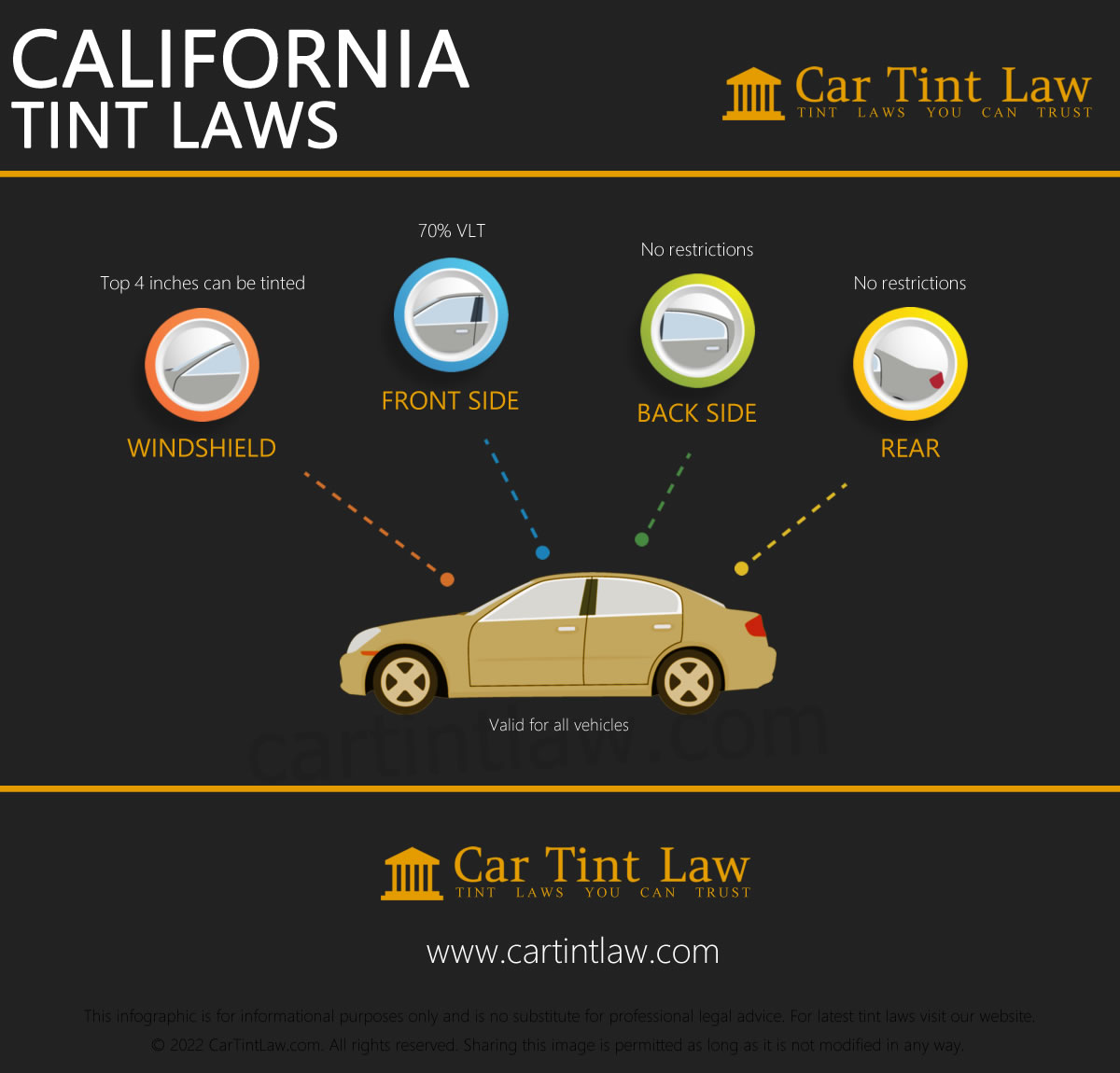
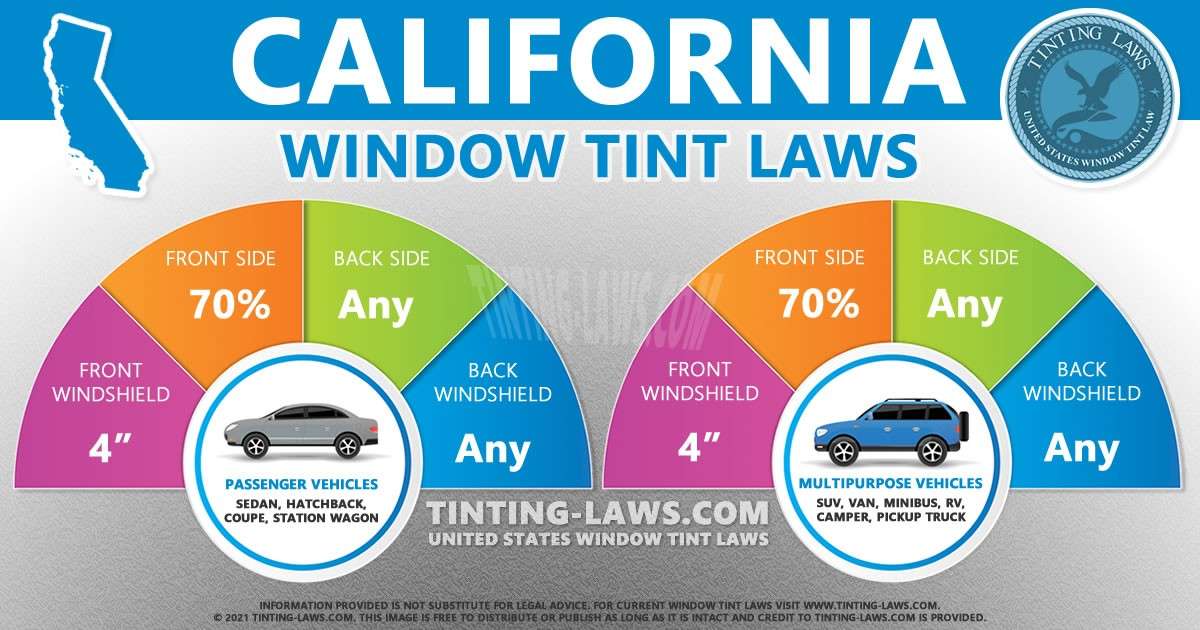
The rules for the front windshield are quite strict. California law prohibits any tinting material that obstructs or reduces the driver’s clear view. However, there is an exception for the top 7 inches of the windshield, which can be covered by a non-reflective tint. This allows for a sun visor strip, commonly referred to as a “brow,” which helps reduce glare from the sun. It’s essential that this strip is not mirrored and does not extend beyond the AS-1 line, typically marked on the windshield.
Front Side Windows
For the front side windows (driver and passenger doors), California law mandates a minimum VLT of 70%. This means that at least 70% of the light must be able to pass through the window. Any tint that darkens these windows beyond this limit is illegal. The intent here is to ensure law enforcement and other drivers can easily see into the vehicle, facilitating identification and traffic safety.
Rear Side Windows and Rear Window
The regulations become more lenient for the rear side windows and the rear window (back windshield). Vehicles are permitted to have a darker tint on these windows, with a minimum VLT of 35%. This allows for greater privacy and heat reduction for passengers in the back. Again, the tint must not be colored, and it cannot be a mirrored or reflective material.
Tinted Windows and Law Enforcement
It’s important to note that law enforcement officers in California can use a light meter to test the VLT of your windows. If your tint is found to be darker than legally permitted, you can receive a citation, often referred to as a “fix-it ticket,” which requires you to remove the illegal tint. In some cases, it can result in a monetary fine.
Exemptions to California Tint Laws
While the general rules apply to most vehicles, California law does provide specific exemptions for certain individuals and vehicle types. These exemptions are typically granted for medical reasons and require proper documentation.
Medical Exemptions
Individuals who have a medical condition that requires them to have darker window tints for protection from sunlight may be eligible for a medical exemption. This is often granted to people with conditions like light sensitivity, lupus, or certain skin cancers. To obtain a medical exemption, you must:
- Obtain a Statement from a Licensed Physician: Your doctor must provide a written statement on their letterhead, clearly stating your medical condition and why darker window tints are medically necessary. The statement should specify the VLT percentage recommended and which windows require the tint.
- Carry the Exemption Documentation: You must carry this physician’s statement with you in your vehicle at all times.
- Adhere to Specific Tint Levels: Even with an exemption, there are still limits. The tint darkness is usually specified by the physician, and you cannot exceed a VLT of 35% on the front side windows or any level of tint that significantly impairs vision for the windshield.
It is crucial to understand that a medical exemption is not a blanket permission to tint your windows as dark as you please. It is a specific allowance based on documented medical needs.
Other Exemptions
Certain types of vehicles may also have different tinting rules or exemptions, although these are less common for standard passenger vehicles. For instance, vehicles used by law enforcement agencies or for specific commercial purposes might have different allowances. However, for the average driver and traveler, the medical exemption is the most relevant.
Practical Considerations for Travelers
When planning a trip to or through California, being aware of the window tint laws can save you a lot of hassle. If your vehicle has aftermarket tints, it’s advisable to verify their compliance with California’s regulations before you arrive.
Checking Your Current Tint
If you are unsure about the VLT of your vehicle’s tint, you can:
- Consult a Professional Tint Shop: Reputable tinting businesses often have VLT meters and can accurately measure your current tint. They can also advise you on what is legal and what might need to be removed or modified.
- Use a VLT Meter: These devices are relatively inexpensive and can be purchased online or from auto parts stores if you wish to check your tint yourself.
Tinting Services in California
If you plan to tint your vehicle while in California, ensure you choose a licensed and reputable tint shop. They will be up-to-date with the current laws and can apply tints that are within the legal limits. They should also be able to provide you with documentation of the VLT percentage applied, which can be helpful if you ever need to prove compliance.
The Importance of Compliance
Adhering to California’s window tint laws is not just about avoiding tickets; it’s also about ensuring the safety of yourself and others on the road. Clearly visible windows are essential for drivers to communicate with each other, for law enforcement to perform their duties, and for emergency responders in the event of an accident. While tinted windows can offer benefits like reduced heat and increased privacy, they must not compromise safety.
Tinting and Vehicle Aesthetics
While the primary focus of tinting laws is safety, the aesthetic appeal of tinted windows is undeniable. Many vehicle owners opt for tinting to enhance the look of their car, reduce interior heat, and protect the interior from UV damage. California’s tint laws aim to strike a balance, allowing for some level of customization and comfort without compromising on public safety.
The “Brow” Tint
As mentioned, the top 7-inch strip on the windshield, often called a “brow” or “sunstrip,” is a popular modification. This is permitted under California law as long as it is not reflective and does not extend beyond the AS-1 line. Many drivers find this helpful for reducing sun glare, particularly when driving during the day.
Window Film Types and VLT
The VLT of window film can vary significantly. Manufacturers offer a wide range of tint shades, from very light tints that offer minimal darkness to very dark tints that significantly obscure the interior. It’s crucial to select film with a VLT that complies with California’s specific requirements for each window.
Choosing the Right Tint for Your Needs
When considering window tinting, it’s beneficial to think about your primary goals. If you’re looking for maximum heat rejection, some high-performance films offer excellent thermal insulation even at legal VLT percentages. If privacy is your main concern, the rear windows offer more flexibility.
Conclusion
Navigating California’s window tint laws requires a clear understanding of the Visible Light Transmission (VLT) percentages permitted for different parts of your vehicle. For the front windshield, only a non-reflective strip at the top is allowed. Front side windows must allow at least 70% VLT, while rear side windows and the rear window can have a tint down to 35% VLT. Medical exemptions are available with proper documentation. By staying informed and compliant, you can ensure a smooth and legal driving experience throughout the diverse landscapes of California. Whether you’re heading to the beaches of Southern California or exploring the national parks, remember that adhering to these regulations is key to enjoying your travels without interruption.
LifeOutOfTheBox is a participant in the Amazon Services LLC Associates Program, an affiliate advertising program designed to provide a means for sites to earn advertising fees by advertising and linking to Amazon.com. Amazon, the Amazon logo, AmazonSupply, and the AmazonSupply logo are trademarks of Amazon.com, Inc. or its affiliates. As an Amazon Associate we earn affiliate commissions from qualifying purchases.