
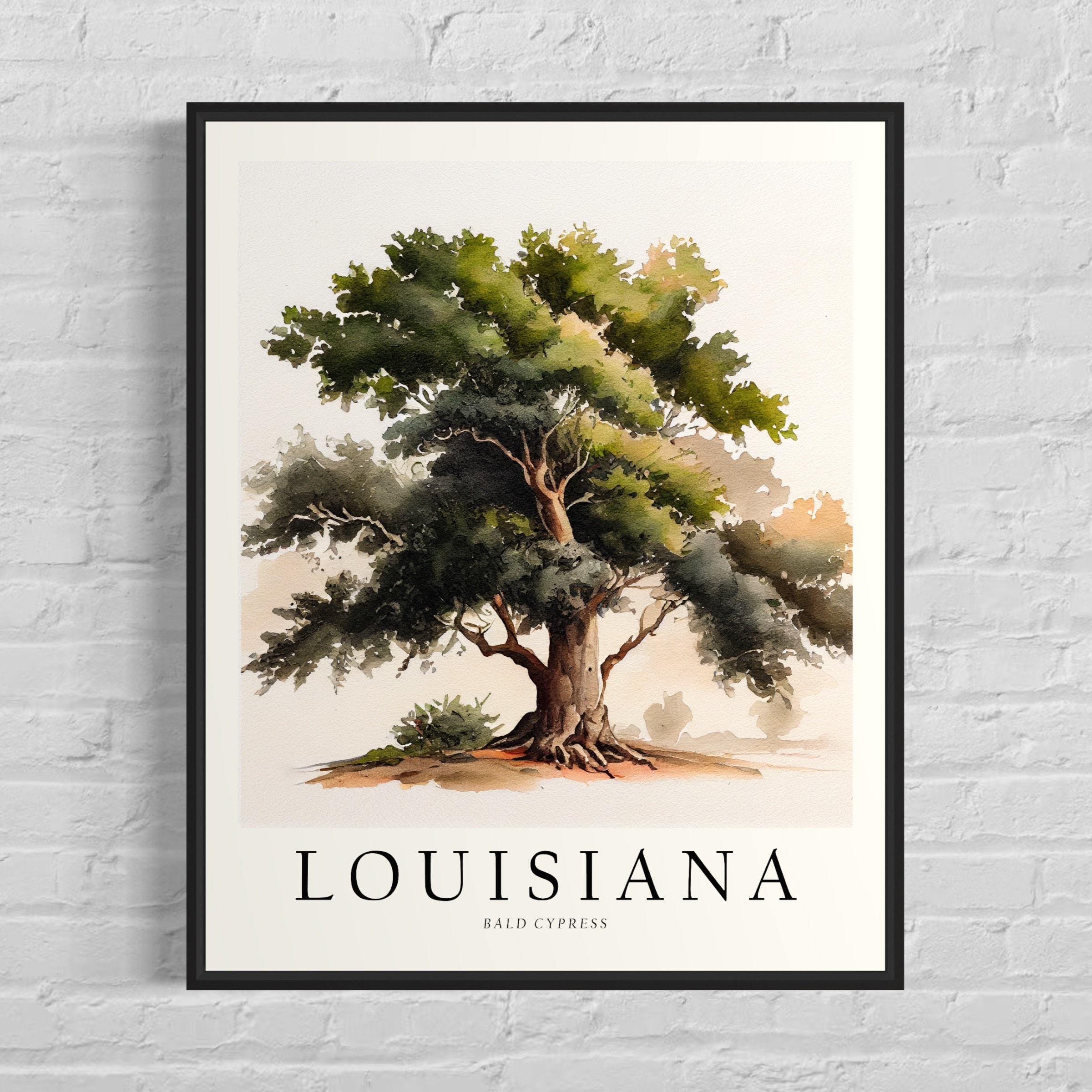
The lush, evocative landscapes of Louisiana are synonymous with a specific, hauntingly beautiful silhouette. When travelers envision the Deep South—the swaying moss, the humid bayous, and the historic plantations—they are almost always picturing the Bald Cypress. Officially designated as the state tree of Louisiana, the Bald Cypress (Taxodium distichum) is more than just a botanical specimen; it is a living monument that defines the natural identity of the region. Standing as a silent witness to centuries of history, this majestic conifer has shaped the ecology, economy, and aesthetic charm of the Pelican State.

The Botanical Marvel of the Bayou
To understand why the Bald Cypress holds such a revered place in Louisiana, one must look at its unique evolutionary adaptations. Unlike most conifers, which remain evergreen, the Bald Cypress is deciduous. It sheds its needle-like leaves every autumn, turning a spectacular copper-bronze color before they drop, leaving the branches “bald” throughout the winter months. This cycle of renewal is a signature feature of the landscape, signaling the changing seasons in a climate where winter is often otherwise indistinct.
The Mystery of the Knees
Perhaps the most distinctive feature of the Bald Cypress is the formation of “cypress knees.” These are woody projections that grow upward from the tree’s root system, emerging above the water level. While scientists have debated their exact function for decades, most researchers believe they aid in structural stability in the soft, saturated soils of the Atchafalaya Basin and other swampland environments. To the observer, these knees resemble gnarled, ancient sculptures rising from the dark, reflective waters, adding to the mystical atmosphere of Louisiana wetlands.
Adaptability and Longevity
The Bald Cypress is a marvel of resilience. It is one of the few tree species capable of thriving in standing water for prolonged periods. Its wood is famously rot-resistant, a quality that led to its widespread use in the building of early infrastructure across the United States. Some of these trees can live for centuries, with the oldest known specimens having stood in Louisiana for over a thousand years. Witnessing a grove of these ancient giants—draped in Spanish moss—is an experience that connects the visitor directly to the primeval history of the American South.
Historical Significance and Economic Impact
The story of the Bald Cypress is inextricably linked to the development of the American South. During the 19th and early 20th centuries, the logging of old-growth cypress forests was a primary economic engine for the region. Known as “The Wood Eternal” for its extreme durability, cypress lumber was highly coveted for shingle-making, boat construction, and exterior siding.
The Timber Industry Era
During the peak of the lumber boom, thousands of acres of cypress were harvested from the wetlands surrounding New Orleans and the Mississippi River. While this logging era left deep scars on the original old-growth forests, it also built the foundations of many historic towns throughout the state. Today, visitors can still see the evidence of this heritage in the architecture of historic districts, where reclaimed cypress wood remains a hallmark of traditional Louisiana home design.

A Turn Toward Conservation
As the state recognized the ecological necessity of these trees, conservation efforts took root. Today, the Bald Cypress is protected in many state parks and national wildlife refuges. The focus has shifted from extraction to preservation, ensuring that future generations can witness the towering spires of cypress that have defined Louisiana for millennia. The modern appreciation for these trees is not just for their utility, but for the essential role they play in coastal land preservation.
Experiencing the Bald Cypress in Nature
For those traveling to Louisiana, experiencing the Bald Cypress firsthand is an essential part of any itinerary. The tree is not merely something to be studied in a textbook; it is a destination in itself. Whether you are navigating the murky waters of a swamp tour or hiking through a nature preserve, the visual impact of these trees is profound.
Iconic Locations to Visit
- Honey Island Swamp: Located near Slidell, this is one of the most pristine wetlands in the country. A guided boat tour through the narrow canals allows you to get within arm’s reach of massive, moss-covered cypress trees.
- Caddo Lake: Stretching across the border into Texas, the Louisiana side of this area features some of the most spectacular, otherworldly cypress groves in the entire region. The reflection of the trees in the calm water at dawn or dusk offers unparalleled photography opportunities.
- Jean Lafitte National Historical Park and Preserve: Situated just a short drive from the cultural hub of New Orleans, this preserve offers elevated boardwalks that wind through a lush cypress-tupelo swamp. It is perhaps the most accessible way for visitors to observe the ecosystem up close without getting their boots muddy.
Photography and Wildlife Observation
The Bald Cypress acts as the heart of a vibrant ecosystem. It provides critical nesting grounds for the bald eagle, the osprey, and various species of herons and egrets. For the photographer, the combination of filtered sunlight through the cypress needles, the dramatic vertical lines of the trunks, and the frequent appearances of wildlife makes these environments a dream destination. The shifting light as it hits the water—often dark and tea-colored due to the tannins from the cypress leaves—creates a dramatic, moody aesthetic that is uniquely “Louisiana.”
The Cultural Identity of the Pelican State
The Bald Cypress is more than a state symbol; it is a cultural icon. It appears in the artwork, literature, and folklore of the region. From the poems describing the “mournful” moss to the paintings capturing the sun-drenched swamps of Lafayette, the tree serves as a shorthand for the enduring spirit of the state.
The Symbiotic Relationship with Spanish Moss
One cannot discuss the Bald Cypress without mentioning the Spanish moss that almost always accompanies it. While the moss is an epiphyte—meaning it pulls moisture and nutrients from the air rather than harming the tree—its presence adds to the haunting beauty of the cypress. The sight of these two elements together is a quintessential symbol of the Deep South, a reminder of the slow, deliberate pace of life found within the bayous of Louisiana.
Legacy and Stewardship
As environmental challenges like coastal erosion and rising sea levels threaten the delicate balance of the Gulf Coast, the Bald Cypress stands as the first line of defense. The extensive root systems of these trees are vital in stabilizing soil and absorbing storm surges. Understanding the importance of the Bald Cypress is, in many ways, understanding the future of the state itself. By protecting these grand, ancient trees, the residents of Louisiana are not only preserving a beautiful landmark but also securing the natural buffers that protect their homes and communities.
When you visit Louisiana, take a moment to look past the vibrant food scenes and the bustling streets of Baton Rouge. Venture into the quiet, meditative space of the swamps. There, you will find the true heart of the state—the Bald Cypress—standing tall, unchanging, and magnificently rooted in the history of the American landscape.
LifeOutOfTheBox is a participant in the Amazon Services LLC Associates Program, an affiliate advertising program designed to provide a means for sites to earn advertising fees by advertising and linking to Amazon.com. Amazon, the Amazon logo, AmazonSupply, and the AmazonSupply logo are trademarks of Amazon.com, Inc. or its affiliates. As an Amazon Associate we earn affiliate commissions from qualifying purchases.