
California’s rental market is a complex tapestry, woven with threads of high demand, stringent regulations, and the ever-present challenge of affordability. For tenants and landlords alike, understanding the legal frameworks governing rent increases is paramount. As we navigate 2024, specific legislation dictates the boundaries for how much landlords can raise rents on eligible properties. This article delves into the specifics of California’s rent control measures, focusing on the annual allowable increase for the current year.
Understanding California’s Rent Control Landscape
California enacted the Tenant Protection Act of 2019 (Assembly Bill 1482) to address rising housing costs and provide greater tenant protections statewide. This landmark legislation introduced several key provisions, including a cap on annual rent increases and “just cause” eviction requirements for many rental properties. It’s crucial to note that AB 1482 applies to most residential properties that are at least 15 years old and are not otherwise exempt. Exemptions typically include newer construction (less than 15 years old), single-family homes owned by individuals (unless the owner is a real estate trust or corporation), and duplexes where the owner occupies one of the units.
The primary aim of AB 1482 was to provide a predictable and reasonable limit on rent hikes, preventing exorbitant increases that could displace long-term residents. Before its passage, rent control was largely a local ordinance, varying significantly from city to city. AB 1482 established a statewide baseline, offering a degree of uniformity across the state, though local ordinances can still provide greater protections than the state law.
The Role of the Consumer Price Index (CPI)
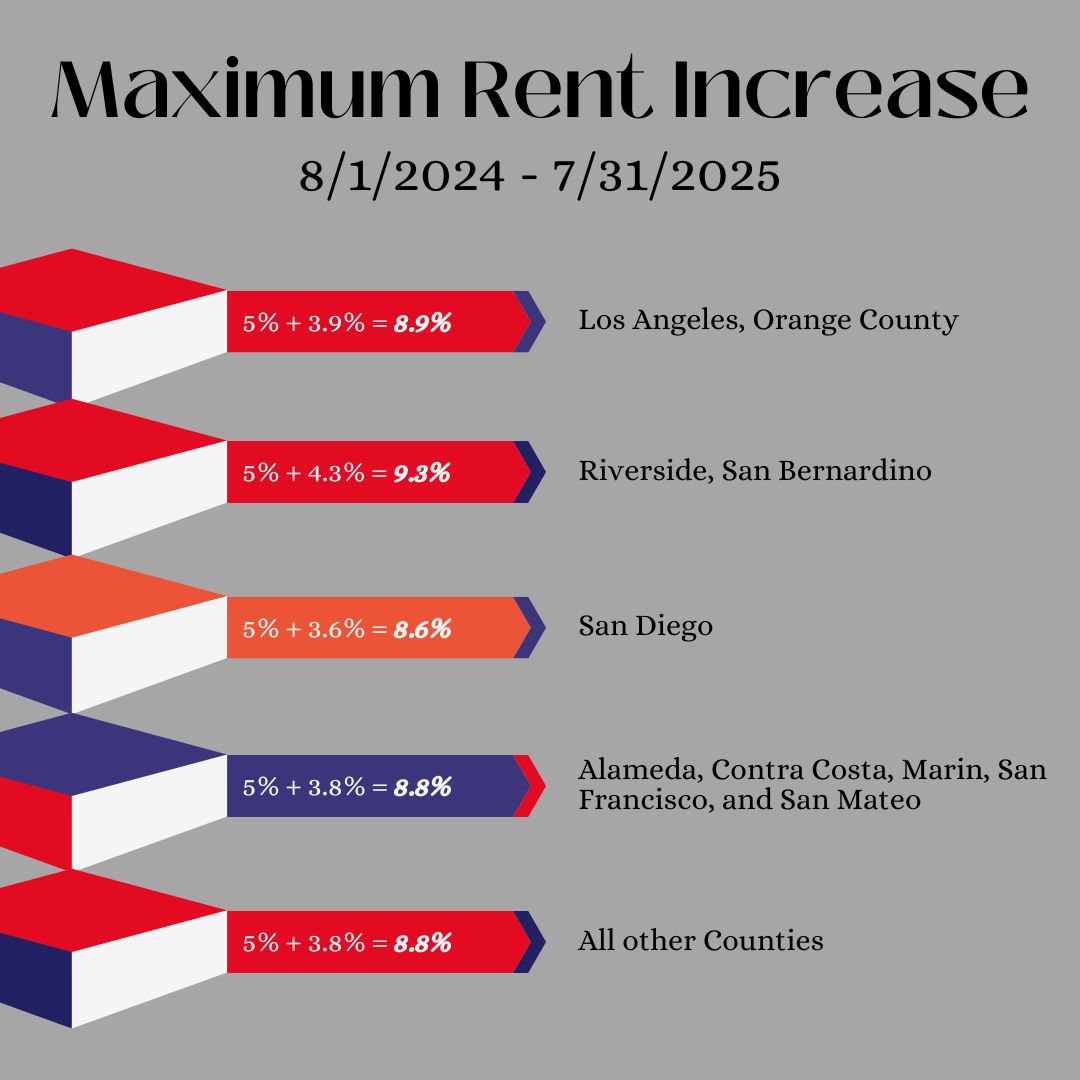
The maximum allowable annual rent increase under AB 1482 is tied to a specific inflation metric: the Consumer Price Index (CPI) for a given region. Specifically, the law uses the Western Region’s CPI, as published by the U.S. Bureau of Labor Statistics. The calculation involves taking the percentage change in the CPI over a 12-month period, ending in April of the preceding year, and adding 5%. However, there’s a ceiling to this calculation: the total increase cannot exceed 10% in any 12-month period.
The CPI is a measure of the average change over time in the prices paid by urban consumers for a market basket of consumer goods and services. It reflects inflationary pressures in the economy. By linking rent increases to CPI, the law aims to allow landlords to keep pace with rising operating costs, such as property taxes, insurance, and maintenance, without resorting to potentially punitive rent hikes.
Calculating the 2024 Maximum Rent Increase
For the year 2024, the maximum annual rent increase allowed under California’s Tenant Protection Act of 2019 is determined by the CPI data available. The relevant CPI data for this calculation is from April 2023 to April 2024. Based on the U.S. Bureau of Labor Statistics’ reporting, the CPI for the Western Region experienced a specific percentage increase during this period.
- The CPI Increase: For the 12-month period ending April 2024, the relevant CPI figure for the Western Region indicated an increase. This figure is then used to calculate the allowable rent hike.
- Applying the Formula: The statutory formula is: (Percentage Change in CPI) + 5%.
- The Cap: Crucially, this calculated increase cannot exceed 10% in any 12-month period.
Therefore, to determine the exact maximum percentage for 2024, one must consult the official CPI figures released by the Bureau of Labor Statistics for the relevant period and apply the statutory formula, always ensuring the final percentage does not surpass the 10% ceiling. This calculation ensures that while landlords can adjust rents to account for inflation and a reasonable profit margin, tenants are shielded from unpredictable and excessive rent spikes.

Key Considerations for Landlords and Tenants
Navigating rent increases involves several critical considerations for both parties involved in a rental agreement. Adherence to the law is non-negotiable, and understanding the nuances can prevent disputes and legal entanglements.
For Landlords:
- Eligibility Check: Before implementing any rent increase, landlords must confirm that their property is subject to AB 1482. Properties exempt from the law do not have these state-mandated rent increase caps.
- Notice Requirements: California law mandates specific notice periods for rent increases. For rent increases that are at least 10% but less than 15%, landlords must provide a 60-day written notice. For increases of 15% or more, a 90-day written notice is required. However, under AB 1482, the maximum allowable increase is capped, so the 60-day notice typically applies to eligible properties. The notice must clearly state the new rent amount, the date it becomes effective, and reference the tenant’s rights under the Tenant Protection Act.
- Prohibited Rent Increases: Landlords cannot increase rent if the property is deemed uninhabitable, or if they have failed to make necessary repairs after receiving written notice from the tenant. Furthermore, rent increases are prohibited within the first 12 months of a new tenancy, unless the tenant previously occupied the unit under a different landlord within the past 12 months.
- Record Keeping: Maintaining meticulous records of all rent increases, notices served, and tenant communications is essential for landlords.
For Tenants:
- Understanding Your Rights: Tenants have the right to be informed about any rent increase in writing, with proper notice. They also have the right to know if their rent increase is in compliance with state and local laws.
- Calculating the Increase: Tenants should familiarize themselves with the CPI data and the statutory formula to verify the legality of any proposed rent increase. If a landlord’s proposed increase exceeds the maximum allowed, tenants have the right to dispute it.
- Seeking Assistance: If a tenant believes their rent has been increased illegally, they can seek assistance from local tenant rights organizations, legal aid societies, or the California Department of Real Estate. These resources can provide guidance and support in resolving disputes.
- Lease Agreements: It’s important to review your lease agreement. While AB 1482 sets a statewide standard, some lease agreements might have specific clauses regarding rent increases that are more favorable to the tenant. However, a lease cannot override state law if it offers less protection than AB 1482.
Local Ordinances and Additional Protections
While AB 1482 provides a statewide framework, it’s crucial for both landlords and tenants to be aware of local rent control ordinances. Many cities in California, such as Los Angeles, San Francisco, Oakland, and San Diego, have their own rent control laws that may offer tenants even stronger protections. These local ordinances can:
- Set Lower Annual Rent Increase Caps: Some cities might have a lower percentage cap on annual rent increases than the state’s formula.
- Expand Rent Control to More Properties: Local ordinances may cover properties that are exempt under AB 1482, such as newer construction.
- Implement Stricter Eviction Protections: Local laws often include more detailed “just cause” eviction requirements.
If a local ordinance offers greater protections than AB 1482, the local ordinance generally takes precedence. This means that landlords must comply with the stricter regulations of the city or county in which the rental property is located. Therefore, a comprehensive understanding requires researching both state and local housing laws.

The Future of Rent Stabilization in California
The conversation around housing affordability and rent stabilization in California is ongoing. While AB 1482 has provided a critical safety net, many advocates argue that it does not go far enough to address the scale of the housing crisis. Discussions continue regarding potential amendments or new legislation aimed at further protecting tenants, increasing housing supply, and ensuring equitable access to housing across the state.
For landlords, the evolving regulatory environment necessitates staying informed about legislative changes and consulting with legal professionals to ensure compliance. For tenants, understanding their rights and the resources available is key to maintaining stable and affordable housing. The maximum rent increase for 2024, while a specific figure calculated based on economic indicators, is part of a broader, dynamic policy landscape that continuously seeks to balance the needs of property owners with the fundamental right to housing security for Californians.
LifeOutOfTheBox is a participant in the Amazon Services LLC Associates Program, an affiliate advertising program designed to provide a means for sites to earn advertising fees by advertising and linking to Amazon.com. Amazon, the Amazon logo, AmazonSupply, and the AmazonSupply logo are trademarks of Amazon.com, Inc. or its affiliates. As an Amazon Associate we earn affiliate commissions from qualifying purchases.