
The iconic song “Hotel California” by the Eagles has captivated audiences for decades, its evocative lyrics and haunting melody conjuring images of a luxurious yet unsettling desert oasis. While often interpreted as a literal account of a stay at a glamorous establishment, the true meaning of “Hotel California” delves much deeper, resonating with themes of excess, the dark side of the American dream, and the seductive nature of materialism. This exploration focuses on the song’s metaphorical significance within the realm of Lifestyle, specifically examining how it serves as a cautionary tale about the pitfalls of unchecked ambition and the allure of a life that promises paradise but delivers a gilded cage.

The Allure of the Desert Mirage: A Symbol of Excess
The opening verses of “Hotel California” paint a vivid picture of a weary traveler drawn to a beacon of light in the desolate landscape. This initial imagery immediately establishes the Hotel California itself as a powerful symbol. It is not merely a physical building but a representation of an idealized, often unattainable, lifestyle. The desert setting underscores the harsh realities from which the traveler seeks escape, making the promise of comfort and indulgence all the more potent.
Promises of Paradise
The lyrics meticulously detail the sensory experiences that lure the protagonist deeper into the hotel’s embrace. The “shimmering light,” the “cool mental breeze,” and the “sweet perfume” all contribute to an atmosphere of opulence and escape. This is the siren call of a certain kind of Luxury Travel, where every desire is anticipated and catered to. It speaks to a yearning for a life of ease, where the mundane struggles of existence are left behind. The Hotel California represents the ultimate destination for those seeking respite, not just from physical fatigue, but from the pressures and demands of everyday life. It embodies the promise of a permanent vacation, a perpetual state of contentment.
The Unseen Price Tag
However, beneath this alluring facade lies a darker truth. The song subtly introduces elements of unease. The mention of “voices down the corridor” and the feeling of being “imprisoned by your own device” hint at a more sinister reality. This paradox – the promise of freedom leading to entrapment – is central to the song’s message. The lifestyle presented by the Hotel California is not one of genuine liberation but of subtle manipulation and eventual control. It’s a powerful metaphor for how the pursuit of material wealth and status can, ironically, lead to a loss of freedom and self. The extravagant amenities and the constant pursuit of pleasure become the very chains that bind the inhabitants.
The American Dream Decoded: A Cautionary Narrative
“Hotel California” is frequently interpreted as a commentary on the darker aspects of the American Dream. The song was released in 1976, a period when the United States was grappling with economic shifts and a growing disillusionment with certain societal ideals. The Eagles, themselves a product of the Southern California music scene, were well-positioned to observe and articulate these sentiments.
The Illusion of Infinite Possibility
The American Dream, at its core, is about opportunity, upward mobility, and the pursuit of happiness, often through material success. The Hotel California in the song embodies the zenith of this dream – a place where success is seemingly guaranteed, and where one can indulge in the fruits of their labor without consequence. The “mission bell” that tolls and the “best damn country music” playing evoke a sense of familiar comfort, tinged with a distinctly American flavor. This represents the allure of the comfortable, affluent lifestyle that many aspire to. It’s a place where one can feel like they’ve “made it.”
The Trap of Materialism
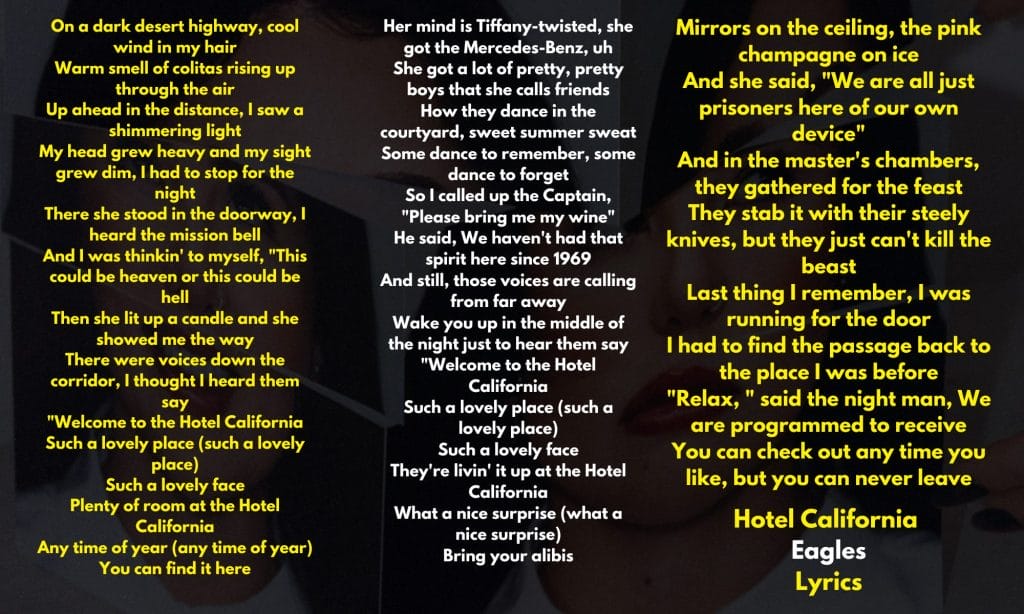
The critical twist, however, is that this dream becomes a trap. The song’s narrative suggests that once one enters the Hotel California, they can never truly leave. The line, “You can check out any time you like, but you can never leave,” is the song’s most potent declaration. This speaks to the seductive nature of materialism and the difficulty of escaping a lifestyle built on excessive consumption and superficial pleasures. The characters within the hotel are “prisoners,” forever caught in a cycle of indulgence. They have achieved the outward markers of success but have lost their inner freedom and perhaps even their souls. This reflects a critique of a culture that equates happiness with possessions and experiences, often at the expense of genuine connection and personal growth. The Hotel California becomes a metaphor for the spiritual emptiness that can accompany relentless pursuit of material gain.
The Subtleties of Control: Psychological and Societal Implications
Beyond overt critiques of materialism and the American Dream, “Hotel California” also explores subtler forms of control and entrapment. The song’s ambiguous narrative allows for multiple interpretations, including psychological and societal undercurrents.
The Psyche of Addiction and Complacency
The inhabitants of the Hotel California are depicted as being in a state of perpetual, yet unfulfilling, revelry. They are described as having “met him here a long time ago, he’s the master of his own conceit.” This suggests a self-imposed illusion, a refusal to acknowledge the underlying emptiness. The song can be viewed as an allegory for addiction, where the initial pleasure gives way to a compulsive need that ultimately enslaves the individual. The comfortable routine and the constant stream of distractions prevent any introspection or desire for change. The hotel’s luxurious amenities become the tools of this psychological entrapment, offering just enough comfort to quell any rising discontent. The constant demand for more, without genuine fulfillment, is a hallmark of many modern Lifestyle choices that prioritize fleeting gratification over lasting happiness.
The Echoes of a Culture
The Hotel California can also be seen as a microcosm of a broader cultural malaise. It represents a society that has become so enamored with its own creations – its wealth, its entertainment, its superficial perfection – that it has lost touch with its core values. The song’s critique is not just about individual choices but about the collective direction of a society that prioritizes consumption and image over substance. The Eagles, through this song, offer a chilling glimpse into a potential future where the pursuit of a seemingly perfect Lifestyle leads to a loss of authenticity and genuine human connection. The “pink champagne on ice” and the “mirrors on the ceiling” are not just details of a hotel room; they are symbols of a culture that is increasingly obsessed with surface appearances.
The Enduring Legacy: A Timeless Warning
“Hotel California” remains relevant because its themes transcend time and specific cultural contexts. The song’s enduring power lies in its ability to resonate with universal human desires and anxieties. The Hotel California serves as a timeless reminder that true fulfillment is not found in material possessions or fleeting pleasures, but in something more profound.
A Metaphor for Modern Life
In the contemporary world, the allure of the Hotel California is perhaps more potent than ever. Social media constantly bombards us with curated images of perfect lives, luxurious vacations, and aspirational lifestyles, mirroring the seductive promises of the song. The pressure to present a successful and enviable image, to constantly consume and experience, can lead many down a similar path of superficial fulfillment. The song’s warning about being unable to leave resonates with the feeling of being trapped in cycles of consumerism and the relentless pursuit of external validation. It encourages a critical examination of the Lifestyle choices we make and the true cost of our desires.

Beyond the Literal Interpretation
While the Eagles themselves have offered various interpretations, often pointing to the song as a metaphor for the excesses and illusions of the American music industry in Los Angeles during the 1970s, its broader implications are undeniable. The Hotel California is not just a story about a particular place or time; it’s a parable about the human condition, about the seductive nature of temptation, and the perennial struggle between genuine happiness and the siren song of worldly success. The song’s lasting impact is a testament to its masterful storytelling and its profound exploration of the human psyche and societal dynamics, offering a powerful cautionary tale for anyone navigating the complexities of modern Lifestyle and aspiration.
LifeOutOfTheBox is a participant in the Amazon Services LLC Associates Program, an affiliate advertising program designed to provide a means for sites to earn advertising fees by advertising and linking to Amazon.com. Amazon, the Amazon logo, AmazonSupply, and the AmazonSupply logo are trademarks of Amazon.com, Inc. or its affiliates. As an Amazon Associate we earn affiliate commissions from qualifying purchases.