
Understanding California’s Economic Landscape
California, often lauded as a land of innovation, opportunity, and unparalleled natural beauty, presents a complex economic landscape that profoundly shapes the lifestyle of its residents. From the tech hubs of Silicon Valley to the agricultural heartland of the Central Valley, the Golden State is a mosaic of diverse industries and socio-economic realities. Understanding the median household income in California is not merely about reciting a statistic; it’s about comprehending the financial backbone that supports, or sometimes strains, the myriad lifestyles embraced within its borders. This figure serves as a crucial benchmark for assessing everything from housing affordability to discretionary spending, directly influencing the daily choices and long-term aspirations of millions.
The State’s High Cost of Living
One of the most defining characteristics of living in California is its notoriously high cost of living. This factor is intrinsically linked to the discussion of median household income, as a higher income is often a necessity rather than a luxury in many parts of the state. Housing, in particular, stands out as a significant expenditure, with median home prices and rental costs far exceeding national averages in major metropolitan areas like San Francisco, Los Angeles, and San Diego. Beyond housing, everyday expenses such as groceries, transportation, and utilities also contribute to the elevated cost of maintaining a comfortable lifestyle. This economic reality means that even what might be considered a substantial income in other states can feel stretched thin in California, forcing residents to make careful budgeting decisions that impact their leisure, travel, and savings.
Key Economic Drivers
California’s economy is a powerhouse, driven by a diverse set of sectors that contribute significantly to its overall wealth and, consequently, to household incomes. Technology, spearheaded by giants in Silicon Valley, remains a primary engine, offering high-paying jobs in software, biotechnology, and venture capital. The entertainment industry, centered in Hollywood and Los Angeles, also provides substantial employment, though often with a more varied income distribution. Agriculture, predominantly in the Central Valley, and tourism, spanning from the beaches of Orange County to the wine country of Napa Valley and the majestic landscapes of Yosemite National Park and Lake Tahoe, further bolster the state’s economy. These robust sectors create a competitive job market with high earning potential for skilled professionals, yet they also highlight disparities for those in lower-wage service or agricultural roles, influencing the overall median income and the distribution of wealth across the state.
The Latest Figures and Their Context
While specific figures for median household income can fluctuate year by year, understanding the general range provides critical insight into the financial realities for most families in California. These numbers are not static; they are influenced by national economic trends, state-level policies, and the dynamic growth of California’s leading industries. A consistently higher median income in California compared to the national average reflects the state’s strong economy and high-wage job sectors, but it must always be viewed in conjunction with the state’s unparalleled cost of living.
Statewide Median Income
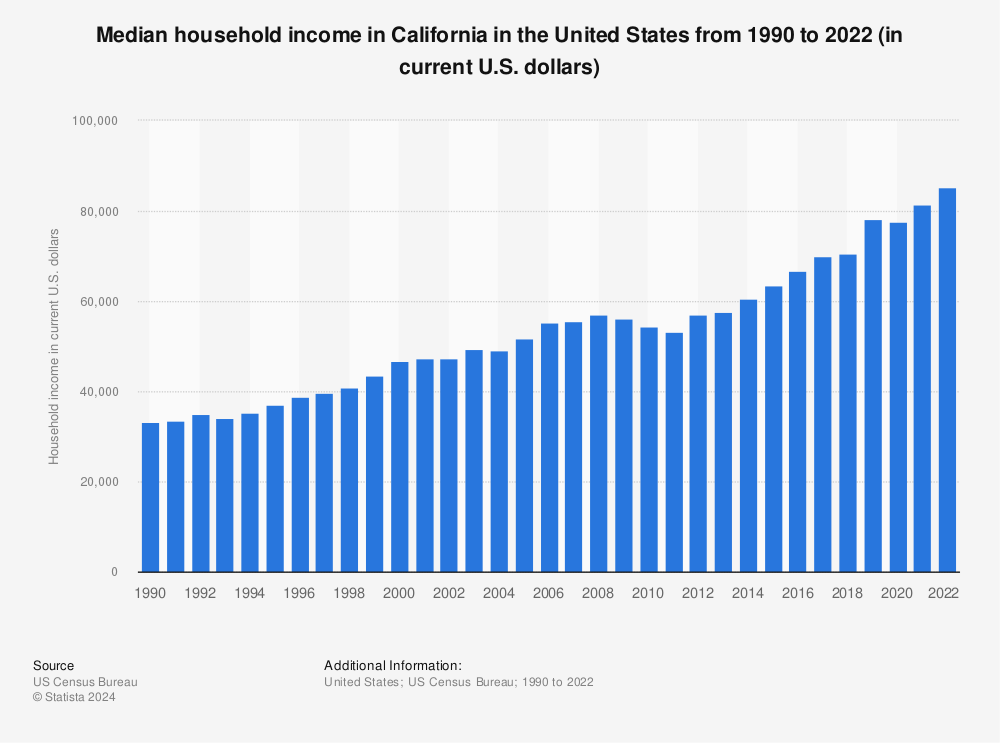
Historically, the median household income in California has significantly outpaced the national median. While precise figures vary based on the reporting year and data source, it is generally understood to hover in the range of approximately $85,000 to $90,000 annually. This figure represents the midpoint where half of households earn more and half earn less. It’s an aggregate number, however, that masks the vast economic diversity within the state. For many, this income level allows for a comfortable lifestyle, especially in less expensive regions. Yet, in the most sought-after urban centers, even an income at or above this median can feel inadequate to achieve homeownership or a truly luxurious lifestyle without significant financial planning and sacrifice. This makes a clear distinction between the “average” Californian and the “average” resident in other parts of the United States when it comes to financial well-being.
Regional Disparities: North vs. South
The statewide median income serves as a useful benchmark, but it is the regional variations that truly paint a picture of California’s diverse economic landscape and the resulting lifestyle choices. The economic fortunes of residents can differ dramatically depending on whether they reside in the tech-centric north, the entertainment and commerce hub of the south, or the agricultural heartland.
Silicon Valley’s Influence
Nowhere is the impact of high-earning sectors more evident than in the Bay Area, particularly around Silicon Valley. Cities like San Francisco and its surrounding counties consistently report some of the highest median household incomes in the nation, often exceeding $120,000 or even $150,000 annually. This concentrated wealth is a direct result of the thriving technology industry, which offers highly compensated positions to engineers, software developers, and executives. The lifestyle here is characterized by intense competition for resources, from housing to dining, and a fast-paced environment geared towards innovation and professional advancement. Despite the high incomes, residents often face extreme housing costs, leading to long commutes or smaller living spaces, even for those earning well above the state median.
Southern California’s Diversity

Moving south, the economic picture in Southern California presents a different kind of diversity. Los Angeles County, the most populous county in the U.S., shows a wide range of incomes, with areas like Beverly Hills boasting astronomical figures, while other neighborhoods reflect more modest earnings. Orange County and San Diego also report median incomes well above the statewide average, driven by robust sectors in defense, tourism, and biotechnology. The lifestyle in these regions can range from luxurious coastal living to more suburban family-oriented communities, each with its own cost structure and expectations. Further inland, communities in the Central Valley and areas around the state capital, Sacramento, typically have lower median incomes, reflecting a more diversified economy with a larger proportion of agricultural and public sector jobs. This regional variance underscores that “living in California” is not a monolithic experience; financial realities and corresponding lifestyles are deeply localized.
Implications for Lifestyle and Quality of Life
The median household income in California is more than just a number; it is a fundamental determinant of the quality of life and the range of lifestyle choices available to its residents. From the type of home one can afford to the leisure activities one can pursue, income serves as the primary gateway to experiencing the best, or navigating the challenges, of the Golden State.
Housing Affordability Challenges
Perhaps the most significant impact of California’s income dynamics on lifestyle is seen in housing affordability. Even with a median income significantly higher than the national average, the cost of housing – whether buying or renting – remains a formidable barrier for many. In high-demand areas, a substantial portion of a household’s income can be consumed by housing costs, leaving less for other essential expenses, savings, or discretionary spending. This leads to lifestyle adaptations such as longer commutes, choosing to live in smaller spaces, or delaying homeownership. For some, it means opting out of living in major metropolitan areas entirely, seeking more affordable lifestyles in inland communities or even outside the state. The dream of a detached home with a yard, readily accessible in many other states, can often feel out of reach for median-income families in California’s urban centers, despite their higher earnings.
Discretionary Spending and Leisure
An understanding of median household income also sheds light on patterns of discretionary spending and leisure activities. For households earning above the median, there may be ample room for enjoying California’s world-class attractions, from dining in Michelin-starred restaurants in San Francisco to weekend trips to Napa Valley or Lake Tahoe. These incomes enable families to invest in premium experiences, luxury travel, and extensive entertainment options. However, for those at or below the median, particularly in expensive areas, discretionary spending might be more constrained. Lifestyle choices could lean towards more budget-conscious activities, local parks instead of distant resorts, or carefully planned domestic trips rather than international excursions. The pursuit of specific hobbies or educational enrichment might also be limited by financial considerations, affecting the overall quality and breadth of their leisure lifestyle.
Educational Opportunities and Healthcare Access
Median household income also plays a pivotal role in access to quality education and healthcare, critical components of a fulfilling lifestyle. Higher incomes often correlate with residence in areas with well-funded public schools or the ability to afford private education, providing children with enhanced opportunities. Similarly, while California has a robust healthcare system, the ability to access specific treatments, specialists, or private insurance plans can be influenced by a household’s financial standing. These factors contribute significantly to long-term well-being and life prospects, underscoring how economic standing shapes foundational lifestyle elements beyond mere consumption.
Navigating California’s Diverse Lifestyles
The variability in median household income across California fosters a wide spectrum of lifestyles, each with its unique advantages and challenges. From those who thrive in the state’s high-wage, high-cost environments to those who find comfortable living in more affordable regions, adapting to the economic realities is key.
From Luxury to Budget-Conscious Living
California offers opportunities for both extravagant luxury and prudent, budget-conscious living. For high-income earners, particularly in areas like Beverly Hills or certain enclaves in the Bay Area, the lifestyle can be one of unparalleled opulence, featuring sprawling estates, private jets, and exclusive access to cultural events and services. However, a vibrant and fulfilling lifestyle is also attainable for those with more modest incomes. Many Californians prioritize access to the state’s natural beauty—its beaches, mountains, and parks—which often come with minimal or no cost. Community events, free cultural festivals, and outdoor recreation become central to their lifestyle, proving that a rich life in California isn’t solely dependent on immense wealth, but rather on how one chooses to allocate resources and appreciate the available amenities.
Impact on Travel and Experiences
The median household income directly influences travel habits and the types of experiences Californians pursue. Those with higher incomes may embark on international journeys, luxury cruises, or frequent high-end resort stays within or outside the state. Their lifestyle often includes exploring distant cultures or indulging in bespoke travel experiences. Conversely, for households closer to the state’s median income, travel often focuses on exploring California’s vast and varied attractions, utilizing camping, road trips, or more affordable accommodation options. A weekend getaway to Yosemite National Park or a beach trip to San Diego might be planned meticulously to fit within a budget. This creates distinct travel lifestyles, where proximity to natural wonders or unique cultural sites can be enjoyed by a broad economic spectrum, albeit through different means.

Adapting to Economic Realities
Ultimately, understanding the median household income in California is about recognizing the financial framework within which diverse lifestyles flourish. It highlights the ingenuity and adaptability required to thrive in a state that offers immense opportunities alongside significant costs. Whether an individual aims for a high-flying career in tech, a creative pursuit in entertainment, or a comfortable family life, the state’s economic landscape demands careful consideration of income versus expenditure. Embracing a Californian lifestyle means understanding these economic currents and charting a personal course that balances aspiration with financial reality, allowing residents to enjoy the unique blend of innovation, culture, and natural splendor that defines this iconic state.
LifeOutOfTheBox is a participant in the Amazon Services LLC Associates Program, an affiliate advertising program designed to provide a means for sites to earn advertising fees by advertising and linking to Amazon.com. Amazon, the Amazon logo, AmazonSupply, and the AmazonSupply logo are trademarks of Amazon.com, Inc. or its affiliates. As an Amazon Associate we earn affiliate commissions from qualifying purchases.