
Navigating Florida’s Roads: An Essential Guide for Tourists
Planning a memorable trip to Florida, the Sunshine State, often involves visions of pristine beaches, vibrant cities like Miami, world-famous theme parks in Orlando, and the cultural richness of Tampa. Whether you’re driving your own vehicle across state lines or planning to rent a car upon arrival, understanding the state’s auto insurance requirements is not just a legal necessity but a crucial step towards ensuring a smooth, worry-free vacation. The last thing any traveler wants is to encounter unforeseen complications or financial burdens due to an accident while far from home. Florida has specific auto insurance laws that differ from many other states, primarily operating under a “no-fault” system. For tourists, being informed about these minimums and recommended coverages is paramount for enjoying the diverse experiences Florida has to offer without any unwelcome surprises on the road. This guide will break down the essentials, ensuring you’re well-prepared before you hit Florida’s scenic highways.
Understanding Florida’s No-Fault Auto Insurance System
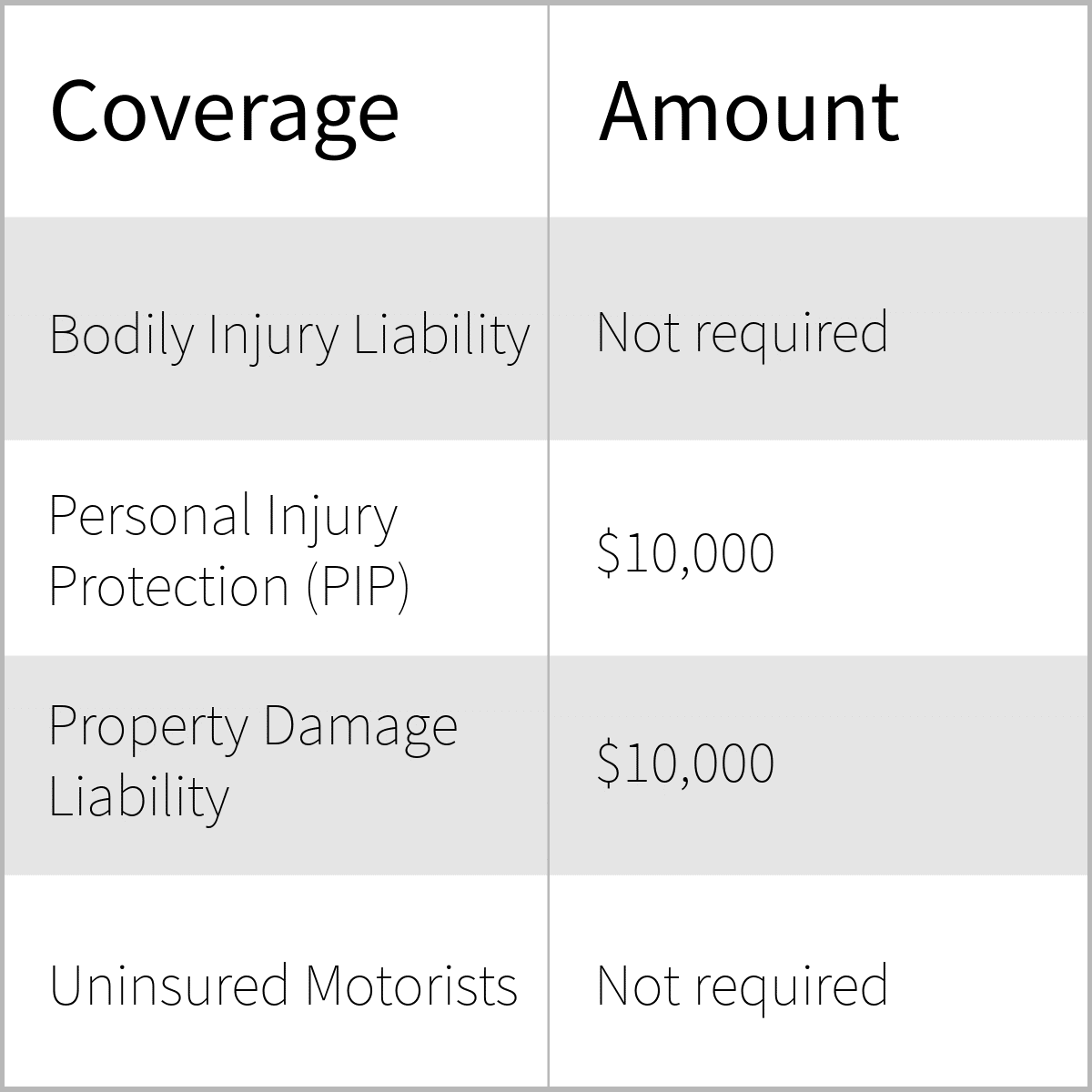
Florida stands out for its unique approach to auto insurance, primarily characterized by its “no-fault” system. This system means that, regardless of who caused an accident, your own insurance company is responsible for paying a portion of your medical expenses and lost wages up to your policy’s limits. This framework aims to reduce litigation by ensuring that accident victims receive prompt medical attention and financial support without having to wait for fault to be determined. For tourists, understanding this distinction is vital, especially when comparing it to “at-fault” states where the responsible party’s insurance typically covers all damages.
The Mandatory Personal Injury Protection (PIP) Coverage
The cornerstone of Florida’s no-fault system is Personal Injury Protection (PIP) coverage. This is the first and most critical component of the minimum auto insurance required for any vehicle registered in Florida, and by extension, for anyone driving a vehicle in the state.
PIP coverage is designed to cover your own medical expenses, lost wages, and even funeral benefits, up to a specified limit, regardless of who was at fault for the accident. The minimum PIP requirement in Florida is $10,000. Specifically, it covers 80% of necessary medical expenses and 60% of lost wages, up to the $10,000 limit. It also provides a $5,000 death benefit. This coverage extends to you, your household members, and certain passengers in your vehicle, as well as pedestrians or cyclists you might injure, ensuring immediate care without legal delays. For tourists, this means that if you’re involved in an accident in Florida, your medical bills and lost income (if applicable) will primarily be covered by your PIP insurance, providing a crucial safety net even if you’re only visiting for a short period.
Property Damage Liability (PDL) Explained
In addition to PIP, Florida mandates Property Damage Liability (PDL) coverage. While PIP addresses personal injuries, PDL focuses on the physical damage you might cause to another person’s property during an accident. This could include damage to another vehicle, a fence, a building, or any other physical property.
The minimum PDL requirement in Florida is $10,000. This coverage pays for repairs or replacement of property belonging to others if you are at fault for damaging it. It does not cover damage to your own vehicle; that would require collision coverage, which is not part of the minimum requirements. For tourists, having PDL is essential. Imagine accidentally backing into someone’s parked car in a crowded Miami parking lot or causing damage to a guardrail on a scenic Florida Keys drive. Without PDL, you would be personally responsible for these repair costs, which could quickly escalate and severely impact your vacation budget and overall experience.
Insurance Considerations for Tourists Driving in Florida
Visiting Florida often involves renting a car to explore beyond the immediate vicinity of your hotel, or driving your own vehicle down for an extended stay. In both scenarios, understanding how Florida’s insurance laws apply to you is vital.
Rental Cars and Your Insurance Options
For many tourists, a rental car is their primary mode of transportation in Florida. Rental car companies will offer you various insurance options at the counter, which can be confusing and costly if you’re not prepared.
- Declining Rental Company Insurance: If you have your own personal auto insurance policy from your home state or country, it might extend to cover rental cars. However, it is imperative to verify the specifics of your policy with your insurer before your trip. Crucially, your existing policy must meet Florida’s minimum PIP and PDL requirements. If your policy doesn’t explicitly state it covers rental cars in Florida or doesn’t meet the minimums, you could be driving illegally.
- Credit Card Benefits: Many credit cards offer some form of rental car insurance, often as a secondary benefit that kicks in after your primary insurance. This typically covers collision damage to the rental vehicle itself. Again, a thorough check with your credit card provider is essential, as coverage varies widely and often excludes liability for damage to other vehicles or injuries to third parties. These benefits rarely, if ever, satisfy the mandatory PIP and PDL requirements in Florida.
- Purchasing Rental Company Insurance: While often expensive, purchasing the rental company’s insurance, particularly the liability and personal accident coverage, ensures you meet Florida’s legal requirements and provides comprehensive protection. This is often the safest bet for international tourists or those with minimal personal coverage.
Always ensure that any chosen insurance plan, whether personal, credit card, or rental company-provided, explicitly meets the Florida minimums of $10,000 PIP and $10,000 PDL.
Out-of-State Insurance Policies: Do They Cover You in Florida?
If you are driving your own vehicle into Florida from another U.S. state, your existing auto insurance policy generally extends to cover you while driving in Florida. However, there’s a critical caveat: your policy must provide at least the minimum $10,000 PIP and $10,000 PDL coverage as required by Florida law.
Many out-of-state policies automatically adjust to meet the minimum liability requirements of the state you are driving in, but it’s not guaranteed for the specific no-fault PIP coverage. Before embarking on your road trip to Florida, contact your insurance provider to confirm that your current policy will satisfy these specific Florida mandates. Get this confirmation in writing if possible. Being caught driving in Florida without the proper coverage, even if you’re a tourist with an out-of-state policy, can lead to severe penalties.
Beyond the Basics: Recommended Coverages for a Worry-Free Florida Vacation
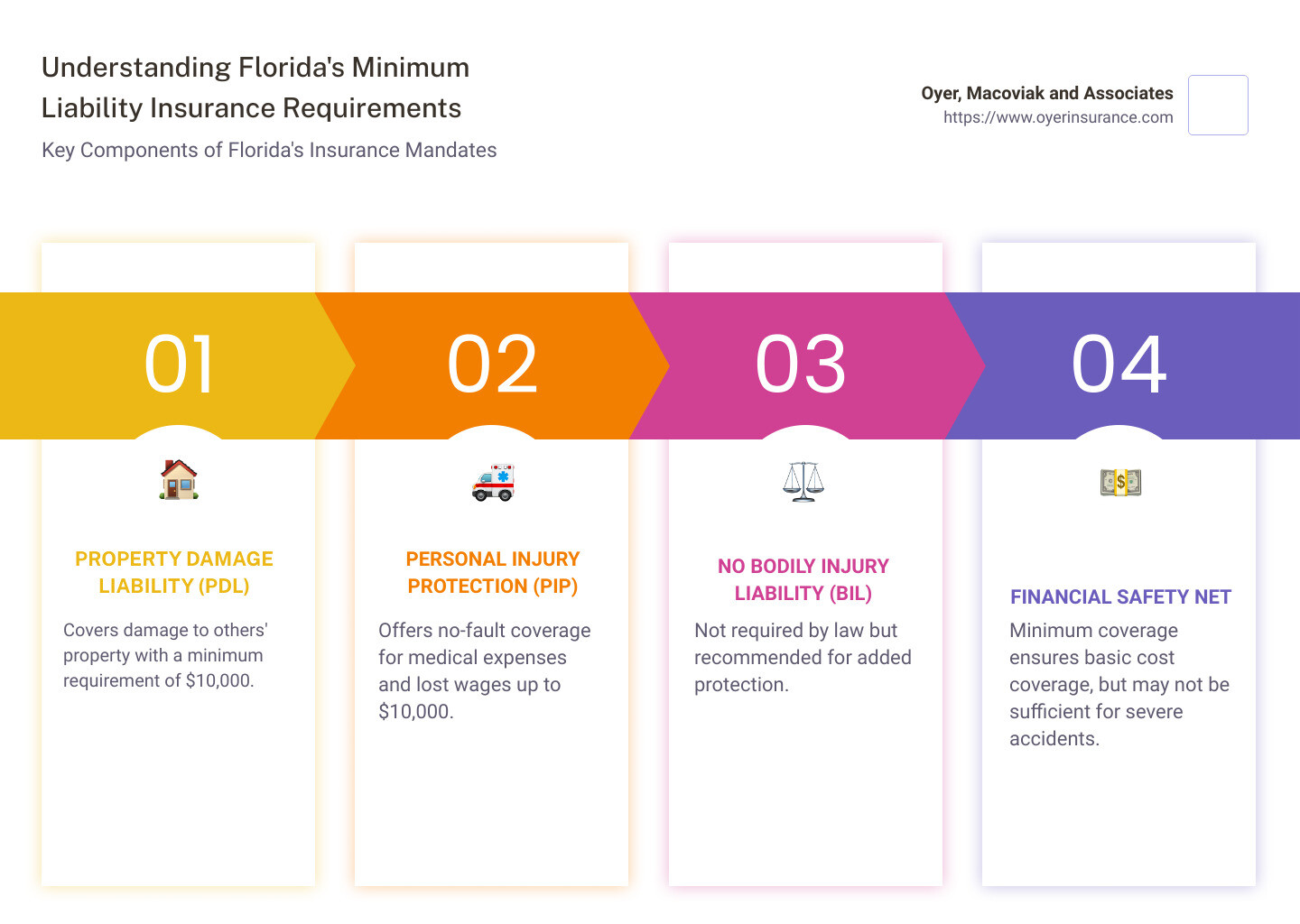
While Florida’s minimum insurance requirements ($10,000 PIP and $10,000 PDL) are legally sufficient, they often provide only basic protection. For tourists, especially those navigating busy roadways around Orlando’s theme parks or Miami’s bustling streets, considering additional coverages is a wise investment in peace of mind.
Bodily Injury Liability (BIL): Why It’s Crucial (Though Not Mandatory)
Surprisingly, Bodily Injury Liability (BIL) is not a mandatory component of minimum auto insurance in Florida. However, it is perhaps the most critical additional coverage to consider. BIL pays for medical expenses, lost wages, and pain and suffering for other people if you are at fault for an accident. While your PIP covers your own injuries regardless of fault, it doesn’t protect you if you injure others and they decide to sue you beyond their own PIP limits, which is common in more serious accidents.
Without BIL, you would be personally responsible for any judgments or settlements from such lawsuits. Given the potential for significant medical costs and legal fees, carrying adequate BIL coverage is highly recommended. Common recommendations are at least $25,000 per person and $50,000 per accident (often written as 25/50). For a tourist on vacation, facing a substantial lawsuit can turn a dream trip into a financial nightmare.
Uninsured/Underinsured Motorist (UM/UIM) Coverage
In a state with a large population and heavy tourist traffic, the unfortunate reality is that many drivers are uninsured or carry only minimum coverage. Uninsured/Underinsured Motorist (UM/UIM) coverage protects you and your passengers if you are hit by a driver who has no insurance (uninsured) or not enough insurance (underinsured) to cover your medical expenses and other damages.
While your PIP covers your immediate medical bills up to its limit, UM/UIM can kick in to cover additional medical costs, lost wages, and pain and suffering if the at-fault driver can’t pay. This is an invaluable protection, especially when driving in unfamiliar areas like the major tourist hubs or busy interstate corridors connecting cities like Jacksonville to Tampa. Given the high number of uninsured drivers on Florida roads, UM/UIM coverage offers significant peace of mind.
Comprehensive and Collision Coverage
For tourists driving their own car or those concerned about their rental vehicle, comprehensive and collision coverage offers protection for the vehicle itself.
- Collision coverage pays for damages to your own vehicle if it collides with another object (another car, a tree, a guardrail), regardless of who is at fault.
- Comprehensive coverage pays for damages to your vehicle from non-collision events, such as theft, vandalism, fire, hail, or hitting an animal.
These coverages are typically mandatory if you have a car loan or lease, but they are optional if you own your car outright. For rental cars, these are often offered as a “Loss Damage Waiver” or similar product by the rental company. While not legally required by Florida for minimum coverage, these options are essential for protecting your investment and ensuring you don’t face hefty repair or replacement costs for your vehicle during or after your trip.
Ensuring a Smooth Trip: Practical Advice and Avoiding Pitfalls
Understanding Florida’s auto insurance requirements is a significant step, but taking practical measures before and during your trip will solidify your protection and ensure a truly seamless vacation experience.
Penalties for Non-Compliance in Florida
Driving without the mandatory PIP and PDL coverage in Florida carries significant penalties. The Florida Department of Highway Safety and Motor Vehicles takes uninsured driving seriously. If you’re caught without proper insurance, even as a tourist, you could face:
- Suspension of your driver’s license, registration, and license plate: This can last up to three years or until proof of insurance is provided, along with reinstatement fees. For a tourist, this would effectively end your ability to drive and could leave you stranded.
- Fines: Substantial monetary penalties can be imposed.
- Vehicle impoundment: In some cases, your vehicle could be impounded, adding further fees and hassle to your trip.
- Personal liability: If you cause an accident and are uninsured, you will be personally responsible for all damages and injuries, which can lead to severe financial distress.
These consequences can quickly derail a vacation, transforming it into a stressful and expensive ordeal. Always ensure you have proof of valid Florida-compliant insurance readily available in your vehicle.

Pre-Trip Checklist for Auto Insurance
To avoid any issues and maximize your enjoyment of Florida’s attractions, consider this pre-trip checklist:
- Verify Your Current Policy: Before you leave your home state or country, contact your insurance provider. Confirm your existing policy’s coverage limits, especially for PIP and PDL, and ask specifically if it extends to Florida’s no-fault requirements and rental cars.
- Consider Temporary Upgrades: If your current policy is insufficient, inquire about temporarily increasing your coverage or purchasing a short-term policy that meets Florida’s standards and offers the recommended additional coverages like BIL and UM/UIM.
- Understand Rental Agreements: If renting a car, read the insurance section of the rental agreement carefully. Clarify what is covered and what isn’t, and weigh the cost of the rental company’s insurance against the protection it offers.
- Carry Proof of Insurance: Always have your insurance ID card or declaration page in your vehicle. For out-of-state drivers, having contact information for your insurance company is also wise.
- Emergency Preparedness: Keep a list of emergency contacts, including your insurance provider’s claims number, in an easily accessible place. Knowing what to do and who to call immediately after an incident can make a significant difference.
By taking these proactive steps, tourists can ensure their travels through Florida are as smooth and enjoyable as the Sunshine State itself, free from the worries of inadequate auto insurance.
LifeOutOfTheBox is a participant in the Amazon Services LLC Associates Program, an affiliate advertising program designed to provide a means for sites to earn advertising fees by advertising and linking to Amazon.com. Amazon, the Amazon logo, AmazonSupply, and the AmazonSupply logo are trademarks of Amazon.com, Inc. or its affiliates. As an Amazon Associate we earn affiliate commissions from qualifying purchases.