
Colorado, a state synonymous with majestic peaks and breathtaking vistas, is home to a singular, awe-inspiring mountain range that defines its iconic landscape. This is not a single, monolithic entity, but rather a vast and intricate system that forms the backbone of the American West. The primary mountain range that dominates the geography of Colorado is the Rocky Mountains. This colossal chain stretches for thousands of miles, but its presence in Colorado is particularly pronounced and significant, hosting the highest elevations in the contiguous United States.
The Rocky Mountains in Colorado are not a uniform expanse; they are a tapestry woven from numerous sub-ranges, each possessing its own distinct character, geological history, and ecological wonders. These ranges collectively contribute to the state’s reputation as an unparalleled destination for outdoor enthusiasts, nature lovers, and those seeking to immerse themselves in the raw power and beauty of the natural world.

The Backbone of the Centennial State: Exploring the Rocky Mountains in Colorado
The Rocky Mountains are a defining feature of Colorado, influencing its climate, water resources, and human settlement patterns. For travelers and adventurers, understanding this vast mountain system is key to unlocking the full spectrum of experiences the state offers. From the iconic fourteeners to hidden alpine lakes, the Rocky Mountains provide a playground of unparalleled diversity.
A Geological Masterpiece: Formation and Features
The formation of the Rocky Mountains is a story etched in geological time, a testament to the immense forces that shaped our planet. Primarily, the Laramide Orogeny, a period of mountain-building that occurred roughly 80 to 55 million years ago, is credited with the uplift and sculpting of these formidable peaks. This intense tectonic activity caused significant folding and faulting of the Earth’s crust, pushing ancient rock layers skyward.
Over millions of years, the forces of erosion – primarily glaciers, wind, and water – have further refined the mountains, carving out valleys, cirques, and dramatic escarpments. The result is a landscape characterized by rugged terrain, sharp ridgelines, and deep canyons.
Key Sub-Ranges and Their Distinguishing Characteristics
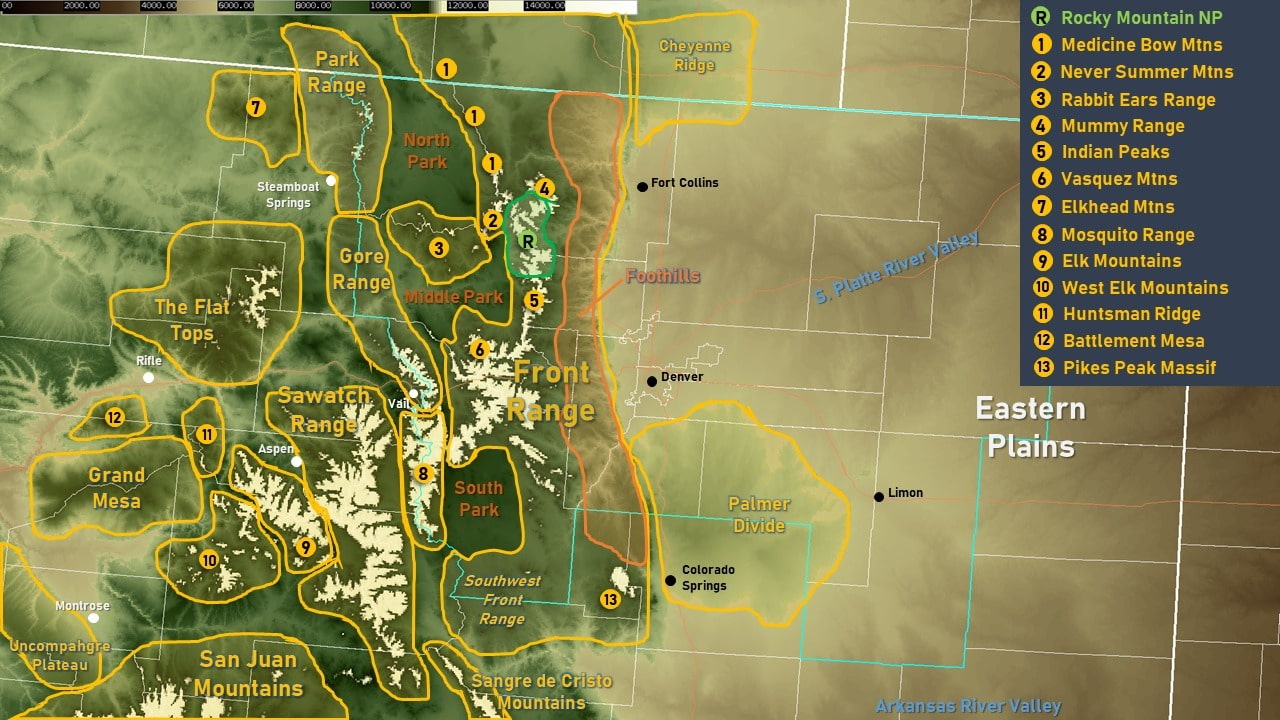
Within the grand expanse of the Rocky Mountains, several distinct sub-ranges stand out in Colorado, each offering unique landscapes and attractions:
-
The Front Range: This is perhaps the most accessible and densely populated part of the Colorado Rockies. It forms the eastern edge of the mountains, rising dramatically from the Great Plains. Here, you’ll find popular destinations like Rocky Mountain National Park, with its iconic Trail Ridge Road, and the famous ski resorts near Denver, such as Aspen and Vail. The Front Range features numerous fourteeners, peaks exceeding 14,000 feet, attracting hikers and climbers from around the globe.
-
The Sawatch Range: Located southwest of the Front Range, the Sawatch Range boasts the highest concentration of fourteeners in Colorado, including Mount Elbert, the state’s highest peak. This range is known for its rugged beauty and expansive alpine meadows, making it a prime destination for serious hikers and backpackers.
-
The San Juan Mountains: Situated in southwestern Colorado, the San Juan Mountains are renowned for their dramatic, jagged peaks, which are often considered among the most beautiful in the entire Rocky Mountains. These mountains are characterized by their volcanic origins, resulting in a unique geological makeup and breathtaking scenery, particularly evident in areas like the Million Dollar Highway and the historic mining towns of Ouray and Telluride.
-
The Gore Range: A more remote and less developed range, the Gore Range is prized by backcountry enthusiasts for its pristine wilderness and challenging terrain. It offers a sense of true solitude, with opportunities for advanced mountaineering and extended wilderness expeditions.
-
The Park Range: Stretching north of the Gore Range, the Park Range is home to the headwaters of several major rivers and features vast tracts of undeveloped land, contributing to Colorado’s reputation for abundant wildlife.
Experiencing the Majesty: Attractions and Activities in the Colorado Rockies
The Rocky Mountains of Colorado are more than just a geological formation; they are a vibrant ecosystem and a boundless playground for adventure. The state’s commitment to preserving its natural heritage ensures that visitors can engage with these magnificent landscapes in a multitude of ways.
National Parks and Forests: Sanctuaries of Natural Splendor
Colorado is blessed with several national parks and an extensive network of national forests that protect significant portions of the Rocky Mountains. These protected areas are the crown jewels of the state’s natural attractions, offering unparalleled opportunities for exploration and recreation.
-
Rocky Mountain National Park: As mentioned, this park is a must-visit. Its diverse ecosystems range from montane forests to alpine tundra. Trail Ridge Road, the highest continuous paved road in North America, offers spectacular panoramic views and access to numerous hiking trails, from gentle strolls around alpine lakes to challenging ascents of fourteeners. The park is a haven for wildlife, including elk, bighorn sheep, and marmots.
-
Mesa Verde National Park: While not exclusively mountainous in the same vein as the central Rockies, Mesa Verde National Park features a plateau that rises significantly, offering unique geological formations and the world-renowned cliff dwellings of the Ancestral Pueblo people. It represents a different, yet equally significant, aspect of the mountainous terrain in southern Colorado.

- National Forests: Vast expanses of Colorado are managed by the U.S. Forest Service as national forests, including the Arapaho National Forest, Pike National Forest, San Isabel National Forest, and White River National Forest. These forests provide extensive opportunities for hiking, camping, fishing, hunting, and off-road adventures across a multitude of mountain terrains.
Outdoor Adventures: From Gentle Hikes to Extreme Sports
The Rocky Mountains are synonymous with adventure. Whether you’re a seasoned athlete or a casual explorer, there’s an activity to suit every level of enthusiasm and expertise.
Hiking and Backpacking
Colorado is a hiker’s paradise. The state boasts over 50 peaks exceeding 14,000 feet, known as “fourteeners,” offering challenging but rewarding climbs. Trails range from accessible loops around serene alpine lakes like Emerald Lake and Dream Lake in Rocky Mountain National Park to multi-day backpacking treks through remote wilderness areas. Popular hiking destinations include the Maroon Bells, near Aspen, and the trails in the San Juan Mountains.
Skiing and Snowboarding
In winter, the Rocky Mountains transform into a world-class ski destination. Resorts like Aspen Snowmass, Vail Ski Resort, Breckenridge Ski Resort, and Winter Park Resort are renowned for their abundant snowfall, challenging terrain, and luxurious amenities. The snow quality in the Colorado Rockies is legendary, drawing skiers and snowboarders from across the globe.
Other Activities
Beyond hiking and skiing, the Rocky Mountains offer a wealth of other activities:
- Rock Climbing and Mountaineering: The rugged peaks and sheer rock faces provide challenging opportunities for experienced climbers.
- Mountain Biking: Numerous trails cater to all skill levels, offering thrilling descents and scenic climbs.
- Fishing: Pristine alpine lakes and rushing rivers are home to trout and other game fish, making Colorado a premier fishing destination.
- White-Water Rafting: Rivers like the Arkansas River and the Colorado River offer exhilarating rafting and kayaking experiences.
- Wildlife Viewing: From majestic elk to elusive mountain lions, the Rocky Mountains are teeming with wildlife, offering incredible opportunities for observation.
Planning Your Rocky Mountain Adventure in Colorado
A trip to the Rocky Mountains in Colorado requires thoughtful planning to ensure a safe and enjoyable experience. Understanding the unique environment and preparing accordingly is paramount.
Best Times to Visit
The best time to visit depends on your intended activities.
- Summer (June-August): Ideal for hiking, camping, mountain biking, and exploring national parks. Weather is generally pleasant, though afternoon thunderstorms are common at higher elevations.
- Fall (September-October): Offers spectacular autumn foliage, especially in the aspen groves, and fewer crowds. The crisp air is perfect for hiking.
- Winter (November-April): The prime season for skiing and snowboarding, with resorts open and abundant snowfall.
- Spring (May): A transitional period with melting snow, making some higher trails inaccessible. Lower elevations begin to bloom, but it’s generally less predictable for outdoor activities.
Preparing for High Altitude
Colorado is known as the “Mile High State” for a reason, with much of its mountainous terrain far exceeding that elevation. Altitude sickness can affect anyone, regardless of fitness level.
- Acclimatize: Spend a day or two at lower elevations upon arrival to allow your body to adjust.
- Stay Hydrated: Drink plenty of water, as dehydration can exacerbate altitude sickness symptoms.
- Limit Alcohol and Caffeine: These can contribute to dehydration and affect acclimatization.
- Pace Yourself: Avoid strenuous activity on your first day at high altitude.
- Listen to Your Body: If you experience symptoms like headache, nausea, or dizziness, descend to a lower elevation.
Essential Gear and Safety Tips
Proper preparation is crucial for a safe and comfortable mountain adventure.
- Layered Clothing: Mountain weather can change rapidly. Pack layers that can be added or removed as needed, including moisture-wicking base layers, insulating mid-layers, and a waterproof/windproof outer shell.
- Sturdy Footwear: Hiking boots with good ankle support are essential for navigating varied terrain.
- Sun Protection: The sun’s rays are stronger at higher altitudes. Bring sunscreen, sunglasses, and a hat.
- Navigation Tools: Carry a map, compass, and/or GPS device, especially when venturing off main trails.
- First-Aid Kit: A well-stocked kit is vital for treating minor injuries.
- Bear Safety: Inquire about bear safety guidelines in the areas you plan to visit and carry bear spray if recommended.
- Inform Others: Let someone know your hiking plans, including your route and expected return time.
The Rocky Mountains of Colorado offer an experience that is both humbling and exhilarating. Whether you seek the thrill of a challenging climb, the serenity of an alpine lake, or the wonder of untouched wilderness, this majestic range provides a backdrop for unforgettable journeys.
LifeOutOfTheBox is a participant in the Amazon Services LLC Associates Program, an affiliate advertising program designed to provide a means for sites to earn advertising fees by advertising and linking to Amazon.com. Amazon, the Amazon logo, AmazonSupply, and the AmazonSupply logo are trademarks of Amazon.com, Inc. or its affiliates. As an Amazon Associate we earn affiliate commissions from qualifying purchases.