
For travelers planning a journey to the neon-lit heart of the United States, understanding the logistics of arrival is the first step toward a seamless vacation. If you are searching for the primary gateway to the entertainment capital of the world, the answer is Harry Reid International Airport. Located just a few miles from the world-famous Las Vegas Strip, this airport serves as the central nervous system for tourism in Southern Nevada.
Whether you are arriving for a high-stakes poker tournament, a world-class residency show, or a desert hiking adventure, navigating this massive aviation hub is part of the quintessential Las Vegas experience. In this guide, we will explore the history behind the name, the layout of the terminals, and the unique amenities that make this airport a destination in its own right.

From McCarran to Harry Reid: The Evolution of the Gateway
For decades, the airport was known by a different name, and even today, many frequent flyers may still refer to it by its former moniker. Understanding the transition is essential for any traveler looking to stay current with local culture and navigation.
The Legacy of McCarran International Airport
For over 70 years, the facility was known as McCarran International Airport. Named after Pat McCarran, a former United States Senator from Nevada, the airport grew from a small airfield known as Alamo Airport into one of the busiest transit points in North America. George Crockett, the founder of the original airfield, initially established the site in 1942 to serve the growing needs of Clark County. As the city of Las Vegas exploded in popularity during the mid-20th century, the airport underwent massive expansions to accommodate the millions of tourists flocking to see the lights of Fremont Street Experience.
The Rebranding to Harry Reid International Airport
In late 2021, the airport officially underwent a name change to honor Harry Reid, the longest-serving senator in Nevada history and a former Senate Majority Leader. The rebranding was more than just a change in signage; it represented a shift toward a modern identity for the region. While the FAA code remains LAS, travelers will now see the name Harry Reid International Airport on all official documentation, ride-share apps, and flight boards. The transition involved updating thousands of signs across the airport’s 2,800-acre footprint, a monumental task funded entirely by private donations.
Navigating the Terminals and Infrastructure
Harry Reid International Airport is unique in its design, featuring two main terminal buildings that are not physically connected by a walkway. Knowing which terminal your airline uses is vital for ensuring you arrive at the correct check-in counter.
Terminal 1: The Domestic Workhorse
Terminal 1 is the older and busier of the two structures. It primarily handles domestic flights and is the main hub for Southwest Airlines, which accounts for a significant portion of the airport’s daily traffic. Within Terminal 1, travelers will find the A, B, and C gates. The terminal is designed with a massive central shopping and dining area known as the Esplanade. If you are flying with Allegiant Air, Spirit Airlines, or American Airlines, you will likely spend your time here.
Terminal 3: International Elegance and Modernity
Opened in 2012, Terminal 3 (often called T3) is a state-of-the-art facility that serves all international arrivals and several major domestic carriers such as United Airlines and Delta Air Lines. T3 was built to alleviate the congestion in Terminal 1 and offers a more streamlined experience with its own baggage claim, ticketing counters, and parking garage. For international travelers coming from London, Mexico City, or Vancouver, Terminal 3 provides a grand entrance into the United States with sweeping views of the desert mountains.
The Automated People Mover System
To connect the various gate areas with the main terminal hubs, the airport utilizes an advanced Automated People Mover. There are three separate tram lines:
- The Green Line: Connects Terminal 1 to the C Gates.
- The Blue Line: Connects Terminal 1 to the D Gates.
- The Red Line: Connects Terminal 3 to the D Gates.
The D Gates serve as a satellite concourse, meaning they are located in the middle of the airfield. Whether you are heading to a luxury stay at the Bellagio or a business meeting at Caesars Palace, the tram ride offers a great first look at the aircraft and the distant skyline of Paradise.
Essential Travel Services and Unique Airport Features
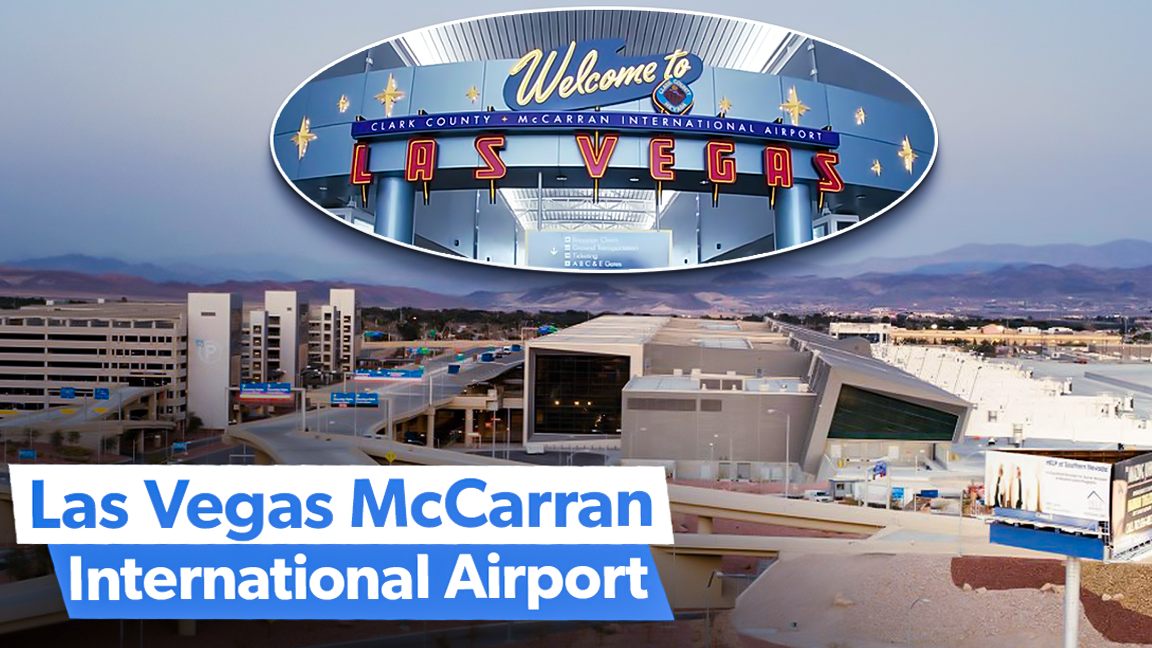
What sets Harry Reid International Airport apart from almost any other airport in the world is the immediate immersion into the local culture. From the moment you step off the plane, you are greeted by the sights and sounds of the city.
Slot Machines and the Gaming Culture
Las Vegas is one of the few places in the world where you can gamble while waiting for your luggage. The airport houses over 1,400 slot machines distributed throughout the terminals. These machines are a major source of revenue for the airport and provide a unique “only in Vegas” experience. Many travelers take a quick spin at a “Wheel of Fortune” machine before heading to the MGM Grand or Mandalay Bay.
Dining, Shopping, and Art
The airport is home to a wide array of dining options that reflect the culinary diversity of Nevada. From quick bites to sit-down restaurants, travelers can enjoy everything from gourmet burgers to high-end sushi. Additionally, the airport features an impressive collection of public art. Large-scale sculptures, such as the giant “Desert Bloom” and various depictions of local wildlife, adorn the walkways.
The Howard W. Cannon Aviation Museum
For those with a long layover, the Howard W. Cannon Aviation Museum offers a deep dive into the history of flight in Southern Nevada. The main exhibit is located on Level 2 above baggage claim in Terminal 1, with additional displays scattered throughout the gate areas. It chronicles the transition from early mail planes to the massive jetliners that now bring millions to the Las Vegas Strip.
Strategic Location and Transportation Options
One of the greatest advantages of Harry Reid International Airport is its proximity to the city center. Unlike many major cities where the airport is an hour away, the Las Vegas airport is practically on the doorstep of the major resorts.
Unmatched Proximity to the Strip
The airport is located in Paradise, just two miles from the southern end of the Las Vegas Strip. On a clear day, passengers landing on the northern runways are treated to a spectacular view of landmarks like the Luxor Hotel pyramid and the Excalibur Hotel towers. A taxi or ride-share from the airport to Mandalay Bay can take as little as ten minutes, making it one of the most convenient urban airports in the United States.
Rideshare, Taxis, and Shuttles
Transporting millions of people requires a sophisticated ground transportation network.
- Ride-share: Uber and Lyft operate out of designated parking levels in both Terminal 1 and Terminal 3.
- Taxis: Taxi lines are well-regulated with flat-rate zones to various parts of the Las Vegas Strip, ensuring price transparency for tourists.
- Public Transit: The Regional Transportation Commission of Southern Nevada (RTC) provides bus services that connect the airport to Downtown Las Vegas and other residential areas like Henderson and North Las Vegas.
The Consolidated Rental Car Center
If you plan on exploring beyond the city limits to visit the Hoover Dam or Red Rock Canyon National Conservation Area, you will likely need a rental car. The Consolidated Rental Car Center is located three miles away from the terminals. Frequent, free shuttle buses transport passengers from the baggage claim areas to this massive facility, which houses all major rental brands under one roof.
Tips for a Seamless Arrival and Departure
To make the most of your time in Nevada, it helps to know a few insider tips for navigating Harry Reid International Airport.
Handling Security and TSA PreCheck
As a high-traffic hub, security lines can fluctuate wildly. The Transportation Security Administration operates multiple checkpoints in both terminals. If you have TSA PreCheck or CLEAR, you will save significant time, especially during peak hours on Sunday afternoons when thousands of travelers are heading home to Los Angeles, Phoenix, or San Francisco.
Gateway to Regional Wonders
While most people think of the airport as the gateway to casinos, it is also the best starting point for exploring the majestic landscapes of the Southwest. Within a few hours’ drive, you can reach the Grand Canyon, Lake Mead, or the colorful Seven Magic Mountains. Many travelers fly into Las Vegas, spend a few nights at a resort like Wynn Las Vegas, and then rent a car to visit Boulder City or the Valley of Fire State Park.

Final Thoughts on Your Arrival
The name of the airport—Harry Reid International Airport—is more than just a label on a map. it is a symbol of the growth and resilience of a city that transformed from a desert outpost into a global icon. By understanding the layout, the history of the name, and the transportation options available, you can ensure that your Las Vegas adventure begins and ends on a high note. So, the next time someone asks, “What is the name of the Las Vegas airport?” you can answer with confidence and share a bit of the rich history that makes this travel hub so special.
LifeOutOfTheBox is a participant in the Amazon Services LLC Associates Program, an affiliate advertising program designed to provide a means for sites to earn advertising fees by advertising and linking to Amazon.com. Amazon, the Amazon logo, AmazonSupply, and the AmazonSupply logo are trademarks of Amazon.com, Inc. or its affiliates. As an Amazon Associate we earn affiliate commissions from qualifying purchases.