
When one hears the phrase “The New School” in relation to New York City, a few distinct images might come to mind: a vibrant hub of artistic and intellectual pursuit, a collection of architecturally significant buildings in Greenwich Village, or perhaps a diverse community of students and faculty shaping contemporary culture. This institution, officially The New School, is far more than just a university; it’s a dynamic force that has profoundly influenced the city’s landscape and the global discourse in education, art, and social change for over a century.
Established in 1919, its genesis was rooted in a progressive educational philosophy that challenged the traditional, staid academic models of its time. Founded by a group of educators and intellectuals seeking an alternative to the prevailing pedagogical norms, The New School was conceived as a place for free inquiry, critical thinking, and interdisciplinary learning. Its early years saw it attract prominent thinkers and artists, fostering an environment where challenging established norms was not just encouraged but expected. This spirit of innovation and intellectual rigor continues to define the institution today, making it a unique destination for those seeking an education that is both academically rigorous and deeply engaged with the world.
Architectural Identity and Urban Integration
The New School is intrinsically woven into the fabric of New York City, particularly within the historic and culturally rich neighborhood of Greenwich Village. Its campus is not a monolithic block but rather a distributed network of buildings, each with its own character and history, contributing to the unique streetscape of the area. This integration with the urban environment is a deliberate choice, fostering a sense of connection between the academic community and the vibrant city life surrounding it.
The University Center: A Modern Marvel
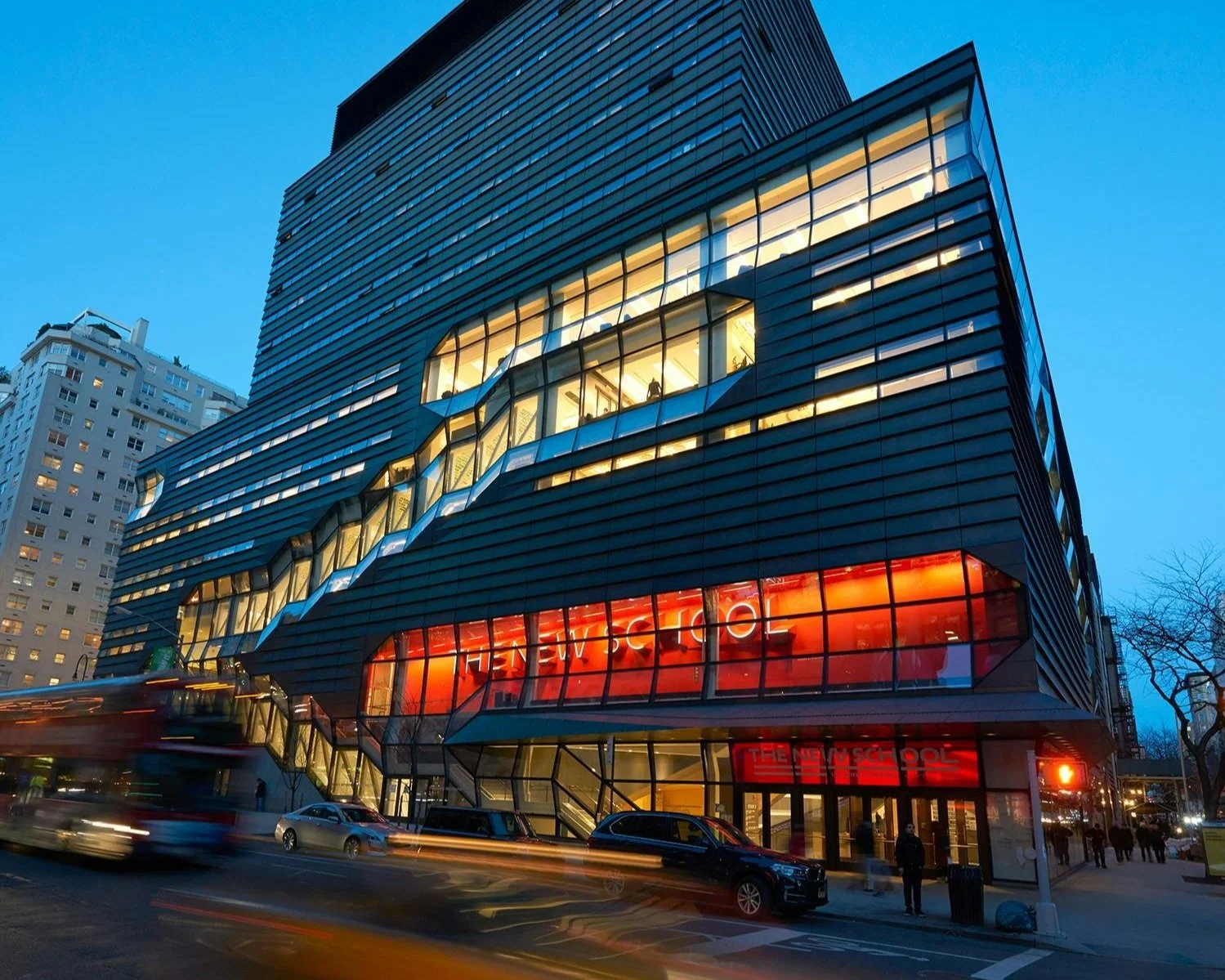
One of the most striking elements of The New School’s modern presence is the University Center. Designed by the renowned architectural firm Skidmore, Owings & Merrill (SOM), this building, which opened its doors in 2014, has become an iconic landmark on Fifth Avenue. Its distinctive wavy facade, composed of more than 1,000 unique glass panels, is a visual testament to the institution’s forward-thinking approach. The building is a hub of activity, housing classrooms, student lounges, administrative offices, and a public library, embodying the institution’s commitment to openness and community engagement. Its sustainable design, including a green roof and rainwater harvesting system, further underscores The New School’s dedication to environmental responsibility.
Historic Greenwich Village Buildings
Beyond the gleaming modernity of the University Center, The New School also occupies several historically significant buildings throughout Greenwich Village. These structures, many of which date back to the early 20th century, possess a charm and character that speaks to the neighborhood’s rich past. The Adam Clayton Powell Jr. Building, formerly a hotel, has been a part of the university since the 1930s and continues to house academic programs and administrative functions. The Olmsted Hall and the Albert List Hall are other examples of historic structures that have been repurposed and integrated into the university’s academic landscape, reflecting a conscious effort to preserve the architectural heritage of the area while serving contemporary educational needs.
Academic Prowess and Progressive Education
The New School is renowned for its commitment to progressive education, fostering a learning environment that encourages critical thinking, creativity, and social engagement. It is not a single entity but rather a constellation of specialized schools, each with its own focus and disciplinary strengths, all united by a shared ethos of innovation and relevance.
The Schools of The New School
The institution comprises several distinct schools, including:

-
Eugene Lang College of Liberal Arts: This is the undergraduate college, known for its rigorous liberal arts curriculum. Students here engage in interdisciplinary studies, with a strong emphasis on critical thinking, writing, and research. The college encourages students to design their own academic paths, fostering intellectual curiosity and independent learning.
-
Parsons School of Design: Globally recognized as one of the leading art and design schools, Parsons offers programs in fashion design, graphic design, illustration, photography, and many other creative fields. It has been instrumental in shaping contemporary design trends and has produced numerous influential artists and designers.
-
The New School for Social Research: This graduate school is a powerhouse of intellectual inquiry, with renowned departments in sociology, psychology, economics, philosophy, and political science. It continues the university’s tradition of challenging established theories and contributing to cutting-edge research in the social sciences.
-
College of Performing Arts: Comprising the School of Drama, the School of Music, and the School of Jazz, this college offers comprehensive training for aspiring actors, musicians, singers, and dancers, nurturing talent within the vibrant artistic ecosystem of New York City.
-
The New School for General Studies: This school provides flexible undergraduate and graduate programs for adult learners and working professionals, offering pathways to complete degrees or pursue new intellectual interests.
A Commitment to Social Impact
A defining characteristic of The New School is its enduring commitment to social justice and civic engagement. From its inception, the institution has been a platform for discussions on pressing social and political issues, attracting activists, policymakers, and scholars dedicated to creating positive change. This ethos is reflected in its curriculum, its public programming, and the work of its faculty and alumni, who are often at the forefront of movements for social reform and global understanding. The university actively encourages students to think critically about their roles in society and to use their knowledge and skills to address contemporary challenges.
A Cultural Nexus and Community Hub
The New School is more than just an academic institution; it is a vibrant cultural nexus and a community hub that contributes significantly to the intellectual and artistic life of New York City. Its presence in Greenwich Village further solidifies its role as a vital part of the city’s cultural landscape.
Public Lectures and Events
The university regularly hosts public lectures, panel discussions, exhibitions, and performances that are open to students, faculty, and the wider community. These events often feature distinguished speakers, artists, writers, and thinkers from around the globe, offering invaluable opportunities for learning and dialogue. From political debates to art critiques, from musical performances to literary readings, The New School provides a dynamic platform for exploring diverse perspectives and engaging with contemporary issues.

Impact on New York City Culture
The influence of The New School on New York City’s culture is undeniable. Alumni from Parsons School of Design have shaped fashion, graphic design, and visual arts for decades. Graduates from The New School for Social Research have made significant contributions to academia, public policy, and social activism. The performing arts graduates continue to enrich the theatrical and musical scenes of the city and beyond. The very presence of such a diverse and intellectually engaged student body and faculty enlivens the surrounding neighborhoods, fostering a unique atmosphere of creativity and critical inquiry.
In essence, “The New School” in New York represents a distinct approach to higher education, one that is deeply embedded in the urban environment, committed to social progress, and dedicated to fostering intellectual and creative excellence. It stands as a testament to the power of education to shape individuals, influence society, and contribute to the rich tapestry of a global city.
LifeOutOfTheBox is a participant in the Amazon Services LLC Associates Program, an affiliate advertising program designed to provide a means for sites to earn advertising fees by advertising and linking to Amazon.com. Amazon, the Amazon logo, AmazonSupply, and the AmazonSupply logo are trademarks of Amazon.com, Inc. or its affiliates. As an Amazon Associate we earn affiliate commissions from qualifying purchases.