
For many travelers, Guam is a tropical enigma—a vibrant dot in the vast Pacific Ocean that serves as the westernmost territory of the United States. When planning a journey to this island paradise, understanding the population of Guam is about much more than just numbers; it is about understanding the soul of the destination. As of the most recent census and demographic projections, the population of Guam stands at approximately 172,000 residents. While this number may seem small compared to major metropolitan hubs in Asia or the Americas, the density, diversity, and cultural richness of these residents create a tourism experience that is uniquely warm, bustling, and deeply rooted in tradition.
The Demographic Fabric of the Island
The demographic makeup of Guam is a fascinating study in history, migration, and resilience. For the visitor, this diversity is the primary driver behind the island’s world-class food scene, its colorful festivals, and its linguistic variety.
The Indigenous CHamoru Heartbeat
The CHamoru people are the indigenous inhabitants of the island and remain the largest ethnic group, making up roughly 37% of the total population. Their history on the island spans over 3,500 years, and their influence is palpable everywhere, from the ancient Latte Stone Park in Hagatna to the modern-day government offices. For tourists, interacting with the CHamoru population is the highlight of any trip. The “Hafa Adai” spirit—a local philosophy of hospitality and warmth—is a direct reflection of CHamoru values. Understanding that the indigenous population has maintained its identity through centuries of colonial influence from Spain, Japan, and the United States adds a layer of depth to every historical site you visit.
A Multi-Ethnic Mosaic
Following the CHamoru people, the next largest demographic group is of Filipino descent, accounting for about 26% of the population. This strong connection to the Philippines is a result of both historical trade routes during the Spanish colonial era and modern economic ties. This presence has heavily influenced the island’s flavors, making Guam a premier destination for fusion cuisine.
The remainder of the population is a blend of other Pacific Islanders from Micronesia, including Chuuk, Pohnpei, and Palau, as well as significant communities from Korea, China, and Vietnam. Approximately 7% of the population identifies as white, many of whom are affiliated with the United States military or the expatriate business community. This “melting pot” atmosphere ensures that even though you are on a small island in Oceania, you are experiencing a global crossroad.
How Population Distribution Shapes the Travel Experience
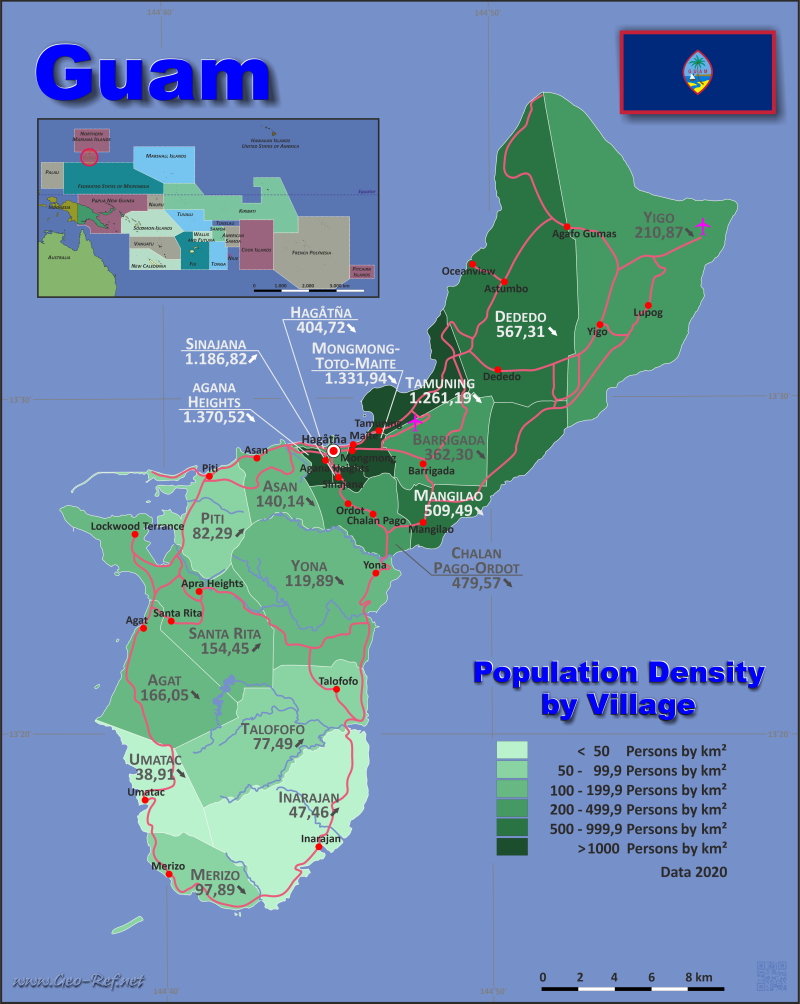
The way the population is spread across the island’s 212 square miles significantly dictates the “vibe” of different regions. Guam is divided into 19 villages, each with its own mayor and distinct personality.
The Urban Centers: Dededo, Tamuning, and Hagatna
If you are looking for the center of the action, you will find it in the northern and central villages. Dededo is the most populous village on the island, housing nearly 45,000 residents. While it is largely residential, it is a hub for local life, home to the famous Dededo Flea Market where tourists can mingle with locals over fresh coconut juice and grilled meats.
Tamuning is the economic heart of the island and the location of Tumon, the primary tourist district. While the permanent resident population here is smaller than in Dededo, the “daily population” swells significantly due to the influx of hotel employees, retail workers, and thousands of tourists. Hagatna, the capital city, serves as the administrative center. Despite having a small residential population, it is rich in landmarks like Dulce Nombre de Maria Cathedral Basilica and Plaza de Espana, making it a high-traffic area for cultural tourism.
The Tranquil South: Inalahan and Merizo
In contrast to the bustling north, the southern villages like Inalahan, Merizo, and Umatac have much smaller populations. These areas offer a glimpse into the more traditional, slower pace of island life. Traveling through these villages, you will see fewer high-rises and more family-owned farms and historical coastal homes. The lower population density here makes the south the perfect destination for nature lovers seeking the quiet beauty of Talofofo Falls or the panoramic views from Fort Nuestra Senora de la Soledad.

The Intersection of Tourism, Military, and Local Life
When discussing the population of Guam, one cannot ignore the significant “temporary” or “floating” populations that play a crucial role in the island’s ecosystem.
The Floating Population: Tourists and Military Personnel
At any given time, the number of people on Guam is significantly higher than the 172,000 residents. The United States military maintains a substantial presence through Andersen Air Force Base in the north and Naval Base Guam in the west. This brings thousands of service members and their families to the island on rotational assignments, contributing to the local economy and the demand for diverse services.
Simultaneously, Guam typically welcomes over 1.5 million tourists annually (pre-pandemic levels). Most visitors arrive from Japan and South Korea, drawn by the short flight times and the pristine beaches of Tumon Bay. This means that for every one local resident, there are often dozens of visitors exploring the island’s attractions, such as Two Lovers Point or the Underwater World aquarium.
Cultural Synergy and the Hafa Adai Spirit
The interaction between the resident population and these visiting groups has created a unique social synergy. Local businesses have adapted to cater to a global audience, leading to a bilingual or even trilingual environment where English, CHamoru, and Japanese are commonly heard. Despite the high ratio of visitors to residents, the local population is renowned for its welcoming nature. The sense of community is strong; it is common for a tourist who has lost their way to be offered help—or even an invitation to a family barbecue—by a local resident.
Essential Tourism Tips for Engaging with the Local Community
To truly appreciate Guam, a traveler should look beyond the statistics and engage with the people who make up the population.
Embracing the Village Fiestas
One of the best ways to experience the local population is by attending a Village Fiesta. Each of the 19 villages celebrates its patron saint’s feast day with a massive community celebration. These events are open to the public and are a masterclass in local culture. You will find tables laden with Red Rice, Chicken Kelaguen, and Finadene sauce. Attending a fiesta allows you to see the population at its most festive, showcasing the importance of family, faith, and food in Guam.
Respecting the Land and the People
While the population of Guam is hospitable, they are also deeply protective of their natural and historical resources. When visiting sites like Ritidian Point or hiking up Mount Lamlam, it is important to practice sustainable tourism. Many residents still practice traditional fishing and farming, and the health of the island’s reefs and jungles is vital to their way of life. By respecting “No Trespassing” signs on private family land and participating in organized tours like the Valley of the Latte Adventure Park, you contribute to the preservation of the island for its current and future population.

Navigating the Local Markets
For a genuine slice of life, visit the Chamorro Village Night Market in Hagatna every Wednesday night. Here, the diverse segments of the population converge. You will see CHamoru artisans selling hand-carved jewelry, Filipino vendors grilling skewers, and tourists from across the globe dancing to live island music. It is the best place to observe the demographics of Guam in motion—a harmonious, energetic, and welcoming community that may be small in numbers but is immense in heart.
In summary, the population of Guam is a resilient and diverse community of about 172,000 people who have turned their island into one of the most inviting destinations in the Pacific Ocean. Whether you are exploring the historical ruins left by Spain, shopping in the modern malls of Tamuning, or diving in the clear waters of Apra Harbor, it is the people of Guam who will ultimately make your trip unforgettable. Their history is etched into the landscape, and their future is being built through a careful balance of tradition and modern tourism. When you ask, “What is the population of Guam?” you aren’t just asking for a number; you are asking about a vibrant family that is ready to welcome you home.
LifeOutOfTheBox is a participant in the Amazon Services LLC Associates Program, an affiliate advertising program designed to provide a means for sites to earn advertising fees by advertising and linking to Amazon.com. Amazon, the Amazon logo, AmazonSupply, and the AmazonSupply logo are trademarks of Amazon.com, Inc. or its affiliates. As an Amazon Associate we earn affiliate commissions from qualifying purchases.