
California, a state renowned for its diverse landscapes, vibrant cities, and significant economic activity, also presents a complex and often misunderstood system of property taxation. Understanding “real estate tax” in California, more accurately termed property tax, is crucial for homeowners, investors, and even long-term renters who may indirectly bear the burden. This tax forms a substantial portion of funding for local governments, schools, and public services, making it a cornerstone of California’s fiscal framework. Unlike sales tax or income tax, which are levied on transactions or earnings, property tax is an ad valorem tax, meaning its value is based on the assessed value of the property itself.
The bedrock of California’s property tax system is Proposition 13, passed by voters in 1978. This landmark legislation fundamentally altered how properties are assessed and taxed, introducing several key provisions that continue to shape the landscape today. Prior to Proposition 13, property values were reassessed regularly, often leading to unpredictable and escalating tax bills. The initiative aimed to provide stability and predictability for property owners by limiting annual increases in assessed values and setting a cap on the overall tax rate.
Proposition 13: The Foundation of California Property Tax
Proposition 13 is arguably the most significant piece of legislation affecting property taxes in California. Its core tenets have remained largely intact, providing a framework that benefits long-term property owners while also presenting challenges for newcomers and those whose properties have appreciated significantly.
Assessed Value Limitations
One of the most impactful aspects of Proposition 13 is its limitation on how frequently property values can be reassessed. Generally, a property’s assessed value is locked in at its 1975 market value. This base year value is then allowed to increase by a maximum of 2% per year, regardless of actual market fluctuations. This means that a property purchased decades ago might have an assessed value substantially lower than its current market value. This provision has been instrumental in keeping property taxes stable for long-term residents, particularly in desirable areas like Los Angeles or San Francisco, where market values have soared.
The 1% Tax Rate Cap
Beyond limiting annual increases in assessed value, Proposition 13 also caps the property tax rate at 1% of the assessed value. This 1% tax rate is applied to all taxable property. However, it’s important to note that this 1% is a baseline. Additional taxes can be levied for specific purposes, such as funding local school bonds or infrastructure improvements, often referred to as special assessments. These additional levies are voted on by the local electorate and can increase the effective tax rate beyond the 1% cap.
Reassessment Triggers
While the base year value is generally protected, Proposition 13 does allow for reassessment under specific circumstances. The most common trigger for a reassessment to current market value is a change in ownership. This typically occurs when a property is sold or transferred to a new owner. Other events that can trigger a reassessment include the completion of new construction. However, there are exceptions to these triggers. For instance, transfers between spouses or certain family members may not result in a reassessment, preserving the existing tax basis.
How Property Tax is Calculated in California
The calculation of property tax in California, while based on the principles of Proposition 13, involves several steps and considerations. Understanding this process is key to comprehending your annual tax bill.
Determining the Assessed Value
The first step in calculating property tax is determining the assessed value of the property. As established by Proposition 13, this is generally based on the property’s market value as of March 1, 1975, plus an annual inflation adjustment of no more than 2%. If a change in ownership has occurred since 1975, or if new construction has been completed, the property will be reassessed to its market value as of the date of the change in ownership or completion of new construction. This new base year value will then be subject to the annual 2% inflation adjustment.
For properties that have undergone reassessment, the assessor’s office will provide a Notice of Assessed Value. It’s crucial to review this notice for accuracy, as errors can lead to incorrect tax assessments.
Applying the Tax Rate
Once the assessed value is determined, the statutory tax rate of 1% is applied. For example, if a property has an assessed value of $500,000, the base property tax would be $5,000 ($500,000 x 0.01).
Accounting for Special Assessments and Levies
As mentioned earlier, the 1% rate is a floor, not a ceiling. Many local jurisdictions in California have voter-approved special assessments and levies that are added to the property tax bill. These can fund a variety of local services, including:

- School Bonds: Many school districts rely on voter-approved bonds to fund new construction, renovations, and technology upgrades.
- County and City Bonds: These can be for infrastructure projects like roads, sewers, or public facilities.
- Special Service Districts: These might fund local improvements like street lighting, landscaping, or security services within specific neighborhoods.
These additional levies are calculated based on the property’s assessed value and are often proportional to the benefit received by the property. The sum of the 1% base rate and any applicable special assessments constitutes the total property tax rate for that specific parcel.
Property Tax Exemptions and Relief Programs
While property taxes can be a significant financial commitment, California offers several exemptions and relief programs designed to ease the burden for certain property owners. These programs are crucial for making homeownership more accessible and sustainable for various segments of the population.
Homeowner’s Exemption
The most common exemption is the Homeowner’s Exemption. This provides a reduction of up to $7,000 from the assessed value of a qualifying principal residence. This means that the property owner will pay property taxes on $7,000 less of their assessed value. For a property with a 1% tax rate, this translates to an annual saving of $70. To qualify, the property must be the owner’s primary residence, and the exemption must be claimed annually by filing a simple form with the county assessor’s office.
Disabled Veterans’ Exemption
California offers a property tax exemption for disabled veterans. This exemption allows eligible disabled veterans to receive a reduction of up to $169,896 (this figure is adjusted annually for inflation) from their property’s assessed value if they own and occupy the property as their principal residence. For veterans with a service-connected disability of 100%, a higher exemption amount is available.
Other Exemptions and Relief
Beyond the homeowner’s and disabled veterans’ exemptions, other programs exist, though they are more specialized:
- Senior Citizens’ Property Tax Deferral Program: This program allows senior citizens who meet certain income and equity requirements to defer payment of their property taxes. The deferred taxes, along with accrued interest, become a lien on the property and are repaid upon the sale of the property or the death of the owner.
- Homeowners’ Property Tax Assistance (Renter’s Credit): While not a direct property tax exemption, this program provides a credit on income taxes for renters who qualify, indirectly assisting with housing costs.
- Possessory Interest in Tax-Exempt Property: This applies to individuals or entities who have a right to use or possess tax-exempt public property, such as a concessionaire operating within a State Park. They are still subject to property tax on their “possessory interest.”
Administration and Payment of Property Taxes
The administration and payment of property taxes in California are managed at the county level, with specific roles played by the County Assessor and the County Tax Collector.
The Role of the County Assessor
The County Assessor is responsible for identifying all taxable property within their county, determining its assessed value, and applying any applicable exemptions. They maintain property records, conduct regular reappraisals (when triggered), and are the primary point of contact for questions regarding property valuation. It is essential for property owners to communicate with their local assessor’s office regarding any changes that might affect their property’s valuation or eligibility for exemptions.
The Role of the County Tax Collector
The County Tax Collector is responsible for billing and collecting property taxes. Tax bills are typically mailed out once a year, usually in the fall. Property taxes in California are usually paid in two installments, with the first installment typically due by December 10th and the second installment by April 10th of the following year. Failure to pay taxes by the due dates can result in penalties and interest. In cases of prolonged non-payment, the property can eventually be subject to tax foreclosure and sale by the county.
Understanding Your Property Tax Bill
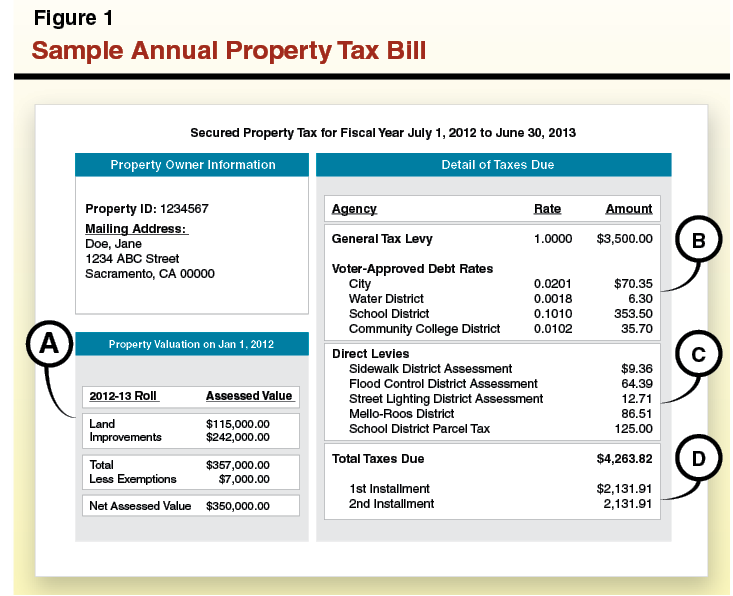
A typical California property tax bill will detail:
- The property’s assessed value.
- The County Assessor’s parcel number.
- The current year’s tax amount.
- Any exemptions applied.
- The breakdown of taxes by taxing agency (e.g., county, city, school district, special districts).
- The due dates for each installment.
It is crucial to review this bill carefully and understand each component to ensure accuracy and avoid late payments. For those who have recently purchased property in California, such as in San Diego or the Bay Area, understanding these nuances is paramount to managing their new financial responsibilities. The property tax system, while complex, is a fundamental aspect of civic responsibility and the funding of essential public services throughout the Golden State.
LifeOutOfTheBox is a participant in the Amazon Services LLC Associates Program, an affiliate advertising program designed to provide a means for sites to earn advertising fees by advertising and linking to Amazon.com. Amazon, the Amazon logo, AmazonSupply, and the AmazonSupply logo are trademarks of Amazon.com, Inc. or its affiliates. As an Amazon Associate we earn affiliate commissions from qualifying purchases.