
California, often hailed as the Golden State, beckons with its unparalleled beauty, from the sun-drenched beaches of Southern California to the majestic redwoods of the north, and the vibrant cityscapes of Los Angeles and San Francisco. It’s a dream destination for travelers seeking diverse experiences, from world-class resorts and luxury travel to rugged outdoor adventures and budget-friendly trips. For those contemplating a move, whether as a digital nomad, an expatriate, or simply seeking a new lifestyle, California offers an irresistible blend of innovation, culture, and natural wonder.
However, alongside the allure of its famous landmarks, exquisite cuisine, and thriving arts scenes, understanding the financial landscape is crucial for anyone planning an extended stay or considering residency. A significant aspect of this financial reality is the state income tax. While the thought of taxes might seem daunting or unglamorous compared to planning a trip to Disneyland Resort or a wine tour in Napa Valley, a clear grasp of California’s income tax structure is essential for smart budgeting, financial planning, and making the most of your California experience, regardless of whether you’re a tourist, a seasonal worker, or a permanent resident.
This comprehensive guide will demystify California’s state income tax, exploring its implications for various lifestyles and travel plans. We’ll delve into how it affects different income levels, what visitors need to know versus residents, and how it fits into the broader cost of living in this popular United States state.
Understanding California’s Tax Landscape for Travelers and Residents
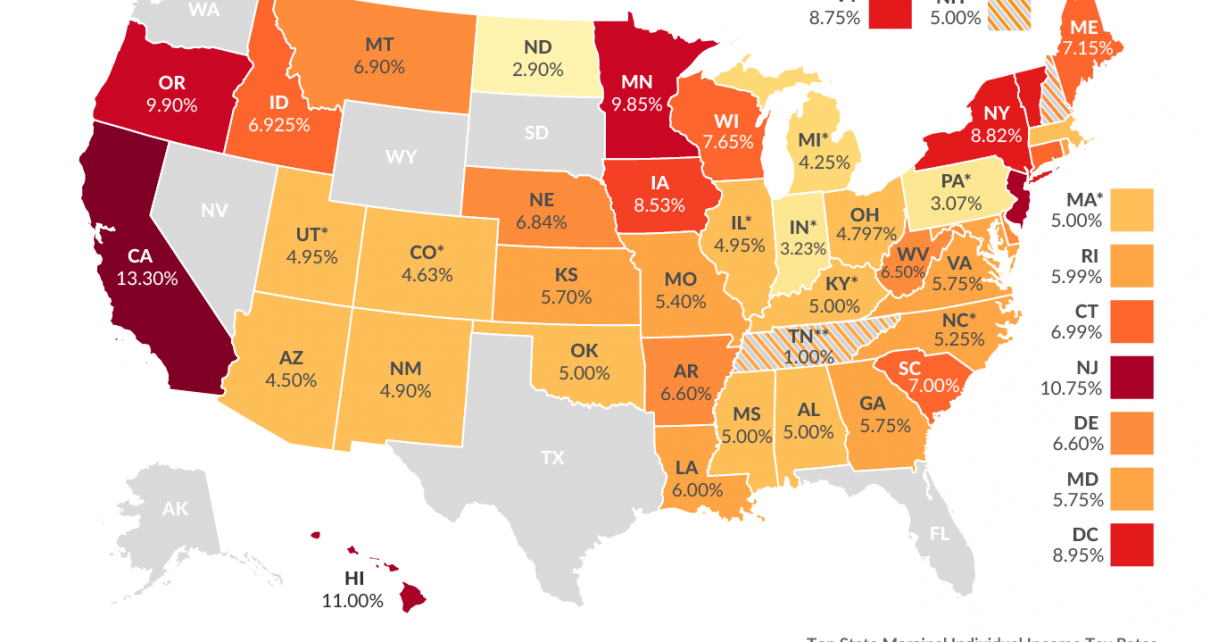
California operates under a progressive state income tax system, meaning that as your income increases, so does your tax rate. This system is designed to distribute the tax burden based on an individual’s ability to pay, but it also means that California is known for having some of the highest state income tax rates in the nation. For anyone considering the Golden State for an extended period, or even just calculating the cost of a long-term luxurious stay, understanding these rates is paramount.
The Golden State’s Progressive Tax System Explained
California’s income tax rates range from 1% to 12.3%, with an additional 1% surcharge for taxable incomes over $1 million, effectively pushing the top marginal rate to 13.3%. These rates are subject to annual adjustments for inflation, which means the income brackets shift slightly each year. The tax applies to all income earned by residents, regardless of where it was earned, and to income earned from California sources by non-residents. This distinction is crucial for travelers, digital nomads, and those with multi-state income streams.
For example, a family planning an extended stay in Anaheim to visit Disneyland Resort or a couple enjoying a long-term luxury resort experience in Palm Springs might not be directly subject to California income tax on their out-of-state earnings unless they establish residency. However, if they earn income within California during their stay – perhaps through a temporary job, freelance work for a California-based company, or even rental income from a California property – that income would be taxable by the state.
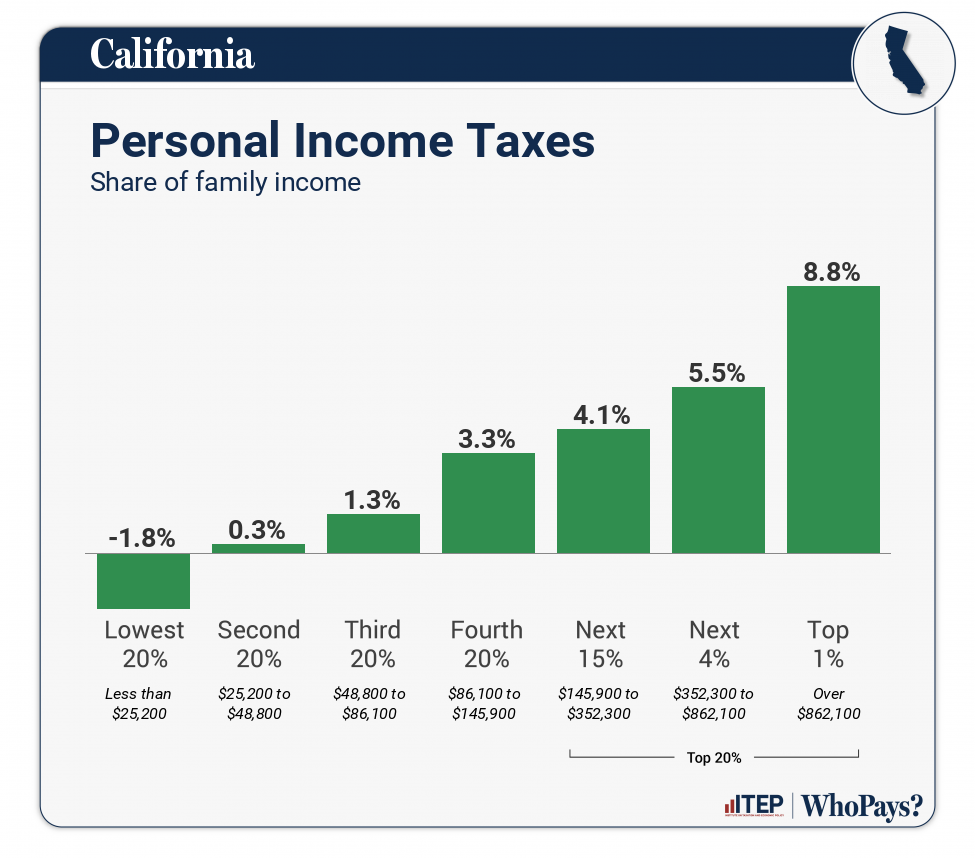
The progressive nature of the tax system means that individuals with higher taxable incomes fall into higher tax brackets. For a single filer in 2023, for instance, taxable income up to around $10,000 would be taxed at lower rates (1-2%), while income exceeding $60,000 starts to see rates climbing towards 9.3%, and those earning over $600,000 could reach the 11.3% bracket. This structure significantly impacts high-income earners and those considering a lavish lifestyle in California, whether residing in a penthouse in San Francisco or a sprawling villa in Malibu.
How State Income Tax Impacts Different Lifestyles in California
The state income tax system profoundly influences financial planning for various lifestyles in California:
- Luxury Travelers and High-Income Earners: For those indulging in luxury travel, staying at five-star hotels like The Ritz-Carlton, Laguna Niguel, or considering purchasing a second home, the higher tax rates become a significant factor. If they establish residency or earn substantial income from California sources, a larger portion of their earnings will go towards state taxes. This requires careful financial planning, potentially with the help of a tax advisor familiar with California tax laws, especially for those with complex investment portfolios or businesses.
- Budget Travelers and Seasonal Workers: Individuals on a tighter budget, perhaps exploring hostels in San Diego or taking on seasonal work in a national park like Yosemite National Park, will find their earnings taxed at lower marginal rates. While the percentages are smaller, the impact on their more limited income can still be significant. It’s crucial for them to understand their gross vs. net income to accurately budget for accommodation, food, and activities.
- Digital Nomads and Remote Workers: The rise of remote work has made California an attractive hub for digital nomads. However, the question of residency is paramount. If a digital nomad establishes residency in California – generally defined by factors like having a permanent home, registering to vote, or obtaining a California driver’s license – they will be subject to state income tax on all their worldwide income, regardless of where their clients or employers are located. For those maintaining residency elsewhere but performing work within California, they may be subject to tax on the income earned while physically present in the state. This complex area often requires professional guidance to avoid double taxation or non-compliance.
- Families and Business Travelers: Families planning long-term stays or business professionals on extended assignments need to consider how California income tax will affect their overall budget. For families, deductions and credits for dependents can provide some relief, but the general cost of living combined with income tax can still be substantial. Business travelers earning commissions or bonuses while working in California should consult with their company’s tax department or a personal advisor to understand their obligations.
Navigating California’s Tax Implications for Your Stay
Whether you’re planning a vacation, a temporary work assignment, or a permanent relocation, understanding the distinction between short-term visits and establishing residency is critical to navigating California’s income tax laws effectively.
Short-Term Visits vs. Residency: What You Need to Know
The key to California income tax is residency. Generally, non-residents are taxed only on income derived from California sources. Residents, however, are taxed on all income, regardless of its source. Determining residency can be complex, as California has broad definitions.
- Non-Residents: If you are visiting California for tourism, staying in hotels or vacation rentals in places like Santa Barbara or Monterey, and maintaining your primary residence elsewhere, you are generally considered a non-resident. If you don’t earn any income from California sources (e.g., you are paid by an out-of-state employer for work performed outside California), you typically won’t owe California state income tax. However, if you perform services in California (e.g., a performer at a venue in Los Angeles, a consultant working on-site in Silicon Valley), that specific income becomes subject to California tax.
- Residents: You are a California resident for income tax purposes if you are in California for other than a temporary or transitory purpose. This is a subjective test that considers all facts and circumstances, not just how many days you spend in the state. Factors include the location of your permanent home, family, business ties, professional licenses, and even where your valuable items are located. Someone who moves to San Jose for a tech job and sets up a household, even if they frequently travel for work, would likely be considered a California resident.
- Part-Year Residents: If you move into or out of California during the tax year, you are a part-year resident. You’ll file taxes as a resident for the portion of the year you resided in California (taxed on all income) and as a non-resident for the remainder (taxed only on California-sourced income).
For many travelers enjoying extended trips to iconic places like the Golden Gate Bridge or Universal Studios Hollywood, the issue of residency might not arise if their visit is purely for leisure and doesn’t involve earning income within the state. However, for digital nomads, retired individuals spending half the year in Palm Springs and half elsewhere, or those working temporarily, understanding these definitions is vital.
Financial Planning for Expats, Digital Nomads, and Long-Term Visitors
Strategic financial planning is indispensable for those whose lifestyle bridges multiple locations or who contemplate a significant move to California.
- Establish Clear Residency Intent: If you don’t intend to be a California resident, ensure your actions align with this. Maintain your primary residence elsewhere, register your vehicles out of state, and avoid obtaining a California driver’s license if possible. Document your travel and stays.
- Track Income Sources Carefully: Digital nomads and remote workers should meticulously track where their income is earned. If you perform work while physically present in California for a California client or company, that income is California-sourced and taxable, even if you are a non-resident.
- Understand Reciprocity Agreements (or Lack Thereof): Unlike some states, California does not have reciprocity agreements with other states. This means if you earn income in California but live in another state, you might owe tax to both California and your home state. You can usually claim a tax credit in your home state for taxes paid to California to avoid double taxation, but careful planning is still needed.
- Consult a Tax Professional: For complex situations, especially involving high income, international travel, or intricate business structures, consulting with a tax attorney or certified public accountant specializing in California tax law is highly recommended. They can provide personalized advice on residency rules, deductions, credits, and strategies to minimize your tax burden while remaining compliant. This is particularly true for expats moving to cities like Oakland or Sacramento for work.
Beyond Income Tax: Other Financial Considerations for Your California Experience
While state income tax is a major financial consideration, it’s just one piece of the puzzle when budgeting for your California adventure or lifestyle. The Golden State has other taxes and costs that significantly impact your overall expenses.
Sales Tax, Property Tax, and Other Costs of Living
- Sales Tax: California has a statewide sales tax rate, which can be supplemented by local district taxes. This means that when you purchase goods or services, whether it’s a souvenir from the Hollywood Walk of Fame, groceries for your Airbnb in Santa Monica, or a new surfboard in Huntington Beach, you’ll pay sales tax. The base rate is 7.25%, but with local additions, it can often reach 9% or even 10.25% in some areas, significantly affecting your budget for shopping and daily expenses.
- Property Tax: For those considering long-term accommodation options, such as purchasing a home or a vacation property, California’s property taxes are an important factor. While Proposition 13 limits the annual increase in assessed value, property taxes are calculated based on the purchase price of the property, with an average effective rate hovering around 0.7-0.8% of the assessed value, though this varies by county. Given California’s high property values in desirable areas like Beverly Hills or La Jolla, the annual property tax bill can be substantial.
- Gasoline Tax: California has one of the highest gasoline taxes in the United States. If your California experience involves extensive road trips along Highway 1 or exploring remote regions around Lake Tahoe, be prepared for higher fuel costs.
- Cost of Living: Beyond taxes, the overall cost of living in California is notoriously high, especially in major metropolitan areas like San Francisco, Los Angeles, and San Jose. Accommodation, whether hotels, resorts, or long-term rentals, tends to be more expensive than the national average. Dining out, entertainment, and even basic utilities can also contribute to a higher cost of living. This impacts everything from choosing a budget hotel to affording a luxury suite.
Maximizing Your California Adventure: Budgeting and Lifestyle Tips
To truly enjoy all that California has to offer, from exploring Alcatraz Island to surfing off Santa Monica Pier, careful financial planning is key.
- Budgeting for All Expenses: Factor in not just your accommodation and activities, but also anticipated sales tax on purchases, higher gas prices if you’re driving, and potential income tax if you plan to earn money within the state. For longer stays, consider utilities, groceries, and local transportation costs.
- Choosing Accommodation Wisely: The choice of accommodation greatly impacts your budget. While luxury hotels and resorts offer unparalleled amenities, exploring apartments, villas, or boutique hotels can provide a more localized experience and potentially reduce costs. For budget travelers, hostels and campgrounds, especially near national parks like Death Valley National Park, offer affordable alternatives. Utilizing booking sites with robust comparison tools can help find the best deals.
- Embrace Public Transportation (Where Available): In cities like San Francisco and Los Angeles, opting for public transportation can save on gas, parking, and rental car costs.
- Seek Out Free and Low-Cost Attractions: California is rich with free attractions, from its stunning beaches and hiking trails to numerous free museums on specific days. Balancing paid attractions with these free experiences can significantly enhance your travel budget.
- Consider Off-Peak Travel: Traveling during the shoulder seasons or off-peak times can often lead to lower prices for flights, accommodation, and even some activities.
- Plan for Health Insurance: For long-term visitors, expats, or digital nomads, ensuring adequate health insurance coverage is crucial. Healthcare costs in the United States can be very high, and an unexpected medical emergency could severely impact your financial stability.
In conclusion, California’s state income tax, with its progressive structure and relatively high rates, is an undeniable aspect of the Golden State’s financial environment. While it might seem daunting, especially for those accustomed to lower tax burdens, a thorough understanding of its mechanisms, coupled with smart financial planning, can empower you to confidently navigate your travel, accommodation, and lifestyle choices. By considering all aspects of the cost of living and seeking expert advice where necessary, you can fully embrace the incredible experiences and opportunities that California has to offer, making your journey truly unforgettable.
LifeOutOfTheBox is a participant in the Amazon Services LLC Associates Program, an affiliate advertising program designed to provide a means for sites to earn advertising fees by advertising and linking to Amazon.com. Amazon, the Amazon logo, AmazonSupply, and the AmazonSupply logo are trademarks of Amazon.com, Inc. or its affiliates. As an Amazon Associate we earn affiliate commissions from qualifying purchases.