
The skyline of Los Angeles is one of the most recognizable in the United States, characterized by its unique blend of mid-century modernism and contemporary glass giants. For decades, the horizon of the “City of Angels” was defined by a specific silhouette: a collection of flat-topped skyscrapers dictated by strict municipal fire codes. However, as the city evolved and engineering prowess advanced, the vertical limits of California were pushed to new heights. To answer the question of what is the tallest building in Los Angeles, one must look at the Wilshire Grand Center, a structural marvel that redefined the city’s aesthetic.
The Reign of the Wilshire Grand Center
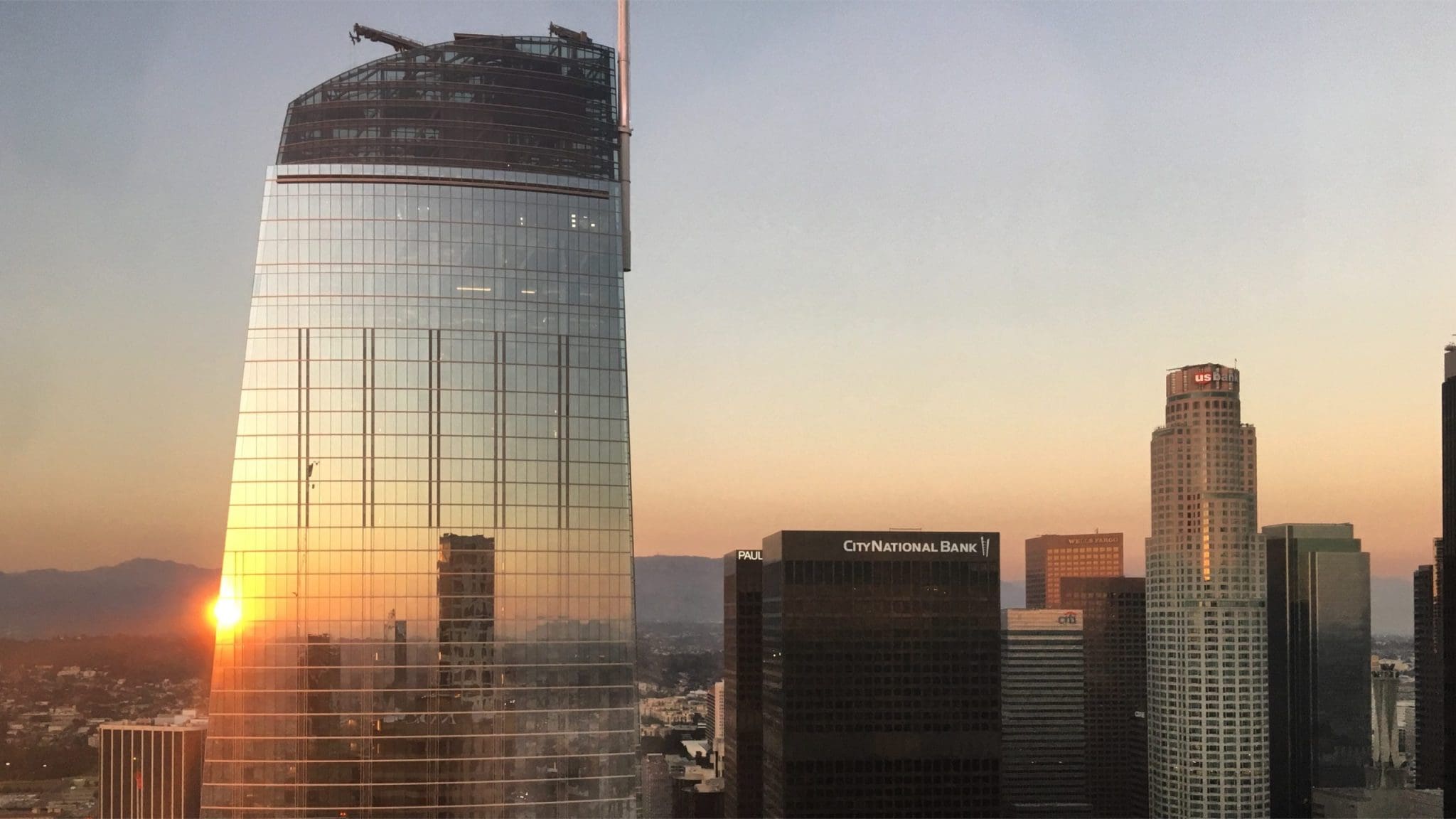
Standing at a staggering height of 1,100 feet (335 meters), the Wilshire Grand Center currently holds the title of the tallest building in Los Angeles. Completed in 2017, this skyscraper did more than just break height records; it broke a long-standing architectural tradition in the city. Located in the heart of Financial District, it serves as a beacon of modern urban development.
Architectural Innovation and the Iconic Spire
The most striking feature of the Wilshire Grand Center is its sail-shaped crown and the decorative spire that extends into the clouds. Before this building’s construction, Los Angeles building codes required every high-rise to have a flat roof to accommodate emergency helicopter landings. Through a special arrangement and advances in fire safety technology, the architects were permitted to depart from this rule, allowing for the first “pointed” skyscraper in the modern skyline of Downtown Los Angeles.
The spire itself accounts for a significant portion of the building’s official height. While some architectural purists argue about whether a spire should count toward a building’s total height, the Council on Tall Buildings and Urban Habitat recognizes it as an integral part of the structure. This architectural flourish gives the building a distinct profile, especially at night when it is illuminated by programmable LED lighting that can change colors to mark holidays or local sporting events.
A Multi-Use Vertical City
The Wilshire Grand Center is not just an office building; it is a mixed-use “vertical city.” It houses the InterContinental Los Angeles Downtown, which features a unique “sky lobby” on the 70th floor. This allows guests to check in while gazing out over the vast expanse of the Pacific Ocean and the Santa Monica Mountains.
In addition to the luxury hotel, the building contains high-end office spaces and several world-class restaurants. Its presence has revitalized the surrounding blocks, cementing its status as a central landmark for both business professionals and tourists. The building’s design also emphasizes sustainability, having earned LEED Gold certification, proving that massive scale and environmental responsibility can go hand in hand.
The Legacy of the U.S. Bank Tower
Before the rise of the Wilshire Grand Center, the title of the tallest building in Los Angeles belonged to the U.S. Bank Tower. Rising 1,018 feet (310 meters) above the sidewalk, it held the crown for nearly three decades, from its completion in 1989 until 2017. Even today, it remains one of the most beloved landmarks in the United States due to its unique shape and historical significance.
Breaking the Flat-Roof Tradition
The U.S. Bank Tower is a prime example of the “helipad era” of Los Angeles architecture. Despite the requirement for a flat roof, the designers incorporated a series of setbacks and a circular crown that made it look far more dynamic than a simple rectangular block. For many years, it was the tallest building in the world with a roof-top helipad.
Its location at 633 West Fifth Street makes it a focal point of the city’s commercial core. The building’s granite and glass facade reflects the bright California sun, and its presence is so dominant that it is visible from miles away, including from the heights of the Griffith Observatory.
Pop Culture and the “Library Tower”
Often referred to by locals as the “Library Tower” because of its proximity to the Los Angeles Central Library, the U.S. Bank Tower has appeared in countless films and television shows. Perhaps its most famous cinematic appearance was in the film “Independence Day,” where it was the first building targeted by the invading spacecraft.

For a brief period, the tower hosted a unique attraction called the OUE Skyspace LA, which featured an outdoor glass slide attached to the exterior of the building. While the attraction has since closed, the tower continues to be an essential part of the city’s architectural identity, representing the late-20th-century boom of Downtown Los Angeles.
Defining the Downtown Los Angeles Skyline
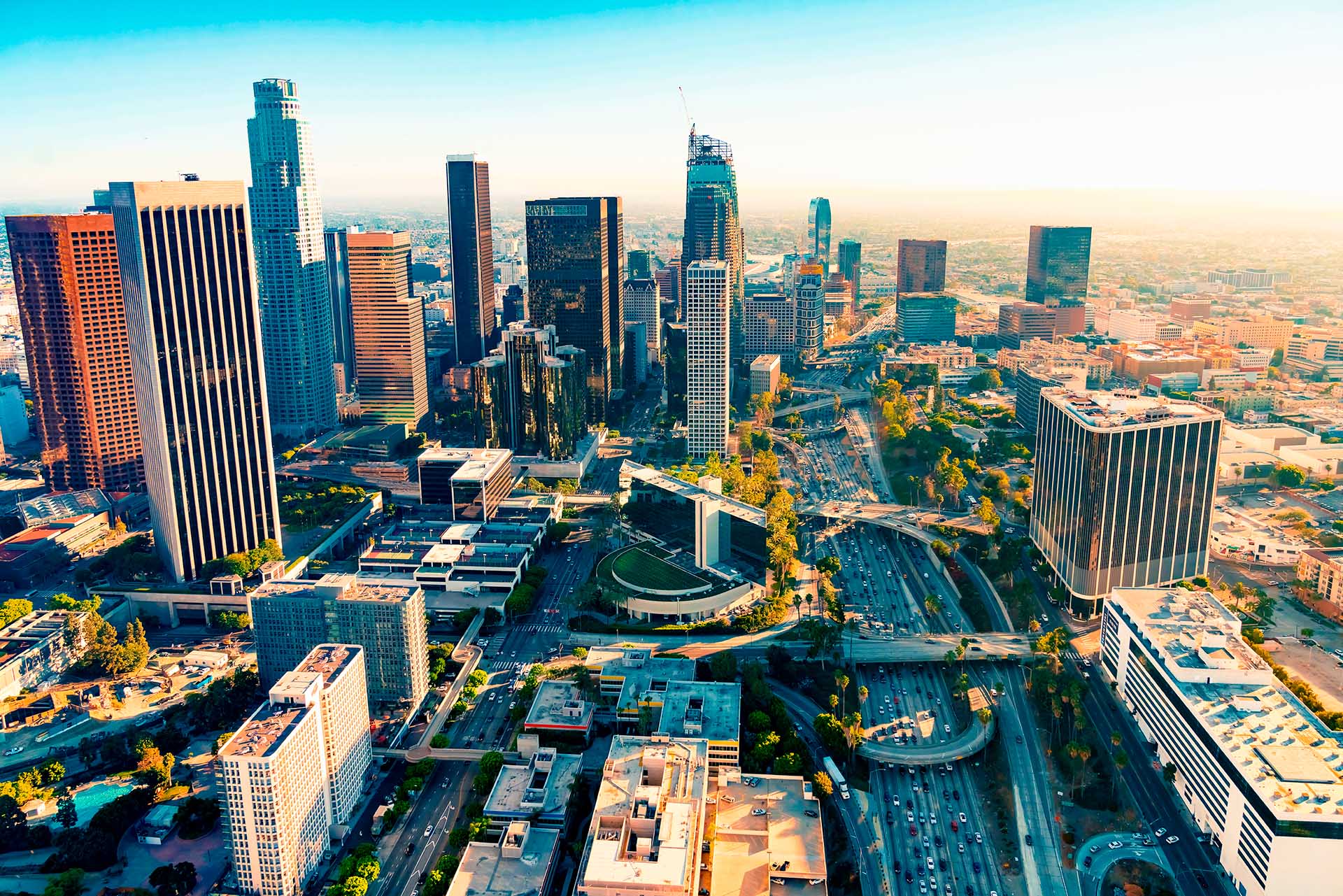
The skyline of Los Angeles is a narrative of different eras. While the Wilshire Grand Center and the U.S. Bank Tower are the two tallest, other landmarks contribute significantly to the city’s vertical identity. These structures represent the growth of the city as a global hub for finance, law, and entertainment.
The Aon Center: A Monolith of the 70s
Standing at 858 feet, the Aon Center was the tallest building in the city before the U.S. Bank Tower was constructed. Completed in 1973, it is a classic example of the International Style—a slender, black, rectangular monolith that exudes a sense of corporate power and permanence. Its understated elegance provides a stark contrast to the more decorative glass towers that have risen around it in recent years.
Two California Plaza and the Bunker Hill Revival
Two California Plaza, reaching 750 feet, is another vital component of the Bunker Hill district. Part of a larger master plan to revitalize the area, this tower represents the shift toward more modern, glass-heavy designs in the 1990s. Nearby, other structures like the Gas Company Tower and the Bank of America Plaza fill out the dense cluster of high-rises that make the skyline look so impressive from the Hollywood Hills.
The density of this area is further enhanced by entertainment complexes like L.A. Live, which includes the Ritz-Carlton Los Angeles. These buildings have transformed Downtown Los Angeles from a purely 9-to-5 business district into a vibrant, 24-hour destination for culture and lifestyle.
Engineering Challenges in Earthquake Country
Building tall in Los Angeles is far more complex than in cities like New York City or Chicago. The city sits near the San Andreas Fault, making seismic safety the primary concern for any landmark project. The history of the tallest buildings in Los Angeles is fundamentally a history of earthquake engineering.
Seismic Safety and Structural Integrity
Skyscrapers like the Wilshire Grand Center utilize advanced “buckling-restrained braces” and massive concrete cores to absorb and dissipate energy during a seismic event. Instead of being rigid, these buildings are designed to be flexible, swaying safely during an earthquake to prevent structural failure. This engineering necessity is why many Los Angeles towers have a wider base or specialized dampening systems tucked away behind their sleek facades.
The Evolution of Fire Codes and Helipads
For years, the “Regulation 10” rule meant that every building over 75 feet had to have a flat roof for helicopter access. This was a response to tragic high-rise fires in the mid-20th century. However, as firefighting technology improved—specifically internal sprinkler systems and dedicated fire elevators—the city realized that the flat-roof requirement was limiting architectural creativity. The Wilshire Grand Center was the first major project to utilize a “performance-based” fire safety design, paving the way for a more diverse and interesting skyline in the future.
Looking Ahead: The Future of High-Rises in the City of Angels
While the Wilshire Grand Center currently sits at the top, the skyline of Los Angeles is never static. New projects are constantly being proposed that seek to redefine the urban experience. From the luxury condos of Century City to the creative hubs in the Arts District, the city is growing in every direction.
Landmarks like the Hollywood Sign remain the historical soul of the city, but the soaring towers of the financial core represent its economic future. As Los Angeles prepares for global events like the 2028 Olympic Games, the pressure to build taller, smarter, and more sustainably continues to grow.
The tallest buildings in Los Angeles are more than just steel and glass; they are symbols of a city that is constantly reinventing itself. Whether you are looking up from the historic streets of Old Bank District or viewing the skyline from a distance in Santa Monica, these landmarks stand as a testament to the ambition and resilience of the United States west coast. The Wilshire Grand Center may hold the crown today, but in a city as dynamic as Los Angeles, the sky is truly the only limit.
LifeOutOfTheBox is a participant in the Amazon Services LLC Associates Program, an affiliate advertising program designed to provide a means for sites to earn advertising fees by advertising and linking to Amazon.com. Amazon, the Amazon logo, AmazonSupply, and the AmazonSupply logo are trademarks of Amazon.com, Inc. or its affiliates. As an Amazon Associate we earn affiliate commissions from qualifying purchases.