
Understanding the climate of Venice, Florida is paramount for anyone planning a visit, whether for a short getaway or an extended stay. This charming city on the Gulf Coast of Sarasota County boasts a tropical savanna climate, characterized by warm to hot temperatures year-round and distinct wet and dry seasons. This means that while sunshine is a frequent companion, visitors should be prepared for the possibility of rain, particularly during the summer months. The “Venice of America,” as it’s affectionately known, offers a unique blend of coastal beauty and comfortable living, largely influenced by its pleasant weather patterns.

Understanding Venice’s Climate Profile
The climate in Venice, Florida is a direct result of its geographical location. Situated on the southwestern coast of the Sunshine State, it benefits from the moderating influence of the Gulf of Mexico. This proximity to a large body of water helps to prevent extreme temperature fluctuations, contributing to its reputation as a desirable destination throughout much of the year.
Seasonal Temperature Trends
Venice experiences two primary seasons: a hot, humid, and wet summer, and a mild, drier winter. Spring and autumn serve as transitional periods, offering pleasant conditions that are often considered ideal for outdoor activities.
Summer (June – August)
Summers in Venice, Florida are undeniably hot and humid. Average daily temperatures typically range from the high 80s to the low 90s Fahrenheit (around 31-33°C). However, the “feels like” temperature can often soar higher due to the significant humidity levels. The defining characteristic of Venice summers is the daily occurrence of afternoon thunderstorms. These are usually brief but intense, bringing heavy rainfall and dramatic lightning displays. These storms are part of the region’s wet season, which peaks in June, July, and August. Despite the heat and rain, summers are a popular time for beach-goers, with the Gulf waters offering a refreshing respite from the heat.
Autumn (September – November)
As summer transitions into autumn, Venice, Florida begins to experience a noticeable shift in its weather. Temperatures gradually cool down, with average highs settling in the mid-70s to low 80s Fahrenheit (around 23-28°C) in September and October, and moving into the 60s and low 70s Fahrenheit (around 18-22°C) by November. Humidity also decreases, making the air feel considerably more comfortable. This period marks the end of the wet season and the beginning of the dry season, meaning fewer afternoon showers and more prolonged periods of sunshine. Autumn is a particularly favored time for exploring the city’s many attractions, from its beautiful beaches to its charming downtown area.
Winter (December – February)
Winter in Venice, Florida is a welcome change for those accustomed to colder climates. It is characterized by mild, pleasant temperatures and abundant sunshine. Average daily temperatures typically range from the low 60s to the mid-70s Fahrenheit (around 17-24°C). While occasional cold fronts can bring temperatures down into the 40s or 50s Fahrenheit (around 4-15°C) overnight, daytime highs remain comfortable for outdoor activities. This is considered the dry season, with very little rainfall. The calm, sunny days and cool evenings make winter an excellent time for exploring the local parks, enjoying water sports, or simply relaxing on the shore. Many visitors from colder northern states flock to Venice during these months, making it a popular winter retreat.
Spring (March – May)
Spring in Venice, Florida offers a continuation of the pleasant weather experienced during winter. Temperatures gradually warm up, with average highs climbing from the mid-70s Fahrenheit (around 24°C) in March to the low 80s Fahrenheit (around 28°C) by May. Humidity begins to increase as the wet season approaches, but it is generally not as oppressive as in the summer months. Sunshine is plentiful, and rainfall remains relatively low until late May. Spring is an ideal time for engaging in a wide array of outdoor pursuits, from fishing and boating to cycling and exploring the nearby Everglades or Myakka River State Park. The blooming flora adds to the scenic beauty of the area during this season.
Factors Influencing Venice’s Temperature
Several key factors contribute to the specific temperature patterns observed in Venice, Florida. Understanding these elements provides a deeper appreciation for the region’s microclimate.
Proximity to the Gulf of Mexico
The most significant influence on Venice’s temperature is its position on the coast of the Gulf of Mexico. The vast body of water acts as a natural thermostat. During the summer, the gulf absorbs heat, preventing the inland temperatures from becoming excessively high. Conversely, in the winter, the warmer waters of the gulf release heat, keeping the coastal areas milder than inland regions. This marine influence also contributes to the high humidity levels, especially during the warmer months. The gentle sea breezes, often referred to as “land and sea breezes,” also play a role in moderating daytime temperatures, providing a cooling effect along the coast.
Humidity Levels
Humidity is a crucial component of the temperature experience in Venice, Florida. While the actual air temperature might be in the high 80s Fahrenheit, the high humidity can make it feel much hotter, often reaching into the 90s or even low 100s on the “feels like” scale. This is because the air is saturated with moisture, hindering the body’s ability to cool itself through evaporation of sweat. During the wet season, especially in the summer, humidity levels can consistently be between 70% and 90%. As the seasons change and the dry season arrives, humidity levels decrease significantly, making the temperatures feel more comfortable and less oppressive.
Latitude
Venice’s latitude also plays a vital role in its temperature. Situated in the subtropical zone of the Northern Hemisphere, it receives a significant amount of direct sunlight throughout the year. This abundance of solar radiation is a primary driver of its warm temperatures. The angle of the sun’s rays is higher in the summer months, leading to hotter conditions, while it is lower in the winter, resulting in milder temperatures. However, its position within the subtropics means it rarely experiences freezing temperatures, distinguishing it from more temperate regions further north.
Planning Your Visit Based on Temperature
When planning a trip to Venice, Florida, understanding the temperature can significantly enhance your experience. Whether you’re seeking sun-drenched beach days or cooler, more comfortable exploration, there’s an ideal time for every type of visitor.
Ideal Times for Beach Activities
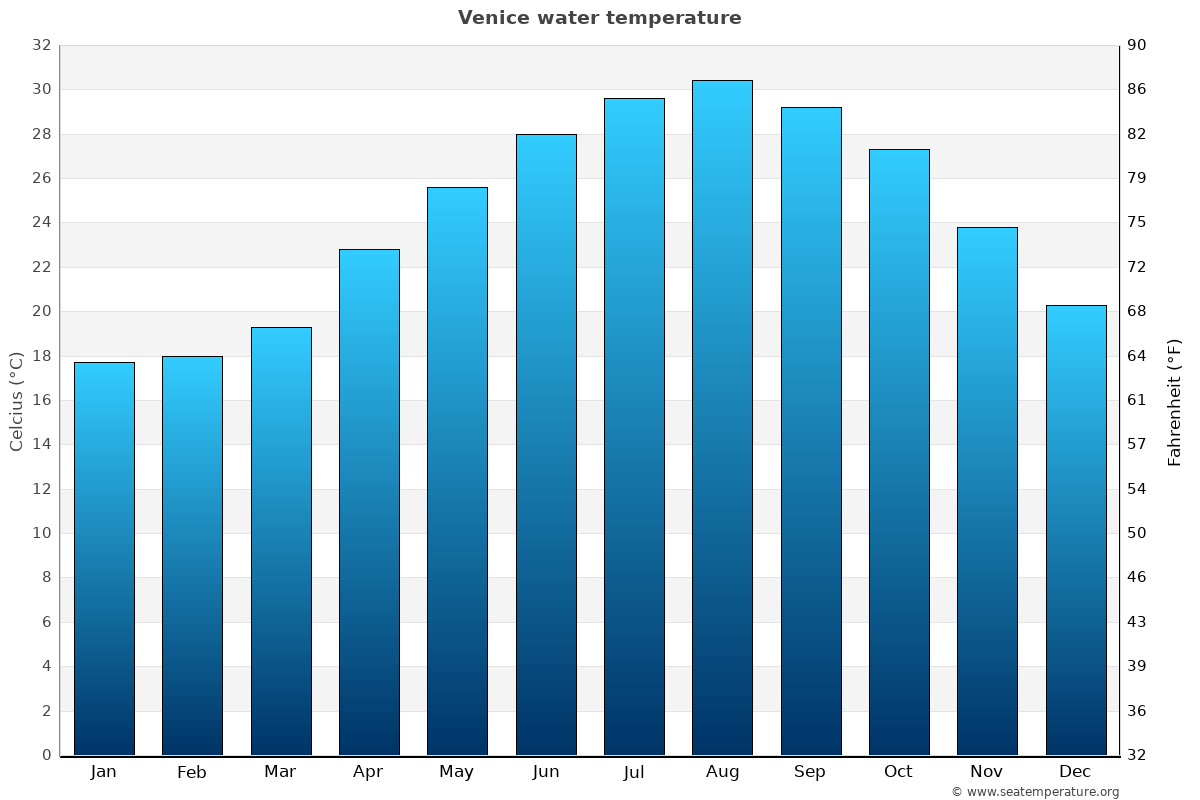
For those whose primary goal is to enjoy the beautiful beaches of Venice, the winter and spring months (December to May) are often considered ideal. During these periods, the temperatures are warm and pleasant, averaging in the 60s and 70s Fahrenheit, with ample sunshine and lower humidity. The Gulf waters, while still cool by some standards, are quite refreshing and suitable for swimming and water sports. Summer offers warmer water temperatures but comes with the caveat of higher humidity and the possibility of afternoon thunderstorms.
Best Periods for Outdoor Exploration and Sightseeing
If your itinerary involves extensive exploration of Venice’s attractions, including its charming downtown, historical sites like the Venice Museum & Archives, or nature excursions in nearby preserves, the cooler, drier months of autumn and winter (October to April) are highly recommended. The temperatures are generally in the 60s and 70s Fahrenheit, with lower humidity and less frequent rainfall. This makes it comfortable to walk around, visit outdoor markets, and enjoy activities like biking or kayaking without feeling overheated or being interrupted by sudden downpours.
Preparing for Summer Heat and Humidity
Visitors planning a trip during the summer months (June to August) should be prepared for the heat and humidity. Light, breathable clothing made of natural fabrics like cotton or linen is essential. Staying hydrated by drinking plenty of water is crucial, and seeking shade during the hottest parts of the day is advisable. Many hotels in Venice, such as the Hampton Inn & Suites Venice or the Best Western Plus Venice Beach Inn, offer excellent air-conditioned spaces to escape the heat. Evenings often bring a slight cooling and a chance to enjoy outdoor dining and events. Understanding that afternoon thunderstorms are a regular occurrence will allow for better planning of activities.
Average Temperature Data for Venice, Florida
To provide a more concrete understanding of Venice’s climate, here is a general overview of average temperatures. These figures are based on historical data and can vary slightly from year to year.
Monthly Average High and Low Temperatures (Fahrenheit)
| Month | Average High (°F) | Average Low (°F) |
|---|---|---|
| January | 70 | 49 |
| February | 72 | 51 |
| March | 76 | 55 |
| April | 80 | 59 |
| May | 84 | 64 |
| June | 88 | 70 |
| July | 90 | 72 |
| August | 90 | 73 |
| September | 87 | 71 |
| October | 82 | 63 |
| November | 76 | 55 |
| December | 71 | 50 |

Average Precipitation
While this article focuses on temperature, it’s worth noting that precipitation is closely linked to the seasonal temperature shifts. Summer months (June-September) are the wettest, with higher chances of daily thunderstorms. Winter months (December-February) are the driest. Understanding these patterns will further aid in planning your perfect trip to Venice, Florida.
LifeOutOfTheBox is a participant in the Amazon Services LLC Associates Program, an affiliate advertising program designed to provide a means for sites to earn advertising fees by advertising and linking to Amazon.com. Amazon, the Amazon logo, AmazonSupply, and the AmazonSupply logo are trademarks of Amazon.com, Inc. or its affiliates. As an Amazon Associate we earn affiliate commissions from qualifying purchases.