
Florida, often dubbed the Sunshine State, is a vibrant mosaic of world-class attractions, pristine beaches, bustling cities, and serene natural landscapes. From the magical theme parks of Orlando to the Art Deco splendor of Miami, and the historic charm of St. Augustine to the stunning shores of the Florida Panhandle, this USA gem beckons millions of visitors annually. However, behind its uniform allure lies a subtle complexity that often catches travelers by surprise: Florida operates across two distinct time zones. Understanding this geographical nuance is paramount for anyone planning a trip, booking accommodation, or simply trying to navigate the daily rhythms of life in this diverse state. For an experience free of missed appointments, delayed check-ins, or confusion over event start times, delving into the specifics of Florida’s time zones is an essential first step. This guide will illuminate the intricacies of time in Florida, offering insights crucial for smooth travel, successful tourism, and an overall enhanced experience in the Sunshine State.
Understanding Florida’s Diverse Time Zones
While the majority of Florida observes one standard time, a significant portion of its westernmost region, particularly the Panhandle, adheres to a different one. This dual-zone system is a geographical quirk that stems from the state’s expansive east-west reach. For visitors and residents alike, recognizing which time zone applies to their specific location is key to avoiding logistical mishaps.
Eastern Time Zone (ET) – The Predominant Zone
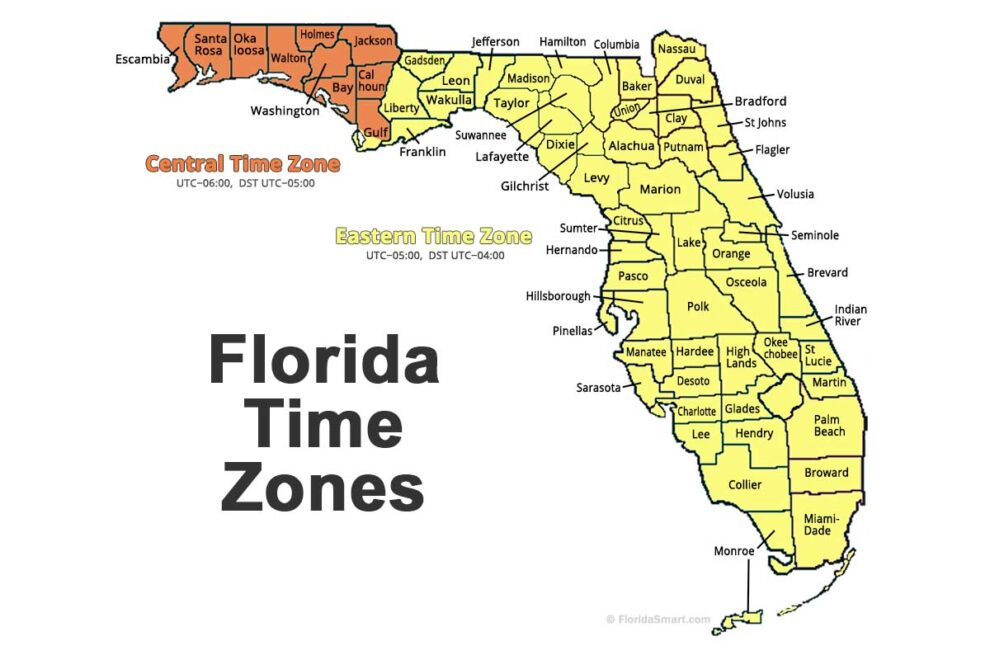
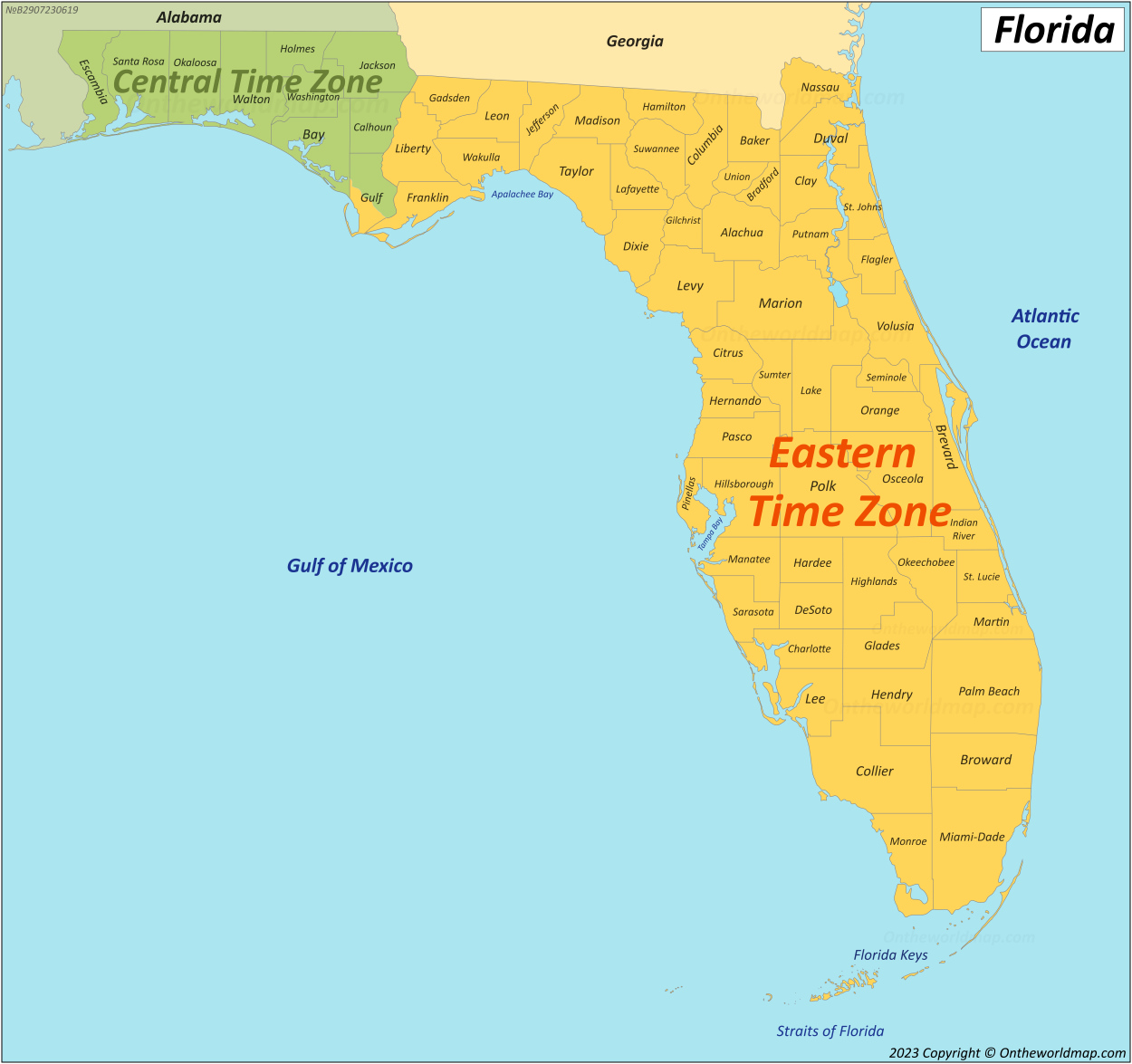
The vast majority of Florida, including its most populous cities and popular tourist destinations, falls within the Eastern Time Zone (ET). This zone observes Eastern Standard Time (EST) during the cooler months and Eastern Daylight Time (EDT) during Daylight Saving Time (DST). EST is UTC-5, while EDT is UTC-4.
This includes major metropolitan areas like Miami, Orlando, Tampa, Jacksonville, and Fort Lauderdale. Iconic attractions such as Walt Disney World Resort, Universal Studios Florida, and the Kennedy Space Center all operate on ET. Even the charming historic streets of St. Augustine and the tropical paradise of Key West are firmly in the Eastern Time Zone. For most travelers, especially those focusing on central and south Florida, ET will be their primary reference.
Central Time Zone (CT) – The Panhandle Exception
The westernmost counties of the Florida Panhandle fall into the Central Time Zone (CT). This area observes Central Standard Time (CST), which is UTC-6, during standard time, and Central Daylight Time (CDT), which is UTC-5, during Daylight Saving Time.
The counties entirely within CT include Escambia, Santa Rosa, Okaloosa, Walton, and Bay. Notable cities in this region include Pensacola, Destin, Fort Walton Beach, and Panama City Beach. Additionally, Gulf County is split, with the western portion adhering to CT and the eastern portion to ET, adding another layer of complexity for those traveling through. When planning a visit to the beautiful white-sand beaches and charming coastal towns of the Panhandle, such as Navarre Beach or Seaside, it’s crucial to remember that you will be an hour behind the rest of the state.
Daylight Saving Time (DST) in Florida
Like most of the United States, Florida observes Daylight Saving Time (DST), which typically begins on the second Sunday in March and ends on the first Sunday in November. During DST, clocks are moved forward by one hour. This means that EST becomes EDT (UTC-4) and CST becomes CDT (UTC-5).
While the practice of DST is consistent across both time zones in Florida, it does not eliminate the one-hour difference between ET and CT. It simply means both zones shift forward or backward simultaneously. There have been discussions and legislative efforts in Florida to make DST permanent, which would effectively put the state on a year-round EDT (UTC-4) schedule. However, as of now, this change has not been implemented at the federal level, which is required for states to permanently adopt DST. Therefore, travelers should always be prepared for the spring forward and fall back adjustments, regardless of which Florida time zone they are in.
Navigating Time Zones for Florida Travel and Tourism
Understanding Florida’s time zones is not merely an academic exercise; it has tangible implications for every aspect of your travel and tourism experience. From the initial planning stages to the day-to-day logistics of your trip, being mindful of time differences can prevent inconveniences and ensure a smoother journey.
Planning Your Itinerary: Impact on Attractions and Activities
When crafting your travel itinerary, particularly if your journey involves traversing from one end of Florida to the other, time zones become a critical factor. Imagine planning to drive from Orlando (ET) to Panama City Beach (CT) for a sunset cruise. A 6 PM departure from Panama City Beach would translate to 7 PM in Orlando. If you aren’t accounting for the time zone change, you might miscalculate your arrival time, potentially missing your scheduled activity.
This is especially relevant for time-sensitive bookings like theme park entry at Walt Disney World Resort or Universal Studios Florida, guided tours in Everglades National Park, fishing charters departing from Destin, or dinner reservations in South Beach Miami. Always double-check the local time of your destination for any scheduled events or attractions. Even local festivals, concerts, or sporting events will adhere strictly to the time zone of their specific location, not necessarily the time zone you departed from.
Accommodation Considerations: Checking In and Out Across Zones
Accommodation, whether it’s a luxury suite at the Fontainebleau Miami Beach, a family-friendly resort near Disney Springs, or a cozy villa in Seaside, operates strictly on local time. This means check-in and check-out times will be dictated by the time zone of the specific hotel or resort.
If you’re flying into Pensacola International Airport (CT) and your flight schedule is based on your departure city’s ET, remember to adjust for the one-hour difference when estimating your arrival and potential check-in time at your Pensacola area accommodation. Similarly, if you’re driving from Tallahassee (ET) to a beachfront apartment in Panama City Beach (CT), you gain an hour upon crossing the time zone boundary, which could mean an earlier check-in than you initially anticipated or more time to enjoy your final morning before check-out if moving in the opposite direction. Always confirm your booking details and cross-reference with the local time of your accommodation to ensure a seamless arrival and departure experience.

Business and Lifestyle Implications
For business travelers, understanding Florida’s time zones is even more critical. Meeting schedules, conference calls, and travel logistics involving clients or colleagues across the state require careful attention to avoid miscommunications. A 9 AM meeting in Pensacola is a 10 AM call for someone in Miami. Likewise, coordinating projects or deliveries that span both zones demands precision in scheduling.
Beyond business, the time zone split influences the daily lifestyle of Floridians, especially those living near the boundary between CT and ET, such as in Gulf County. School buses, local government operations, and even television programming might switch abruptly. For long-term stays or those considering relocating, this aspect of daily life becomes a persistent consideration. Even simple things like calling family back home in a different time zone need to be factored in. For those engaging in luxury travel or seeking unique experiences, knowing the local time can also influence activity timings, from exclusive dinner cruises to private tours, ensuring all arrangements run like clockwork.
Key Destinations and Their Time Zones
To further clarify, let’s look at some of Florida’s most beloved destinations and their respective time zones, aligning with various interests from tourism to lifestyle.
East Coast Hotspots (Eastern Time Zone)
Florida’s East Coast is a powerhouse of activity, from pristine beaches to bustling urban centers, all operating on Eastern Time (ET).
- Miami & Fort Lauderdale: These vibrant South Florida cities are synonymous with luxury travel, stunning beaches like South Beach, and a lively nightlife. From booking a suite at The Breakers Palm Beach to catching a flight from Miami International Airport, everything here is on ET.
- Orlando: Home to the world’s most famous theme parks, including Walt Disney World Resort and Universal Orlando Resort, Orlando is a premier family trip destination. Park opening hours, show times, and hotel check-ins at resorts like Disney’s Contemporary Resort all adhere to ET.
- Jacksonville: Florida’s most populous city offers a blend of urban attractions and natural beauty. Business stays and leisure trips to its extensive coastline or cultural venues will follow ET.
- St. Augustine: The nation’s oldest city, rich in history and famous landmarks like the Castillo de San Marcos, is firmly in ET, meaning guided tours and historic reenactments are scheduled accordingly.
- Florida Keys & Key West: This tropical archipelago, famous for its unique lifestyle and natural beauty, including Dry Tortugas National Park, operates entirely on ET. Sunset celebrations at Mallory Square are on ET, regardless of how far west Key West appears on a map.
West Coast Gems (Eastern Time Zone)
While often considered geographically “west,” many popular destinations along Florida’s Gulf Coast also remain within the Eastern Time Zone.
- Tampa & St. Petersburg: These vibrant cities on Tampa Bay offer diverse attractions, from museums to beautiful beaches and professional sports. All activities, including flights from Tampa International Airport, are on ET.
- Sarasota: Known for its cultural scene, beautiful beaches like Siesta Key, and the Ringling Museum, Sarasota is also in ET.
- Fort Myers & Naples: These Southwest Florida destinations, popular for luxury travel, golf, and stunning natural parks, observe ET.
Panhandle Pearls (Central Time Zone)
The pristine beaches and charming towns of the Florida Panhandle fall into the Central Time Zone (CT), providing a distinct rhythm compared to the rest of the state.
- Pensacola: As the westernmost major city in Florida, Pensacola, with its rich history and beautiful Pensacola Beach, operates on CT.
- Destin & Fort Walton Beach: Famous for their emerald waters and white sands, these popular tourist destinations are unequivocally in CT. Plan your deep-sea fishing excursions and resort stays, such as at the Henderson Beach Resort, with this one-hour difference in mind.
- Panama City Beach: A bustling hub for family trips and spring breakers, Panama City Beach also adheres to CT. All activities, from amusement parks to boat tours, will be based on Central Time.
Practical Tips for a Seamless Florida Experience
Navigating Florida’s dual time zones doesn’t have to be a source of stress. With a few practical tips, you can ensure your travel, tourism, and accommodation experiences are as smooth and enjoyable as the state’s famous beaches.
Always Confirm Local Time
The golden rule for any trip involving multiple time zones is to always confirm the local time of your destination. Before making reservations for hotels, attractions, tours, or dining, verify which time zone applies. Most booking platforms and official websites will specify the time zone, but it never hurts to double-check, especially if you’re traveling across the state. Your smartphone, if connected to a cellular network, will automatically update to the correct local time, which is an invaluable tool. However, don’t rely solely on this for planning; have a mental note or a quick search ready if you’re crossing a time zone boundary.
Adjusting to Time Changes
When traveling between ET and CT within Florida, be prepared for the one-hour shift. If driving from east to west (ET to CT), you will “gain” an hour. If driving from west to east (CT to ET), you will “lose” an hour. This minor adjustment can impact your energy levels, especially if you’re sensitive to even small time changes. For families on vacation, building in a small buffer for travel days that involve a time zone change can help everyone adjust and prevent rushed schedules. Consider the impact on young children’s sleep schedules or an early flight if your journey involves crossing the time zone boundary on the day of departure or arrival.
Communication Across Time Zones
For those coordinating with people in different parts of Florida or outside the state, clear communication about time zones is essential. When scheduling calls, meetings, or even simply checking in with family, explicitly state the time zone (e.g., “Let’s connect at 2 PM ET” or “I’ll call you at 1 PM CT”). This simple practice eliminates ambiguity and ensures everyone is on the same page. This is particularly important for business travelers or anyone managing remote work while enjoying the Sunshine State. For long-term stays, establish consistent communication protocols with local services, whether it’s for property management, tour operators, or local businesses.
In conclusion, while the thought of navigating two time zones within a single state might seem daunting, it is a relatively straightforward aspect of Florida travel that simply requires awareness. By understanding which areas fall into Eastern Time and which into Central Time, and by incorporating this knowledge into your planning, you can ensure a seamless and enjoyable journey through this incredibly diverse and captivating USA destination. Embrace the unique geographical rhythm of the Sunshine State, and prepare for an unforgettable adventure where every moment counts, precisely timed for your ultimate enjoyment.
LifeOutOfTheBox is a participant in the Amazon Services LLC Associates Program, an affiliate advertising program designed to provide a means for sites to earn advertising fees by advertising and linking to Amazon.com. Amazon, the Amazon logo, AmazonSupply, and the AmazonSupply logo are trademarks of Amazon.com, Inc. or its affiliates. As an Amazon Associate we earn affiliate commissions from qualifying purchases.