
The University of Hawaii stands as a beacon of academic excellence and cultural preservation in the heart of the Pacific Ocean. As the primary public institution of higher education in the state, it serves not only as a hub for rigorous research but also as a vital repository for the history, language, and heritage of the Hawaiian Islands. While many visitors flock to the state for its beaches, those who delve deeper into the local culture often find that the university is a defining landmark, shaping the identity of Honolulu and beyond.
Pioneering Research in Marine and Earth Sciences
One of the primary pillars upon which the university has built its global reputation is its world-class research in marine biology, oceanography, and earth sciences. Given its strategic location in the middle of the Pacific, the institution acts as a living laboratory for scholars who are dedicated to understanding the complexities of island ecosystems and climate change.
The Role of the Hawaii Institute of Marine Biology
The Hawaii Institute of Marine Biology, situated on the lush islet of Moku o Loʻe in Kaneohe Bay, is perhaps the most iconic research facility associated with the university. Here, scientists from around the globe converge to study coral reefs, shark behavior, and the resilience of marine life in the face of rising ocean temperatures. This facility is a premier example of how the university integrates education with the natural environment, providing students with unparalleled access to Oahu’s coastal biodiversity.
Leadership in Volcanology and Geophysics
Beyond the blue waters, the university plays a critical role in the study of volcanoes. Through its deep collaboration with the United States Geological Survey, the university has been instrumental in monitoring the volcanic activity on The Big Island. Researchers from the university frequently work in tandem with the Hawaii Volcanoes National Park to study the life cycle of Mauna Loa and Kilauea, turning the rugged landscape of Hawaii into a dynamic classroom for aspiring geologists.
A Global Leader in Indigenous Studies and Language Revitalization
Beyond the hard sciences, the University of Hawaii at Manoa is recognized globally for its unwavering commitment to Indigenous Studies and the preservation of the Hawaiian language. The institution is considered the intellectual home of the movement to revitalize native cultural practices, ensuring that the history of the Polynesian people remains a central focus of academic discourse.
The Kamakakuokalani Center for Hawaiian Studies
The Kamakakuokalani Center for Hawaiian Studies serves as the academic core for those interested in the social, political, and cultural history of the islands. The architecture of the building itself, characterized by its distinctively traditional design, serves as a landmark on the campus, symbolizing a deep respect for the ancestors of the Pacific. Students here engage with curricula that go beyond textbook history, focusing on the preservation of traditional agriculture, Hula, and navigation.
Language Immersion and Academic Documentation
The university has been a pioneer in creating master’s and doctoral programs focused on Hawaiian language and linguistics. By documenting oral histories and archiving traditional texts, the university has successfully helped reverse the decline of the native tongue. This effort is not merely academic; it is a profound act of cultural reclamation that has inspired similar indigenous programs throughout Oceania.
A Hub for Pacific and Asian Studies
Given its unique geography, the university serves as a vital bridge between the United States and the countries of the Asia-Pacific region. The institution is renowned for hosting the East-West Center, an organization dedicated to fostering cultural exchange and mutual understanding through education and collaborative research.
Intercultural Exchange and Diplomacy
The East-West Center brings together students and scholars from Japan, China, South Korea, and across Southeast Asia. By facilitating dialogues on economic, political, and social issues, the university acts as a diplomatic hub, cementing its status as an institution that serves the broader global community.
Academic Excellence in Regional Expertise
The university’s library systems, particularly the Hamilton Library, house one of the most comprehensive collections of Pacific Collection materials in the world. This makes the university a primary destination for historians and researchers studying the evolution of Pacific Islander cultures and their interactions with global powers.
The Campus Environment as a Cultural Landmark
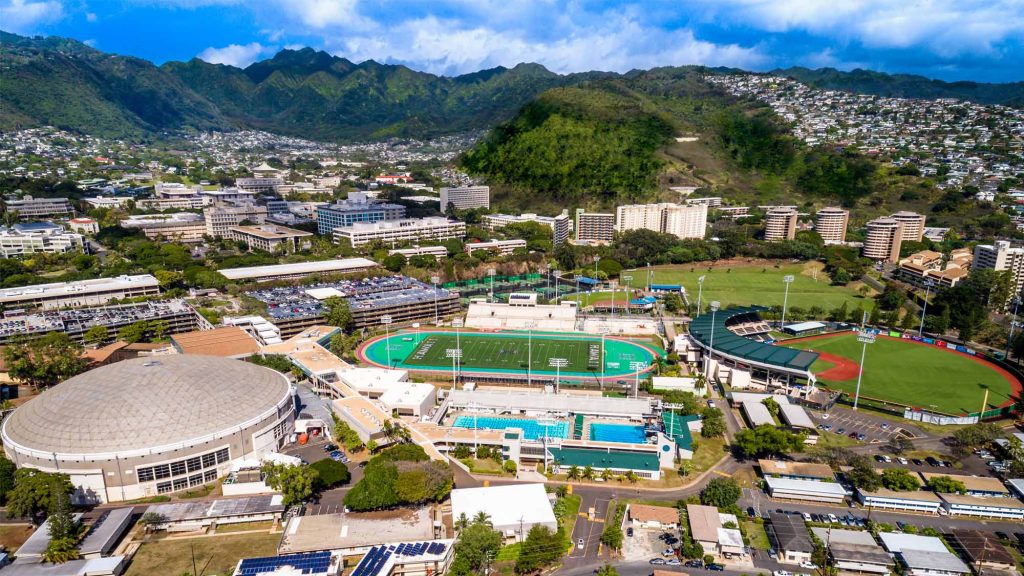
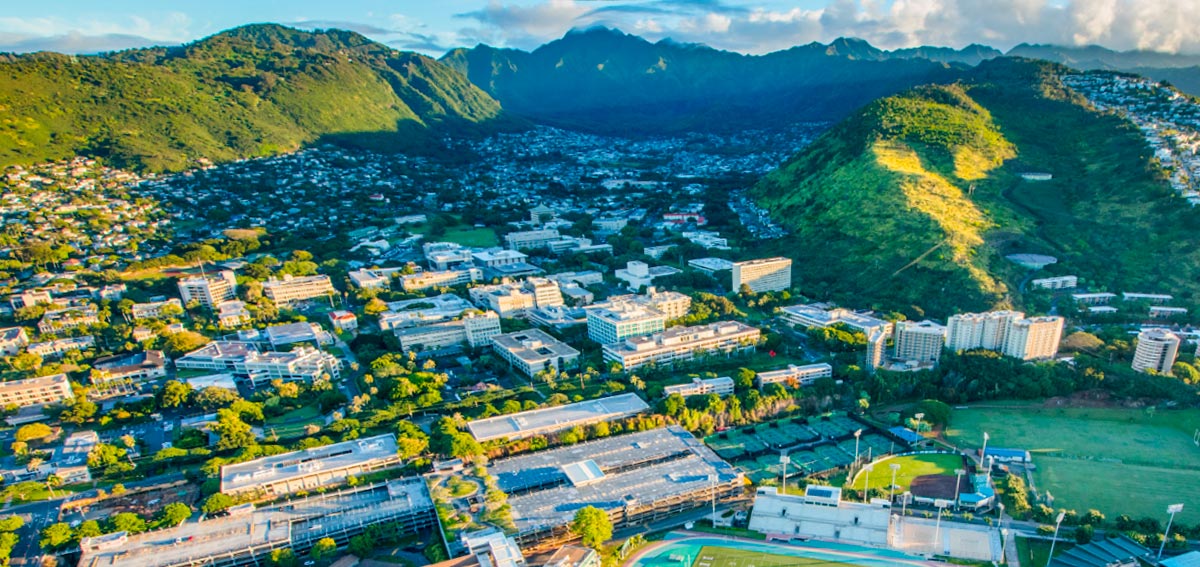
For those visiting the islands, the campus of the University of Hawaii at Manoa is a sight in its own right. Nestled within the verdant Manoa Valley, the campus offers a serene aesthetic that blends modernist academic architecture with the breathtaking natural beauty of the Koolau Mountains.
The Aesthetic of the Manoa Campus
Walking through the campus, visitors encounter lush botanical gardens, including the Harold L. Lyon Arboretum, which showcases thousands of species of tropical plants. This commitment to the environment reflects the university’s philosophy: that education should be deeply integrated with the land, or ʻāina.

A Center for Sports and Community
The university is also a massive touchstone for local pride, particularly through its Hawaii Rainbow Warriors athletics programs. The Clarence T.C. Ching Athletics Complex and the Stan Sheriff Center are focal points of social life in Honolulu. The local culture of supporting these teams brings together the diverse student body, faculty, and residents of the island in a way that transcends academic interests.
Ultimately, the University of Hawaii is known for its dual commitment to scientific progress and the safeguarding of local culture. It is an institution where high-level oceanographic study happens just miles from the sacred sites of the native people. For any traveler or prospective student, the university offers a lens through which to view the Hawaiian Islands—not just as a vacation destination, but as a place of immense historical significance and intellectual depth. Its influence stretches far beyond the classroom, shaping the trajectory of the Pacific and ensuring that the wisdom of the past informs the discoveries of the future.
LifeOutOfTheBox is a participant in the Amazon Services LLC Associates Program, an affiliate advertising program designed to provide a means for sites to earn advertising fees by advertising and linking to Amazon.com. Amazon, the Amazon logo, AmazonSupply, and the AmazonSupply logo are trademarks of Amazon.com, Inc. or its affiliates. As an Amazon Associate we earn affiliate commissions from qualifying purchases.