
There is a distinct sensation that comes with sliding into a hotel bed after a long day of traveling through New York City or navigating the cobblestone streets of Paris. It is a combination of coolness, crispness, and a weightiness that seems impossible to replicate at home. While many travelers assume the secret lies in a high thread count, the reality of hospitality bedding is far more nuanced. From the specific botanical origins of the fibers to the mechanical precision of the weave, luxury properties like those managed by Marriott International or Hilton invest millions of dollars into engineering the perfect sleep environment.
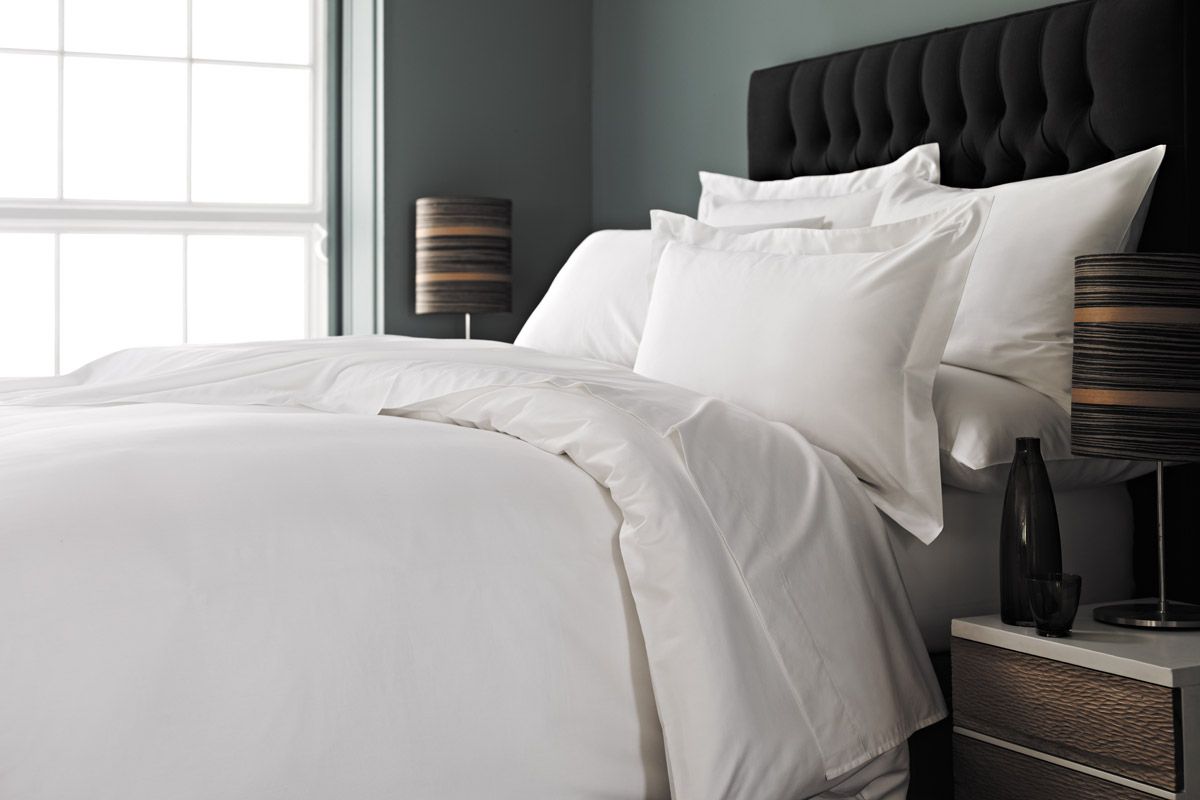
In the world of high-end hospitality, sheets are not just linens; they are a critical component of the brand’s identity. Whether you are staying at a boutique villa in Italy or a sprawling resort in Dubai, the choice of bedding is a calculated decision designed to balance guest comfort with industrial-grade durability.
The Science of Fabric: Percale vs. Sateen
When we ask what kind of sheets hotels use, the answer almost always begins with the weave. Most luxury hotels opt for one of two primary styles: percale or sateen. These terms do not refer to the material itself, but rather the way the threads are interlaced.
The Crisp Appeal of Percale
If you have ever stayed at a Sheraton Hotels property and noticed the sheets feel particularly “cool” and “snappy,” you were likely sleeping on percale. Percale features a simple one-over, one-under weave. This creates a matte finish and a breathable structure that allows air to circulate easily. It is the gold standard for “hot sleepers” and is frequently utilized in tropical destinations throughout Mexico and the Caribbean. Percale is also highly durable, standing up to the rigorous daily laundering required in the hospitality industry.
The Silky Touch of Sateen
Conversely, properties like the Ritz-Carlton often lean toward sateen. A sateen weave uses a four-over, one-under pattern, which exposes more of the thread surface. This results in a fabric that is heavier, softer, and possesses a subtle sheen reminiscent of silk. Sateen is often preferred in cooler climates, such as London or Zurich, because it feels slightly warmer and more substantial against the skin. While sateen is exceptionally luxurious, it can be more prone to pilling than percale, which is why top-tier resorts only source sateen from high-quality long-staple cotton.
Material Matters: Why Cotton Reigns Supreme
While synthetic blends are common in budget-friendly motels, the premium hospitality sector almost exclusively uses 100% cotton or high-ratio cotton blends. However, not all cotton is created equal.
The Prestige of Egyptian Cotton
For decades, Egypt has been synonymous with the finest cotton in the world. True Egyptian cotton is grown in the moist, nutrient-rich soil of the Nile River Valley. Its extra-long staples (fibers) allow it to be spun into incredibly fine, strong yarns. When you visit an iconic landmark hotel like the Burj Al Arab, you are almost guaranteed to be sleeping on high-thread-count Egyptian cotton. The length of the fiber ensures that there are fewer “ends” exposed, resulting in a smoother surface that resists fraying.
Supima and Pima Cotton
In the United States, many luxury brands, including The Westin, utilize Supima cotton. Supima is a trademarked name for American-grown Pima cotton, which also features extra-long staples. It is renowned for its strength and color retention, meaning those signature white hotel sheets stay bright white even after hundreds of industrial washes. For guests staying at a Four Seasons in Los Angeles, the softness of the bed is often a direct result of these high-quality long-staple fibers.
Debunking the Thread Count Myth
One of the most common misconceptions among travelers is that a higher thread count always equates to a better sheet. In the context of professional hotel management, the “thread count arms race” is largely viewed as a marketing gimmick.
The 300 to 400 Sweet Spot
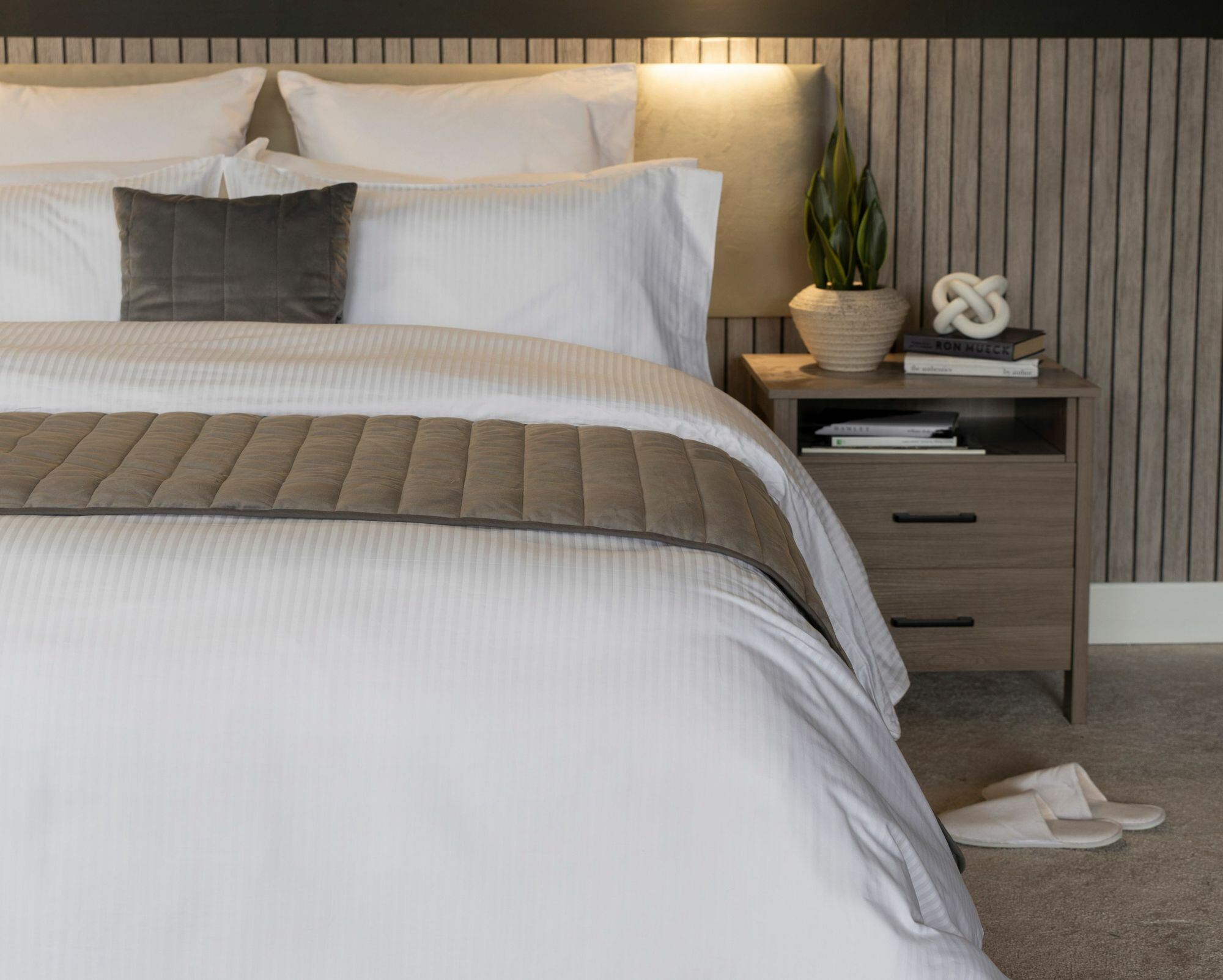
Most five-star hotels, from the Park Hyatt Tokyo to the historic grand hotels of Vienna, actually utilize sheets with a thread count between 300 and 400. There is a practical reason for this. Once a thread count exceeds 500 or 600, the fabric becomes so dense that it loses its breathability. Furthermore, to achieve counts of 800 or 1,000, manufacturers often use “multi-ply” yarns—twisting several low-quality threads together. This makes the sheet heavy and prone to trapping heat, which can lead to an uncomfortable night’s sleep for guests.
Institutional Grade Construction
Hotels require “institutional grade” linens. This means the sheets must be able to withstand the high temperatures of commercial dryers and the chemical intensity of industrial detergents without losing their structural integrity. A 300-thread count single-ply percale sheet made from high-quality cotton will outlast a 1,000-thread count multi-ply sheet every time. This is why when you book a stay at a St Regis property, the sheets feel substantial but never suffocating.
Signature Bedding and Brand Partnerships
Many of the world’s most famous hotel chains have spent years developing their own proprietary bedding systems. They understand that a guest’s sleep quality is the single most important factor in a positive review.
The Heavenly Bed and Beyond
The Westin revolutionized the industry in 1999 with the introduction of the “Heavenly Bed.” This system includes a custom-designed mattress and 250-thread count sheets that prioritize a crisp feel. Following their success, other brands followed suit. Today, many hotels partner with luxury linen manufacturers like Frette or Sferra. These Italian heritage brands are the go-to suppliers for elite properties in Milan and Rome, providing linens that are often custom-woven with the hotel’s crest or a specific jacquard pattern.
Global Standards in Luxury
Whether you are at a Grand Hyatt Hotel or a Waldorf Astoria, the linen specifications are strictly regulated. In many cases, these hotels sell their bedding through online retail shops, allowing guests to purchase the exact sheets they used during their stay. This trend has turned hotel rooms into showrooms for high-end home goods, particularly in major hubs like San Francisco or Tokyo.
Maintenance: The Secret to the “Hotel Feel”
Even if you buy the exact same sheets used at the InterContinental, they may not feel the same at home. This is because the “hotel feel” is as much about maintenance as it is about the fabric.
The Role of Industrial Ironing
Hotels use massive industrial mangles—large, heated rollers—to press their sheets. This process happens while the sheets are still slightly damp, which flattens the fibers and creates that signature smooth, glass-like surface. While it is difficult to replicate this in a residential setting, steam ironing can help bridge the gap.
The Psychology of White Linens
You may have noticed that almost all high-end hotels use white sheets. This is not just for aesthetic reasons. White linens signify a high standard of cleanliness; they cannot hide stains. From a management perspective, white sheets can be bleached and washed at very high temperatures to ensure sanitation. Furthermore, the “all-white bed” was popularized by Westin Hotels and Resorts because it creates a “halo effect,” making the entire room appear cleaner and more modern.
Recreating the Experience: A Practical Guide
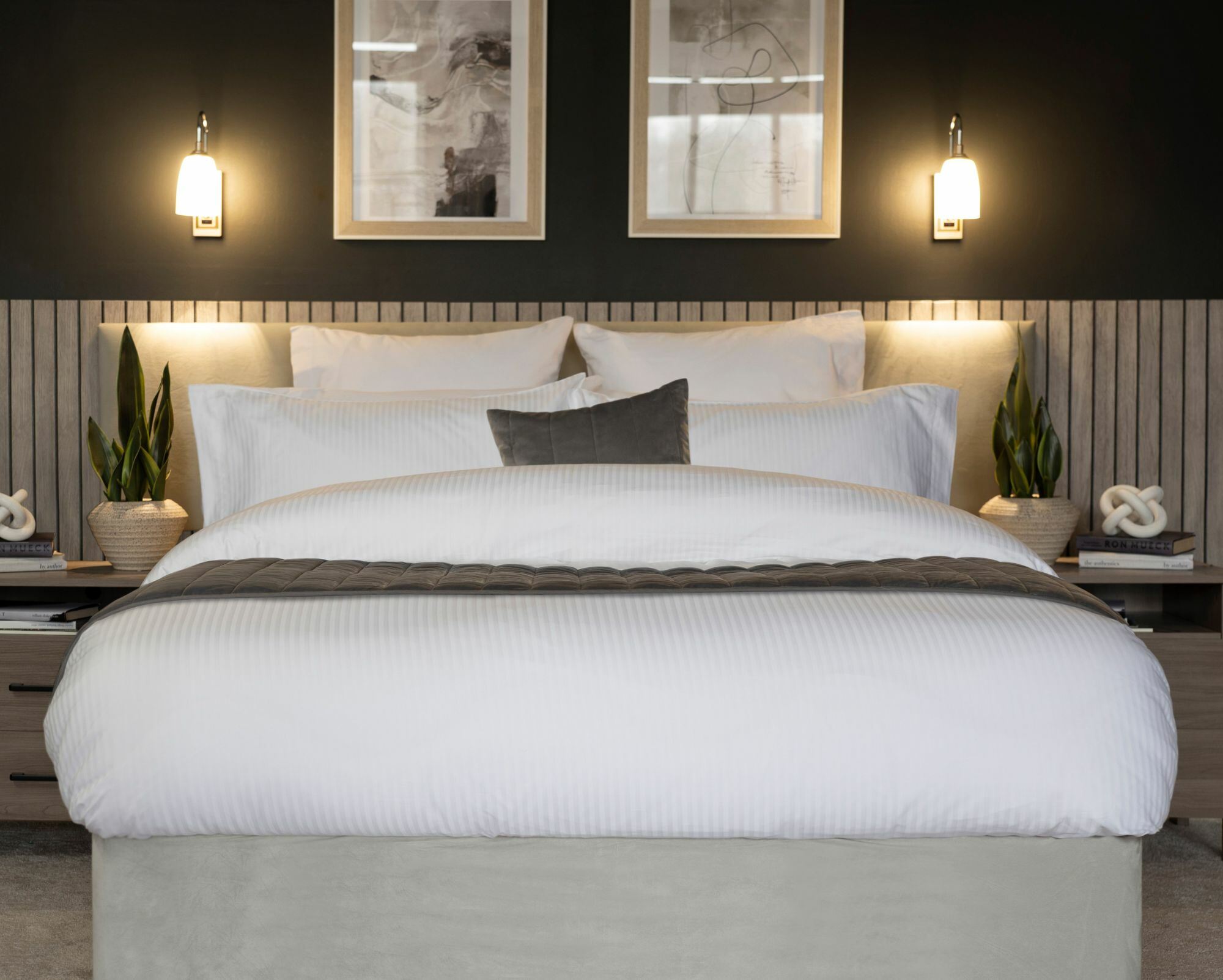
If you are looking to bring the luxury of a Mandarin Oriental or a Rosewood Hotels experience into your own bedroom, you should focus on several key factors. First, look for 100% long-staple cotton—specifically Egyptian or Supima. Second, choose your weave based on your climate: percale for cooling or sateen for warmth.
Third, consider the “triple sheeting” method used by many resorts in Hawaii and Florida. This involve layering a thin blanket or duvet between two starched flat sheets. This technique is not only hygienic but also provides a crisp, tucked-in feeling that mimics a professional hotel turndown service.
Finally, remember that the best hotel sheets are those that balance comfort with longevity. Whether you are dreaming of your next stay in Australia or reflecting on a past trip to Canada, the sheets you choose are the foundation of your rest. By understanding the materials, weaves, and maintenance strategies used by the world’s best hotels, you can transform your own home into a sanctuary of five-star comfort.
LifeOutOfTheBox is a participant in the Amazon Services LLC Associates Program, an affiliate advertising program designed to provide a means for sites to earn advertising fees by advertising and linking to Amazon.com. Amazon, the Amazon logo, AmazonSupply, and the AmazonSupply logo are trademarks of Amazon.com, Inc. or its affiliates. As an Amazon Associate we earn affiliate commissions from qualifying purchases.