
When one thinks of Chicago, Illinois, images of towering skyscrapers, deep-dish pizza, and a vibrant arts scene often come to mind. Yet, inextricably linked to the city’s identity, skyline, and very existence is a colossal body of freshwater: Lake Michigan. More than just a scenic backdrop, Lake Michigan is the quintessential natural landmark of Chicago, shaping its history, defining its geography, and profoundly influencing its culture and economy. It is one of the five Great Lakes of North America, a freshwater sea that bestows upon Chicago its unique character as a major metropolis with an expansive, stunning waterfront.

Lake Michigan: Chicago’s Defining Natural Landmark
Lake Michigan is not merely adjacent to Chicago; it is an integral part of its fabric. As the only one of the Great Lakes located entirely within the United States, its eastern shore lies in Michigan, its northern in Wisconsin, its western in Illinois and Indiana. For Chicago, the lakefront stretches for an impressive 26 miles, providing residents and visitors with unparalleled access to beaches, parks, and recreational opportunities right in the heart of the city. This vast expanse of water is a natural wonder, simultaneously serving as a vital resource and a breathtaking vista.
A Great Lake’s Grandeur
Lake Michigan is immense, boasting a surface area of approximately 22,400 square miles, making it the second-largest of the Great Lakes by volume and the third-largest by surface area. It holds an astounding 1,180 cubic miles of water, so vast that it can generate its own weather patterns, contributing to Chicago’s famously fickle climate. Its depth reaches up to 923 feet, and its average depth is 279 feet, creating a massive, cold-water ecosystem. The lake’s geology is a testament to the powerful forces of glacial activity that shaped the North American landscape thousands of years ago. These geological origins also explain the lake’s relatively straight western shoreline along Chicago, characterized by sandy beaches and bluffs, while its eastern shore is known for dramatic dunes. The ever-present horizon across the lake creates an illusion of an ocean, lending Chicago a coastal feel despite its inland location.
Formative Power: Shaping Chicago’s Identity
The presence of Lake Michigan was the primary reason for Chicago’s founding and subsequent explosive growth. In the early 19th century, the site at the mouth of the Chicago River offered a strategic portage point between the Great Lakes and the Mississippi River system. This natural advantage positioned Chicago as a critical transportation hub, facilitating trade and westward expansion. The lake provided abundant freshwater, a natural defense, and a gateway for commerce. Early settlers built their lives around it, and the city’s architects and planners consistently acknowledged its profound influence. The famous “Plan of Chicago” by Daniel Burnham and Edward H. Bennett in 1909 enshrined the lakefront as permanently open and public, a testament to its value as a shared civic space. This forward-thinking vision ensured that the lake would remain accessible to all, rather than being privatized, a decision that continues to define Chicago’s urban character today.
The Chicago Lakefront: An Urban Masterpiece
The relationship between Chicago and Lake Michigan is perhaps best exemplified by the city’s magnificent lakefront, a testament to visionary urban planning and sustained civic dedication. Far from being a mere boundary, the lakefront is a dynamic and integrated part of the city, weaving together stunning architecture, expansive green spaces, and world-class cultural institutions. It is a daily destination for millions, offering a seamless blend of natural beauty and urban sophistication.
Architectural Dialogues with the Shoreline
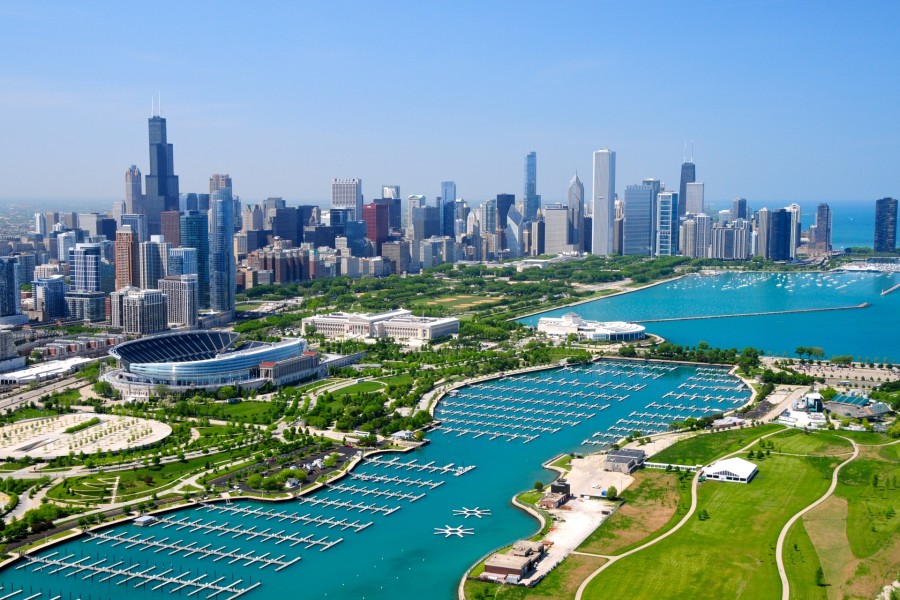
Chicago’s skyline, renowned globally for its architectural innovation, engages in a perpetual dialogue with Lake Michigan. The city’s iconic skyscrapers, from historic marvels like the Art Deco Tribune Tower to modern giants like Willis Tower (formerly Sears Tower) and St. Regis Chicago, often culminate in dramatic vistas overlooking the lake. Many of Chicago’s most significant cultural institutions are strategically placed along or near the lakefront, forming what is known as the Museum Campus. This includes the Field Museum (natural history), the Shedd Aquarium (aquatic life), and the Adler Planetarium (astronomy), each offering profound insights into the natural world, the cosmos, and humanity’s place within them, all with Lake Michigan as their expansive backdrop. The proximity of these institutions to the lake underscores a natural synergy between education, culture, and the environment.
Green Oasis: Parks and Public Spaces
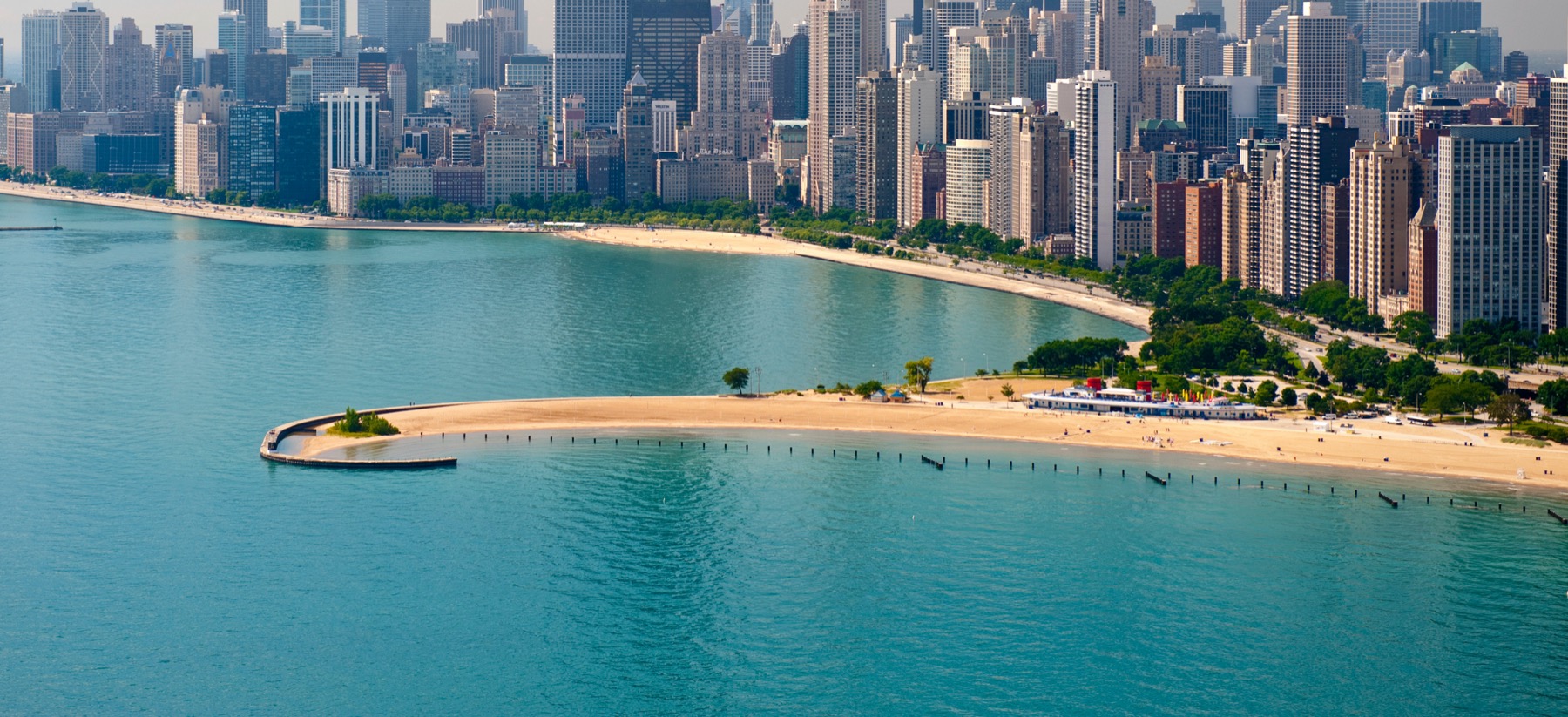
The uninterrupted stretch of parks along the lakefront is arguably Chicago’s most treasured landmark asset. Grant Park, often called “Chicago’s Front Yard,” is a sprawling urban park that hosts major events, festivals, and houses the magnificent Buckingham Fountain. Adjacent to it, Millennium Park seamlessly blends public art, landscape design, and architecture, featuring iconic installations like “Cloud Gate” (The Bean) and the Pritzker Pavilion. Further north, Lincoln Park offers vast open spaces, gardens, a free zoo, and several museums, including the Chicago History Museum and the Notebaert Nature Museum. These parks are not just green spaces; they are vibrant social hubs, essential for the city’s recreational life, providing trails for biking and running, areas for picnics, and access to numerous public beaches like North Avenue Beach and Oak Street Beach. This commitment to public access and green space along the lake is a defining characteristic of Chicago’s urban planning ethos.
Ecological Significance and Conservation Efforts
Beyond its aesthetic and recreational appeal, Lake Michigan is a vital ecological engine, supporting a diverse array of wildlife and providing drinking water to millions. Its health is paramount, and significant efforts are continuously undertaken to protect and preserve this irreplaceable natural landmark. The lake’s vastness belies its fragility, making conservation a critical endeavor for regional and global environmental health.
Biodiversity and Ecosystem Health
Lake Michigan is home to a complex ecosystem, supporting a variety of fish species, including salmon, trout, whitefish, and perch, which are crucial for both sport fishing and commercial industries. The surrounding shoreline, wetlands, and nearshore waters provide critical habitats for migratory birds, amphibians, and various plant species. However, like all Great Lakes, Lake Michigan has faced environmental challenges, including pollution from industrial runoff, agricultural chemicals, and urban stormwater. Invasive species, such as zebra mussels and quagga mussels, have also profoundly altered the lake’s food web and water clarity, necessitating ongoing monitoring and management strategies. Understanding and protecting this delicate balance is crucial for maintaining the lake’s ecological integrity.
Stewardship for Future Generations
Numerous organizations, government agencies, and community groups are dedicated to the stewardship of Lake Michigan. The Alliance for the Great Lakes, the National Oceanic and Atmospheric Administration (NOAA), and the Environmental Protection Agency (EPA) work alongside local entities like the Chicago Park District and the Friends of the Parks to address issues ranging from water quality improvement and habitat restoration to public education and advocacy. Projects focus on reducing phosphorus runoff, managing invasive species, restoring native plant communities, and protecting critical shoreline habitats. These concerted efforts aim to ensure that Lake Michigan remains a healthy and vibrant ecosystem, capable of sustaining its biodiversity and continuing to provide clean water and recreational opportunities for generations to come. The long-term health of Chicago is intrinsically linked to the long-term health of its lake.
Lake Michigan’s Enduring Legacy and Cultural Impact
The influence of Lake Michigan on Chicago transcends mere geography or ecology; it permeates the city’s cultural identity, artistic expression, and economic vitality. It is a constant presence, shaping everything from daily routines to grand civic ambitions.
A Source of Inspiration and Recreation
For residents and visitors alike, Lake Michigan is an endless source of inspiration and recreation. Its ever-changing moods, from tranquil sunrises to dramatic storms, have inspired countless artists, photographers, and writers. The lakefront path, stretching the entire length of the city, is a haven for runners, cyclists, and strollers, offering breathtaking views of the city skyline and the vast expanse of water. Sailing, kayaking, paddleboarding, and swimming are popular activities during the warmer months, making the lake a giant playground. Even in winter, the frozen shoreline and ice formations offer a stark, beautiful landscape, drawing those seeking solitude or a unique photographic opportunity. The lake also hosts numerous annual events, including the spectacular Chicago Air and Water Show, which draws millions to the lakefront each summer.
Economic Engine and Transportation Artery
Historically, Lake Michigan was the primary artery for Chicago’s economic growth, facilitating the transport of goods like lumber, grain, and coal. While its role in commercial shipping has evolved with the advent of rail and road networks, the lake remains important for recreational boating and continues to contribute to the city’s economy through tourism. Boat tours, fishing charters, and various watersports industries thrive because of the lake’s presence. Furthermore, Lake Michigan is the source of Chicago’s drinking water, processed through massive purification plants like the Jardine Water Purification Plant, one of the largest in the world. This vital resource ensures the health and prosperity of the metropolitan area, underpinning its continued development.
In conclusion, the answer to “What lake is in Chicago, IL?” is unequivocally Lake Michigan. More than just a geographical feature, it is the city’s defining natural landmark, a foundational element of its history, a central pillar of its urban design, a critical ecological resource, and an enduring source of beauty, recreation, and economic life. It is the vast, shimmering blue heart of the Windy City, perpetually shaping its past, present, and future.
LifeOutOfTheBox is a participant in the Amazon Services LLC Associates Program, an affiliate advertising program designed to provide a means for sites to earn advertising fees by advertising and linking to Amazon.com. Amazon, the Amazon logo, AmazonSupply, and the AmazonSupply logo are trademarks of Amazon.com, Inc. or its affiliates. As an Amazon Associate we earn affiliate commissions from qualifying purchases.