
For travelers and dreamers alike, the United States offers no destination more exotic or geographically unique than the Hawaii archipelago. Often visualized as a remote cluster of emerald peaks rising from the deep blue of the Pacific Ocean, its exact location is the secret behind its legendary weather and breathtaking biodiversity. If you have ever wondered, “What latitude is Hawaii?” you are essentially asking why this chain of islands feels like nowhere else on Earth. Positioned roughly between 19° N and 22° N latitude, Hawaii sits firmly within the tropical zone, a fact that dictates everything from the surf at the North Shore to the lush fern forests of Kauai.
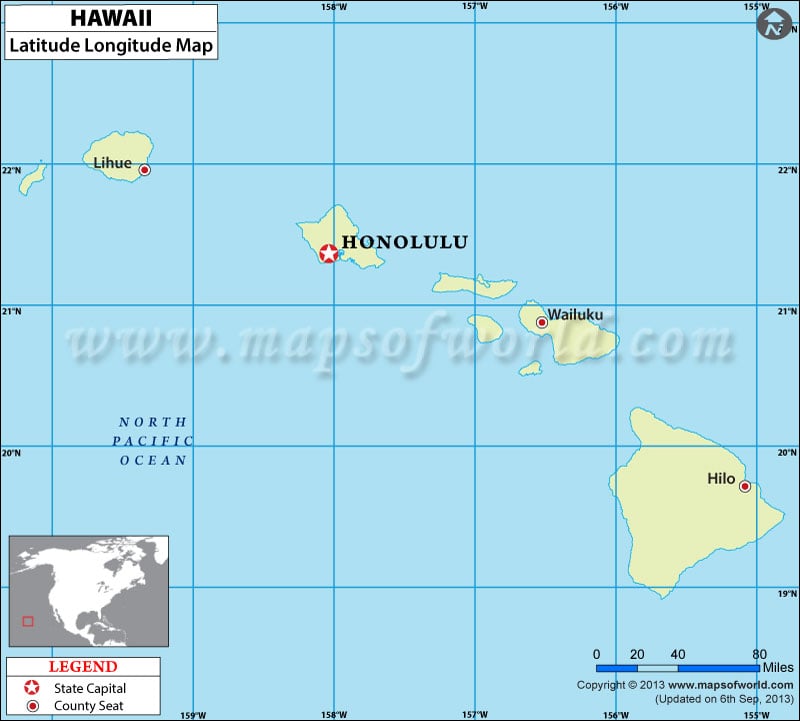
The Geographical Significance of Hawaii’s Latitude
Understanding the latitude of Hawaii is about more than just numbers on a map; it is about understanding the mechanics of a tropical paradise. Because the islands are located just south of the Tropic of Cancer, they receive a high amount of direct solar radiation year-round. This creates a remarkably consistent climate, where the “winter” and “summer” seasons differ by only a few degrees in temperature.
Mapping the Aloha State
The main Hawaiian Islands span a distance of about 1,500 miles, but the primary tourist destinations are concentrated at the southeastern end of the chain. When we look at the coordinates, Honolulu, the vibrant capital city located on Oahu, sits at approximately 21.3° N. To the south, the Hawaii Island—commonly known as the Big Island—extends down to about 18.9° N at its southernmost tip, Ka Lae. This makes it the southernmost point in the entire United States. To the north, Kauai sits near the 22° N mark. This narrow band of latitude ensures that the islands remain warm enough for palm trees and coral reefs while being far enough from the Equator to enjoy the cooling influence of the trade winds.
Why Latitude Matters for Your Travel Experience
For the traveler, Hawaii’s latitude means that the sun is exceptionally strong. Even on a cloudy day in Waikiki, the UV index can be much higher than in northern cities like Seattle or New York City. This geographic positioning also influences the length of the days. Unlike Alaska, where summer days can last nearly 24 hours, Hawaii enjoys a relatively stable day-night cycle, with about 11 hours of daylight in the winter and 13.5 hours in the summer. This stability makes it an ideal year-round destination for those looking to escape the drastic seasonal shifts of the mainland.
Island by Island: Navigating the Tropical Coordinates
Each island in the Hawaii chain offers a different experience, partly due to its specific longitudinal and latitudinal placement. As the islands move further northwest, they become geologically older and more eroded, leading to the dramatic cliffs seen in the northernmost inhabited islands.
Oahu: The Gathering Place at 21 Degrees North
Oahu is the heart of the state, home to Pearl Harbor and the world-famous Waikiki Beach. Its latitude places it in the perfect path for the northeasterly trade winds. These winds hit the Koolau Range, causing moisture to rise and fall as rain on the windward side, while leaving Honolulu and the leeward side sunny and dry. This “rain shadow” effect is a direct result of the islands’ tropical latitude interacting with their mountainous topography. Travelers visiting Diamond Head will notice the arid, volcanic landscape, which stands in stark contrast to the lush valleys just a few miles north.
Maui: The Valley Isle’s Latitude and Microclimates
Slightly southeast of Oahu lies Maui, located near 20.7° N. Maui is famous for its diverse microclimates. You can spend the morning sunbathing in the luxury resorts of Wailea and the afternoon driving through the misty, temperate forests of Kula on the slopes of Haleakala National Park. The latitude here allows for the cultivation of everything from tropical pineapples to high-altitude lavender. A visit to the historic town of Lahaina or a drive along the Hana Highway demonstrates how the island’s position catches the moisture of the Pacific Ocean, creating a veritable Eden.

The Big Island: Hawaii’s Southernmost Extremes
The Hawaii Island is a geographic marvel. Because it is the largest and southernmost island, it contains 4 out of the 5 major climate zones found on earth. At its southern tip, the latitude is low enough that you are closer to the Equator than any other part of the country. Here, you can explore the Hawaii Volcanoes National Park, where the earth is literally being reborn. The towns of Hilo and Kona represent two different worlds; Hilo is one of the wettest cities in the United States, while Kona is famous for its dry, sunny weather and world-class coffee, which thrives in the volcanic soil at this specific latitude.
Planning Your Trip Based on Hawaii’s Unique Position
When planning a trip to Hawaii, understanding its latitude helps manage expectations regarding weather and activities. While many expect a monolithic “tropical” experience, the reality is more nuanced.
Seasonal Expectations: Sun, Rain, and Trade Winds
The islands don’t have four seasons; they have two: kau (summer) and hooilo (winter). From May to October, the sun is nearly directly overhead, and the temperatures average around 85°F (29°C). In the winter months, from November to April, the temperature drops slightly to an average of 78°F (25°C). However, the latitude of Hawaii puts it in the path of “Kona storms” during the winter, which can bring heavy rain. If you are heading to the North Shore of Oahu in the winter, you’ll witness the massive swells that attract pro surfers from around the globe—a phenomenon caused by winter storms far to the north in the Pacific Ocean pushing waves toward the islands.
Essential Packing for a Tropical Latitude
Because of the intensity of the sun at 20° N, high-SPF sunscreen is a non-negotiable item for any Hawaii packing list. Additionally, because the latitude and varied elevations can lead to rapid weather changes, layering is key. A light rain jacket is essential for exploring the Na Pali Coast State Park on Kauai, while a warm fleece may be necessary if you plan to stargaze at the summit of Mauna Kea. Even in the tropics, the altitude can drop temperatures below freezing at the peaks.
Top Attractions Shaped by the Hawaiian Sun
The specific latitude of Hawaii has created natural wonders that cannot be found anywhere else. These attractions are the direct result of millions of years of volcanic activity combined with a tropical climate.
Coastal Wonders and Oceanic Adventures
The coral reefs surrounding the islands, such as those at Hanauma Bay or Molokini Crater, thrive because the water temperature remains consistently warm. This attracts a diverse array of marine life, including the Hawaiian Green Sea Turtle and the Humpback Whale, the latter of which migrates from Alaska to Hawaii every winter to breed in the warm, shallow waters. Kayaking along the Na Pali Coast or snorkeling off the coast of Lanai are experiences defined by the clarity and warmth of the tropical Pacific.
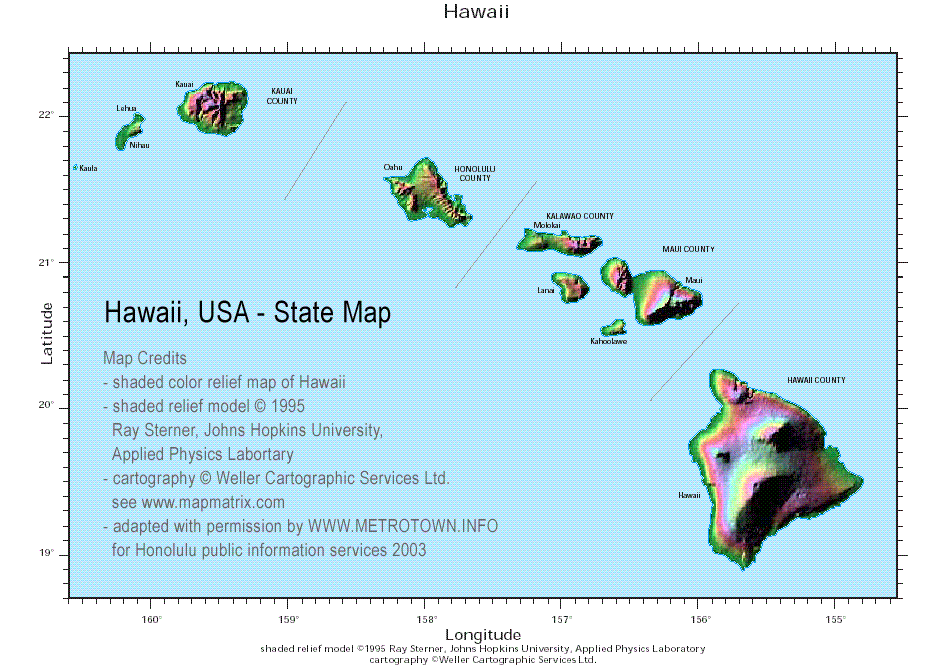
High-Altitude Experiences: Rising Above the Clouds
One of the most unique aspects of Hawaii’s geography is the presence of massive shield volcanoes. Because Hawaii is at a tropical latitude, the base of these mountains is surrounded by tropical rainforests. However, as you ascend Mauna Loa or Haleakala, you pass through several distinct ecological zones. The Haleakala Observatory on Maui offers some of the clearest skies in the world for astronomy, precisely because its latitude and height place it above the inversion layer of the atmosphere. Watching the sunrise from the “House of the Sun” is a quintessential Hawaii experience that highlights the island’s vertical reach within its tropical coordinates.
In conclusion, the latitude of Hawaii—hovering around the 20th parallel—is the fundamental architect of the islands’ beauty. It dictates the rhythm of the waves, the variety of the fruit, the warmth of the people, and the eternal appeal of the Aloha State. Whether you are relaxing at the Royal Hawaiian Hotel or hiking through Waimea Canyon State Park, you are experiencing the perfect intersection of geography and paradise. Hawaii remains a beacon for travelers not just for its luxury and culture, but for its unique place on the globe, standing as a solitary tropical sentinel in the vastness of the Pacific Ocean.
LifeOutOfTheBox is a participant in the Amazon Services LLC Associates Program, an affiliate advertising program designed to provide a means for sites to earn advertising fees by advertising and linking to Amazon.com. Amazon, the Amazon logo, AmazonSupply, and the AmazonSupply logo are trademarks of Amazon.com, Inc. or its affiliates. As an Amazon Associate we earn affiliate commissions from qualifying purchases.