
Alaska, often hailed as the Last Frontier, is a realm defined by its vast, untamed wilderness and the extraordinary array of life that calls it home. From the icy Arctic plains to the temperate rainforests of the panhandle, its diverse ecosystems support an incredible mosaic of flora and fauna, each species a natural landmark in its own right, shaped by millennia of adaptation to extreme conditions. Understanding what lives in Alaska is to glimpse the raw power and delicate balance of nature at its most profound.
The Arctic Giants: Terrestrial Mammals
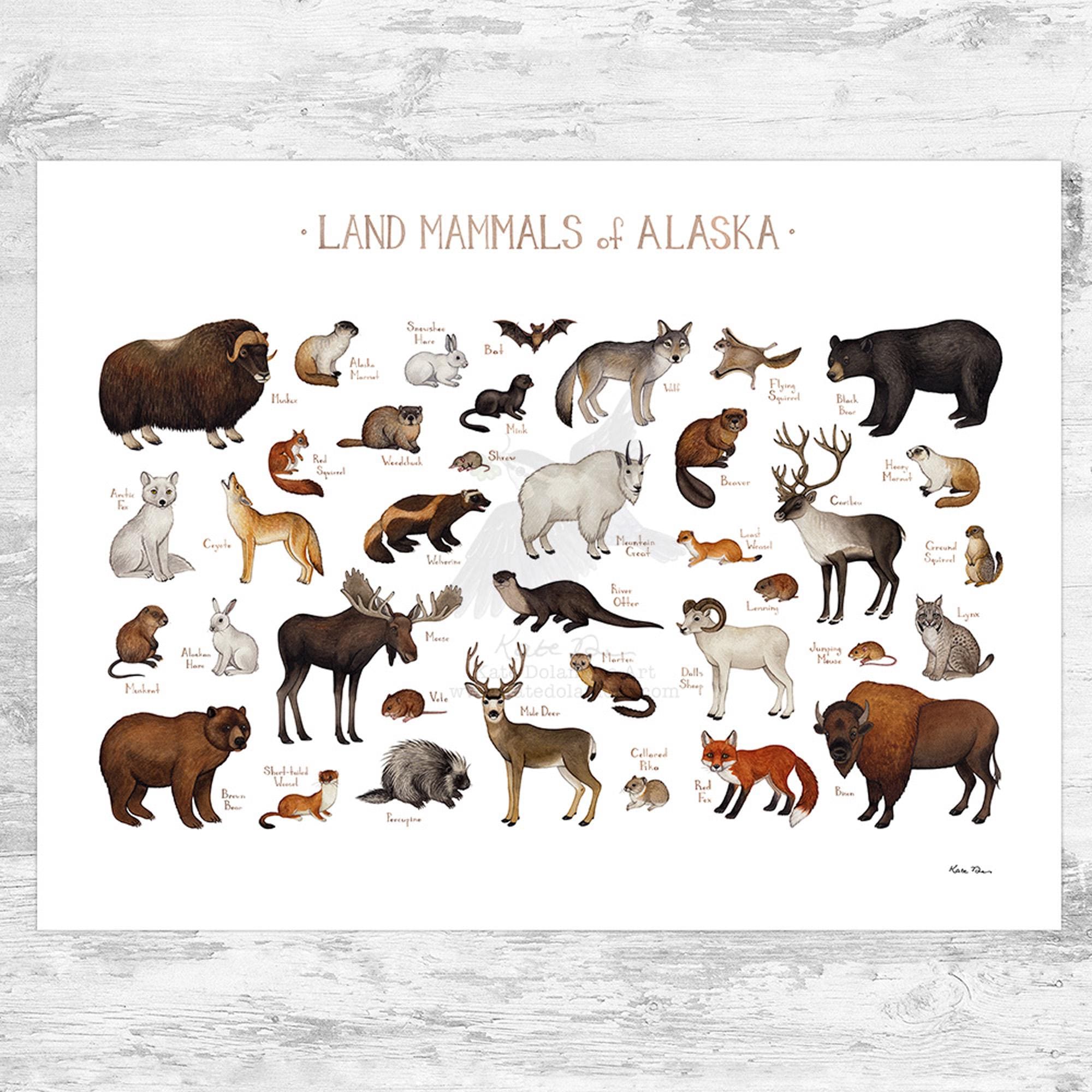
The landmass of Alaska is immense, encompassing rugged mountain ranges, expansive tundras, and dense boreal forests. These varied terrains provide habitats for some of North America’s most iconic and formidable terrestrial mammals.
Bears of the Last Frontier
Perhaps the most recognized residents of Alaska are its bears. The Brown Bear, particularly the subspecies known as the Grizzly Bear, dominates the interior and coastal regions. These magnificent omnivores are powerful symbols of Alaskan wilderness, often seen foraging for berries, roots, and, famously, salmon along rivers during the annual spawns. Coastal Brown Bears, often larger due to a rich diet of fish, are among the biggest land predators on Earth.
Further north, specifically in the Arctic National Wildlife Refuge and along the shores of the Chukchi and Beaufort Seas, resides the Polar Bear. Perfectly adapted to life in an icy environment, these apex predators hunt seals from sea ice, their stark white coats providing ideal camouflage. Their existence is intrinsically linked to the presence of sea ice, making them a poignant indicator of climate change impacts on Alaska’s northern reaches. The more elusive and smaller American Black Bear is common in the forested areas of Southcentral and Southeast Alaska, often venturing close to human settlements like Anchorage and Juneau.
Majestic Ungulates and Other Land Dwellers
Alaska is also home to a spectacular array of hoofed mammals. The Moose, the largest member of the deer family, roams the boreal forests and wetlands throughout much of the state, its impressive antlers a common sight against the backdrop of snowy mountains. Herds of Caribou undertake epic migrations across the tundra, particularly notable in areas like Denali National Park and the Arctic National Wildlife Refuge. These hardy animals are a cornerstone of the Alaskan ecosystem and a vital resource for indigenous communities.
In the towering peaks and craggy cliffs, the agile Dall Sheep can be spotted, their white coats contrasting with the rugged grey terrain. Their presence is a testament to the extreme adaptations required for survival in high-alpine environments. Other notable land mammals include various species of wolves, foxes (red, arctic, and cross), lynx, wolverines, and smaller furbearers like martens and beavers, all integral parts of the complex food web that defines Alaskan wilderness.
Masters of the Marine Realm: Aquatic Life
With more coastline than all other U.S. states combined, Alaska’s marine environments are teeming with life, from microscopic plankton to gargantuan whales. The cold, nutrient-rich waters of the Pacific Ocean and Bering Sea create a vibrant underwater world.
Whales, Seals, and Sea Otters
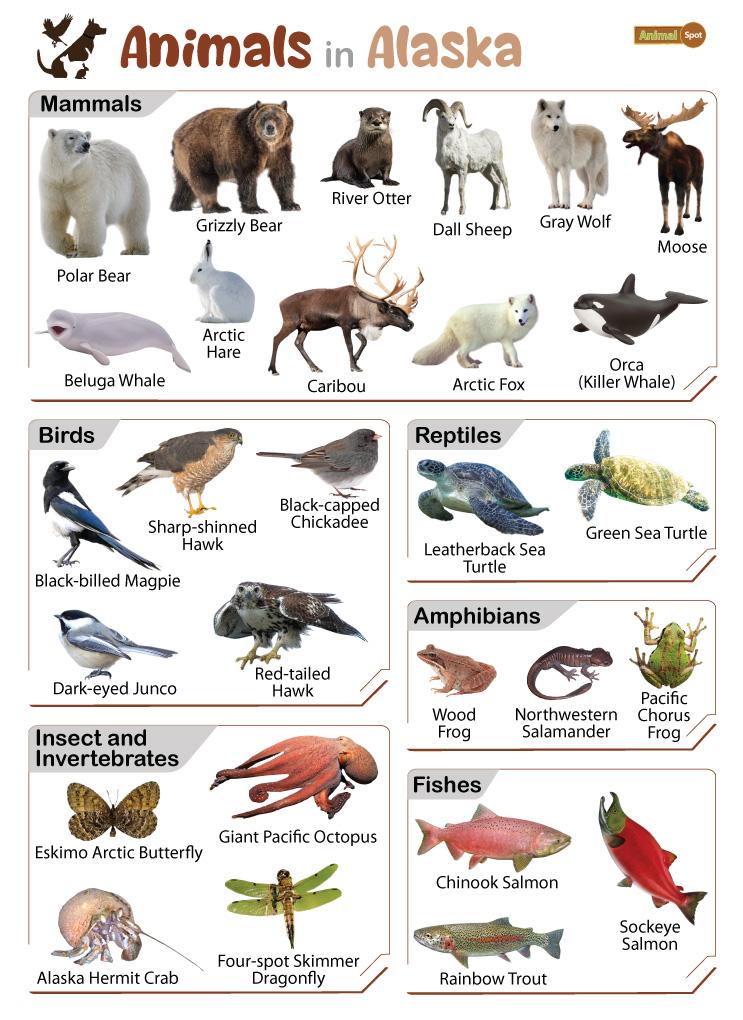
The waters off Alaska are a critical feeding ground and migratory pathway for numerous marine mammals. Humpback Whales are famous for their spectacular breaching and tail-slapping displays, especially common in the protected waters of Southeast Alaska and around Kenai Fjords National Park. Orcas, or Killer Whales, are powerful predators often observed hunting seals, sea lions, and even other whales. Gray Whales undertake one of the longest migrations of any mammal, passing through Alaskan waters on their journey from Mexico to the Arctic for summer feeding. Other cetaceans include Minke Whales, Fin Whales, and the elusive Bowhead Whale in the Arctic.
Various species of seals and sea lions are also prevalent. Steller Sea Lions haul out on rocky islets and buoys, particularly abundant in the Gulf of Alaska. Harbor Seals are commonly found along the coastlines and in glacial bays. The charismatic Sea Otter, a keystone species, floats playfully in kelp forests, diligently grooming its dense fur and cracking shellfish on its belly. Their recovery from near extinction is a significant conservation success story in Alaskan waters.
The Salmon Lifeblood
No discussion of Alaskan aquatic life would be complete without mentioning salmon. Five species of Pacific Salmon – King (Chinook), Sockeye (Red), Coho (Silver), Pink (Humpy), and Chum (Dog) – undertake incredible journeys from the ocean to their natal freshwater streams to spawn. This annual migration is a colossal event, underpinning the entire ecosystem. Bears, eagles, and even humans rely heavily on the abundant protein provided by the salmon runs. The health of Alaska’s rivers and coastal waters is inextricably linked to the vitality of its salmon populations. Beyond salmon, Alaska’s freshwaters are home to Rainbow Trout, Arctic Char, and Dolly Varden, providing rich angling opportunities and further contributing to the region’s biodiversity.
Avian Wonders: From Tundra to Coast
Alaska is a birder’s paradise, hosting over 400 species of birds, many of which migrate thousands of miles to breed in its resource-rich environments. The diverse habitats—from coastal cliffs to vast tundras—support a wide array of avian life.
Raptors and Waterfowl
The majestic Bald Eagle, the national bird of the United States, thrives in Alaska, especially in the abundant salmon-rich regions of the panhandle. Their impressive nests atop spruce trees and their powerful silhouettes against the sky are common sights. Other raptors include various species of falcons, hawks, and owls, such as the Great Horned Owl and the Snowy Owl, which hunts on the Arctic tundra.
Waterfowl are incredibly abundant. Millions of ducks, geese, and swans descend upon Alaska’s wetlands, lakes, and coastal areas for breeding. Species like Harlequin Ducks, Common Murres, and Puffins populate the rugged sea cliffs and islands, forming immense breeding colonies. The ethereal call of the Common Loon is a quintessential sound of Alaskan wilderness lakes.
Migratory Marvels
Alaska’s Arctic tundra is a vital nesting ground for countless shorebirds that migrate from as far away as the southern hemisphere. Species like Golden Plovers, Sandpipers, and Phalaropes utilize the brief but intense summer season to raise their young before embarking on epic migrations. The annual return of these birds signals the true awakening of the Arctic from its long winter slumber. Their journeys are incredible feats of endurance and navigation, highlighting the interconnectedness of global ecosystems with Alaskan “landmarks.”
Adapting to Extremes: Unique Alaskan Flora
While often overshadowed by its spectacular wildlife, Alaska’s plant life is equally remarkable, displaying incredible resilience and adaptation to the state’s harsh climate and short growing seasons.
Tundra and Taiga Ecosystems
The majority of Alaska is covered by two primary terrestrial biomes: the tundra and the taiga (boreal forest). The tundra, stretching across the northern and western parts of the state, is characterized by permafrost and low-growing vegetation. Here, plants like Arctic Cotton Grass, various mosses and lichens, dwarf willows, and numerous berry plants (blueberries, cranberries, cloudberries) create a vibrant carpet of color in summer. These plants are crucial for grazing animals like Caribou and Muskoxen.
South of the tundra lies the vast taiga, a dense evergreen forest dominated by Black Spruce, White Spruce, Birch, and Aspen. This forest stretches across Interior Alaska, from Fairbanks southwards, providing critical habitat for Moose, bears, and countless bird species. The undergrowth here is rich with wildflowers and shrubs that burst into life during the brief summer.
Resilient Plant Life
Despite the challenges of frost, strong winds, and limited sunlight, Alaskan plants exhibit remarkable strategies for survival. Many grow close to the ground to avoid harsh winds and capture warmth, while others complete their life cycles rapidly during the short summer. The rainforests of Southeast Alaska, a stark contrast to the Arctic, are characterized by colossal Sitka Spruce and Western Hemlock trees, draped in moss and ferns, thriving in the region’s abundant rainfall. This unique ecosystem supports its own distinct communities of wildlife, including the rare Sitka Black-tailed Deer. The sheer diversity and resilience of Alaska’s plant life are as much a part of its natural grandeur as its famous animal inhabitants.
LifeOutOfTheBox is a participant in the Amazon Services LLC Associates Program, an affiliate advertising program designed to provide a means for sites to earn advertising fees by advertising and linking to Amazon.com. Amazon, the Amazon logo, AmazonSupply, and the AmazonSupply logo are trademarks of Amazon.com, Inc. or its affiliates. As an Amazon Associate we earn affiliate commissions from qualifying purchases.