
Florida, often celebrated for its sun-drenched beaches, vibrant cities, and theme parks, also holds a profoundly significant, yet less publicly explored, identity as a cornerstone of national defense. The state’s unique geographical position, bordered by the Atlantic Ocean to the east and the Gulf of Mexico to the west, coupled with its proximity to strategic international waters, has made it an indispensable hub for military operations across all branches of the US Armed Forces. These military installations are not merely functional sites; they are monumental landmarks, each with a rich history, distinct architecture, and an enduring legacy that shapes the state’s cultural, economic, and strategic landscape. From critical training centers to command posts for global operations, Florida’s military bases stand as powerful testaments to the nation’s defense prowess and historical evolution.
The Strategic Importance of Florida’s Military Landmarks
The geographical advantage of Florida cannot be overstated. Its long coastline provides crucial access to both oceanic fronts, facilitating naval operations, maritime patrols, and logistical support. The expansive, often sparsely populated, interior and airspace offer ideal conditions for advanced flight training, weapons testing, and missile development. Furthermore, Florida’s close proximity to the Caribbean Sea, Central and South America, and critical shipping lanes positions it as a vital staging ground for operations in these regions, making installations like MacDill Air Force Base in Tampa indispensable for global command and control. These bases are not only military assets but also significant historical landmarks, many having played pivotal roles in major conflicts from World War II to the Cold War and contemporary global security challenges. They are centers of innovation, training, and strategic power, firmly etched into the identity of the Sunshine State.
Key Air Force Installations
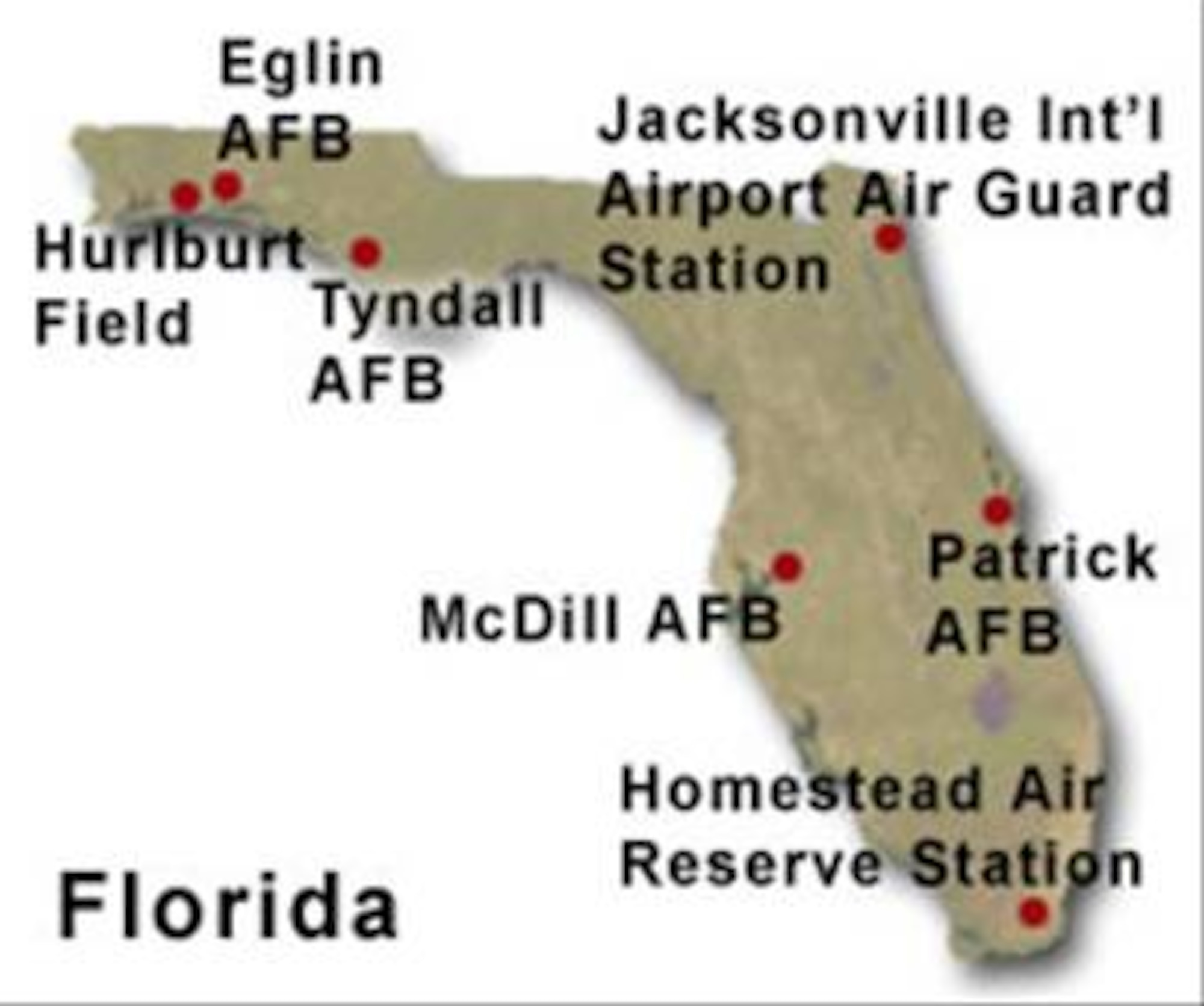
Florida is home to several of the US Air Force’s most critical bases, serving diverse roles from specialized operations to fighter pilot training and space launch support. These installations are characterized by their vast footprints, sophisticated infrastructure, and their profound impact on their surrounding communities.
Eglin Air Force Base
Situated near Valparaiso in Northwest Florida, Eglin Air Force Base is one of the largest and most significant military installations in the world. Encompassing over 724 square miles, it serves as a primary hub for weapons development, testing, and evaluation, earning it the moniker “the largest military base in the free world.” As a landmark, Eglin represents the cutting edge of military technology and innovation, with its sprawling range complex capable of testing virtually every type of air-delivered munition. Historically, it has been instrumental in the development of iconic aircraft and weaponry, and today, it hosts numerous tenant units, including the 7th Special Forces Group (Airborne) and the 33rd Fighter Wing. Its sheer scale and continuous contribution to defense technology make it an unparalleled landmark in military history.
Tyndall Air Force Base
Located east of Panama City, Tyndall Air Force Base has long been known as the “Home of Air Dominance,” a critical training ground for F-22 Raptor pilots and air battle managers. In October 2018, Hurricane Michael, a Category 5 storm, devastated the base, reducing much of its infrastructure to rubble. However, in an extraordinary display of resilience and strategic commitment, Tyndall is currently undergoing a massive rebuilding effort, transforming it into a “base of the future.” This ambitious project, incorporating smart technology and resilient construction, positions Tyndall as a landmark of modern military infrastructure design, aiming to be a fully integrated and storm-resistant installation. Its rebirth from devastation symbolizes the enduring spirit and adaptability of the US Air Force.
MacDill Air Force Base
MacDill Air Force Base, situated on a peninsula in Tampa, holds immense strategic importance as the headquarters for two critical unified combatant commands: US Central Command (USCENTCOM) and US Special Operations Command (USSOCOM). USCENTCOM oversees military operations in a vast region, including the Middle East, Central Asia, and parts of Africa, while USSOCOM directs special operations forces globally. This dual role makes MacDill a focal point for international security and a landmark of global military strategy. Historically, it served as a bomber base during World War II and the Cold War. Today, its presence deeply integrates the military into the economic and cultural fabric of Tampa Bay, standing as a powerful symbol of international leadership and defense.
Patrick Space Force Base
Located on Florida’s Space Coast near Cocoa Beach, Patrick Space Force Base is a vital installation for the United States Space Force. Formerly Patrick Air Force Base, its renaming reflects the evolving nature of military operations into the space domain. Patrick Space Force Base plays a crucial role in space launch operations, range safety, and satellite tracking, supporting missions from nearby Cape Canaveral Space Force Station and the Kennedy Space Center. As a landmark, it signifies humanity’s push beyond Earth’s atmosphere for national defense and scientific exploration, embodying the future of aerospace technology and strategy.
Hurlburt Field
Adjacent to Eglin Air Force Base in Northwest Florida, Hurlburt Field is the headquarters for Air Force Special Operations Command (AFSOC), which provides combat search and rescue, special weather reconnaissance, and psychological operations, among other specialized missions. This base is a landmark of elite military capability, housing highly trained personnel and specialized aircraft designed for covert and complex operations worldwide. Its history is steeped in special tactics and unconventional warfare, making it a critical asset in the nation’s security architecture.
Other notable Air Force installations include Homestead Air Reserve Base near Miami, which serves as a crucial strategic air defense hub and a rapid deployment center.
Dominant Naval and Marine Corps Presence

Florida’s extensive coastline and deep-water ports make it an ideal location for naval operations, hosting some of the US Navy’s largest and most historically significant bases.
Naval Air Station Pensacola
Known as the “Cradle of Naval Aviation,” Naval Air Station Pensacola in Northwest Florida is arguably the most iconic naval landmark in the state. Established in 1914, it is the initial training base for all US Navy and Marine Corps aviators and naval flight officers. The base is also home to the legendary Blue Angels flight demonstration squadron and the world-renowned National Naval Aviation Museum, which attracts thousands of visitors annually, celebrating the rich history of naval flight. As a landmark, NAS Pensacola embodies over a century of aviation excellence, innovation, and the foundational training of naval airpower.
Naval Station Mayport
Located near Jacksonville on the Atlantic coast, Naval Station Mayport is a major deep-water port and the third-largest naval surface warfare base in the United States. It serves as a homeport for numerous warships, including destroyers, frigates, and littoral combat ships, providing critical support for naval operations in the Atlantic and beyond. Mayport is a landmark of maritime power projection, with its vast piers and industrial facilities serving as a constant reminder of the US Navy’s global reach and readiness.
Naval Air Station Jacksonville
Also situated in Jacksonville, Naval Air Station Jacksonville (NAS Jax) is a large and vital master air station, serving as the largest employer in Northeast Florida. It hosts maritime patrol aircraft, including the P-8 Poseidon, and provides critical support for naval aviation operations and maintenance. NAS Jax is a landmark of continuous operational readiness, playing a significant role in anti-submarine warfare, intelligence gathering, and surveillance missions across the globe.
Naval Support Activity Panama City
On the Gulf Coast in Panama City, Naval Support Activity Panama City (NSA PC) is a specialized hub for diving and salvage operations, mine warfare, and amphibious vehicle research and development. It houses the Naval Diving and Salvage Training Center, which trains all military divers. As a landmark, NSA PC represents the specialized and often unseen capabilities of the Navy, critical for underwater safety, recovery, and combat.
The Marine Corps also maintains a presence with facilities like Marine Corps Support Facility Blount Island in Jacksonville, a strategic logistics hub for the prepositioning of military equipment.
Army and Coast Guard Footprints
While the Air Force and Navy have the largest visible footprints, the US Army and US Coast Guard also maintain essential installations in Florida, vital for training, homeland security, and maritime safety.
Camp Blanding Joint Training Center
Located near Starke in northern Florida, Camp Blanding Joint Training Center is the primary training site for the Florida Army National Guard. This vast training area, encompassing over 73,000 acres, provides facilities for live-fire exercises, maneuver training, and readiness preparation for units across all branches. As a landmark, Camp Blanding is a testament to the continuous readiness and training efforts of reserve forces, historically serving as a major mobilization center during World War II and continuing to play a vital role in homeland defense and emergency response.
US Coast Guard Air Station Clearwater
US Coast Guard Air Station Clearwater, situated at the St. Pete-Clearwater International Airport, is the largest and busiest air station in the Coast Guard. It conducts a wide array of missions, including search and rescue, drug interdiction, migrant interdiction, and environmental protection across the Gulf of Mexico, Caribbean Sea, and Atlantic Ocean. The air station, a crucial landmark for maritime safety, utilizes C-130 Hercules aircraft and MH-60 Jayhawk helicopters to respond to emergencies and enforce maritime law.
Other significant Army presences include supporting units at MacDill Air Force Base for USCENTCOM and USSOCOM, as well as recruiting and reserve centers scattered throughout the state.
Enduring Legacy and Impact
The network of military bases in Florida represents more than just a collection of installations; they are profound landmarks that embody the historical tapestry, strategic importance, and innovative spirit of the United States. From the “Cradle of Naval Aviation” at NAS Pensacola to the “base of the future” at Tyndall and the global command centers at MacDill, each base tells a story of evolving defense needs, technological advancements, and unwavering commitment to national security.
These landmarks profoundly influence the surrounding communities, creating vibrant military towns, fostering economic growth, and contributing to a unique cultural identity. They are sites where history is made, where the next generation of service members is trained, and where critical decisions impacting global stability are orchestrated. While direct public access to many operational areas is restricted, their imposing presence, historical narratives, and visible impact on the landscape and local populace firmly establish them as vital, enduring landmarks of the state of Florida. Their significance extends beyond their fences, shaping the very identity of the communities and the nation they serve.
LifeOutOfTheBox is a participant in the Amazon Services LLC Associates Program, an affiliate advertising program designed to provide a means for sites to earn advertising fees by advertising and linking to Amazon.com. Amazon, the Amazon logo, AmazonSupply, and the AmazonSupply logo are trademarks of Amazon.com, Inc. or its affiliates. As an Amazon Associate we earn affiliate commissions from qualifying purchases.