
The unmistakable and awe-inspiring mountain range that defines the landscape of Colorado is the majestic Rocky Mountains. Extending for thousands of miles across North America, from Canada down to New Mexico in the United States, the Rockies reach their most significant prominence and highest average elevation within the borders of the Centennial State. This monumental natural landmark is not merely a collection of peaks; it is a complex tapestry of sub-ranges, diverse ecosystems, and profound historical and geological significance, shaping the climate, culture, and very identity of Colorado.
The Geographic Backbone of Colorado: The Rocky Mountains
The Rocky Mountains form the grand western frontier of Colorado, serving as a dramatic transition from the vast Great Plains to the east. Within Colorado, the range is particularly broad and rugged, home to the majority of the highest peaks in the entire Rocky Mountain system. This segment of the North American Cordillera is characterized by its towering summits, extensive high-altitude plateaus, deep canyons, and a critical hydrographic feature: the Continental Divide. This invisible line snakes through the heart of the Colorado Rockies, dictating whether water flows east towards the Atlantic Ocean or west towards the Pacific.

Geological Formation and Distinctive Features
The formation of the Rocky Mountains is a story written in millennia of geological upheaval, primarily driven by the Laramide Orogeny that began approximately 80 to 55 million years ago. This period saw shallow-angle subduction of oceanic plates beneath the North American continent, leading to the uplift of ancient Precambrian crystalline basement rocks. Unlike many mountain ranges formed by volcanic activity, the Colorado Rockies are largely a result of crustal shortening and uplift, revealing some of the oldest rocks on the planet at their cores.
Subsequent geological processes, including extensive Ice Age glaciation, further sculpted the range. Glaciers carved out U-shaped valleys, dramatic cirques, and sharp arêtes, leaving behind a landscape of raw, magnificent beauty. The high elevation contributes to distinct climate zones, from semi-arid plains to alpine tundra, supporting a remarkable diversity of flora and fauna. The sheer scale of these mountains, combined with their dramatic geological history, makes them a landmark of unparalleled natural grandeur.
Iconic Sub-Ranges and Notable Peaks within Colorado
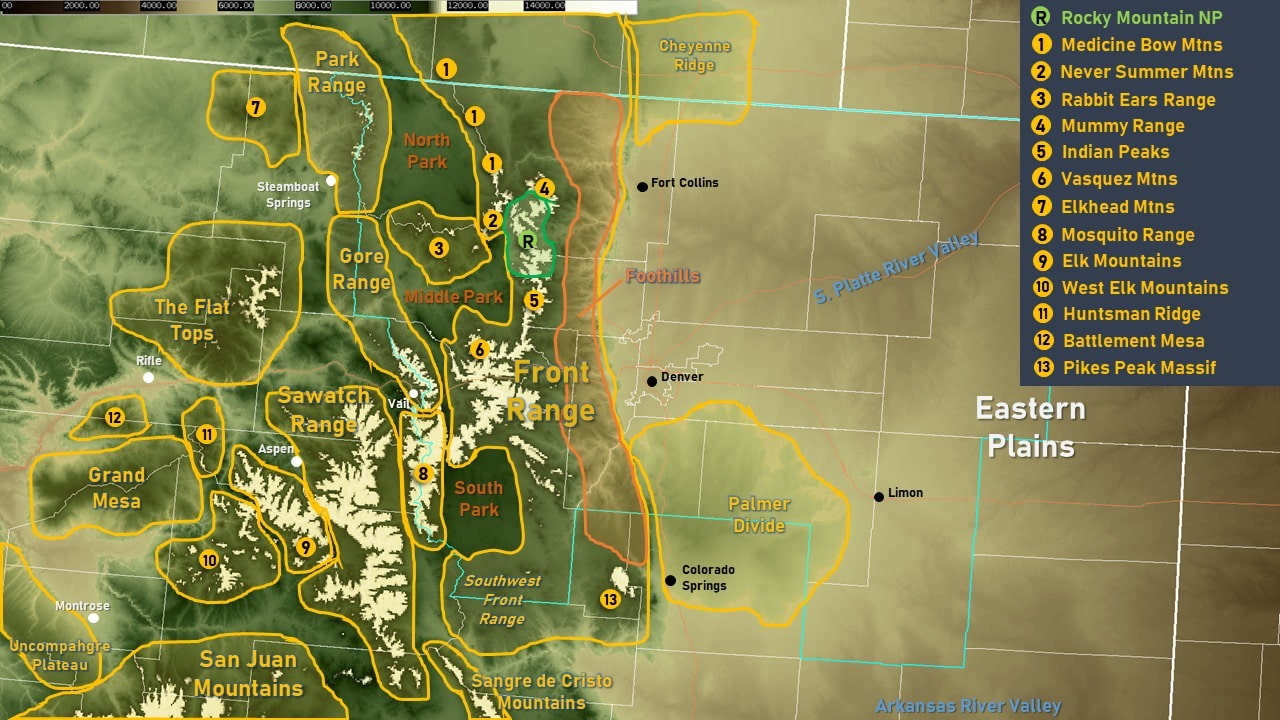
The Colorado Rockies are not a monolithic entity but are composed of several distinct sub-ranges, each with its own character and iconic peaks. These ranges contribute to the overall fame and allure of the Rocky Mountains as a natural landmark.
The Front Range
Perhaps the most recognized sub-range, the Front Range is the easternmost extension of the Rockies in Colorado, rising abruptly from the Great Plains. This range is home to some of Colorado’s most populous cities, including Denver, Boulder, and Colorado Springs, whose urban skylines are dramatically backdropped by jagged peaks. Key landmarks within the Front Range include Pikes Peak, a globally recognized Fourteener (a peak exceeding 14,000 feet in elevation) famous for its scenic drive and cog railway, and Longs Peak, the northernmost Fourteener in the range and a prominent feature of Rocky Mountain National Park. The proximity of these towering mountains to major urban centers makes them a highly accessible and cherished landmark for millions.
The Sawatch Range
Deep within the heart of Colorado lies the Sawatch Range, a colossal collection of high peaks that includes the two highest mountains in Colorado and the entire Rocky Mountain chain: Mount Elbert (14,439 feet) and Mount Massive (14,429 feet). This range is characterized by its broad, rounded summits, a stark contrast to the more jagged peaks found elsewhere. The Sawatch Range forms a significant portion of the Continental Divide and is a watershed for major rivers like the Arkansas River. Its remote, rugged wilderness is a testament to the raw, untamed beauty of the Colorado Rockies, embodying the spirit of pristine mountain landscapes.
The Sangre de Cristo Mountains

To the south, stretching into New Mexico, are the Sangre de Cristo Mountains. This range is renowned for its incredibly steep, angular peaks and narrow valleys. It holds a unique geological history and is culturally significant, with a name that translates to “Blood of Christ,” said to be inspired by the crimson hues that often paint the peaks at sunrise and sunset. Peaks like Blanca Peak and Crestone Peak are among its most challenging and rewarding summits, drawing experienced climbers to their remote and imposing heights.
Other notable sub-ranges contributing to Colorado’s mountainous identity include the San Juan Mountains in the southwest, known for their volcanic origins, dramatic basins, and historic mining towns; the Gore Range, a wilderness area celebrated for its pristine beauty and challenging terrain; and the Medicine Bow Mountains in the north, straddling the border with Wyoming. Each of these ranges contributes to the diverse geological and ecological mosaic that defines the Rocky Mountains as a landmark in Colorado.
A Tapestry of Colorado History and Natural Splendor
The Rocky Mountains in Colorado are more than just geological formations; they are deeply woven into the historical fabric and natural splendor of the region. From the earliest human inhabitants to modern-day conservation efforts, the mountains have been a constant presence and a defining force.
Indigenous Heritage and Early Exploration
Long before European explorers ventured into the interior of North America, indigenous peoples revered and inhabited the Colorado Rockies. Tribes such as the Ute, Cheyenne, and Arapaho hunted game, gathered resources, and established spiritual connections with the mountains. Their knowledge of the terrain, survival skills, and deep respect for the land were essential for thriving in such a challenging environment. Evidence of their ancient paths and settlements can still be found throughout the range, offering a glimpse into centuries of human interaction with this powerful landmark.
Later, European explorers and American pioneers navigated these formidable peaks, initially seeking passage to the west, then drawn by the lure of gold and silver. The mountains became a crucible for boom-and-bust mining towns like Leadville and Crested Butte, leaving behind a rich legacy of stories, ghost towns, and infrastructure that speak to the arduous yet captivating history of settlement in the high country.
Colorado’s Fourteeners: A Unique Mountain Landmark Culture
A distinctive aspect of the Colorado Rockies is the presence of its 58 Fourteeners, mountains exceeding 14,000 feet in elevation. Colorado boasts the vast majority of these majestic peaks in the contiguous United States, creating a unique mountaineering culture centered around “peak bagging” – the quest to summit all of them. Each Fourteener is a landmark in its own right, with distinct trails, challenges, and views, collectively representing a significant natural monument that draws hikers and climbers from around the globe. This cultural phenomenon underscores the deep connection between the state’s identity and its towering mountain range.
The Rocky Mountains as an Enduring Natural Landmark
The enduring status of the Rocky Mountains in Colorado as a natural landmark is rooted in its immense ecological value and the concerted efforts to preserve its pristine character.
Biodiversity and Ecosystems
The varied topography and elevation gradients of the Colorado Rockies support an extraordinary range of ecosystems. From the montane forests of ponderosa pine and aspen at lower elevations to the subalpine spruce-fir forests and finally the treeless alpine tundra above timberline, each zone harbors unique plant and animal species. Iconic wildlife such as elk, bighorn sheep, mountain goats, moose, and black bears call these mountains home. The Rockies serve as a vital corridor for numerous migratory species and are a crucial reservoir for biodiversity, making them a living, breathing landmark of global ecological importance.
Preservation and Accessibility
Recognizing the unparalleled value of this natural treasure, significant portions of the Colorado Rockies have been designated as national parks, national forests, and wilderness areas. Rocky Mountain National Park, established in 1915, stands as a prime example, preserving a vast expanse of high-altitude wilderness, including peaks, valleys, and pristine lakes. Other protected areas like Routt National Forest, Pike National Forest, Arapaho National Forest, and White River National Forest ensure the long-term conservation of these landscapes. These designations not only protect the natural environment but also ensure that future generations can experience the profound beauty and majesty of this iconic North American landmark. The interplay of these protected lands with renowned ski resorts like Aspen and Vail further illustrates the multi-faceted nature of the Colorado Rockies as both a wild sanctuary and a place of human activity, all contributing to its status as an iconic and defining landmark of Colorado.
LifeOutOfTheBox is a participant in the Amazon Services LLC Associates Program, an affiliate advertising program designed to provide a means for sites to earn advertising fees by advertising and linking to Amazon.com. Amazon, the Amazon logo, AmazonSupply, and the AmazonSupply logo are trademarks of Amazon.com, Inc. or its affiliates. As an Amazon Associate we earn affiliate commissions from qualifying purchases.