
When planning a trip to the Sunshine State, understanding Florida’s time zones is as crucial as knowing the best time to visit the Walt Disney World Resort or booking a stay at a luxurious Fontainebleau Miami Beach. While it might seem like a straightforward question, the reality of time in Florida is a little more nuanced, involving two distinct time zones and a peculiar historical quirk that impacts the daily lives of its residents and visitors alike. This article delves into the temporal landscape of Florida, exploring its time zone divisions, the rationale behind them, and how it affects your travel experiences across this vibrant state.
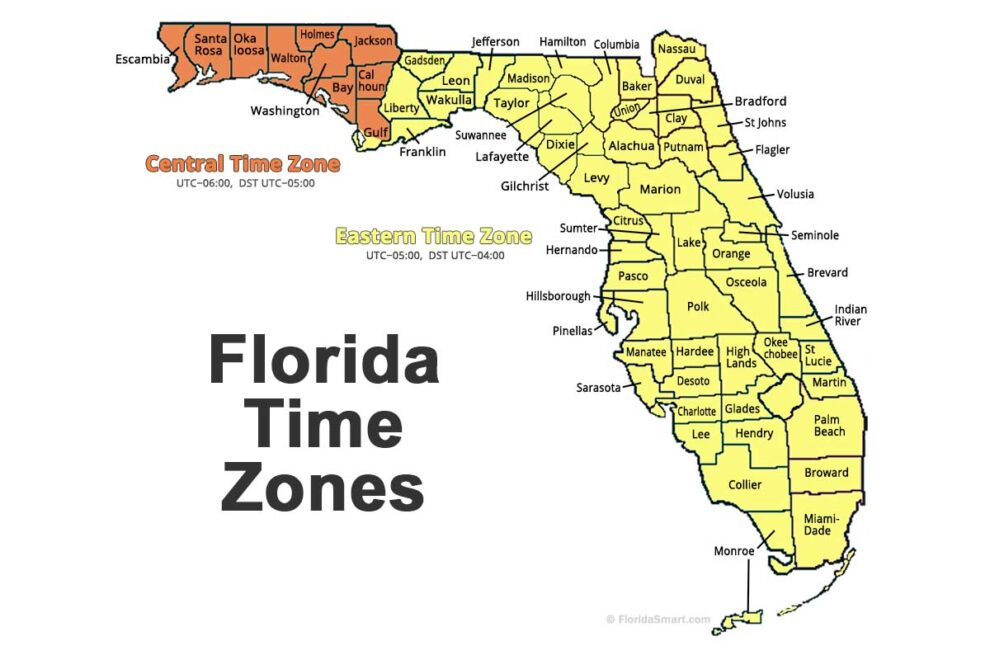
The United States officially operates on a system of standard time zones, designed to synchronize daily activities with the sun’s apparent position. For most of the continental US, this system is clear-cut. However, Florida, with its long, slender shape and its position on the southeastern edge of the continent, presents a unique case. The state is bisected by a boundary that separates two of the nation’s primary time zones: Eastern Standard Time (EST) and Central Standard Time (CST).
The Eastern Time Zone Dominance
The vast majority of Florida observes Eastern Standard Time (EST), which is UTC-5. This means that the eastern two-thirds of the state operate on the same time as cities like New York City and Washington D.C. This includes some of the state’s most popular tourist destinations and largest metropolitan areas, such as Miami, Orlando, Tampa, Jacksonville, and Fort Lauderdale.
Embracing the Eastern Standard Time Experience
For most travelers, their Florida adventure will unfold entirely within the Eastern Time Zone. This simplifies scheduling, especially when coordinating with friends and family back home in the Eastern Time Zone. When you land at Miami International Airport or Orlando International Airport, you’ll immediately be immersed in EST.
Consider the itinerary of a typical family vacation. A morning visit to Universal Studios Florida in Orlando will start and end according to EST. An evening stroll along Ocean Drive in Miami Beach will be governed by EST. The opening hours of attractions like Busch Gardens Tampa Bay or the historic streets of St. Augustine are all set to EST. This widespread adoption of EST across the state’s major hubs means that for a significant portion of your Florida experience, time will feel familiar and predictable, aligning with a large swathe of the United States.
The economic and social implications of EST are substantial. Major media outlets based in Florida operate on EST, and business transactions across the state largely adhere to this temporal framework. Educational institutions, government offices, and public transportation systems are all synchronized with EST. This creates a cohesive temporal rhythm for most Floridians.
The Central Time Zone’s Panhandle Presence
While Eastern Standard Time reigns supreme for most of Florida, a smaller, yet significant, portion of the state operates on Central Standard Time (CST), which is UTC-6. This temporal zone applies to the westernmost part of the Florida Panhandle, generally west of the Apalachicola River.
Exploring the Central Time Zone’s Influence
This geographical division means that towns and cities in the western Panhandle, such as Pensacola and Panama City Beach, are an hour behind their counterparts in the rest of Florida. This distinction is crucial for travelers planning trips that might span across the state or involve visiting both parts of the Panhandle.
Imagine a road trip that begins in Tallahassee, firmly in the EST zone, and heads west towards Pensacola. As you cross the invisible time line, you’ll gain an hour. This can be a delightful surprise for some, allowing for an extended evening, or a slight adjustment for those accustomed to always being in EST.

The communities within the Central Time Zone in Florida often find themselves aligning with the temporal rhythms of neighboring Alabama and Mississippi, which also observe CST for the most part. This can influence local business hours, radio broadcasts, and even the timing of local news. For those planning to visit attractions like the Naval Aviation Museum in Pensacola, it’s essential to confirm opening and closing times in CST.
The historical reasons behind this division are rooted in the early days of rail transportation and telegraphy. As the United States expanded westward, standard time zones were established to bring order to the previously chaotic system of local solar times. The boundaries were often drawn based on geographical features and existing settlement patterns, leading to the somewhat irregular lines we see today. Florida’s shape and its historical development contributed to its dual time zone status.
Daylight Saving Time: A Seasonal Shift
Beyond the fundamental division between EST and CST, Florida also participates in Daylight Saving Time (DST). During the warmer months, most of the United States, including Florida, shifts its clocks forward by one hour. This means that during DST, the Eastern Time Zone observes Eastern Daylight Time (EDT), which is UTC-4, and the Central Time Zone observes Central Daylight Time (CDT), which is UTC-5.
Navigating Daylight Saving Time in Florida
The implementation of Daylight Saving Time can add another layer of complexity when planning. For the majority of the year, Florida is on EST. However, from early March to early November, it’s on EDT. Similarly, the western Panhandle shifts from CST to CDT.
This seasonal shift is particularly relevant for those planning international travel or business with countries that do not observe DST. For instance, if you’re coordinating a conference call with a business in London, which observes Greenwich Mean Time (GMT) and then British Summer Time (BST), you’ll need to factor in both the state’s time zone and its DST status, as well as the UK’s own DST schedule.
While Florida does observe DST, there have been ongoing discussions and legislative efforts in recent years to make DST permanent in the state. This would mean that Florida would remain on EDT year-round, aligning it more closely with the longer daylight hours experienced during summer. However, for the time being, the clocks still spring forward and fall back, a familiar ritual for many.
The practical implications of DST for tourists are generally minimal, as most attractions and services adjust their hours accordingly. However, it’s always a good practice to double-check schedules, especially if your travel dates fall around the DST changeover period. Booking accommodations at renowned resorts like the Ritz-Carlton, Naples or finding a charming villa in the Keys will involve checking their stated hours of operation, which will implicitly be in the local time zone, including DST.
Practical Tips for Travelers
Understanding Florida’s time zones is not just an academic exercise; it has practical implications for your travel plans. Here are a few tips to ensure you stay on schedule:

Staying Synchronized During Your Florida Getaway
- Check Your Destination: Before you finalize your itinerary or book transportation, confirm which time zone your primary destinations fall under. If you’re staying in Miami, you’re in EST. If your heart is set on exploring the beaches of Destin, you’ll be in CST. Websites for cities and attractions will typically specify their local time zone.
- Set Multiple Alarms: When crossing time zones within Florida, especially if driving from the eastern part of the state to the Panhandle, set alarms on your phone or watch to remind you of the change. Your smartphone will usually update automatically, but it’s wise to be aware.
- Coordinate with Others: If you’re traveling with a group or meeting people, clearly state the time zone when making arrangements. Instead of saying “let’s meet at 2 PM,” say “let’s meet at 2 PM Eastern Time” or “2 PM Central Time.” This avoids confusion, particularly if some members of your party are in different time zones.
- Be Mindful of Flight and Train Schedules: Airlines and train companies operate on scheduled times, which are typically displayed in the local time of the departure and arrival airports or stations. However, if you’re booking a complex journey, always double-check the time zone of each leg of your trip. For example, a flight from Tampa (EST) to Pensacola (CST) will have arrival times adjusted for CST.
- Factor in DST: Remember that the time difference between Florida and other parts of the US or the world can change twice a year due to Daylight Saving Time. This is especially important for business travelers or those with family commitments abroad.
By keeping these temporal distinctions in mind, you can navigate Florida with ease, ensuring that your visits to iconic landmarks like the Everglades National Park, your explorations of the vibrant culinary scenes in cities like New Orleans (though not in Florida, it highlights the contrast), and your stays in world-class hotels are perfectly timed. Whether you’re basking in the sun on the shores of South Beach or enjoying the tranquility of the Panhandle’s beaches, a clear understanding of Florida’s time zones will enhance your travel experience, making your journey through the Sunshine State as seamless as possible.
LifeOutOfTheBox is a participant in the Amazon Services LLC Associates Program, an affiliate advertising program designed to provide a means for sites to earn advertising fees by advertising and linking to Amazon.com. Amazon, the Amazon logo, AmazonSupply, and the AmazonSupply logo are trademarks of Amazon.com, Inc. or its affiliates. As an Amazon Associate we earn affiliate commissions from qualifying purchases.