
For many individuals holding a Concealed Weapon or Firearm License (CWFL) in Florida, the ability to travel across state lines with their firearm is a significant consideration. Understanding which states honor a Florida Concealed Carry Weapon (CCW) permit is paramount for responsible and lawful interstate travel. The landscape of firearm reciprocity is complex, influenced by a patchwork of state laws, formal agreements, and differing legal interpretations. This guide aims to demystify these regulations, providing Florida CCW holders with the essential knowledge needed to navigate their journeys safely and legally.
Understanding Concealed Carry Reciprocity for Florida Travelers
Traveling with a firearm requires a meticulous understanding of the laws governing concealed carry reciprocity. Simply put, reciprocity refers to the agreement between states to recognize each other’s concealed carry permits. While your Florida CWFL grants you the privilege to carry a concealed firearm within the Sunshine State, this privilege does not automatically extend to all other states. Each state maintains its sovereign right to determine who can carry a firearm within its borders and under what conditions.

The Landscape of Interstate Firearm Laws
The Second Amendment of the United States Constitution protects the right of the people to keep and bear arms. However, the scope of this right, particularly concerning concealed carry, is subject to varying interpretations and regulations at the state level. Some states adopt a “shall issue” policy, meaning permits are issued to applicants who meet specific objective criteria. Others operate under “may issue” policies, where authorities have discretion in granting permits. This divergence creates the intricate web of reciprocity agreements that Florida CCW holders must navigate. It’s not just about whether a state honors your permit, but also about the specific conditions, restrictions, and local ordinances that may apply even if reciprocity is in place.
Florida’s Permit: A Foundation for Travel
The Florida Concealed Weapon or Firearm License is widely recognized across the United States due to Florida’s robust permitting standards and its “shall issue” status. This broad recognition makes the Florida permit one of the most respected and commonly honored permits nationwide. However, this recognition is not universal, and the specific terms can vary significantly from one state to another. For example, while Florida may have a reciprocity agreement with Alabama, the nuances of carrying in Alabama might differ from carrying in Georgia, even if both states honor the Florida permit. Understanding these variations is crucial for avoiding legal complications.
Key Concepts: Reciprocity, Recognition, and Agreements
It’s important to distinguish between “reciprocity” and “recognition.” True reciprocity implies a mutual agreement where State A honors State B’s permits, and State B, in turn, honors State A’s permits. “Recognition,” on the other hand, means one state unilaterally honors another’s permits without necessarily being reciprocated. Many states might recognize Florida’s CCW without Florida recognizing theirs. Additionally, some states have “permitless carry” laws, meaning residents and often non-residents who are legally allowed to possess a firearm can carry it concealed without a permit. In such states, your Florida permit might be superfluous, but it still serves as proof of your legal eligibility to carry. Always check the specific wording of state laws to understand the exact nature of the agreement or recognition.
Navigating the Map: States That Recognize Florida CCW
For Florida CCW holders planning a trip, the critical first step is to identify which states will permit you to carry your firearm. This requires consulting up-to-date resources, as reciprocity agreements can change with legislative amendments or new interpretations of existing laws. Generally, states fall into three categories concerning Florida’s CCW: those with direct reciprocity, those with conditional recognition, and those with no recognition.
Direct Reciprocity: The “Green Light” States
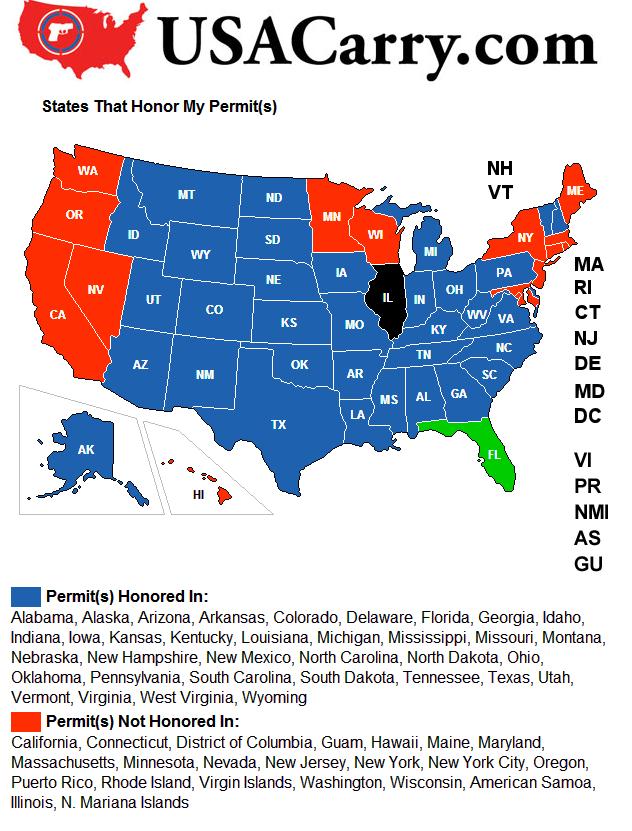
A significant number of states have direct reciprocity agreements with Florida, meaning they honor the Florida CWFL as if it were their own state’s permit. These are often referred to as “Green Light” states because, generally, you can carry your concealed firearm under the same conditions as a resident permit holder. States in the South and Midwest frequently fall into this category. For instance, travelers heading to Alabama, Arkansas, Georgia, Mississippi, Missouri, North Carolina, Oklahoma, South Carolina, Tennessee, Texas, and Virginia will typically find their Florida permit honored. Many western states like Arizona, Idaho, Kansas, Montana, Nevada, Utah, and Wyoming also honor Florida’s permit. It’s important to remember that while the permit is honored, you are still subject to the specific concealed carry laws of that state, which can include restrictions on where you can carry (e.g., schools, government buildings, private businesses with posted signs) and duty to inform laws.
Conditional Recognition: When Conditions Apply
Some states may recognize the Florida CCW but with certain conditions or specific stipulations. These conditions might relate to the age of the permit holder, residency status, or specific types of firearms. For example, a state might honor a Florida non-resident permit differently from a resident permit, or they might have an age restriction (e.g., you must be 21 to carry concealed, even if your Florida permit was issued at 18). Furthermore, several states have adopted “permitless carry” or “constitutional carry” laws. In such states, like Kentucky, Maine, New Hampshire, and West Virginia, you may not need your Florida permit to carry concealed, provided you meet the state’s legal requirements for firearm possession. However, having your Florida permit can still be beneficial for identification or if you encounter law enforcement. Always verify the specific conditions before relying solely on a blanket statement of recognition.
States with No Recognition: Know Before You Go
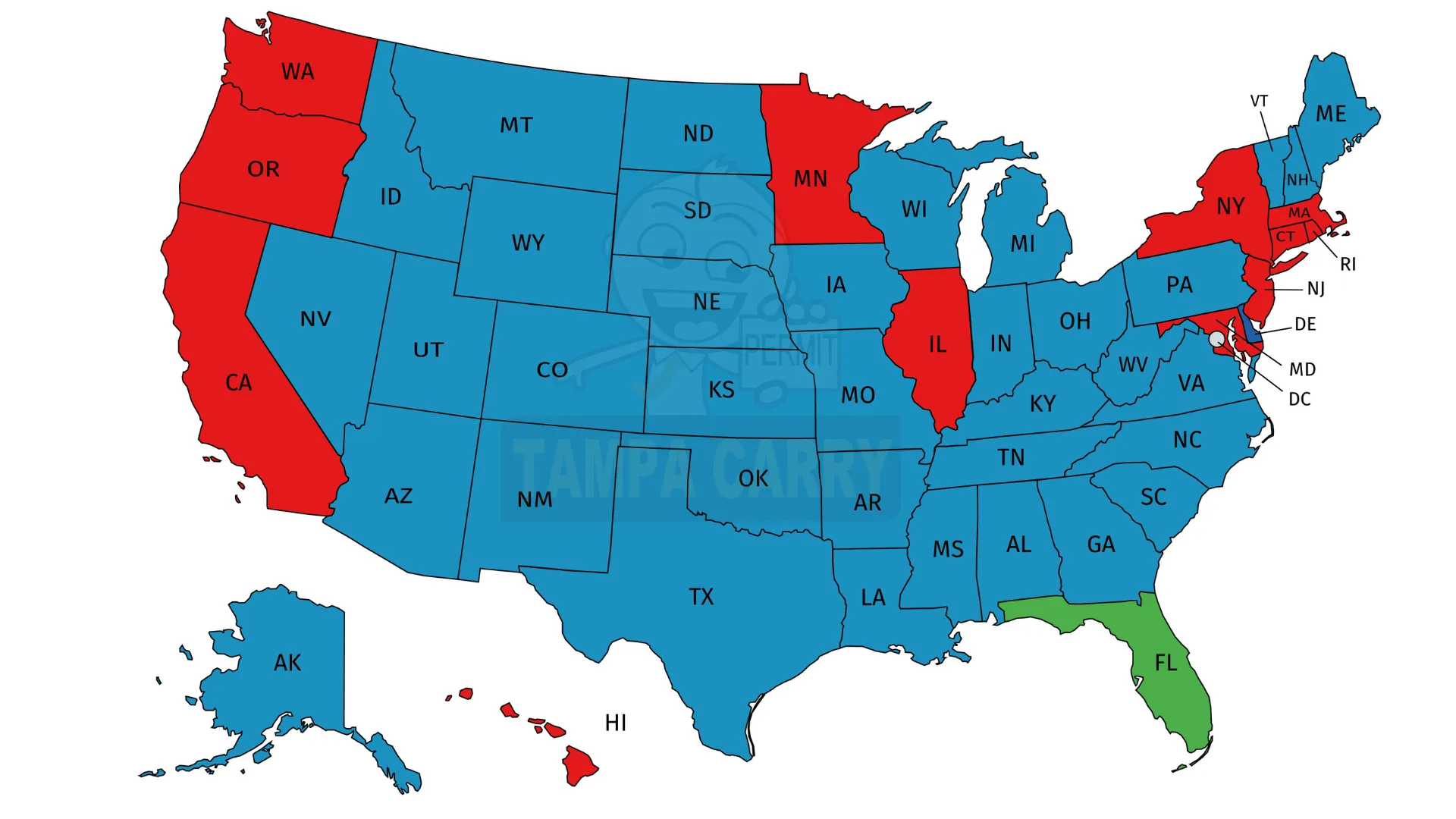
Equally important are the states that do not honor Florida’s CCW permit. These are typically states with stricter gun control laws or those that do not have formal reciprocity agreements in place. Examples include California, Connecticut, Delaware, Hawaii, Illinois, Maryland, Massachusetts, New Jersey, New York, Oregon, Rhode Island, and Washington. Carrying a concealed firearm in these states with only a Florida permit can lead to serious legal consequences, including felony charges, imprisonment, and significant fines. In such situations, it is crucial to understand federal transportation laws that may allow you to transport an unloaded firearm, securely stored, and inaccessible, without running afoul of local concealed carry prohibitions.
Beyond Reciprocity: Critical Considerations for Interstate Travel
While knowing which states honor your Florida CCW is the primary concern, it’s far from the only consideration for responsible firearm travel. The legal landscape surrounding firearms is incredibly intricate, with layers of federal, state, and even local laws that can impact your journey.
Federal Regulations and Safe Passage
Even if your Florida permit isn’t honored in a particular state, federal law provides some protection for travelers transporting firearms. The Firearm Owners’ Protection Act (FOPA) of 1986 protects individuals transporting unloaded firearms in a locked container, separate from ammunition, through states where they are not authorized to carry. This protection applies when the traveler is passing through a state where they are otherwise prohibited from possessing a firearm, provided they are traveling from a place where they may lawfully possess and carry such firearm to any other place where they may lawfully possess and carry such firearm. The firearm and ammunition must not be readily accessible from the passenger compartment. However, FOPA applies only to transportation and does not grant the right to carry a concealed firearm outside of the vehicle or to use it for self-defense while in transit through a non-reciprocal state. Understanding the strict requirements of FOPA is essential for anyone traveling through “no recognition” states.
State-Specific Laws: The Devil in the Details
Even in states that honor your Florida CCW, the specific laws governing concealed carry can vary widely. These nuances often dictate where you can and cannot carry, and how you must interact with law enforcement.
- Restricted Locations: Many states prohibit concealed carry in specific locations, such as schools, government buildings, courthouses, polling places, airports (beyond TSA checkpoints), bars, or establishments that primarily serve alcohol. Always check the specific prohibitions for your destination state.
- Duty to Inform: Some states have a “duty to inform” law, requiring you to notify a law enforcement officer immediately upon contact that you are carrying a concealed firearm and possess a permit. Florida does not have a duty to inform law, but many other states do (e.g., Michigan, Ohio, Indiana). Failure to comply can result in fines or permit revocation.
- Magazine Capacity and Firearm Type: Some states impose restrictions on magazine capacity or prohibit certain types of firearms, even for permit holders. Always verify that your firearm and accessories comply with the laws of your destination.
- Local Ordinances: Beyond state laws, some cities or counties may have specific ordinances that add further restrictions. While often preempted by state law, it’s wise to be aware of any unique local regulations, especially in major metropolitan areas.
The Importance of Due Diligence
The dynamic nature of firearm laws means that what is true today may change tomorrow. Relying on outdated information can have severe legal consequences. Therefore, personal due diligence is not just recommended, but absolutely necessary. Before every trip, regardless of how many times you’ve visited a particular state, reconfirm its current reciprocity status with Florida.
Preparing for Your Journey: Best Practices for Florida CCW Holders
Responsible travel with a firearm begins long before you pack your bags. A systematic approach to research and preparation can ensure a smooth, lawful, and safe journey.
Researching Your Route and Destination
The first step in planning any trip that involves carrying a firearm is comprehensive research.
- Official State Resources: The most reliable sources of information are the official state government websites, particularly those of the Attorney General’s office or the State Police/Law Enforcement division. Many states provide clear maps or lists of reciprocal agreements.
- Reputable Third-Party Organizations: Organizations dedicated to firearm rights often compile extensive, up-to-date reciprocity maps and legal guides. These can be valuable tools but should always be cross-referenced with official state sources.
- Plan Your Entire Route: Don’t just research your final destination. Every state you pass through on your journey must be considered. A single misstep in a non-reciprocal state, even for a brief stop, can lead to legal trouble.
Securing and Transporting Your Firearm
How you transport your firearm is just as critical as knowing where you can carry it.
- In Your Vehicle: If you are carrying under reciprocity, your firearm is typically on your person. If you are in a non-reciprocal state, or traveling under FOPA, the firearm must be unloaded and locked in a container, ideally in the trunk or a place not readily accessible. Ammunition should be stored separately.
- Air Travel: Transporting firearms by air is governed by strict TSA regulations. Firearms must be unloaded, declared to the airline at check-in, and placed in a hard-sided, locked container in checked baggage. Ammunition must be in original or similar packaging and also in checked baggage. Never attempt to carry a firearm or ammunition onto an aircraft in carry-on luggage.
- Hotel Stays: Be aware of hotel policies regarding firearms. While generally private property, a hotel’s policy can dictate whether you can carry on their premises, even if state law permits it.
Staying Informed and Exercising Caution
The world of firearm laws is ever-evolving. Remaining informed and exercising extreme caution are your best defenses against legal complications.
- Carry Your Permit and ID: Always have your Florida CWFL and a valid photo ID readily available.
- Avoid Restricted Zones: Even in reciprocal states, adhere strictly to all posted signs and known restricted locations. When in doubt, err on the side of caution and avoid carrying.
- Professional Demeanor: Should you interact with law enforcement, maintain a calm and respectful demeanor. Inform them if required by law, and follow all instructions.
- Legal Counsel: If you are unsure about any aspect of firearm laws for your travel, consult with legal counsel specializing in firearm law in the relevant states.
Understanding the complex tapestry of concealed carry reciprocity is essential for any Florida CWFL holder venturing beyond state lines. By meticulously researching, preparing, and adhering to the laws of each jurisdiction, you can ensure your travels are both safe and legally compliant, allowing you to enjoy your journey with peace of mind.
LifeOutOfTheBox is a participant in the Amazon Services LLC Associates Program, an affiliate advertising program designed to provide a means for sites to earn advertising fees by advertising and linking to Amazon.com. Amazon, the Amazon logo, AmazonSupply, and the AmazonSupply logo are trademarks of Amazon.com, Inc. or its affiliates. As an Amazon Associate we earn affiliate commissions from qualifying purchases.