
For individuals holding a Florida Concealed Carry Weapon (CCW) license, understanding where that permit is recognized is a critical aspect of responsible travel and lifestyle management. The ability to legally carry a firearm across state lines is not universal, and it hinges on a complex web of reciprocity agreements and unilateral recognition laws. Navigating these legal landscapes is paramount for any Florida permit holder planning to venture beyond the Sunshine State, ensuring compliance and avoiding potentially severe legal repercussions.
Understanding Reciprocity and Recognition Agreements
The concept of CCW reciprocity refers to an agreement between two or more states where each state honors the others’ concealed carry permits. Recognition, while similar, can sometimes imply that a state unilaterally decides to honor permits from other states without necessarily having a formal, mutual agreement in place. For Florida CCW holders, this means their permit may be valid in a significant number of other states, but the specifics can vary wildly.

It is crucial to understand that these laws are dynamic. Reciprocity agreements can change due to legislative action, shifting political climates, or even evolving interpretations of existing statutes. A state that recognized a Florida permit last year might not do so this year, or vice versa. Therefore, the onus is always on the permit holder to verify the current legal status before traveling. The core principle for any responsible armed citizen traveling interstate is due diligence, ensuring their actions remain within legal boundaries in every jurisdiction they enter.
Navigating the Map: States Honoring Florida Permits
Florida has one of the largest networks of reciprocity agreements, making its CCW license widely recognized across the United States. However, this widespread recognition is not absolute, and certain states maintain strict prohibitions or unique conditions. Understanding these distinctions is fundamental for any Florida permit holder planning interstate travel.
States with Full Recognition
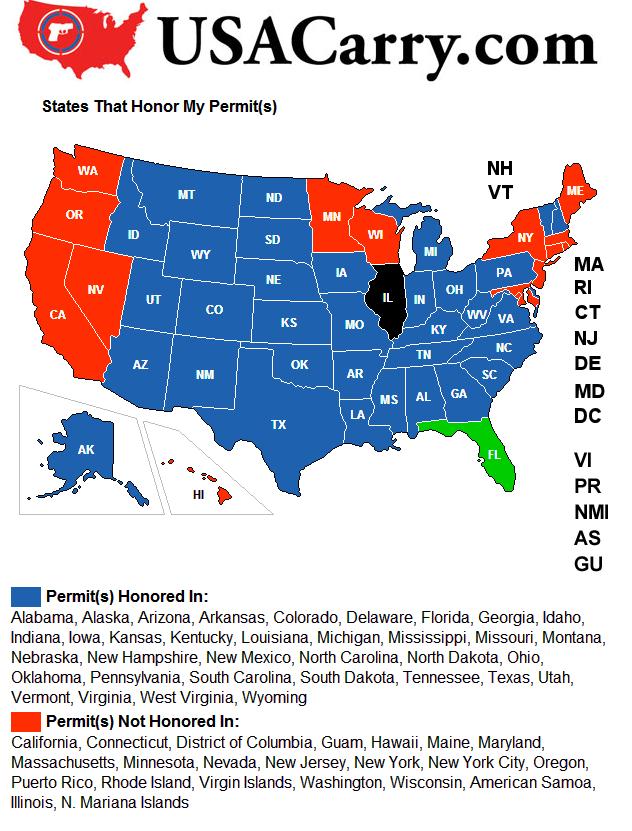
A significant number of states have full reciprocity or unilateral recognition for Florida Concealed Carry Weapon permits. These states generally treat a Florida permit as if it were their own, allowing the holder to carry a concealed firearm under the same conditions as their resident permit holders. Examples of such states often include:
- Alabama
- Alaska
- Arizona
- Arkansas
- Delaware
- Georgia
- Idaho
- Indiana
- Iowa
- Kansas
- Kentucky
- Louisiana
- Maine
- Mississippi
- Missouri
- Montana
- Nebraska
- Nevada
- New Hampshire
- New Mexico
- North Carolina
- North Dakota
- Ohio
- Oklahoma
- Pennsylvania
- South Carolina
- South Dakota
- Tennessee
- Texas
- Utah
- Virginia
- Vermont (Constitutional Carry state, no permit needed but still recognizes some out-of-state permits)
- West Virginia
- Wyoming
Even within these states, it’s vital to remember that while the permit itself is recognized, the specific rules for carrying—such as prohibited locations (schools, government buildings, bars, etc.), magazine capacity restrictions, or “duty to inform” laws—will be dictated by the laws of the state you are in, not Florida.
States with Limited or Conditional Recognition
Some states may recognize Florida permits but with specific conditions or limitations. This could include nuances such as:
- Resident vs. Non-Resident Permits: A few states might only recognize resident Florida permits, not those issued to non-residents (though Florida typically issues one type of permit to both residents and non-residents who meet the criteria).
- Age Restrictions: The age at which a permit holder can carry might differ from Florida’s minimum of 21, although this is less common for recognition purposes.
- Specific Documentation: Requiring additional documentation beyond the permit itself, although this is rare.
These conditional recognitions highlight the need for granular research, ensuring that your specific permit and personal circumstances align with the receiving state’s requirements.
States That Do Not Recognize Florida Permits
A crucial category for Florida CCW holders are the states that offer no recognition whatsoever. Carrying a concealed firearm in these jurisdictions, even with a valid Florida permit, can lead to severe felony charges, including arrest, fines, and imprisonment. These states typically have highly restrictive firearms laws or simply do not engage in reciprocity agreements. Examples include:
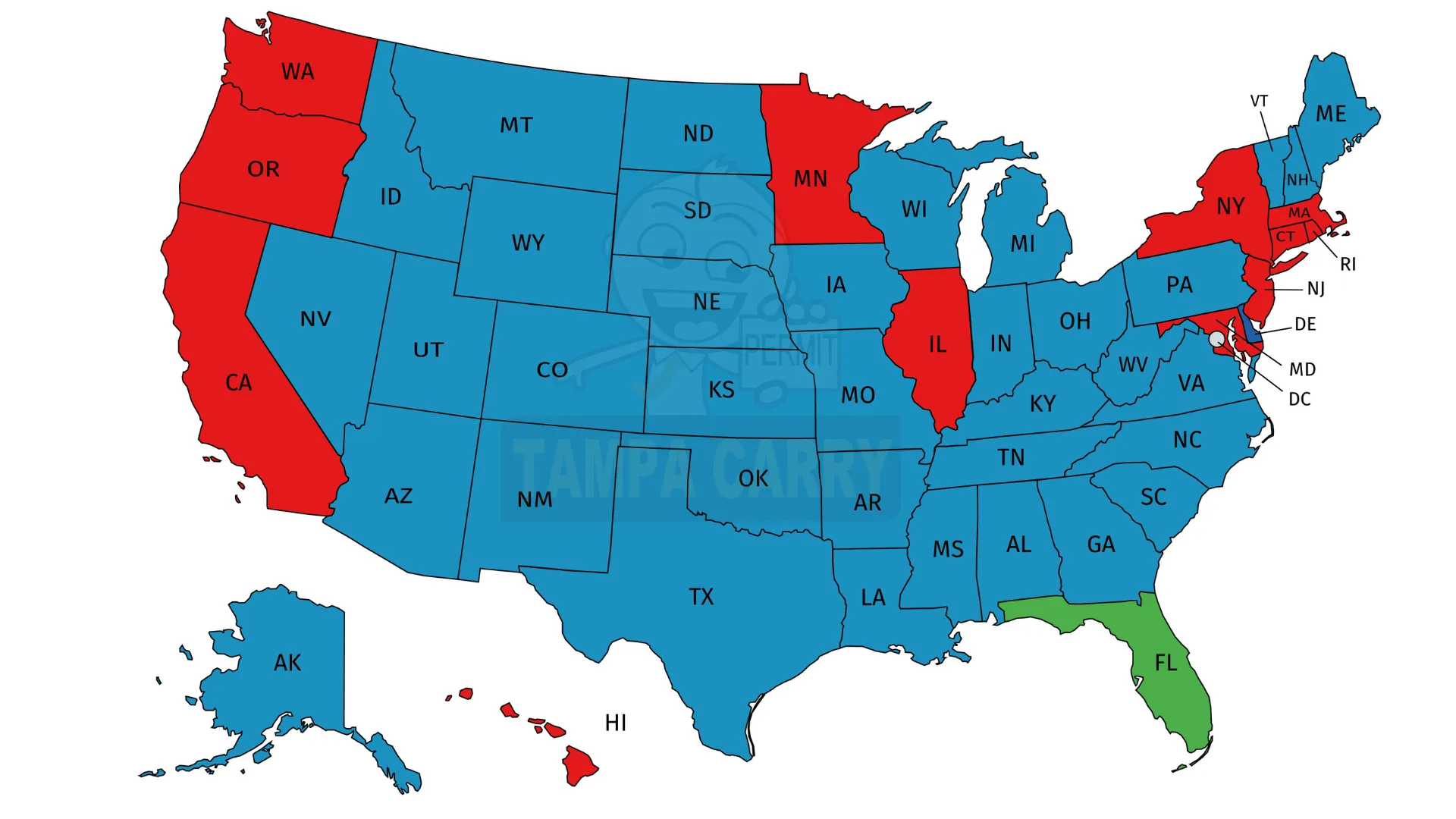
- California
- Connecticut
- Hawaii
- Illinois
- Maryland
- Massachusetts
- New Jersey
- New York
- Oregon
- Rhode Island
- Washington
- District of Columbia
If traveling to or through these states, Florida CCW holders must plan to travel unarmed or comply with federal interstate transportation laws, which require firearms to be unloaded, in a locked hard-sided container, and inaccessible, typically in the trunk of a vehicle.
Essential Travel Planning for Florida CCW Holders
Responsible travel with a Florida CCW involves meticulous planning and an unwavering commitment to legal compliance. This is a core tenet of the armed citizen lifestyle.
Pre-Trip Research is Paramount
Before embarking on any interstate journey, the first and most critical step is to verify the current laws of every state you intend to enter or pass through. Relying on outdated information or assumptions is a recipe for legal trouble.
- Official Sources: Always consult the official websites of the destination state’s Attorney General, State Police, or relevant law enforcement agency. These are the definitive sources for current reciprocity and firearms laws.
- Reputable Third-Party Resources: While useful for an overview, always cross-reference information from private organizations (e.g., NRA-ILA, Handgunlaw.us) with official state government sites. These sites can offer quick summaries but may not always be instantly updated.
- Direct Contact: If there’s any ambiguity, consider contacting the state police or a local legal professional in your destination state.
Understanding Local Laws Beyond Recognition
Even if your Florida permit is recognized, the host state’s specific regulations govern how and where you can carry. Ignorance of these laws is not a defense.
- Prohibited Places: Common restrictions include courthouses, schools, polling places, government buildings, airports (beyond TSA checkpoints), bars, and private property where signage prohibits firearms. These vary significantly by state.
- Duty to Inform: Some states require you to inform a law enforcement officer that you are carrying a firearm if you are stopped. Florida does not have a “duty to inform” statute, but many other states do. Know the local rule.
- Open Carry vs. Concealed Carry: Recognition of your CCW permit typically only applies to concealed carry. Open carry laws are entirely separate and vary widely. Some states allow open carry without a permit, others prohibit it entirely, and some require a specific permit. Do not assume that concealed carry recognition grants you open carry privileges.
- Storage Requirements: Understand the rules for storing a firearm in a vehicle, a hotel room, or other temporary accommodations. Some states have specific requirements for how firearms must be secured when not on your person.
Air Travel and Federal Regulations
For those flying, federal regulations apply universally. The Transportation Security Administration (TSA) dictates strict protocols for transporting firearms on commercial flights:
- Unloaded and Locked: Firearms must be unloaded and declared to the airline at the check-in counter.
- Hard-Sided Container: They must be transported in a hard-sided, locked container as checked luggage. The traveler should retain the key or combination.
- Ammunition: Ammunition typically must be in its original manufacturer’s box or a secure container designed for ammunition, separate from the firearm, and also checked.
- Destination Laws: Even if legally transported through the airport, upon arrival, the laws of the destination state apply immediately. If your Florida permit is not recognized there, you must arrange for legal transportation and storage of your firearm from the airport to a location where it can be lawfully stored (e.g., a private residence where you are a guest, or a licensed FFL for temporary holding if permitted).
Responsible Carry and Best Practices on the Road
Carrying a firearm is a serious responsibility, and this principle is amplified when traveling through unfamiliar jurisdictions.
- Maintain Discretion: Always strive for discreet carry. Avoid drawing attention to the fact that you are armed.
- Situational Awareness: Heightened awareness of your surroundings is crucial, especially when traveling.
- Avoid Contention: If a situation can be de-escalated or avoided, do so. The goal of carrying is self-defense as a last resort, not to engage in altercations.
- Law Enforcement Encounters: If stopped by law enforcement, remain calm and comply with all lawful commands. Know your duty-to-inform status for that specific state. If required, state clearly and calmly that you are a permit holder and are carrying a firearm, and ask how the officer wishes you to proceed (e.g., “Officer, I have a Florida Concealed Carry Weapon license, and I am currently carrying a firearm. How would you like me to handle this?”). Do not make any sudden movements.
The Dynamic Landscape of Firearms Laws
The legal framework surrounding firearms ownership and carry is in constant flux. Court rulings, legislative sessions, and shifting political sentiments can all lead to changes in state and federal laws. A conscientious Florida CCW holder must approach interstate travel with the understanding that what was true yesterday may not be true tomorrow. Regular review of the laws in states you frequently visit or plan to visit is not just recommended, it’s essential for maintaining a safe, legal, and responsible lifestyle on the road.
LifeOutOfTheBox is a participant in the Amazon Services LLC Associates Program, an affiliate advertising program designed to provide a means for sites to earn advertising fees by advertising and linking to Amazon.com. Amazon, the Amazon logo, AmazonSupply, and the AmazonSupply logo are trademarks of Amazon.com, Inc. or its affiliates. As an Amazon Associate we earn affiliate commissions from qualifying purchases.