
While many envision the vibrant, neon-drenched thoroughfare of the Las Vegas Strip as a singular, iconic street, its reality is a bit more complex, weaving through a substantial stretch of highway that defines the very essence of Las Vegas tourism. It’s not a single named street in the traditional sense, but rather a segment of a larger public road that has become synonymous with world-class entertainment, luxurious resorts, and unparalleled spectacle.
Understanding The Las Vegas Strip’s Geographic Identity
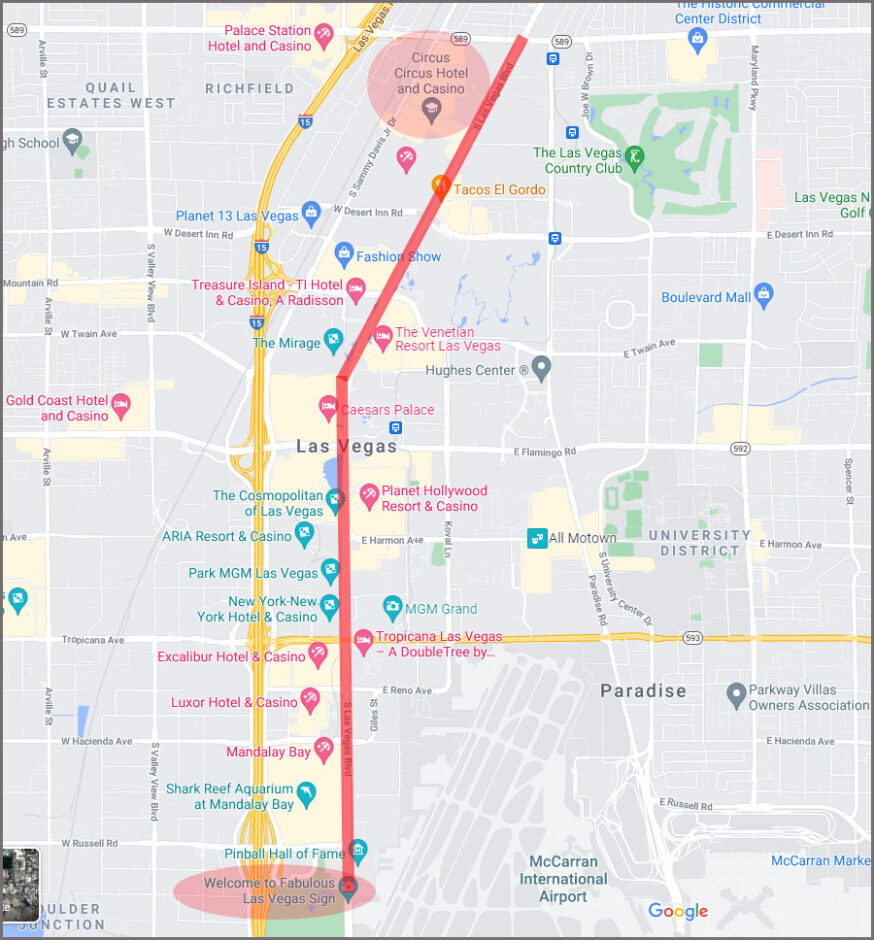
The common misconception is that the Las Vegas Strip is a distinct avenue with its own unique name. However, the reality is that it is predominantly located along a 4.2-mile (6.8 km) stretch of Las Vegas Boulevard South. This boulevard is the backbone of the resort corridor, housing many of the most famous hotels, casinos, and attractions that draw millions of visitors annually to the Nevada desert.

Las Vegas Boulevard South: The Primary Artery
The vast majority of what is commonly referred to as the Las Vegas Strip lies directly on Las Vegas Boulevard South. This highway extends for miles, but the “Strip” specifically denotes the section that is densely packed with megaresorts, entertainment venues, and signature landmarks. This segment begins just south of Russell Road and extends northwards, with its northernmost point often considered to be around Sahara Avenue, though the influence of its style and development continues beyond this point.
Southern Extents and City Boundaries
The southern end of the Las Vegas Strip is technically located within the unincorporated town of Paradise, Nevada, and a small portion in Winchester, Nevada, both governed by Clark County. As the boulevard progresses northward, it eventually enters the city limits of the actual City of Las Vegas near Sahara Avenue. This geographical nuance is often overlooked by tourists who simply refer to the entire glittering expanse as “The Strip.” The street itself, Las Vegas Boulevard South, is a vital public artery, but the magic and allure that define “The Strip” are concentrated along this specific, celebrated stretch.
Northern Reaches and The Fremont Street Experience
While the most iconic resorts like Bellagio, Caesars Palace, and The Venetian are firmly planted on Las Vegas Boulevard South, the concept of “The Strip” has evolved. Historically, the term referred to the area west of downtown Las Vegas, differentiating it from the older, original gambling district. Today, while the boulevard remains the core, the energy and spirit of Las Vegas entertainment extend beyond its immediate perimeters. The Fremont Street Experience, a pedestrian mall in downtown Las Vegas, offers a different, yet equally vibrant, historical perspective on the city’s entertainment roots, even though it is geographically separate from the main Strip boulevard.
The Illusion of a Single Street Name
The power of branding and marketing has created a strong, singular identity for “The Strip.” Visitors typically navigate by hotel names, iconic landmarks, and the sheer visual spectacle rather than by referencing specific street signs for “The Strip” itself. [Las Vegas Boulevard South](https://lifeout بlifeoutofthebox.com/las-vegas-boulevard-south) serves as the physical address, but “The Strip” is the brand, the experience, and the destination.
Navigation and Practicality for Visitors
For travelers planning a visit, understanding that the key attractions are along Las Vegas Boulevard South is crucial. This means that taxis, ride-sharing services, and shuttle buses will all be familiar with routes along this main artery. Many hotels have direct access or are situated directly on the boulevard, making navigation straightforward once you grasp this fundamental point. Walking between resorts is also a popular activity, allowing guests to soak in the atmosphere, but it’s important to remember you are walking along a major public road.
Beyond the Boulevard: The Strip’s Expansive Influence
While the physical address is Las Vegas Boulevard South, the influence of “The Strip” extends to cross streets and adjacent properties. Streets like Tropicana Avenue, Flamingo Road, and Spring Mountain Road intersect the Strip and are home to major resorts and entrances, such as the iconic entrance to MGM Grand on Tropicana. These intersecting streets act as crucial access points and are integral to the Strip’s overall layout and accessibility. Even though they don’t bear the name “Strip,” they are intrinsically part of the tourist corridor’s infrastructure.
A Corridor of Wonders
The 4.2 miles of Las Vegas Boulevard South designated as the Strip are more than just a road; they are a carefully curated landscape of architectural marvels, entertainment hubs, and culinary destinations. From the themed resorts that transport visitors to different worlds to the world-class dining and shopping, every element is designed to create an unforgettable experience.
Iconic Landmarks and Their Addresses
The most recognizable landmarks and resorts of Las Vegas are situated along this stretch. Consider the following examples:
- Bellagio: Located at 3600 S Las Vegas Blvd, famous for its captivating water fountains.
- Caesars Palace: Situated at 3570 S Las Vegas Blvd, a sprawling resort known for its Roman-themed grandeur.
- The Venetian Resort Las Vegas: Found at 3355 S Las Vegas Blvd, offering a recreation of Venice with its canals and gondolas.
- The Mirage: Located at 3400 S Las Vegas Blvd, recognizable by its volcano.
- MGM Grand Hotel & Casino: At 3799 S Las Vegas Blvd, one of the largest hotels in the world.
- Wynn Las Vegas & Encore Boston Harbor: Situated at 3131 S Las Vegas Blvd and 3121 S Las Vegas Blvd, respectively, representing ultra-luxury.
- Luxor Hotel & Casino: At 3900 S Las Vegas Blvd, a striking pyramid-shaped hotel.
- Excalibur Hotel & Casino: Located at 3850 S Las Vegas Blvd, a medieval castle-themed resort.
These addresses all point to the same fundamental street: Las Vegas Boulevard South.

The Experience is the Address
Ultimately, when asking “What street is the Las Vegas Strip on?”, the most accurate and evocative answer is that it is on the collective imagination and the physical space occupied by the spectacular resorts and attractions lining Las Vegas Boulevard South. It’s a place where dreams are amplified by neon, where every corner offers a new visual delight, and where the spirit of entertainment reigns supreme. While the street signs may read Las Vegas Boulevard South, the experience, the destination, and the legend are universally known as simply “The Strip.” It’s a testament to how a stretch of highway can transform into a global icon of leisure and excitement, a true testament to Nevada’s unique contribution to the world of tourism.
LifeOutOfTheBox is a participant in the Amazon Services LLC Associates Program, an affiliate advertising program designed to provide a means for sites to earn advertising fees by advertising and linking to Amazon.com. Amazon, the Amazon logo, AmazonSupply, and the AmazonSupply logo are trademarks of Amazon.com, Inc. or its affiliates. As an Amazon Associate we earn affiliate commissions from qualifying purchases.