
Florida, affectionately known as the Sunshine State, is a premier destination drawing millions of visitors each year to its pristine beaches, vibrant cities, and world-class attractions. From the magical realms of Orlando to the Art Deco charm of Miami and the tranquil shores of the Panhandle, the state offers an unparalleled array of experiences. While the abundant sunshine is a major draw, understanding when the sun sets can significantly enhance your travel planning, allowing you to perfectly time your sunset cruises, secure the best dining views, or plan evening excursions. The exact moment darkness descends in Florida is not static; it’s a dynamic ballet influenced by geography, seasonality, and even the human adjustment of daylight saving time. For those seeking to maximize their days, capture stunning twilight photography, or simply enjoy a leisurely evening, knowing what time it gets dark is as crucial as checking the weather. This comprehensive guide delves into the nuances of sunset in Florida, helping you craft the perfect itinerary that embraces both the glorious daylight and the enchanting nights.
Understanding Florida’s Sunset Dynamics
Florida’s unique geographical position, stretching as a peninsula between the Atlantic Ocean and the Gulf of Mexico, gives it distinct characteristics regarding its daylight hours and, consequently, its sunset times. Unlike states further north or south, Florida’s length along a latitudinal axis means there are noticeable differences in sunset times from its northern borders to its southernmost tip. Furthermore, the annual orbit of the Earth and the implementation of Daylight Saving Time play significant roles in how we perceive and experience the setting sun throughout the year.
Key Factors Influencing Dusk in the Sunshine State
Several scientific and administrative factors determine when the sky darkens across the Sunshine State. Understanding these elements is fundamental to predicting and planning around Florida’s twilight hours.
Latitude and Longitudinal Spread
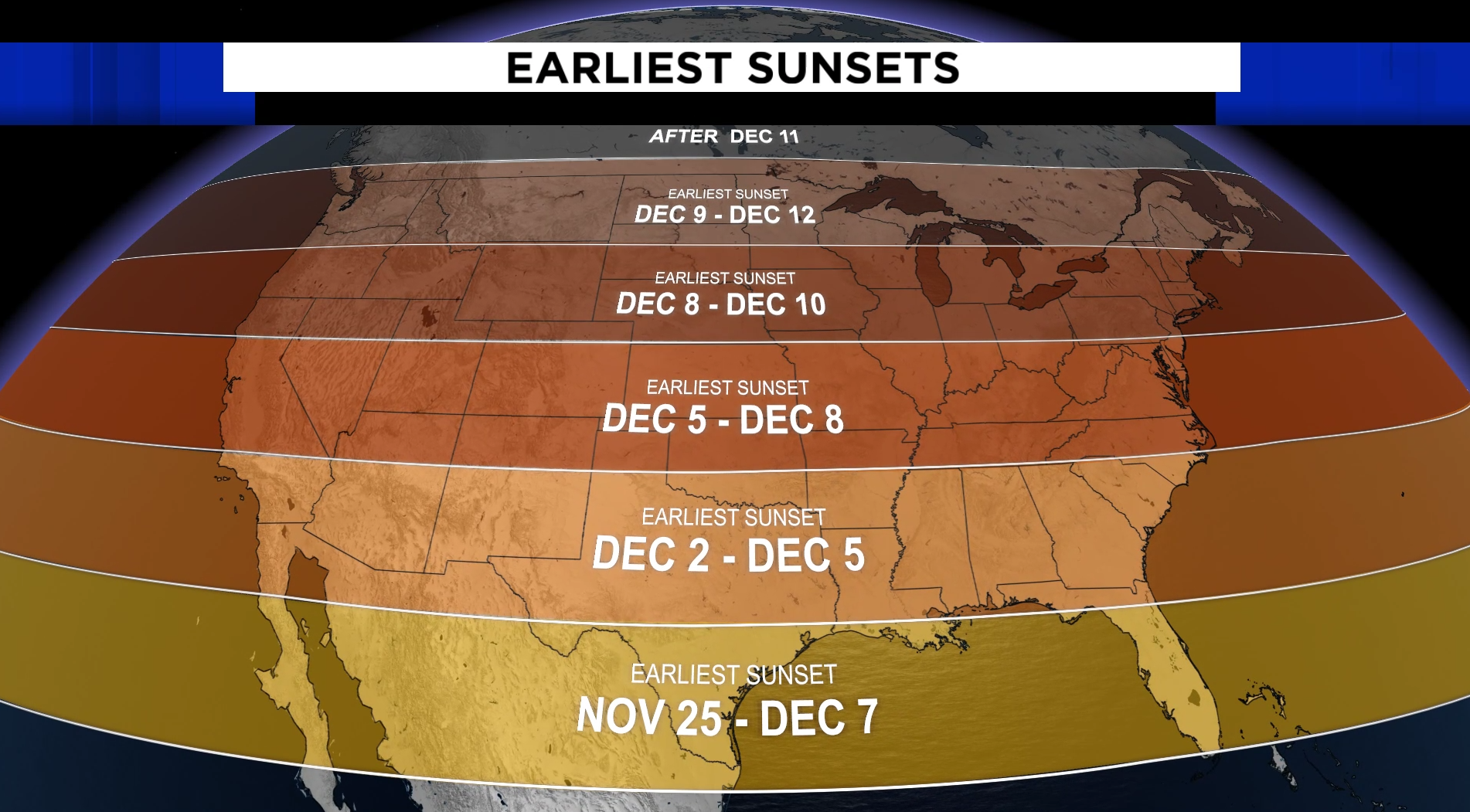
Latitude is arguably the most significant natural determinant of sunset times. Florida spans a considerable range of latitudes, from roughly 31 degrees North at its border with Georgia and Alabama down to approximately 24.5 degrees North at Key West. This means that during the summer months, northern Florida experiences earlier sunsets than its southern counterparts, simply because the sun’s path is lower relative to the horizon there. Conversely, during winter, the northern regions will see the sun dip below the horizon earlier.
Additionally, Florida is primarily situated within the Eastern Time Zone, though a portion of its Panhandle region operates on Central Time Zone. This time zone boundary introduces an immediate one-hour shift in reported sunset times. For instance, if the sun sets at 6:00 PM Eastern Time in Tallahassee, it will be reported as 5:00 PM Central Time just a short distance west in Pensacola, despite the actual solar event happening at nearly the same moment. This necessitates careful attention to local time zones when consulting sunset tables.
Time of Year (Seasons)
The Earth’s axial tilt means that as it orbits the sun, different parts of the planet receive varying amounts of direct sunlight throughout the year, creating the seasons. Florida, while lacking the dramatic seasonal shifts of more temperate climates, still experiences significant changes in day length.
- Winter Solstice (around December 21st): This marks the shortest day of the year in the Northern Hemisphere. Consequently, Florida experiences its earliest sunsets during this period, typically in the range of 5:30 PM to 6:00 PM EST, depending on the latitude.
- Summer Solstice (around June 21st): Conversely, this is the longest day, bringing the latest sunsets, often extending past 8:00 PM EST across much of the state.
- Equinoxes (around March 20th and September 22nd): During the spring and autumn equinoxes, day and night are roughly equal in length. Sunset times during these periods fall somewhere in the middle of the seasonal extremes, typically between 7:00 PM and 7:30 PM EST.
These seasonal shifts are crucial for travelers, as a December trip will offer much less daylight for outdoor activities than a July excursion.
Daylight Saving Time (DST)
A human-introduced variable, Daylight Saving Time (DST), which typically begins in March and ends in November in the United States, shifts clocks forward by one hour. While it doesn’t change the actual astronomical event of sunset, it does shift the reported time of sunset. When DST is in effect, sunsets effectively appear one hour later by the clock. For instance, a sunset that would naturally occur at 7:00 PM standard time would be reported as 8:00 PM during DST. This is a vital consideration for planning, as many popular spring, summer, and fall travel periods coincide with DST. Florida lawmakers have at times considered making DST permanent, which would further solidify these later apparent sunset times year-round, adding another layer to the state’s “Sunshine State” identity by extending perceived daylight into the evening.
Weather Conditions and Horizon Obstructions
While not changing the astronomical sunset time, weather conditions like heavy cloud cover or fog can significantly alter the perception of when it gets dark. On an overcast day, the sky might appear dark much earlier than the official sunset time, while a clear day allows for a prolonged twilight period. Similarly, urban landscapes with tall buildings or natural features like dense forests can obscure the horizon, making the sun seem to disappear earlier than it truly does. Conversely, an unobstructed view over the Gulf of Mexico or Atlantic Ocean can offer a breathtaking, lingering sunset display.
Seasonal Sunset Times Across Florida’s Diverse Regions
Florida’s elongated geography ensures a variation in sunset times not just by season, but also by region. From the bustling beaches of South Florida to the tranquil natural beauty of North Florida, understanding these regional and seasonal differences is key to optimizing your visit.
Winter Evenings: Early Retreats (December – February)
During the winter months, Florida experiences its earliest sunsets, a stark contrast to its image as a perpetually sunny paradise. For travelers escaping colder climates, the earlier dusk can be a gentle reminder of the season.

- Miami / Fort Lauderdale: As South Florida is closer to the equator, it enjoys slightly later sunsets than its northern counterparts. In December and January, sunsets typically range from 5:30 PM to 5:45 PM EST. By February, as the days gradually lengthen, this shifts to around 6:00 PM to 6:15 PM EST. This allows for stunning early evening experiences along South Beach or canal-side dining.
- Orlando / Tampa: In Central Florida, including the theme park mecca of Orlando and the vibrant city of Tampa, winter sunsets are generally between 5:30 PM and 5:50 PM EST in December and January, extending to 6:00 PM to 6:20 PM EST by late February. This means that evening shows at Walt Disney World Resort or Universal Orlando Resort often begin shortly after official sunset.
- Key West / Florida Keys: The southernmost point of the continental United States, Key West, boasts some of the latest sunsets in Florida during winter, often occurring between 5:45 PM and 6:00 PM EST in December and January, and pushing to 6:15 PM to 6:30 PM EST by late February. This is perfect for the famous sunset celebrations at Mallory Square.
- Panhandle (Pensacola, Panama City Beach): The Panhandle operates on Central Time, so while the sun sets later in solar terms compared to South Florida, its reported time is earlier. In December and January, sunsets are often around 4:45 PM to 5:00 PM CST, shifting to 5:15 PM to 5:30 PM CST by late February. This early dark means planning dinner and evening activities for an earlier start.
Spring into Longer Days (March – May)
Spring brings a welcome change, with longer daylight hours as the Earth tilts back towards the sun. The advent of Daylight Saving Time in March further extends the perceived evening.
- Statewide Shift: When Daylight Saving Time begins in March, sunset times instantly jump by an hour. For instance, a 6:30 PM sunset in early March might become 7:30 PM overnight.
- March: Expect sunsets to range from 7:20 PM to 7:45 PM EDT across the state, from Key West to Jacksonville.
- April: Sunsets progressively get later, generally falling between 7:40 PM and 8:00 PM EDT.
- May: By late May, Florida is already enjoying very late sunsets, typically between 8:00 PM and 8:20 PM EDT across most regions, with the Panhandle seeing 7:15 PM to 7:30 PM CDT. This is ideal for enjoying longer evenings at outdoor cafes or leisurely strolls along the beach.
Summer Solstice and Late Sunsets (June – August)
Summer in Florida means maximum daylight and the latest sunsets of the year, providing ample time for evening excursions and outdoor relaxation.
- June: Around the Summer Solstice in late June, sunsets reach their peak lateness. In South Florida and Central Florida, expect sunsets between 8:15 PM and 8:30 PM EDT. The Panhandle will see sunsets around 7:15 PM to 7:30 PM CDT.
- July & August: These months maintain very late sunsets, gradually receding by a few minutes each week. Expect times generally between 8:00 PM and 8:25 PM EDT for most of the state, and 7:00 PM to 7:20 PM CDT in the Panhandle. These extended evenings are perfect for enjoying resort amenities, evening swims, or lingering over a waterfront dinner.
Autumn’s Gentle Decline (September – November)
As autumn arrives, days noticeably shorten, and the end of Daylight Saving Time in early November brings a significant shift back to earlier sunsets.
- September: Sunsets begin to recede, typically ranging from 7:20 PM to 7:50 PM EDT.
- October: The decline continues, with sunsets generally between 6:30 PM and 7:00 PM EDT.
- November: The most dramatic shift occurs when Daylight Saving Time ends, pushing sunset times back by an hour. In early November, a sunset that might have been 6:45 PM EDT will suddenly become 5:45 PM EST. By late November, sunsets across the state will be similar to early winter times, usually between 5:20 PM and 5:45 PM EST. This period is great for travelers seeking cooler weather and earlier, cozy evenings.
Planning Your Florida Experience Around Sunset
Understanding when the sun sets is not just an interesting fact; it’s a vital piece of information for crafting an unforgettable Florida itinerary. From romantic dinners with a view to thrilling theme park experiences, twilight adds a unique dimension to your travel.
Optimizing Evening Activities and Attractions
Florida’s attractions transform as daylight fades, offering new perspectives and experiences.
- Beach Sunsets: Experiencing a sunset over the Gulf of Mexico is a quintessential Florida experience. Destinations like Clearwater Beach or Siesta Key Beach are renowned for their spectacular sunsets. Plan to arrive at least an hour before the official sunset time to secure a good spot, enjoy the changing colors, and maybe even spot the elusive “green flash.” Many beaches offer casual dining or live music as the sun dips below the horizon, creating a festive atmosphere.
- Theme Parks: Walt Disney World Resort and Universal Orlando Resort become particularly magical after dark. Evening fireworks, parades, and light shows are often timed shortly after sunset, making the transition from a day of rides to an evening of entertainment seamless. Knowing the sunset time allows you to plan your ride queues or dining reservations to coincide with these spectacular displays.
- Dining and Nightlife: Many of Florida’s cities boast vibrant evening scenes. In Miami, the restaurants and bars of South Beach come alive, often with outdoor seating perfect for enjoying the cooler evening air. Ybor City in Tampa offers historic charm blended with lively nightlife. Booking a table for sunset can provide breathtaking views, especially at waterfront establishments along the Florida Keys or on the Intracoastal Waterway.
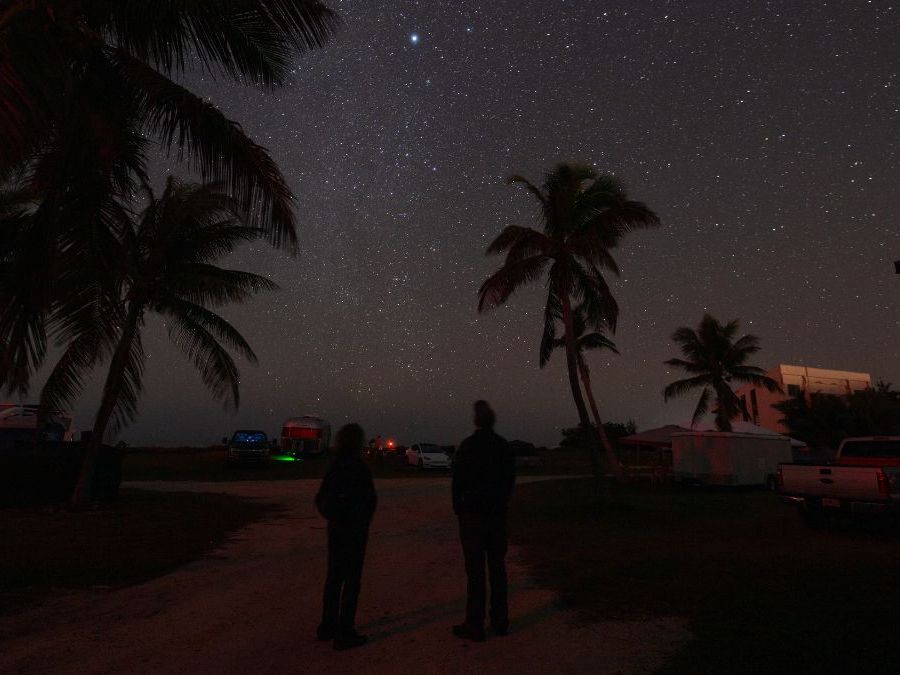
- Nature and Wildlife: Dusk is a prime time for certain wildlife viewing opportunities. Everglades airboat tours often operate into the evening, offering a chance to spot nocturnal animals or catch alligators coming out to hunt. Stargazing is another excellent post-sunset activity, particularly in less light-polluted areas like the Big Cypress National Preserve or the Florida Keys.
- Cultural Experiences: Many cities host evening markets, festivals, or outdoor concerts that begin as the sun sets. St. Augustine, the oldest continuously inhabited European-established settlement in the United States, offers ghost tours that are especially atmospheric after dark.
Capturing the Golden and Blue Hours
For photographers, the periods immediately before and after sunset are known as the “golden hour” and “blue hour,” respectively, offering unique lighting conditions that can transform ordinary scenes into extraordinary photographs.
- Golden Hour: The hour leading up to sunset, when the sun’s low angle casts a soft, warm, golden light. This is ideal for portraits, landscapes, and architectural photography. Imagine capturing the vibrant colors of Art Deco District in Miami Beach bathed in this soft glow, or the historic structures of St. Augustine.
- Blue Hour: The period shortly after sunset, when the sky deepens into rich shades of blue, and artificial lights begin to glow. This creates a striking contrast and is perfect for cityscapes, landmarks like the Seven Mile Bridge against the darkening sky, or resorts illuminated by their carefully designed lighting. Knowing exact sunset times helps photographers precisely plan their shoots to maximize these fleeting moments of perfect light.
Accommodation and Safety Considerations
Your choice of accommodation and your awareness of safety should also factor in sunset times.
- Accommodation with a View: If a sunset view is a priority, consider booking a room, suite, or villa that specifically offers this amenity. Resorts along the Gulf Coast or high-rise hotels in cities like Miami often highlight rooms with western-facing balconies. For a luxury travel experience, private villas in destinations like Naples or Sarasota might offer expansive views over the water.
- Lighting and Navigation: When traveling with family or exploring new neighborhoods, especially in urban or less familiar areas, it’s wise to be aware of how quickly it gets dark. Well-lit streets and pathways are easier to navigate after dusk. For those enjoying a budget travel experience and relying on public transport or walking, knowing when to head back to your accommodation can be a safety consideration. Always ensure your chosen paths are well-lit and populated, particularly when returning from evening activities.
- Driving After Dark: Driving conditions change significantly after sunset. While Florida’s major highways are well-lit, rural roads can be quite dark. Be extra cautious, especially in areas bordering nature preserves, as wildlife such as deer or even alligators can be more active near roadsides after dark. Factor in additional travel time for evening journeys.
In conclusion, the enchanting sunsets of Florida are much more than a beautiful daily spectacle; they are a critical element in planning an enriching and safe travel experience. By understanding the seasonal and regional variations, and how factors like Daylight Saving Time play a role, you can perfectly choreograph your days and nights to savor every moment the Sunshine State has to offer. Whether you’re chasing the last rays of light on a Gulf Coast beach, capturing the magical twilight over a theme park, or simply enjoying an evening cocktail with a view, Florida’s sunsets promise to leave an indelible mark on your travel memories. Plan wisely, and let the beauty of Florida’s evenings unfold before you.
LifeOutOfTheBox is a participant in the Amazon Services LLC Associates Program, an affiliate advertising program designed to provide a means for sites to earn advertising fees by advertising and linking to Amazon.com. Amazon, the Amazon logo, AmazonSupply, and the AmazonSupply logo are trademarks of Amazon.com, Inc. or its affiliates. As an Amazon Associate we earn affiliate commissions from qualifying purchases.