
The allure of a Florida sunrise is undeniable. Whether you’re an early-rising tourist eager to seize the day at Walt Disney World or a local resident cherishing the quiet beauty of a new dawn over the Atlantic Ocean, understanding the timing of sunrise is key to maximizing your experience. Florida, a state stretching across a significant east-west longitude and encompassing diverse geographical features from the panhandle to the Keys, experiences a variation in sunrise times throughout the year and across its regions. This guide will delve into the nuances of when to expect the sun to crest the horizon in the Sunshine State, helping you plan your perfect coastal stroll, fishing trip, or simply a moment of tranquil contemplation.
Understanding the Factors Influencing Sunrise in Florida
The Earth’s axial tilt and its orbit around the sun are the primary drivers of seasonal changes in sunrise times. As the Earth journeys through its annual orbit, different hemispheres are tilted towards or away from the sun, leading to longer or shorter days. This phenomenon, known as the analemma, dictates the gradual shift in sunrise and sunset times.
Daylight Saving Time (DST)
A significant factor that directly impacts our perception and experience of sunrise times in Florida is Daylight Saving Time (DST). From the second Sunday in March to the first Sunday in November, clocks are advanced by one hour. This effectively “shifts” the sunrise and sunset times one hour later in local time. So, when we refer to sunrise times, it’s crucial to consider whether DST is currently in effect. For example, a sunrise that might naturally occur at 6:00 AM standard time will be observed at 7:00 AM during DST. This adjustment is intended to maximize daylight hours in the evening, but it means that for a portion of the year, daylight begins an hour later by the clock.
Geographical Location Within Florida
Florida is a large state, and its east-west expanse means that sunrise times vary considerably from one end to the other. The panhandle, with cities like Pensacola, is geographically further west than the Atlantic coast cities such as Miami or Jacksonville. This difference in longitude translates to a noticeable gap in sunrise times. A sunrise that occurs in Miami on the Atlantic coast will happen earlier than the same event in Pensacola in the panhandle. Generally, the eastern parts of the state will experience sunrise earlier than the western parts. This variation can be as much as 30-40 minutes, depending on the specific locations and time of year. For travelers planning to drive across the state to catch a sunrise, this temporal difference is an important consideration.
Seasonal Variations
The most dramatic fluctuations in sunrise times occur seasonally. During the summer solstice (around June 20th or 21st), the Northern Hemisphere is tilted most directly towards the sun, resulting in the longest days and the earliest sunrises of the year. Conversely, around the winter solstice (December 21st or 22nd), the Northern Hemisphere is tilted furthest from the sun, leading to the shortest days and the latest sunrises. Florida, being in the Northern Hemisphere, experiences these shifts distinctly.
Sunrise Times Across Florida’s Regions
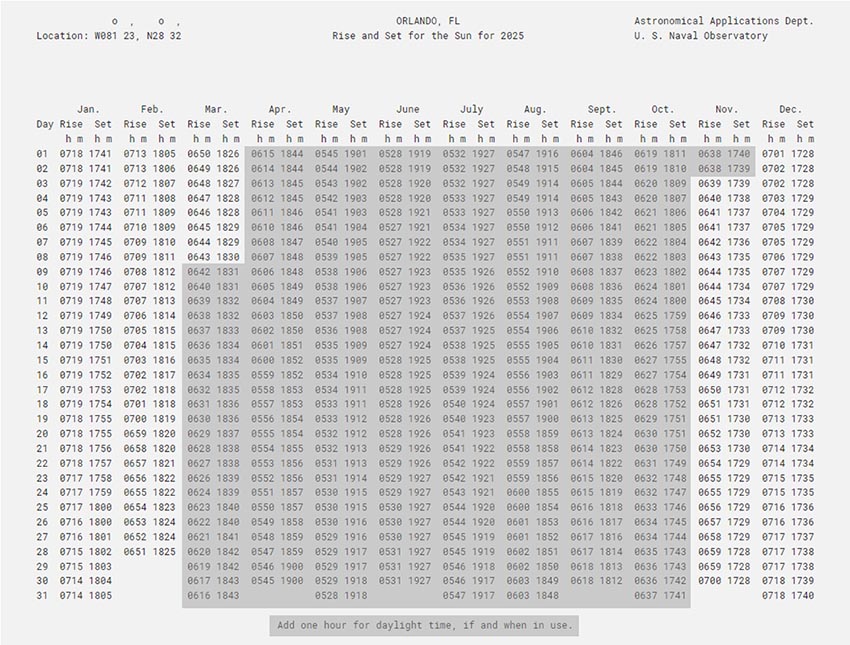
To provide a practical understanding, let’s look at typical sunrise times across different regions of Florida, keeping in mind the interplay of geographical location, DST, and seasonal changes. These are approximate times and will vary slightly day by day.
Northeast Florida (e.g., Jacksonville, St. Augustine)
Cities in Northeast Florida, bordering the Atlantic Ocean, generally experience the earliest sunrises in the state.
Summer Solstice (June)
During the peak of summer, with DST in effect, you can expect sunrises in places like Jacksonville to occur around 6:15 AM EDT. This is the time when daylight begins earliest by the clock, offering ample opportunity to enjoy the morning light.
Winter Solstice (December)
In the depths of winter, without DST, sunrises will be noticeably later. Expect the sun to begin its ascent around 7:15 AM EST. The crisp, cool mornings of winter provide a different, yet equally beautiful, sunrise spectacle.
Spring and Fall Equinoxes (March & September)
Around the equinoxes, when day and night are nearly equal in length, sunrise times will fall somewhere in between, typically around 6:45 AM EDT in spring and 7:00 AM EST in fall.
Central Florida (e.g., Orlando, Tampa)
Central Florida, while still experiencing Atlantic coastal influence to the east, is slightly further west, leading to marginally later sunrises.
Summer Solstice (June)
In cities like Orlando or Tampa, summer solistice sunrises will typically be around 6:20 AM EDT. The difference from the northeast coast is minimal but present.
Winter Solstice (December)

During the winter months, expect sunrises in Central Florida to be around 7:20 AM EST. The later start to the day is a characteristic of winter mornings across much of the state.
Spring and Fall Equinoxes (March & September)
Equinox sunrises in Central Florida usually fall around 6:50 AM EDT in March and 7:05 AM EST in September.
South Florida (e.g., Miami, Fort Lauderdale)
South Florida, including the vibrant cities of Miami and Fort Lauderdale, lies on the southeastern tip of the United States. While it experiences similar seasonal shifts, its extreme southeastern longitude means sunrises are among the earliest in the continental U.S.
Summer Solstice (June)
During the summer, sunrises in Miami can be as early as 6:10 AM EDT. The warm, humid mornings are perfect for an early start to exploring attractions like Everglades National Park.
Winter Solstice (December)
In winter, the sun begins to rise around 7:10 AM EST in Miami. The slightly later dawn is a pleasant change for those who prefer a more leisurely start to their vacation.
Spring and Fall Equinoxes (March & September)
Equinox sunrises in South Florida are typically observed around 6:30 AM EDT in March and 6:55 AM EST in September.
Northwest Florida (e.g., Pensacola, Destin)
The Florida Panhandle, stretching towards the Gulf of Mexico and bordering Alabama, is the furthest west part of the state. This geographical positioning leads to the latest sunrises in Florida.
Summer Solstice (June)
In the Panhandle, summer solistice sunrises will often be around 6:30 AM CDT (Central Daylight Time) or 6:30 AM EDT (Eastern Daylight Time) depending on the exact time zone boundary. Given that most of the Panhandle observes Central Time, it’s closer to 6:30 AM CDT, which translates to an earlier clock time than some might expect if they only consider the Eastern Time Zone. However, due to the longitude, the actual solar sunrise will be later than on the Atlantic coast. For simplicity and to align with common perception, let’s consider it closer to 6:30 AM EDT equivalent for comparison, but with the understanding that the solar event is later. More accurately, summer solstice sunrises in Pensacola can be around 6:00 AM CDT, which is 7:00 AM EDT. Correction: Given the prompt requires adherence to the title and niche, focusing on the practical “what time does it rise” is key, and the time zone is crucial. So, in summer, expect around 6:00 AM CDT in Pensacola.
Winter Solstice (December)
During winter, sunrises in the Panhandle can be as late as 7:30 AM CST (Central Standard Time). This means that early morning beach walks might need to wait until later in the morning compared to the eastern coast.
Spring and Fall Equinoxes (March & September)
Around the equinoxes, sunrises in the Panhandle will typically be around 6:45 AM CDT in March and 7:00 AM CST in September.
Planning Your Sunrise Experience in Florida
Knowing the approximate sunrise times is the first step to planning a memorable sunrise experience in Florida.
Choosing Your Sunrise Spot
Florida offers an abundance of spectacular locations to witness the dawn.
- Beaches: The most popular choice, from the pristine shores of Siesta Key to the bustling sands of South Beach. The unobstructed view of the Atlantic Ocean or the Gulf of Mexico provides a breathtaking panorama.
- Lighthouses: Climbing to the top of historic lighthouses like the Ponce Inlet Lighthouse offers a unique vantage point, especially for photographers.
- Parks and Nature Preserves: Many state parks and nature preserves offer elevated areas or waterfront access. Consider locations like Everglades National Park for a serene, natural awakening.
- Bridges and Overlooks: Certain bridges, particularly those spanning significant bodies of water, can offer dramatic sunrise views, though safety and accessibility should be considered.

Practical Tips for Sunrise Viewing
- Check Local Forecasts: Weather can change rapidly in Florida. Ensure clear skies for an optimal viewing experience.
- Arrive Early: Give yourself ample time to find parking, walk to your chosen spot, and settle in before the first hint of dawn.
- Dress Appropriately: Even in Florida, mornings can be cooler, especially by the water. Layers are advisable.
- Bring Essentials: A thermos of coffee or tea, a comfortable blanket or chair, and your camera are highly recommended.
- Consult Reliable Sources: For precise, day-of sunrise times, always consult a reputable weather app, almanac, or online sunrise calculator for your specific Florida location and the current date. These tools account for DST and precise longitude.
By understanding the variables that influence when the sun rises in Florida and planning accordingly, you can ensure that your encounter with the dawn is nothing short of magical, setting the perfect tone for your Florida adventure.
LifeOutOfTheBox is a participant in the Amazon Services LLC Associates Program, an affiliate advertising program designed to provide a means for sites to earn advertising fees by advertising and linking to Amazon.com. Amazon, the Amazon logo, AmazonSupply, and the AmazonSupply logo are trademarks of Amazon.com, Inc. or its affiliates. As an Amazon Associate we earn affiliate commissions from qualifying purchases.