
For the intrepid traveler, the question “What time is Idaho in?” might seem simple, yet it holds a nuanced answer that is crucial for seamless exploration of the Gem State. Idaho is a land of stunning natural beauty, from towering mountains and pristine lakes to vast deserts and lush river valleys. Its diverse landscapes offer an unparalleled array of adventures, but what many visitors don’t realize is that this geographic diversity extends to its time zones. Unlike many states that reside squarely within a single time zone, Idaho uniquely straddles two, making time awareness an essential part of your travel planning. Understanding this split isn’t just a matter of avoiding a missed appointment; it’s about navigating your journey effectively, from booking flights to coordinating with tour operators and making the most of every precious moment in this captivating destination.
A Tale of Two Time Zones: Idaho’s Geographic Divide
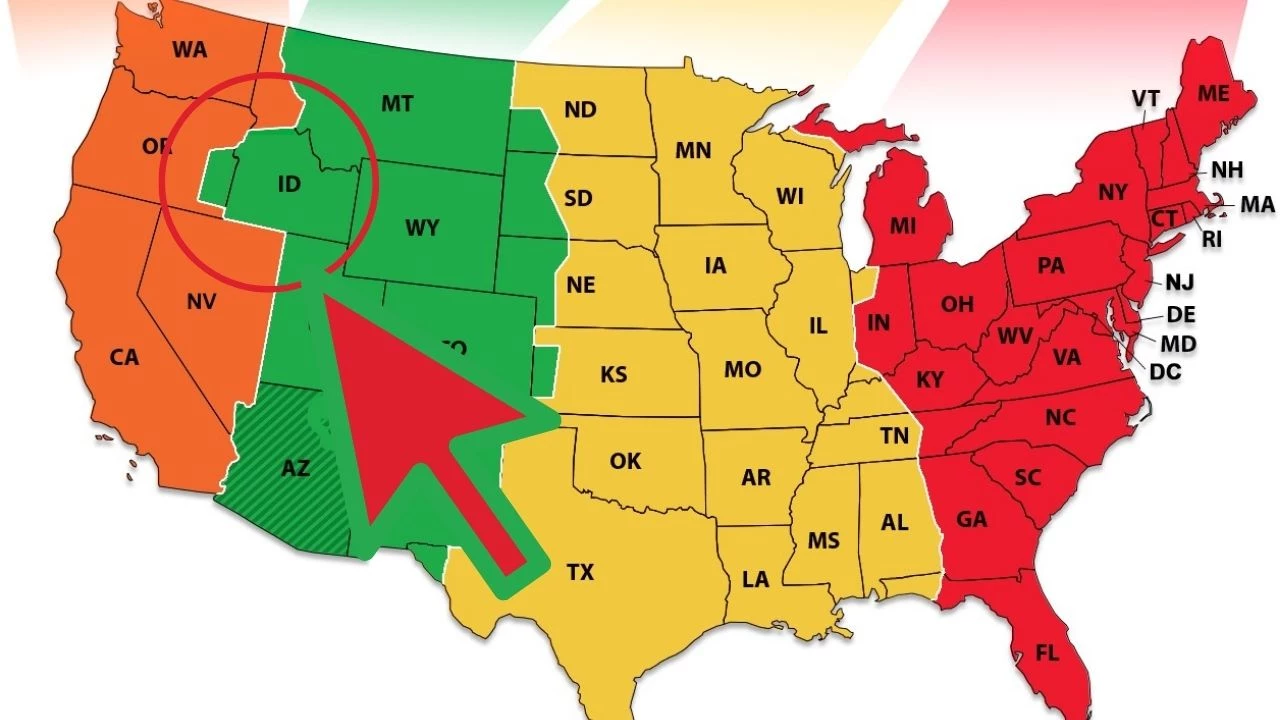
Idaho’s position on the map, stretching vertically across several degrees of longitude, naturally places it at the crossroads of different time zone designations. This unique geographical reality means that travelers must pay attention to which part of the state they plan to visit to accurately set their watches and manage their schedules.
The Invisible Border: Understanding the Split
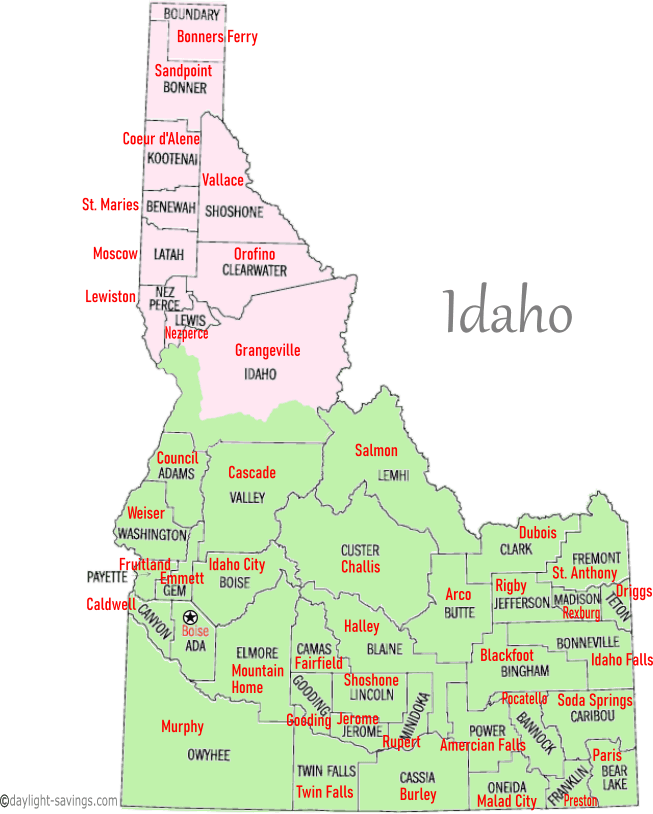
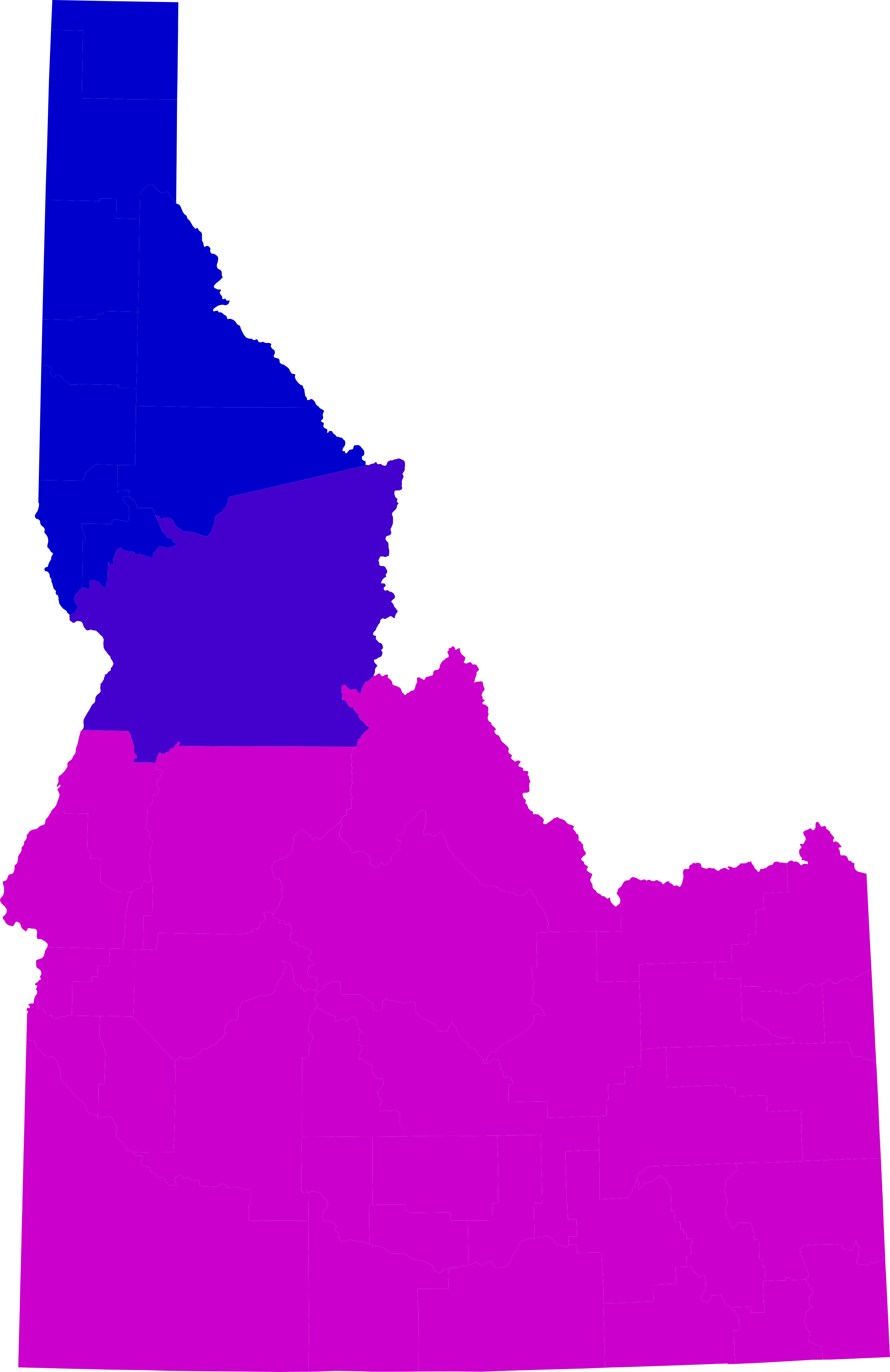
The most significant takeaway for anyone planning a trip to Idaho is that the state is divided between the Pacific Time Zone (PT/PDT) and the Mountain Time Zone (MT/MDT). Roughly speaking, the dividing line meanders along the middle of the state, often following natural features. The most commonly cited natural boundary is the Salmon River or, more precisely, the western boundary of the Idaho County. This division places the northern panhandle on Pacific Time, while the vast majority of the southern and central parts of the state operate on Mountain Time. This one-hour difference can be surprisingly impactful, turning a simple 10:00 AM meeting into an 11:00 AM rush or vice-versa, depending on which side of the invisible line you are.
Why the Split? Historical and Practical Reasons
The origins of time zones in the United States are rooted in the expansion of railroads in the late 19th century, which necessitated a standardized system for scheduling trains and preventing collisions. As these zones were formalized, they often followed state or county lines, but practical considerations for commerce, communication, and connectivity with neighboring regions also played a significant role. For Idaho, the split primarily serves to align its respective regions with their most frequent economic and social partners. Northern Idaho, with its close proximity to Washington and Oregon, naturally aligns with the Pacific Time Zone for ease of business and daily life. Conversely, southern Idaho maintains closer ties with Utah, Montana, and Wyoming, making the Mountain Time Zone a more practical choice for its population centers. This pragmatic approach, though sometimes inconvenient for cross-state travel, ultimately facilitates regional cohesion.
Mapping Idaho’s Time Zones for Travelers
To simplify your travel planning, it’s helpful to visualize which major destinations fall into each time zone. Knowing this upfront can prevent misunderstandings and ensure your itinerary unfolds as planned.
Northern Idaho: On Pacific Time
The slender panhandle of Idaho, stretching north to the Canadian border, adheres to the Pacific Time Zone. This includes the counties of Benewah, Bonner, Boundary, Kootenai, and Shoshone. Key cities and popular tourist destinations in this region, such as Coeur d’Alene, Sandpoint, and Lewiston, all observe Pacific Time. This alignment is particularly convenient for travelers flying into Spokane, Washington’s international airport, which is a common gateway to northern Idaho, as both locations share the same time. Whether you’re planning to explore Lake Coeur d’Alene, ski at Schweitzer Mountain Resort, or traverse the scenic International Selkirk Loop, remember to set your watch to PT/PDT.
Southern Idaho: Embracing Mountain Time
The vast majority of Idaho, including its capital city, operates on the Mountain Time Zone. This encompasses most of the state’s land area and population. Major urban centers like Boise, Idaho Falls, Pocatello, and Twin Falls are all firmly within MT/MDT. For travelers arriving via Boise Airport (BOI) or those planning adventures in the Sawtooth National Recreation Area, exploring Craters of the Moon National Monument and Preserve, or hitting the slopes at Sun Valley Resort, Mountain Time is your reference. This part of Idaho shares its time with major cities such as Salt Lake City, Utah and popular destinations like Jackson Hole, Wyoming, simplifying multi-state itineraries in the intermountain West.
Daylight Saving Time: A Consistent Shift
Both the Pacific Time Zone and the Mountain Time Zone in Idaho observe Daylight Saving Time. This means that during the spring, clocks “spring forward” an hour, and in the fall, they “fall back” an hour. Crucially, the one-hour difference between the two zones remains constant throughout the year. So, while the absolute time relative to UTC (Coordinated Universal Time) shifts, the relative difference between northern and southern Idaho does not change, simplifying cross-state communication in that regard.
Practical Implications for Your Idaho Trip
Understanding Idaho’s time zone situation is more than just a trivia fact; it has tangible impacts on the practicalities of your travel. Ignoring it can lead to missed connections, late arrivals, or simply unnecessary stress.
Booking Flights and Accommodations
When booking flights into or out of Idaho, always double-check the time zone listed for departure and arrival. If you’re flying into Spokane (PT) to visit Boise (MT), remember there will be a one-hour jump forward upon arrival in Boise. Conversely, traveling from Boise to Coeur d’Alene means you’ll gain an hour. This also applies to hotel reservations; ensure your check-in and check-out times align with the local time of your accommodation. A seemingly late arrival might turn into an early one, or vice-versa, impacting your itinerary.
Scheduling Activities and Tours
Perhaps nowhere is time zone awareness more critical than when scheduling activities. Whether it’s a guided fishing trip on the Snake River, a whitewater rafting excursion, a dinner reservation, or entry to a museum, confirm all timings are in the local time of the activity’s location. Imagine missing your sunrise hot air balloon ride because you thought 6:00 AM Pacific was 6:00 AM Mountain! When planning visits to national parks or attractions that span time zones (like areas near the Idaho-Montana or Idaho-Wyoming borders), such as the western edge of Yellowstone National Park, which is entirely in Mountain Time, precise time coordination is vital.
Communication with Locals and Outside Contacts
For business travelers, or those needing to stay in touch with family and colleagues outside of Idaho, the time zones are particularly important. A planned conference call at 9:00 AM PST might be 10:00 AM MST in Boise, requiring careful adjustment. Even casual phone calls to loved ones back home require a quick mental calculation to avoid waking them up or calling during inconvenient hours. Being mindful of the time difference shows professionalism and consideration, contributing to smoother interactions.
Strategies for Seamless Time Zone Transitions
Navigating Idaho’s dual time zones doesn’t have to be complicated. With a few simple strategies, you can ensure your trip remains on schedule and stress-free.
Before You Go: Research and Planning
Proactive research is your best friend. Before you even pack your bags, consult online maps and time zone tools that clearly delineate the Pacific Time Zone and Mountain Time Zone within Idaho. When creating your itinerary, explicitly note the time zone for each city or attraction you plan to visit. If you’re traveling across the time zone boundary within the state, build in a buffer hour to account for the change and allow yourself to adjust without feeling rushed. This foresight will be invaluable.
On the Ground: Devices and Awareness
Once you’re in Idaho, ensure your electronic devices—smartphones, tablets, and smartwatches—are set to automatically update their time zones. Most modern devices do this seamlessly, but it’s always wise to double-check. When crossing the internal time zone boundary, you might receive a notification that your time has adjusted. Pay attention to local signage, hotel clocks, and public displays, which will always reflect the correct local time. Don’t hesitate to politely confirm times with locals or staff if you are unsure about an event or appointment.
Embracing the Shift: Adjusting Your Body Clock
While a one-hour time difference typically doesn’t induce severe jet lag, it can still throw off your internal clock slightly, especially if you’re sensitive to changes. If you have an important early morning activity after crossing the time zone boundary, consider adjusting your bedtime by an hour the night before, or simply factor in that slight feeling of being an hour “off.” Staying hydrated and getting enough rest are always good travel tips that can help mitigate any minor time-related fatigue.
Beyond the Clock: Why Idaho’s Time Zones Matter to Travelers
While the practical aspects of time zones are paramount for logistics, understanding Idaho’s dual zones can also enrich your overall travel experience, adding another layer to your appreciation of this diverse state.
Enhancing the Travel Experience
The time zone split is a tangible reminder of Idaho’s unique geography and its deep connections to neighboring states. It encourages travelers to think more deeply about the state’s regional identities and the subtle ways they influence daily life. Recognizing this division can become part of the adventure, a quirky characteristic that defines Idaho as distinct from other travel destinations. It’s a testament to the state’s wild, untamed nature, where even time itself bends to the landscape and the needs of its communities.
A Gateway to Neighboring Adventures
Idaho‘s strategic position, straddling two time zones, also makes it an excellent base for exploring the wider American West. From northern Idaho, a short drive can take you into Washington’s wine country or across the border into British Columbia, Canada, all while remaining on Pacific Time. From southern Idaho, the proximity to Yellowstone National Park (in Mountain Time) and other iconic national parks in Wyoming and Utah makes multi-state road trips highly accessible. Being aware of the local time wherever you are, and where you’re heading next, ensures smooth transitions and maximizes your time for discovery.
In conclusion, the question “What time is Idaho in?” is more complex than it appears, but armed with this knowledge, you are well-prepared to navigate the Gem State confidently. Idaho’s unique two-time-zone system is a minor detail that, when understood, can significantly enhance your travel experience, ensuring that every moment of your adventure in this beautiful state is spent exploring, not stressing over the clock. So go forth, explore Idaho, and let its landscapes define your rhythm, not just its time zones.
LifeOutOfTheBox is a participant in the Amazon Services LLC Associates Program, an affiliate advertising program designed to provide a means for sites to earn advertising fees by advertising and linking to Amazon.com. Amazon, the Amazon logo, AmazonSupply, and the AmazonSupply logo are trademarks of Amazon.com, Inc. or its affiliates. As an Amazon Associate we earn affiliate commissions from qualifying purchases.