
Understanding “what time it is in Texas” is far more than a simple inquiry about the current hour. For travelers, digital nomads, business professionals, and anyone planning to experience the vast and diverse landscape of the Lone Star State, comprehending its time zones is a foundational piece of travel planning. Texas, a state renowned for its expansive geography, rich history, and vibrant culture, spans over 268,000 square miles, boasting everything from bustling metropolises to serene natural wonders and charming small towns. This immense size means that not all of Texas operates on the same clock, a crucial detail that can significantly impact everything from flight schedules and hotel check-ins to tour bookings and even dinner reservations.
This guide delves beyond the immediate answer to the time query, exploring the nuances of Texas’s time zones, their implications for various types of travel, and how to seamlessly integrate this knowledge into your planning for accommodations, attractions, and lifestyle experiences. Whether you’re flying into Dallas for a business conference, exploring the historic sites of San Antonio, enjoying the live music scene in Austin, or venturing into the rugged wilderness of Big Bend National Park, a clear understanding of Texas time will be your indispensable companion for a smooth and enjoyable journey.
Navigating Texas Time Zones: A Traveler’s Essential Guide
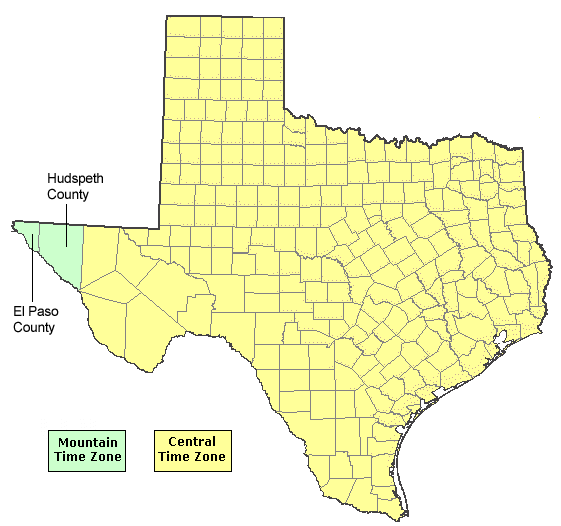
The vast majority of Texas observes the Central Time Zone (CT), but a significant portion of its westernmost reaches, particularly around El Paso, operates on Mountain Time Zone (MT). This distinction is vital for anyone planning to traverse the state or coordinate activities across different regions.
Central Time Zone (CT): The Heartbeat of Texas
The Central Time Zone encompasses virtually all of Texas, making it the default time reference for most visitors and residents. During standard time, it’s referred to as Central Standard Time (CST), which is UTC-6. When Daylight Saving Time is in effect, it shifts to Central Daylight Time (CDT), which is UTC-5. This zone covers the state’s four largest cities—Houston, San Antonio, Dallas, and Austin—as well as other major hubs like Fort Worth, Corpus Christi, and Galveston.
For travelers, understanding that most of Texas operates on CT simplifies planning for tours, restaurant reservations, and event attendance within these areas. For instance, if you’re planning to visit the historic The Alamo in San Antonio, explore the Space Center Houston, or immerse yourself in the arts district of Dallas, all your scheduling will align with CT. The vibrant lifestyle, from bustling business districts to laid-back leisure activities, follows this rhythm. Early risers can catch the sunrise over the Gulf Coast in Galveston on CT, while night owls can enjoy Austin’s famous live music scene well into the CT evening.
Mountain Time Zone (MT): The Western Edge
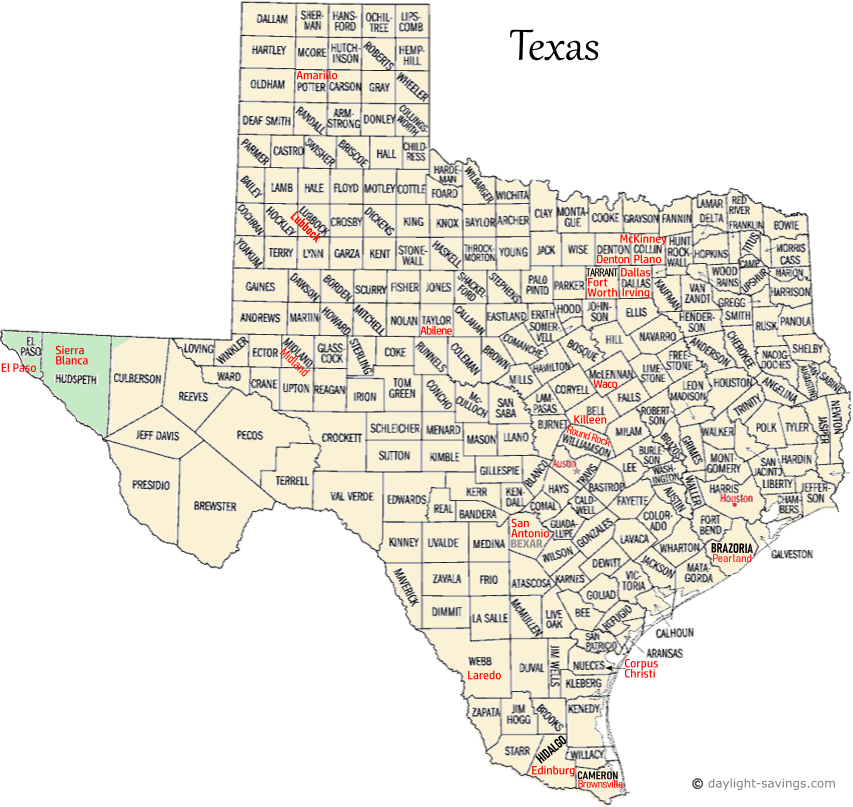
The exception to the Central Time Zone rule lies in the far western part of Texas, specifically the city of El Paso and portions of Hudspeth County. These areas observe the Mountain Time Zone. During standard time, it’s Mountain Standard Time (MST), which is UTC-7. With Daylight Saving Time, it becomes Mountain Daylight Time (MDT), UTC-6. This means that El Paso is consistently one hour behind the rest of Texas that observes CT.
This time difference is incredibly important for travelers, especially those venturing into western Texas for natural attractions like Big Bend National Park. While Big Bend National Park officially observes Central Time Zone, its remote location and proximity to the MT boundary can sometimes lead to confusion. It’s always best to double-check opening hours and tour schedules for attractions in this region, particularly if you are traveling from El Paso or other MT areas. For anyone flying into El Paso and then driving east, or vice versa, remember to adjust your watch to avoid missing appointments or miscalculating travel times. This is especially critical for those with tight itineraries or connecting flights.

Daylight Saving Time (DST) in Texas
Like most of the United States, Texas observes Daylight Saving Time, which typically begins on the second Sunday in March and ends on the first Sunday in November. During this period, clocks “spring forward” one hour, effectively moving from CST to CDT (UTC-5) and from MST to MDT (UTC-6). This shift impacts both time zones uniformly across the state.
For travelers, DST means longer daylight hours during the spring, summer, and early fall, which can be advantageous for sightseeing, outdoor activities, and enjoying Texas’s vibrant evening scenes. However, it also means adjusting schedules. Always confirm local times for any pre-booked activities, especially around the start and end dates of DST, to prevent any misunderstandings or missed connections. While most digital devices automatically adjust, it’s a good practice for international travelers or those with older devices to manually verify.
Texas Travel & Time: Maximizing Your Itinerary
The difference in time zones across Texas may seem minor, but it holds significant implications for various aspects of travel, from seamless flight connections to enjoying the state’s iconic landmarks and understanding its unique lifestyle rhythms.
Seamless Planning Across Time Zones
For travelers, integrating time zone awareness into itinerary planning is paramount. When booking flights, particularly those with layovers within Texas or connecting from other states, always verify departure and arrival times in local time. A flight from Houston (CT) to El Paso (MT) will show an arrival time that is one numerical hour earlier than the departure time, even though the actual flight duration is longer. For example, a 2-hour flight departing Houston at 10:00 AM CT will arrive in El Paso at 11:00 AM MT, making it seem like a 1-hour flight locally. Conversely, flying from El Paso to Houston will ‘lose’ an hour.
Beyond flights, this also applies to hotel check-ins, car rental pick-up/drop-off, and pre-booked tours or experiences. A late check-in at a resort in [El Paso](https://lifeoutofthebox.com/el-paso] could inadvertently be an hour earlier than expected if you’re mentally calculating based on Central Time Zone. Always confirm local times when making reservations to avoid any inconvenience.
Experiencing Texas Landmarks & Attractions on Schedule
Texas is brimming with diverse attractions, from historical sites to natural wonders, and each operates on its local time. In San Antonio, a leisurely morning stroll along the San Antonio River Walk can lead to a visit to The Alamo, all synchronized with Central Time Zone operating hours. In Dallas, exploring the Sixth Floor Museum or enjoying a picnic at Klyde Warren Park will also follow CT.
However, if your journey takes you from the cosmopolitan flair of Houston to the rugged beauty of West Texas, particularly near Big Bend National Park or the region around El Paso, you must be diligent. While most national parks and state parks in Texas adhere to Central Time Zone, local businesses, restaurants, and other services in El Paso will be on Mountain Time Zone. Missing the last entry time for an attraction or a pre-booked tour due to a one-hour miscalculation can be disappointing and disrupt your carefully planned adventure. Always double-check official websites or call ahead for exact operating hours in the local time zone of your destination.
Business and Lifestyle Considerations
For business travelers, understanding time zones is non-negotiable. Coordinating conference calls or meetings between Dallas and El Paso requires a one-hour adjustment. Similarly, scheduling client dinners or networking events needs careful consideration of local closing times and cultural norms. The business pace in Houston, a global energy hub, might start earlier than in other parts of the state.
Beyond business, the lifestyle in Texas also follows these time rhythms. Eating out in Austin’s vibrant food truck scene or catching a rodeo at the Fort Worth Stockyards National Historic District requires knowing the local time for events and performances. Many live music venues in Austin open their doors late, a reflection of the city’s nocturnal culture, while many family-friendly attractions in cities like San Antonio or Corpus Christi cater to earlier starts. Being in sync with the local clock allows you to fully immerse yourself in the authentic Texas experience, whether it’s enjoying a leisurely breakfast at a local diner or savoring a sunset from a scenic overlook.
Accommodation & Lifestyle: Synchronizing with the Lone Star State
The choice of accommodation and how you plan your daily lifestyle activities are deeply intertwined with understanding the local time in Texas. From luxurious resorts to budget-friendly stays, and from fine dining to exploring local markets, time awareness plays a subtle yet significant role in maximizing your travel experience.
Booking Your Stay: Time Zones and Check-in/Check-out
When booking accommodation in Texas, whether it’s a suite at The Post Oak Hotel in Houston, a historic room at Hotel Emma on the San Antonio River Walk, or a charming bed and breakfast in a smaller town, always pay close attention to the check-in and check-out times specified in local time. Most booking platforms will display times in the local zone of the property, but a quick mental double-check, especially if you’re traveling from a different time zone, can prevent unnecessary stress.
For instance, arriving at the JW Marriott San Antonio Hill Country Resort & Spa late after a long drive from [El Paso](https://lifeoutofthebox.com/el-paso] means you’ve gained an hour, potentially allowing for a smoother check-in without feeling rushed. Conversely, flying into Austin for a stay at the Four Seasons Hotel Austin from the West Coast means you’ve lost one or two hours, making early morning arrivals feel even earlier. Knowing this beforehand allows you to communicate effectively with the hotel about early check-in needs or late arrivals.
Many hotels and resorts, particularly those catering to business and luxury travelers, offer amenities like 24-hour concierge services or flexible check-in options. However, for smaller boutique hotels or vacation rentals, adherence to strict check-in windows is more common. If you’re considering a long-term stay, perhaps in a serviced apartment in Dallas or a villa near South Padre Island, understanding the daily rhythm of the local community, including business hours for property management or local services, will be key to a comfortable experience.
Embracing Texas Culture: Dining, Events, and Leisure
Texas’s lifestyle is as diverse as its geography, and its timing varies from region to region. The state is famous for its culinary delights, from world-class BBQ and authentic Tex-Mex to upscale fine dining experiences. In bustling cities like Houston and Dallas, dinner reservations might be necessary, and knowing the local time is crucial for securing your spot. In smaller towns, kitchen closing times can be earlier, so planning your meals around the local clock is important.
Leisure activities also follow local time. Attending a football game in Arlington, visiting the Texas State Capitol in Austin, or enjoying a day on [South Padre Island](https://lifeoutofthebox.com/south-padre-island]’s beaches—all are best enjoyed when you’re in sync with local schedules. Austin’s “Live Music Capital of the World” reputation means many venues come alive late into the evening. Planning your day to account for these late nights, perhaps with a later start the next morning, is part of embracing the local lifestyle.
Tips for a Smooth Texas Experience
- Set Your Devices: Ensure your smartphone, tablet, and smartwatches are set to automatically update time zones. This is your first line of defense against time confusion.
- Physical Watch: If you rely on a physical watch, remember to manually adjust it when crossing into or out of the Mountain Time Zone or during Daylight Saving Time transitions.
- Confirm Local Times: Always confirm operating hours, reservation times, and event schedules in the local time zone of your specific destination within Texas. A quick call or check on a website can save you a lot of hassle.
- Factor in Travel Time: When planning multi-city trips within Texas, especially between the Central Time Zone and Mountain Time Zone, factor in the one-hour time difference in addition to physical driving time.
- Combat Jet Lag (if applicable): If you’re arriving from a distant time zone, give yourself time to adjust. Even a one-hour shift can impact some individuals. Stay hydrated, get some sunlight, and try to adjust to the local sleep schedule as quickly as possible.
In conclusion, understanding “what time it is in Texas” is a fundamental aspect of planning any visit to this magnificent state. While most of Texas operates on Central Time Zone, the western segment observes Mountain Time Zone, a detail crucial for seamless travel, accommodation, and cultural immersion. By keeping these time distinctions in mind, you can ensure a well-organized, stress-free, and truly enriching Texas adventure, allowing you to fully appreciate everything the Lone Star State has to offer, right on schedule.
LifeOutOfTheBox is a participant in the Amazon Services LLC Associates Program, an affiliate advertising program designed to provide a means for sites to earn advertising fees by advertising and linking to Amazon.com. Amazon, the Amazon logo, AmazonSupply, and the AmazonSupply logo are trademarks of Amazon.com, Inc. or its affiliates. As an Amazon Associate we earn affiliate commissions from qualifying purchases.