
Planning a trip to the vast, sun-drenched landscapes of Arizona often brings a unique question to the forefront: what time is it actually there? For travelers accustomed to the biannual ritual of adjusting clocks for Daylight Saving Time (DST), Arizona’s approach to time can be a delightful anomaly, or a source of mild confusion if not understood. Unlike most of the United States, the Grand Canyon State largely opts out of DST, adhering instead to Mountain Standard Time (MST) year-round. This distinctive characteristic not only shapes the daily rhythm for residents but also has significant implications for tourism, travel planning, and the overall lifestyle experience within the state.

From the bustling streets of Phoenix to the serene red rocks of Sedona and the awe-inspiring depths of the Grand Canyon National Park, understanding Arizona’s time zone is key to a seamless visit. This article delves into the intricacies of Arizona’s timekeeping, exploring its historical roots, practical impacts on travel and accommodation, and providing essential tips for anyone looking to experience the magic of this desert gem without missing a beat.
Unraveling Arizona’s Unique Timekeeping
Arizona’s stance on Daylight Saving Time is one of its most fascinating quirks, distinguishing it from nearly all its neighboring states. This unique approach to timekeeping is deeply ingrained in the state’s culture and environment, offering both a simplified schedule for locals and an intriguing challenge for visitors.
The Land Without Daylight Saving
For the majority of the year, specifically from the second Sunday in March to the first Sunday in November, most of the United States springs forward for Daylight Saving Time. During this period, areas observing DST are one hour ahead of their standard time. However, mainland Arizona remains steadfastly on Mountain Standard Time (MST). This means that for roughly half the year, Arizona is aligned with Pacific Daylight Time (PDT), which is used by states like California and Nevada. When DST ends in the fall, Arizona reverts to being one hour ahead of the Pacific Time Zone, aligning with Mountain Standard Time in states like Colorado and New Mexico.
This constant MST schedule offers a straightforwardness that many residents appreciate. There’s no twice-yearly confusion of changing clocks, no sudden shifts in sleep patterns, and a consistent schedule for business and daily life. The primary reason for this decision, dating back to the 1960s, largely revolves around the state’s intense summer heat. Arizona summers are notoriously scorching, and pushing daylight an hour later would mean an hour more of brutal sunlight extending into the evening, increasing energy consumption for air conditioning and delaying outdoor activities until even later into the night. By sticking to MST year-round, the sun sets an hour earlier during the summer months compared to states observing DST, making evenings more tolerable for outdoor leisure and reducing the demand on power grids.
The Navajo Nation Anomaly
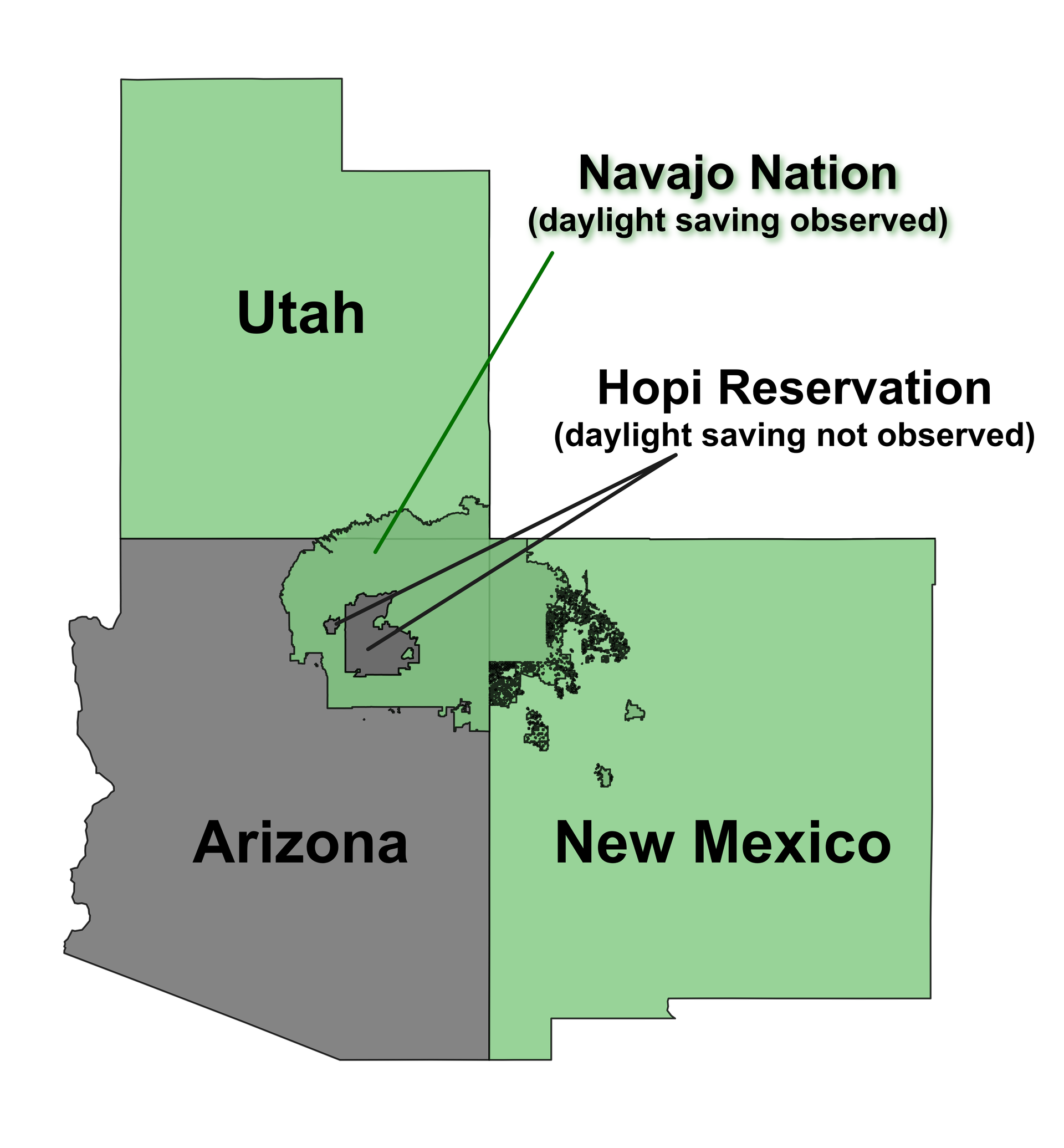
Adding another layer of complexity to Arizona’s time zone landscape is the Navajo Nation. This vast sovereign territory, encompassing large portions of northeastern Arizona as well as parts of Utah and New Mexico, does observe Daylight Saving Time. This means that during the DST period, the Navajo Nation operates on Mountain Daylight Time (MDT), making it one hour ahead of the rest of Arizona.
This internal time zone shift within the state can be particularly perplexing for travelers visiting iconic landmarks such as Antelope Canyon or Monument Valley, which are located within the Navajo Nation. Visitors driving from cities like Flagstaff or Page need to be acutely aware of this change. It is crucial to note that the Hopi Reservation, which is entirely surrounded by the Navajo Nation within Arizona, does not observe DST and remains on MST year-round. This creates a fascinating and sometimes challenging “time island” scenario for those traveling through these distinct tribal lands.
Navigating Travel and Tourism Across Arizona’s Time Zones
For anyone planning a memorable trip to Arizona, understanding the state’s time zone dynamics is more than a trivial detail; it’s an essential part of effective planning. From flight schedules to booking luxury resorts and embarking on guided tours, the unique timekeeping impacts nearly every facet of the travel experience.
Planning Your Arizona Getaway
When flying into Arizona, particularly during the spring and summer months when DST is in effect elsewhere, travelers need to adjust their internal clocks accordingly. For example, if you’re flying from Los Angeles (on Pacific Daylight Time) to Phoenix Sky Harbor International Airport (on Mountain Standard Time), there will be no time difference. The flight might leave at 10:00 AM PDT and arrive at 11:00 AM MST (local time), effectively making it a one-hour flight. However, if you’re flying from Denver (on Mountain Daylight Time) to Phoenix, you’ll effectively lose an hour, as Phoenix will be an hour behind Denver’s local time. Always confirm flight times with the local time of your destination, rather than simply relying on what your personal devices might auto-adjust to. Major airports like Phoenix Sky Harbor International Airport and Tucson International Airport consistently operate on MST.

Road trips entering Arizona from neighboring states also require vigilance. Crossing the border from California or Nevada during DST means you effectively gain an hour, as Arizona will be one hour ahead of Pacific Standard Time but the same as Pacific Daylight Time. Conversely, coming from Utah, Colorado, or New Mexico during their DST periods means you’ll “lose” an hour as you enter Arizona proper, which will be an hour behind their Mountain Daylight Time. Setting your phone to automatically update its time zone is usually helpful, but a quick manual check upon crossing state lines can prevent missed appointments or reservations.
Accommodation and Activity Bookings
Booking accommodation, whether it’s a luxury suite at the Hyatt Regency Scottsdale Resort & Spa at Gainey Ranch or a charming villa in Sedona, requires attention to the local time. Check-in and check-out times, spa appointments, and dinner reservations are all based on Arizona’s consistent MST. Many online booking platforms and confirmation emails will typically display times in the local time zone, but it’s always prudent to double-check.
When planning activities, especially tours that originate in one part of the state and venture into another, the Navajo Nation time difference becomes critical. A sunrise tour of Antelope Canyon or a visit to Monument Valley during summer months will operate on MDT, meaning it will be an hour later than the time in nearby Page, Arizona. Failing to account for this can lead to missed tour departures, which are often non-refundable. Tour operators are generally good at providing explicit time instructions, but the onus is ultimately on the traveler to understand and abide by them. Always confirm the local time for your specific tour or attraction within the Navajo Nation.
Practical Tips for Seamless Arizona Experiences
Mastering the nuances of Arizona’s time zone is surprisingly easy once you’re aware of the core principles. With a few simple strategies, you can ensure your travel and stay in the state are as smooth and enjoyable as the desert breeze.
Checking the Time Like a Pro
The most straightforward advice for managing time in Arizona is to always defer to local electronic devices and official sources. Your smartphone, if set to automatically update its time zone, will almost always display the correct local time, whether you’re in Phoenix, Tucson, or within the Navajo Nation.
- Trust Your Tech: Keep your phone’s automatic time zone setting enabled. Most modern phones are smart enough to handle the Arizona anomaly.
- Check Local Clocks: Hotels, airports, and public buildings will display the correct local time.
- When in Doubt, Ask: If you have an appointment or a tour, don’t hesitate to confirm the time with the local establishment. A quick call can save you a lot of hassle.
- Be Mindful of Borders: When driving near the borders with Utah, New Mexico, or the Navajo Nation, be especially vigilant. Road signs might indicate upcoming time zone changes.
Communication Across Borders
For business travelers or those maintaining contact with friends and family outside Arizona, understanding the time difference is paramount.
- Eastern Time Zone (ET): Arizona is three hours behind during DST (e.g., 9 AM in Phoenix is 12 PM in New York City) and two hours behind during standard time (e.g., 9 AM in Phoenix is 11 AM in New York City).
- Central Time Zone (CT): Arizona is two hours behind during DST (e.g., 9 AM in Phoenix is 11 AM in Chicago) and one hour behind during standard time (e.g., 9 AM in Phoenix is 10 AM in Chicago).
- Mountain Time Zone (MT – observing DST): During DST, Arizona is one hour behind MDT (e.g., 9 AM in Phoenix is 10 AM in Denver). During standard time, Arizona is aligned with MST (e.g., 9 AM in Phoenix is 9 AM in Salt Lake City).
- Pacific Time Zone (PT – observing DST): During DST, Arizona is aligned with PDT (e.g., 9 AM in Phoenix is 9 AM in Los Angeles). During standard time, Arizona is one hour ahead of PST (e.g., 9 AM in Phoenix is 8 AM in Los Angeles).
These differences are crucial for scheduling virtual meetings, conference calls, or simply making sure you call loved ones at an appropriate hour.
Embracing the Arizona Lifestyle
Beyond the logistical considerations, Arizona’s time zone also influences the rhythm of daily life and the unique lifestyle experiences available. The absence of DST means that during the peak summer months, the sun sets “earlier” by the clock, creating longer, more enjoyable evenings for outdoor activities like dining al fresco in Scottsdale, stargazing in Sedona, or exploring the vibrant nightlife in Tucson.
This consistent schedule also fosters a sense of stability, simplifying the planning of local events, festivals, and community gatherings. From family trips enjoying the amenities of a resort in Lake Havasu City to business stays in downtown Phoenix, the straightforwardness of Arizona’s time ensures that accommodation bookings, tourism activities, and local culture explorations are predictable and easy to manage. It’s one less variable to worry about, allowing visitors to fully immerse themselves in the natural beauty and rich cultural tapestry of the state.
In conclusion, “What time is it in Arizona?” is a question with a refreshingly simple answer for most of the state: it’s Mountain Standard Time all year long. The critical exception of the Navajo Nation merely adds a layer of fascinating cultural and practical consideration for those venturing into its breathtaking landscapes. With a little awareness and reliance on modern technology, travelers can navigate Arizona’s unique time zone with ease, ensuring a memorable and perfectly timed journey through one of America’s most captivating destinations.
LifeOutOfTheBox is a participant in the Amazon Services LLC Associates Program, an affiliate advertising program designed to provide a means for sites to earn advertising fees by advertising and linking to Amazon.com. Amazon, the Amazon logo, AmazonSupply, and the AmazonSupply logo are trademarks of Amazon.com, Inc. or its affiliates. As an Amazon Associate we earn affiliate commissions from qualifying purchases.