
Florida, often celebrated as the Sunshine State, beckons millions of travelers each year with its pristine beaches, vibrant cities, and world-class attractions. From the magical theme parks of Orlando to the Art Deco charm of Miami and the serene shores of the Florida Panhandle, the state offers an incredibly diverse range of experiences. However, an often-overlooked aspect that can significantly impact your travel plans and daily logistics is Florida’s unique geographical position, which places it across two distinct time zones. While most of the United States operates on a single time zone within each state, Florida presents a subtle complexity that savvy travelers and residents alike must understand.
For those planning an unforgettable journey, booking accommodation, or coordinating business ventures, knowing “What time is it in Florida?” isn’t always a straightforward question. It depends entirely on where in the state you are. This guide delves into the specifics of Florida’s time zones, offering comprehensive insights into how this impacts everything from flight schedules and hotel check-ins to sightseeing and communication. Understanding these nuances is crucial for a seamless and stress-free Florida experience, ensuring you’re always on schedule whether you’re exploring the historic streets of St. Augustine or relaxing on the white sands of Destin.
The Sunshine State’s Dual Time Zones: A Brief Overview
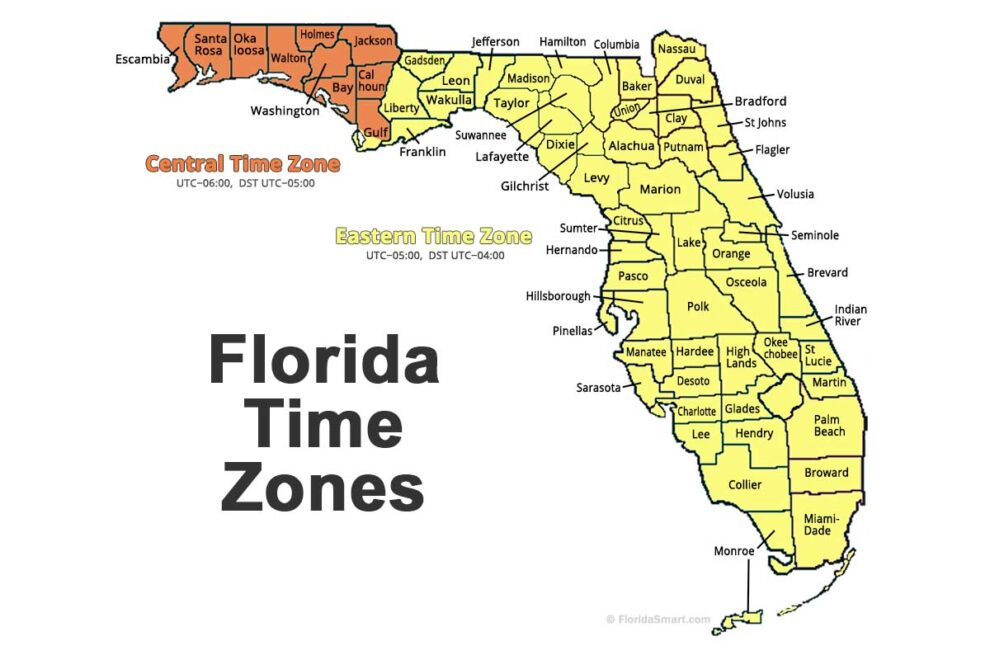
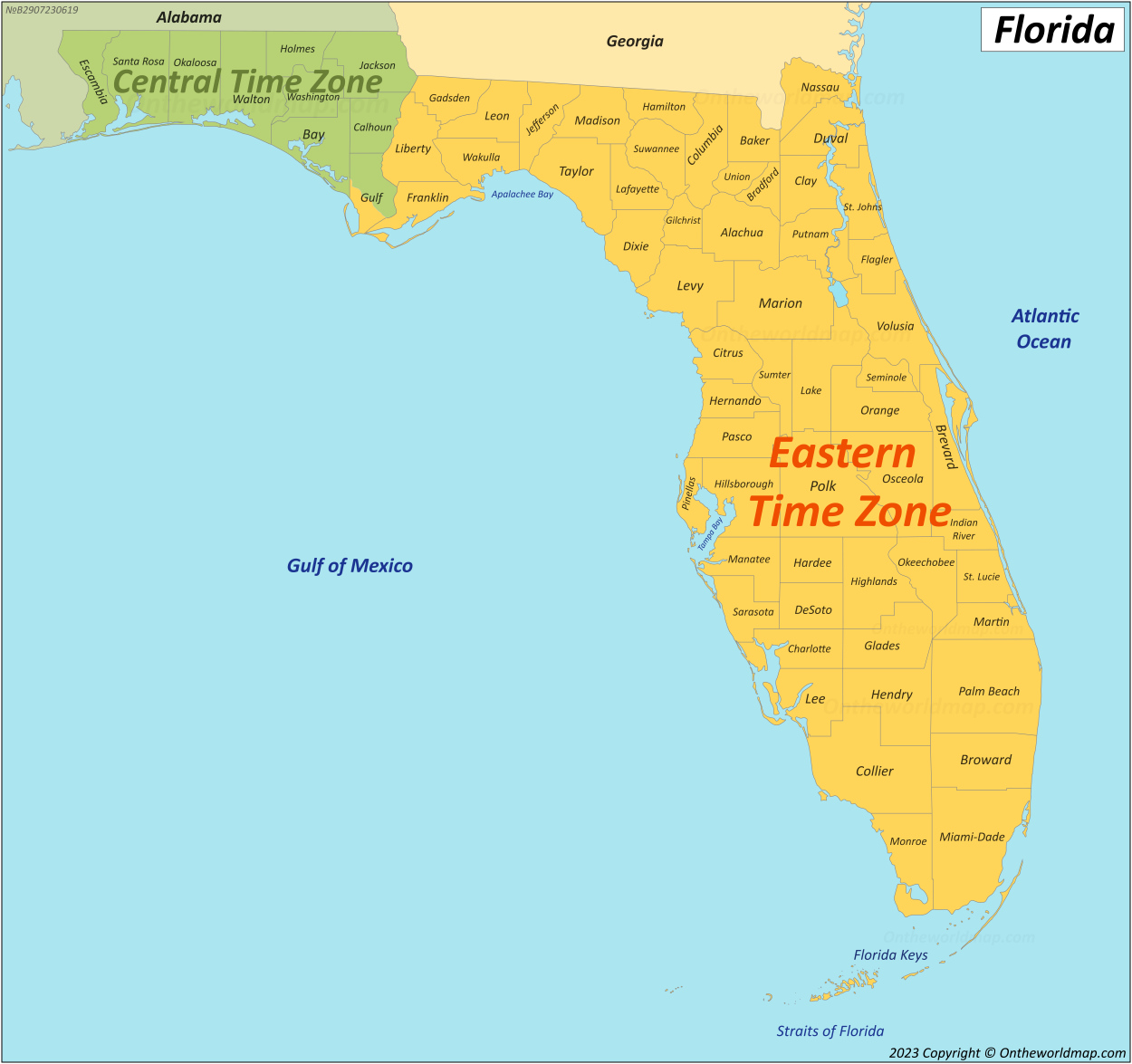
Unlike many states that uniformly fall into one time zone, Florida is segmented, primarily following the Eastern Time Zone (ET) but with a significant portion of its westernmost Panhandle adhering to the Central Time Zone (CT). This division, while logical from a geographical perspective, can sometimes catch unsuspecting visitors off guard. The vast majority of Florida’s population centers, major cities, and world-famous attractions are firmly situated within ET. This includes the entire Florida Peninsula and extending north into much of the Panhandle. However, as you travel further west, particularly beyond the Apalachicola River, you’ll cross into CT, which is one hour behind ET.
Both of these time zones observe Daylight Saving Time (DST), meaning clocks “spring forward” one hour in the early spring and “fall back” one hour in the late autumn. This ensures that the one-hour difference between ET and CT remains constant throughout the year. For instance, if it’s 3 PM ET, it will be 2 PM CT. While this might seem like a minor detail, it has significant implications for travel planning, especially if your itinerary involves moving between these two parts of the state. Whether you’re flying into Miami International Airport or planning a road trip along the Gulf Coast, being aware of these time distinctions is your first step towards a perfectly synchronized vacation or business trip.

Eastern Time Zone (ET): Florida’s Most Populous Region
The majority of Florida, including all of its iconic tourist destinations and major metropolitan areas, operates on Eastern Time (ET). This encompasses the bustling cityscape of Miami, known for its vibrant South Beach nightlife and luxurious boutique hotels along Ocean Drive. Further north, the theme park capital of Orlando with its sprawling Walt Disney World Resort and Universal Orlando Resort also adheres to ET. Visitors here might find themselves staying at renowned family resorts like the Hard Rock Hotel Orlando or the Four Seasons Resort Orlando at Walt Disney World Resort, all operating on the same schedule.
Other major cities in ET include Jacksonville, Tampa, St. Petersburg, Sarasota, Fort Lauderdale, Naples, and the beautiful chain of islands known as the Florida Keys, stretching down to Key West. Landmarks such as the Kennedy Space Center Visitor Complex near Cape Canaveral, the historic Castillo de San Marcos in St. Augustine, and natural wonders like Everglades National Park are all on Eastern Time.
For travelers arriving at major hubs like Orlando International Airport, Tampa International Airport, or Fort Lauderdale-Hollywood International Airport, their entire journey through these regions will be consistent. Planning activities like dining at top-rated restaurants, exploring local culture, or attending events means adhering to ET. When booking rooms at luxurious properties like The Breakers Palm Beach or the historic Casa Marina Key West, A Curio Collection by Hilton, confirming check-in and check-out times will always refer to Eastern Time. This widespread adoption of ET simplifies planning for the vast majority of Florida’s visitors, making it a primary consideration for almost any itinerary.
Central Time Zone (CT): Exploring Florida’s Panhandle
The westernmost counties of the Florida Panhandle fall within the Central Time Zone (CT), placing them one hour behind the rest of the state. This includes Escambia County, Santa Rosa County, Okaloosa County, and Walton County, which are home to popular destinations like Pensacola, Destin, and much of Panama City Beach. These areas are renowned for their stunning white-sand beaches, emerald waters of the Gulf of Mexico, and a more laid-back lifestyle compared to the bustling metropolitan areas of south Florida.
Visitors to this region, arriving perhaps via Pensacola International Airport or Northwest Florida Beaches International Airport near Panama City Beach, will find themselves operating on CT. When planning stays at luxurious resorts like the Hilton Sandestin Beach Golf Resort & Spa or The Henderson Beach Resort & Spa in Destin, all booking confirmations and daily schedules will reflect this time. The distinction becomes particularly important for travelers driving east or west within the Panhandle. For example, if you’re traveling from Tallahassee (ET) to Pensacola (CT), you’ll “gain” an hour, moving from 3 PM ET to 2 PM CT as you cross the time zone boundary. Conversely, heading east means “losing” an hour.
This time zone shift affects everything from restaurant reservations to attraction opening hours and even local television schedules. While many mobile devices automatically adjust time zones, it’s always prudent to manually check, especially when relying on fixed schedules. The serene beauty and outdoor activities, from fishing charters to exploring historic forts, are best enjoyed when your internal clock aligns with the local one, preventing missed appointments or confusion during your stay in this picturesque part of Florida.
Practical Implications for Your Florida Journey
Understanding Florida’s dual time zones goes beyond mere trivia; it’s a fundamental aspect of effective travel planning and ensuring a smooth, enjoyable trip. From coordinating flights and ground transportation to managing accommodation bookings and business communications, being time-aware is paramount.
Navigating Flight Schedules and Ground Transportation
One of the most critical areas where time zones play a role is in travel logistics. When booking flights, train tickets, or even long-distance bus services within, into, or out of Florida, all times listed are typically local to the departure and arrival points. This means a flight departing Pensacola International Airport at 10:00 AM CT and arriving at Orlando International Airport (error in previous mention, corrected to Orlando International Airport) at 12:30 PM ET is actually a 1.5-hour flight, not 2.5 hours, because you’ve crossed into a new time zone that is one hour ahead. Conversely, flying west from Orlando to Pensacola will add an hour to the clock, making a 1.5-hour flight appear as a 30-minute journey if you only look at the numbers without accounting for the time zone change.
For road trips, particularly those crossing the Apalachicola River area, it’s essential to note the time change. Gas stations, rest stops, and local businesses will operate on their respective local times. Missing a planned rendezvous or arriving late for a tour simply because of an hour’s discrepancy can be frustrating. Always double-check your itinerary, especially for connecting flights or pre-booked transfers, ensuring you’re working with the correct local times for each leg of your journey.
Hotel Check-ins, Restaurant Reservations, and Attraction Hours
Accommodation bookings, whether for a sprawling resort like The Ritz-Carlton, Amelia Island or a cozy villa in Key Largo, are always set to the property’s local time. Arriving at your hotel an hour early or late can impact your check-in process, especially if the hotel is fully booked or has strict policies. Similarly, restaurant reservations in Miami (ET) will follow a different clock than a casual seafood spot in Panama City Beach (CT). Missing a coveted dinner reservation due to a time zone miscalculation is a common, yet easily avoidable, travel hiccup.
The same applies to visiting Florida’s myriad attractions. Theme parks like Busch Gardens Tampa Bay or natural parks like Big Cypress National Preserve have specific operating hours that are always local to their location. If you’re planning a tight schedule involving visits to multiple attractions across the time zone boundary, factor in the hour difference. This attention to detail will help you maximize your tourism experience, allowing you to immerse yourself fully in the local culture and activities without worrying about missed opportunities.
Business & Communication
For those combining travel with work or needing to communicate with contacts back home, the time zone difference in Florida adds another layer of complexity. Coordinating conference calls, virtual meetings, or simply staying in touch with colleagues or family in other parts of the United States (or the world) requires careful consideration. A 9 AM ET meeting might be 8 AM CT for some team members and even later or earlier for those outside Florida. Utilizing online scheduling tools that automatically convert time zones is highly recommended to prevent miscommunications and ensure everyone is on the same page. This is particularly relevant for individuals on business stays in Florida, where precision and punctuality are often critical.
Tools and Tips for Staying on Florida Time
Navigating Florida’s time zones doesn’t have to be a source of stress. With the right tools and a little foresight, you can ensure your trip runs smoothly.
- Trust Your Smartphone and Smartwatch: Most modern smartphones and smartwatches automatically detect your location and adjust the time accordingly. This is usually the most reliable method. However, if you are relying on an older device or have location services turned off, confirm the time manually.
- Utilize Online World Clocks: Before you depart or when planning your itinerary, use an online World Clock tool or a simple web search (“What time is it in Pensacola?” or “Current time in Miami?”) to get real-time information.
- Confirm All Bookings: When making reservations for accommodation, transportation, or activities, always reconfirm the local time with the provider. Don’t assume; verify. This is especially true if you are booking from a different time zone.
- Ask Locals: Don’t hesitate to ask a hotel concierge, restaurant staff, or even fellow travelers for clarification. Locals are always the best resource for on-the-ground information.
- Plan Your Itinerary with Time Zones in Mind: If your travel plans involve crossing the time zone boundary, build in extra buffer time. This allows for smooth transitions and prevents any rushed feelings or missed appointments. For example, if you’re driving from Tallahassee to Destin, remember you’ll “gain” an hour, which could be useful for an earlier dinner reservation.
- Be Mindful of Daylight Saving Time: Remember that both time zones in Florida observe DST. The one-hour difference between ET and CT remains constant, but the absolute time relative to Greenwich Mean Time (GMT) will shift twice a year.
Beyond Time Zones: Maximizing Your Florida Experience
While understanding time zones is a logistical necessity, it’s ultimately about enhancing your overall Florida experience. By being time-aware, you free yourself to fully immerse in the diverse offerings of this captivating state. Imagine seamless transitions from the thrilling rides of LEGOLAND Florida Resort to the tranquil beaches of Anna Maria Island, or from a vibrant cultural festival in Gainesville to a serene sunset cruise off Clearwater Beach.
Florida offers an incredible tapestry of destinations and attractions, catering to every imaginable lifestyle. Whether you’re planning a luxury travel getaway at a five-star resort in Palm Beach, a budget travel adventure exploring the natural beauty of John Pennekamp Coral Reef State Park, or a memorable family trip to SeaWorld Orlando and Discovery Cove, careful planning around time zones contributes to a truly optimized itinerary. Our guides offer extensive tourism tips to help you explore local culture, discover exquisite food, and engage in exciting activities across every part of the state.
From the historic landmarks of St. Augustine to the futuristic architecture of Cape Canaveral, and the pristine natural beauty of Sanibel Island, Florida is a land of endless possibilities. By simply being mindful of “What time is it in Florida?” and understanding its dual time zones, you’re better equipped to enjoy every moment, making your Florida experience as relaxing and fulfilling as possible. So go ahead, set your watches, and get ready to discover the magic of the Sunshine State!
LifeOutOfTheBox is a participant in the Amazon Services LLC Associates Program, an affiliate advertising program designed to provide a means for sites to earn advertising fees by advertising and linking to Amazon.com. Amazon, the Amazon logo, AmazonSupply, and the AmazonSupply logo are trademarks of Amazon.com, Inc. or its affiliates. As an Amazon Associate we earn affiliate commissions from qualifying purchases.