
For many travelers planning a journey to the lush shores of Maui, the question of time is more than a matter of checking a watch. Knowing the time in Kaanapali is about synchronizing your internal clock with the rhythm of the Pacific Ocean, understanding the logistical window for world-class activities, and respecting the cultural pace of Hawaii. Whether you are coordinating a business call with New York City or ensuring you arrive at Black Rock before the sun dips below the horizon, mastering the clock in this tropical paradise is essential for a seamless vacation.

Understanding Hawaii-Aleutian Standard Time (HST)
The state of Hawaii operates on Hawaii-Aleutian Standard Time (HST). Geographically, Kaanapali is situated in one of the most isolated island chains in the world, and its time zone reflects this distance. HST is 10 hours behind Coordinated Universal Time (UTC-10). However, the most significant factor for visitors from North America, Europe, or Asia to grasp is the lack of daylight saving adjustments.
The No-Daylight Saving Difference
Unlike the majority of the United States, Hawaii does not observe Daylight Saving Time. This means that the time difference between Kaanapali and the mainland shifts twice a year. During the summer months, when California is on Pacific Daylight Time, Kaanapali is three hours behind. In the winter, when the mainland reverts to standard time, that gap narrows to just two hours. For those traveling from the East Coast, specifically cities like Miami or Boston, the difference can be as much as six hours in the summer and five hours in the winter.
This lack of seasonal clock-shifting is rooted in Hawaii’s proximity to the equator. Because the length of days remains relatively consistent throughout the year, there is little practical need to “save” daylight. For the tourist, this provides a reliable, steady cycle of sunrises and sunsets, which is the true clock by which the island operates.
Embracing the Concept of “Island Time”
While the numerical time is important for dinner reservations at Hula Grill Kaanapali or tee times at the Kaanapali Golf Courses, there is a deeper temporal concept known as “Island Time.” In the local culture of Maui, time is viewed less as a rigid sequence of minutes and more as a flow of experiences.
“Island Time” is not about being late; it is about being present. It is the understanding that a conversation with a local artisan at Whalers Village or a moment spent watching a sea turtle near the shore is more valuable than rushing to the next itinerary item. Visitors who successfully transition to this mindset find that their stress levels plummet as they stop fighting the clock and start following the tide.
Planning Your Day Around the Sun in Kaanapali
In Kaanapali, the sun is the ultimate timekeeper. Because the area is located on the western leeward side of Maui, it enjoys a unique relationship with light and shadow, dictated by the massive peaks of the West Maui Mountains.
Sunrise at Haleakalā National Park
While Kaanapali is famous for its sunsets, the morning clock is vital for those planning a trip to Haleakalā National Park. To witness the world-famous sunrise from the summit, visitors staying at the Westin Maui Resort & Spa or the Sheraton Maui Resort & Spa must wake up well before dawn.
The drive from Kaanapali to the summit of Haleakalā takes approximately two to two and a half hours. If the sun is scheduled to rise at 6:00 AM, a 3:00 AM departure is often necessary to secure a viewing spot and navigate the winding mountain roads. Timing this correctly is one of the most critical logistical challenges for any Maui vacationer.
The Sunset Ritual at Black Rock
As the day progresses, all eyes in Kaanapali turn toward the west. Puu Kekaa, commonly known as Black Rock, is the focal point of the evening. Every night, as the sun begins its descent toward the islands of Lanai and Molokai, the Sheraton Maui Resort & Spa hosts a traditional cliff diving ceremony.
The timing of this ceremony shifts slightly throughout the year based on the sunset. It is a profound cultural moment that honors the history of King Kahekili, who once proved his spiritual strength by leaping from these very cliffs. For tourists, knowing the exact time of sunset—which ranges from roughly 5:45 PM in December to 7:10 PM in July—is key to securing a prime spot on Kaanapali Beach to witness the torch-lighting and the breathtaking dive.

Cultural Timing and Local Traditions
Tourism in Kaanapali is deeply intertwined with the timing of cultural events. To truly experience Maui, one must adhere to the schedules of the traditions that have shaped the Hawaiian Islands for centuries.
Traditional Hawaiian Luau Schedules
A trip to Hawaii is rarely complete without attending a luau. In the Kaanapali area, venues like the Drums of the Pacific Luau at the Hyatt Regency Maui Resort and Spa or the nearby Old Lahaina Luau in Lahaina operate on a precise evening schedule.
These events typically begin around 5:00 PM or 5:30 PM, allowing guests to enjoy traditional crafts, the unearthing of the kalua pig from the imu (underground oven), and cocktails while the sky is still bright. The performances and dinner are timed to coincide with the “golden hour,” providing a spectacular natural backdrop for the hula dancers and fire performers. Arriving on time is not just a matter of courtesy; it ensures you don’t miss the historical introductions that provide context for the entire evening.
Whale Watching Seasons
Time in Kaanapali is also measured in seasons. From December through April, the waters of the Auau Channel between Maui, Lanai, and Molokai become the premier destination for Humpback Whales.
During this peak season, the morning hours (between 8:00 AM and 11:00 AM) are often considered the best time for whale watching tours departing from Kaanapali Beach. The ocean surface is generally calmer in the morning before the trade winds pick up in the afternoon. Understanding this daily weather pattern allows visitors to book their excursions during the most favorable “time windows” for wildlife viewing and photography.
Logistics for the Modern Traveler
While the allure of Kaanapali is its ability to make you forget the outside world, practical logistics often require a firm grasp of the clock, especially regarding transportation and communication.
Navigating West Maui Traffic
One of the most important “times” to know is the commute between Kaanapali and Kahului Airport. While the distance is only about 27 miles, the drive can take anywhere from 45 minutes to over an hour and a half depending on the time of day.
Traffic through Lahaina and along the Honoapiilani Highway often peaks during the mid-afternoon as workers head home and tourists move between the resort areas of Kapalua and Wailea. Travelers catching a flight back to the United States Mainland or Honolulu must budget their time wisely, accounting for the “Maui rush hour.”
Coordinating with the Mainland
For those who must remain connected to the Mainland, the time gap can be a significant hurdle. If you are staying at the Kaanapali Alii on a “workation,” remember that a 9:00 AM meeting in San Francisco requires a 6:00 AM or 7:00 AM start in Hawaii. Conversely, the benefit of the time zone is that by the time you finish your morning coffee overlooking the Pacific Ocean, the workday on the East Coast is already winding down, leaving you with an uninterrupted afternoon to explore the Iao Valley State Monument.
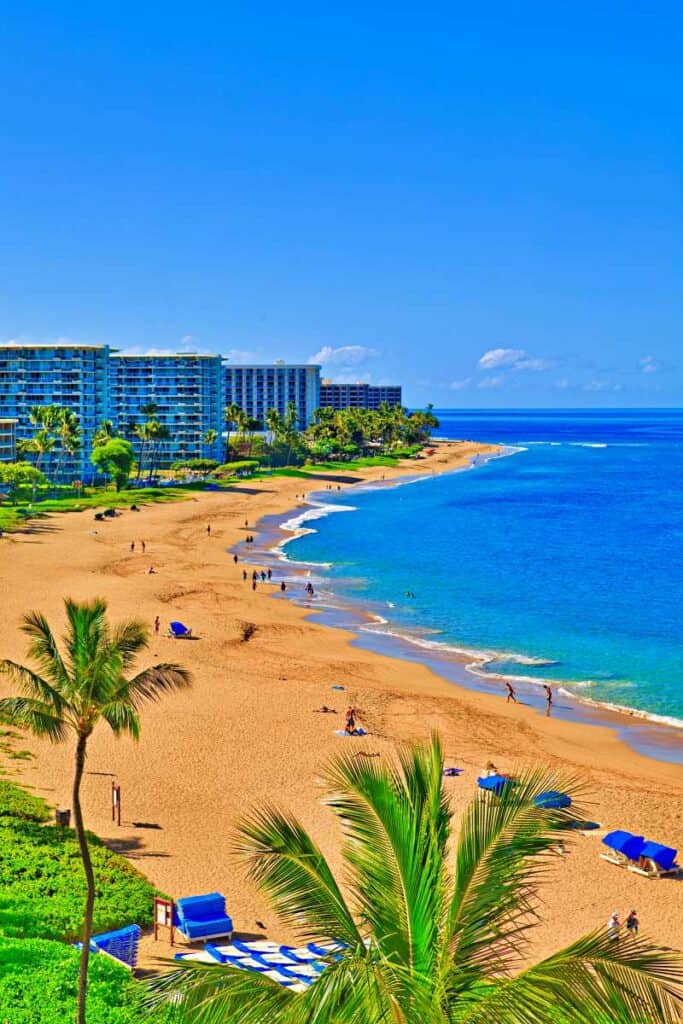
Seasonal Considerations and Year-Round Travel
The “time” of year you visit Kaanapali dictates the type of experience you will have. While Hawaii is a year-round destination, subtle shifts in the calendar affect everything from hotel rates to ocean conditions.
The winter months bring larger swells to the northern parts of Maui, making it a prime time for professional surfing spectators. However, Kaanapali Beach remains relatively protected, offering swimmable waters even when the North Shore is experiencing massive waves. In contrast, the summer months bring calmer, glassier conditions to the Kaanapali coast, ideal for snorkeling at Kahekili Beach Park or stand-up paddleboarding.
Understanding what time it is in Kaanapali is ultimately about more than just digits on a digital display. It is about timing your walk along the Kaanapali Beachwalk to catch the breeze, knowing when the local markets in Lahaina open, and realizing that in Hawaii, the best moments don’t happen on a schedule—they happen when you finally let go of the clock and let the island take the lead. From the early morning calls of the tropical birds to the late-night sound of the waves hitting the shore, time in Kaanapali is a gift that is best opened slowly.
LifeOutOfTheBox is a participant in the Amazon Services LLC Associates Program, an affiliate advertising program designed to provide a means for sites to earn advertising fees by advertising and linking to Amazon.com. Amazon, the Amazon logo, AmazonSupply, and the AmazonSupply logo are trademarks of Amazon.com, Inc. or its affiliates. As an Amazon Associate we earn affiliate commissions from qualifying purchases.