
For many travelers, the question “What time is it in Texas now?” might seem straightforward, but beneath its simple surface lies a crucial element for seamless trip planning and maximizing your adventures in the Lone Star State. Texas, a land of vast distances and diverse landscapes, spans across two distinct time zones, making a clear understanding of local time essential for everything from booking flights and hotel stays to planning your day’s exploration of historic landmarks and vibrant cultural activities.
Beyond simply checking a clock, knowing the precise time in various Texas regions impacts your entire travel experience. It dictates when you’ll arrive for your hotel check-in, the operating hours of must-see attractions, the timing of a critical business meeting, or even just coordinating a simple dinner reservation. This comprehensive guide will not only clarify Texas’s time zones but also delve into why this knowledge is indispensable for any visitor, helping you to effortlessly navigate the state’s rich offerings in tourism, accommodation, and lifestyle.
Understanding Texas’s Time Zones: A Geographical Snapshot
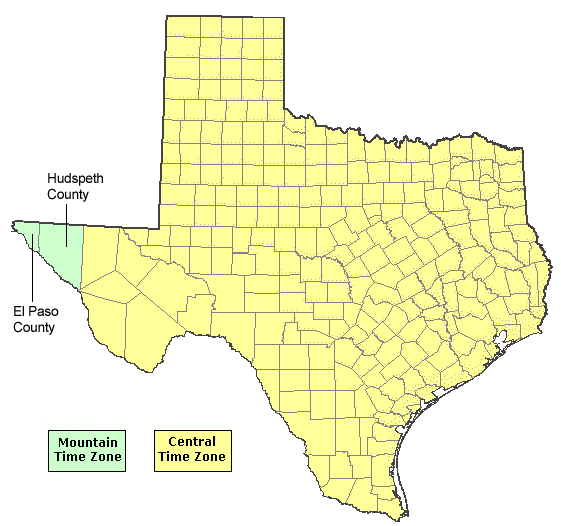
The enormous geographical expanse of Texas necessitates a division into different time zones, reflecting its position within the United States. The vast majority of the state adheres to one time zone, while a crucial western sliver observes another, a detail often overlooked by those unfamiliar with the state’s unique geography.
Central Time Zone (CT) – The Dominant Factor
The overwhelming majority of Texas operates on the Central Time Zone (CT). This includes all of the state’s major metropolitan areas and popular tourist destinations. During standard time, Central Time is UTC-6. When Daylight Saving Time is in effect, from early March to early November, the time shifts to Central Daylight Time (CDT), which is UTC-5. This means that if you’re planning a trip during these months, you’ll “spring forward” an hour.
Cities like Houston, Dallas, Austin, San Antonio, and Fort Worth are all firmly within the Central Time Zone. This uniformity across the most populated and frequently visited parts of the state simplifies travel planning considerably for most visitors. Whether you’re flying into Dallas/Fort Worth International Airport, exploring the River Walk in San Antonio, catching live music in Austin, or delving into the space exploration history in Houston, you’ll be on Central Time. Awareness of Daylight Saving Time is the primary time-related consideration for travel within these areas.
Mountain Time Zone (MT) – The Western Exception
While most of Texas observes Central Time, there’s a significant exception in the far western reaches of the state. The city of El Paso and the western parts of Hudspeth County (specifically, the portion west of the Guadalupe Mountains National Park) operate on the Mountain Time Zone (MT). During standard time, Mountain Time is UTC-7. When Daylight Saving Time is observed, it shifts to Mountain Daylight Time (MDT), which is UTC-6.
This one-hour difference can be a crucial detail for travelers venturing into the trans-Pecos region of Texas. If you’re driving from, say, San Antonio to El Paso, you’ll gain an hour upon arrival, and conversely, lose an hour on your return journey. For those exploring the rugged beauty of West Texas, perhaps combining a visit to Big Bend National Park (which is primarily Central Time) with a stop in El Paso, it’s paramount to be aware of this shift to avoid missed appointments, reservations, or confusion regarding local operating hours. Always confirm the local time when making plans or checking schedules in this unique corner of the state.

Why Time Matters: Planning Your Texas Adventure
Understanding Texas’s time zones goes far beyond mere curiosity; it’s a fundamental aspect of effective travel planning that impacts every facet of your trip. From the moment you book your flight to the final souvenir purchase, time awareness ensures a smooth, stress-free, and enjoyable journey.
Seamless Travel and Accommodation Bookings
The precision of time is critical when it comes to travel logistics. Imagine landing at Dallas/Fort Worth International Airport, only to discover your hotel check-in time was set for the wrong time zone, leaving you waiting or, worse, without a room. Flights, train schedules, and bus services are all meticulously timed, and a missed connection due to a time zone oversight can unravel your entire itinerary. It’s not just about arrival; early morning flights often mean needing to coordinate airport transfers in the wee hours, where every minute counts.
Similarly, securing your ideal accommodation requires attention to time. Hotels, whether they are luxury resorts in Houston, charming boutique stays in Austin, or a vacation rental in the Hill Country, operate on strict check-in and check-out times. Confirming these against your arrival and departure ensures a smooth transition. For popular restaurants or specialized tours (like a brewery tour in Austin or a historical walk in San Antonio), reservation windows are tight. A simple phone call to confirm an 8 PM dinner reservation could mean the difference between enjoying a world-class meal and showing up an hour late to a closed kitchen, especially if you’ve recently crossed a time zone boundary. Always confirm booking times in the local time of your destination.
Maximizing Your Tourism and Experience
Texas offers an incredible array of attractions, from historical landmarks to natural wonders, and nearly all of them have specific operating hours. Missing the opening or closing time of a major site due to a time zone miscalculation can lead to significant disappointment and wasted travel time. Imagine planning a visit to The Alamo in San Antonio, the Sixth Floor Museum in Dallas, or Space Center Houston, only to find the gates closed.
Beyond static attractions, many of Texas’s vibrant tourism experiences are time-sensitive. This includes guided tours, boat rides, specific animal encounters at zoos, or timed entry tickets to popular museums and galleries. Cultural activities such as live music shows, festivals, concerts, or sports games (like a Dallas Cowboys football game) all adhere to strict schedules. For outdoor adventures in National Parks like Big Bend or Guadalupe Mountains, knowing the time is vital for daylight hiking, stargazing schedules, and park ranger programs. Being aware of local time ensures you’re at the right place at the right time, maximizing every precious moment of your Texas journey and fully immersing yourself in the local culture and experiences.

Exploring Texas By The Clock: Destinations & Activities
Texas’s diverse geography offers a plethora of destinations, each with its own rhythm and set of experiences. Tailoring your exploration to the local time not only helps with logistics but also enhances your ability to truly enjoy what each region has to offer.
Urban Escapes in Central Time
The major cities of Texas, all within the Central Time Zone, are hubs of culture, commerce, and entertainment. Planning your day effectively ensures you don’t miss a beat.
- Dallas & Fort Worth: These sister cities offer everything from world-class shopping and dining to historic sites. In Dallas, you can spend a morning at the Sixth Floor Museum at Dealey Plaza, grab lunch at a gourmet food truck in Klyde Warren Park, and then explore the vibrant Arts District. For a taste of the Old West, head to Fort Worth’s Stockyards National Historic District for the daily cattle drive. Evening plans might include a show at the Bass Performance Hall or an authentic barbecue dinner. Early booking for popular Southfork Ranch tours is often advised.
- Houston: As the largest city in Texas, Houston boasts incredible variety. A visit to Space Center Houston (home to NASA Johnson Space Center) requires a significant portion of your day and often timed entry tickets, so precise scheduling is key. In the afternoon, you might explore the Museum District, followed by an evening of diverse food experiences, reflecting Houston’s multicultural essence. Don’t forget the vibrant nightlife in areas like Washington Avenue or Midtown.
- Austin: The “Live Music Capital of the World” invites you to embrace its laid-back yet energetic vibe. Mornings can be spent paddleboarding on Lady Bird Lake or swimming at Barton Springs Pool. Afternoons might involve a tour of the Texas State Capitol or exploring the eclectic shops on South Congress Avenue. Evenings are, of course, dedicated to catching live music on 6th Street or the Red River Cultural District. Many popular food trucks also have specific hours, requiring some planning.
- San Antonio: Rich in history and charm, San Antonio offers iconic experiences like the River Walk and The Alamo. A morning visit to The Alamo before the crowds, followed by a leisurely boat tour and lunch along the River Walk, makes for a perfect day. Exploring the historic missions (part of a UNESCO World Heritage Site) requires mindful planning of travel time between sites and their operating hours.
West Texas’s Mountain Time Wonders
Venturing into West Texas brings a shift in scenery and, notably, a shift in time for the city of El Paso.
- El Paso: Located firmly in the Mountain Time Zone, El Paso offers a unique blend of Texas and Mexican culture. Here, your morning might begin an hour earlier or later than you’re used to if coming from Central Time. Explore the historic downtown, visit the El Paso Mission Trail, or take a scenic drive up the Franklin Mountains for panoramic views. When coordinating activities, especially across the border to Ciudad Juarez or with other parts of Texas, double-checking the local time is non-negotiable.
- Natural Landmarks: While most of Big Bend National Park remains in Central Time, its proximity to the Mountain Time Zone and the vast, remote nature of the region means that travelers need to be acutely aware of time. The same applies to Guadalupe Mountains National Park, where some parts fall into Mountain Time. For hikers and campers, daylight hours are paramount, especially given the challenging terrain and extreme temperatures. Planning your hikes to start early and end before sunset becomes even more critical when time zones can subtly shift your perception of the day. Park visitor centers and ranger programs will always operate on local park time, which needs to be verified upon arrival.
Practical Tips for Time-Conscious Travelers
A little foresight regarding time zones can save you a lot of hassle and enhance your entire Texas travel experience.
Navigating Daylight Saving Time
Daylight Saving Time is a recurring temporal shift that affects both Central and Mountain Time Zones in Texas. Typically, clocks “spring forward” one hour on the second Sunday in March and “fall back” one hour on the first Sunday in November. While most modern devices automatically adjust, it’s always wise to be aware of these dates, especially if you’re traveling around these times. A misplaced hour can mean missing a flight, an important meeting, or a critical tour departure. Double-check your itinerary against these annual changes.
Essential Tools and Resources
In the digital age, keeping track of time zones has never been easier, yet a proactive approach is still best.
- Smartphones and World Clock Apps: Your smartphone is your best friend. Most modern phones automatically update to the local time zone when you arrive at a new location. Additionally, utilize world clock apps to quickly check the current time in different Texas cities or compare Central Time with Mountain Time.
- Official Websites and Direct Calls: When booking accommodation, tours, or checking attraction hours, always refer to the official websites. If there’s any doubt, a quick phone call to the hotel, attraction, or service provider can clarify the local time they operate on. This is particularly important for less common or independently run establishments.
- Hotel Staff: Don’t hesitate to ask hotel reception staff for clarification on local time, especially if you’ve just arrived from a different time zone. They are a valuable resource for local tips and ensuring your schedule aligns with regional norms.
- Itinerary Review: Before and during your trip, review your itinerary daily. Mentally (or physically) cross-reference all scheduled activities and bookings with the local time zone. This simple practice can prevent a cascade of issues.
In conclusion, understanding “What time is it in Texas now?” is more than a trivial inquiry; it’s a cornerstone of successful and enjoyable travel throughout this magnificent state. From the bustling Central Time Zone cities to the rugged beauty of the Mountain Time Zone in West Texas, a mindful approach to local time ensures that your journey is filled with memorable experiences, not logistical frustrations. With careful planning and the smart use of available resources, you can fully embrace all the unique opportunities Texas has to offer, making every second count.
LifeOutOfTheBox is a participant in the Amazon Services LLC Associates Program, an affiliate advertising program designed to provide a means for sites to earn advertising fees by advertising and linking to Amazon.com. Amazon, the Amazon logo, AmazonSupply, and the AmazonSupply logo are trademarks of Amazon.com, Inc. or its affiliates. As an Amazon Associate we earn affiliate commissions from qualifying purchases.