
Embarking on a journey to Texas, the second-largest state in the United States, means preparing for an experience as vast and varied as its landscapes. From the bustling metropolises of Houston and Dallas to the historic charm of San Antonio and the vibrant culture of Austin, the Lone Star State offers an unparalleled array of destinations, attractions, and experiences. However, one often-overlooked aspect that can significantly impact your travel planning and overall enjoyment is understanding its time zones.
The seemingly simple question, “What time is it now in Texas?” holds a surprising complexity due to the state’s immense geographical spread. Navigating its two distinct time zones—Central Time Zone (CT) and Mountain Time Zone (MT)—is not just a matter of curiosity; it’s a practical necessity for seamless travel, efficient business dealings, and making the most of every precious moment. Whether you’re coordinating a flight, booking a hotel, planning to visit a landmark, or simply trying to call a friend across state lines, a grasp of Texas’s time landscape is indispensable. This guide delves into the intricacies of Texas time, offering insights and tips to ensure your visit is as smooth and enriching as possible, integrating seamlessly with your travel, accommodation, tourism, landmarks, and lifestyle aspirations.

Understanding Texas’s Time Zones: Central and Mountain
Due to its expansive east-to-west stretch, Texas falls under two different standard time zones. This division is crucial for anyone planning to traverse the state, coordinate meetings, or simply understand daily operations.
Central Time Zone (CT): The Heartbeat of Texas
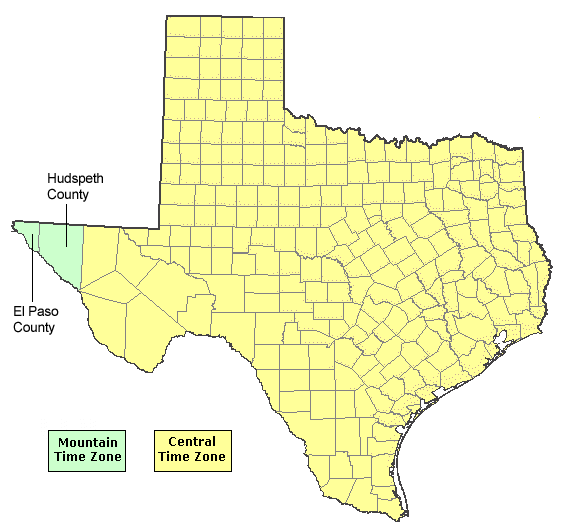
The vast majority of Texas operates within the Central Time Zone (CT). This includes all the major metropolitan areas and popular tourist destinations that draw millions of visitors annually. When people refer to “Texas time” without further specification, they are almost always referring to CT.
During Standard Time, this is known as Central Standard Time (CST), which is UTC-6. When Daylight Saving Time (DST) is observed, the clocks spring forward, and it becomes Central Daylight Time (CDT), which is UTC-5. This shift means that for a significant portion of the year, the time in most of Texas is one hour ahead of CST. Cities like Houston, Dallas, Austin, San Antonio, Fort Worth, and Corpus Christi all reside within this primary time zone, making it the rhythm section for most of the state’s vibrant tourism and business activities. From early morning breakfast tacos in Austin to late-night entertainment in Dallas, the daily schedule in these cities adheres to CT.
Mountain Time Zone (MT): A Glimpse into the West
While the Central Time Zone dominates, a small but significant portion of western Texas observes the Mountain Time Zone (MT). This primarily includes the city of El Paso and the western part of Hudspeth County. These areas are essentially an hour behind the rest of the state.
During Standard Time, this is Mountain Standard Time (MST), which is UTC-7. With the observance of Daylight Saving Time, it shifts to Mountain Daylight Time (MDT), which is UTC-6. This means that if it’s 3:00 PM in Austin (CT), it will be 2:00 PM in El Paso (MT). This time difference is crucial for anyone traveling to the far western reaches of Texas, especially if connecting flights, meetings, or tour schedules involve both time zones. It’s a unique characteristic that adds an extra layer of planning for those exploring the rugged beauty of the Trans-Pecos region, including destinations like Guadalupe Mountains National Park or Big Bend National Park.
Why the Time Difference Matters: Practical Implications
The existence of two time zones within Texas has significant practical implications for travelers and residents alike. For instance, if you’re flying from Dallas to El Paso, your arrival time will appear an hour earlier than your departure time in terms of local clocks, even though the flight itself took a standard duration. This “time travel” effect needs to be accounted for in all scheduling. Similarly, coordinating a business conference between teams in Houston and El Paso requires careful consideration to ensure everyone is on the same page and no one misses a crucial meeting. When booking accommodations, verifying check-in/check-out times against the correct local time zone is paramount to avoid any mix-ups or unexpected charges. Even for leisure travelers, understanding this distinction can prevent missing a scheduled tour, a reservation at a renowned restaurant, or the opening hours of a historical landmark.
Time-Sensitive Planning for Your Texas Journey
A successful trip to Texas hinges on more than just choosing your destinations; it requires meticulous planning, especially when considering the element of time. From optimizing your itinerary to ensuring smooth accommodation transitions and enjoying local culture, time awareness is your best ally.
Optimizing Your Travel Itinerary: From Cityscapes to Coastal Retreats
When crafting your Texas travel itinerary, understanding the time zones is paramount, particularly if your journey spans across the state. A road trip from Austin to Big Bend National Park, for example, involves a significant time change as you approach the western part of the state. Factor in this one-hour shift when estimating arrival times at hotels or attractions. For flights, always confirm the local departure and arrival times to avoid confusion, especially when connecting flights are involved. International travelers flying into Texas should also consider their home country’s time zone difference with CT or MT to manage jet lag effectively. Whether you’re exploring the historical sites of San Antonio, enjoying the beaches of Galveston Island, or hiking through the scenic trails of Franklin Mountains State Park near El Paso, precise timing ensures you maximize your experiences and minimize logistical hiccups.
Accommodation Check-ins and Check-outs: A Timely Transition
One of the most common pitfalls for travelers is miscalculating check-in and check-out times for their accommodation. Whether you’ve booked a luxurious suite at a Dallas resort, a charming apartment in Austin, or a cozy villa near South Padre Island, these times are always stated in local time. If you’re arriving from a different time zone, especially the Mountain Time Zone into the Central Time Zone, remember that you’ll “lose” an hour. This could mean arriving an hour later than anticipated for your guaranteed check-in or missing a crucial window to extend your stay. Hotels, resorts, and even peer-to-peer accommodation services like Airbnb operate strictly on local time. Always double-check the time zone of your accommodation’s location when making reservations and planning your arrival. This diligence prevents unexpected delays or additional charges and ensures a smooth transition into your temporary home.
Dining and Entertainment: Never Miss a Beat
Texas’s vibrant tourism scene is defined by its incredible food, live music, and diverse entertainment options. However, these experiences are highly time-sensitive. A reservation at a highly sought-after Houston restaurant, a concert at Austin’s Moody Center, or a theater performance in Dallas will all adhere to the local CT. Similarly, if you’re exploring the unique culinary scene of El Paso, remember its MT setting. Missing a reservation due to a time zone miscalculation can be a frustrating experience, particularly for popular venues. Many attractions, like the Space Center Houston or The Alamo, have strict opening and closing hours, and last entry times. Checking these times against your local schedule is crucial. Furthermore, local cultural events, festivals, and sports games (think a Dallas Cowboys game) will always be advertised in the local time of their venue. Incorporating time zone awareness into your entertainment planning ensures you don’t miss out on any of the exciting activities Texas has to offer.

Business Travel and Remote Work Considerations
For those on business trips or engaged in remote work while in Texas, understanding the time zones is not just convenient, but critical. Coordinating meetings with clients or colleagues across different time zones, both within and outside Texas, requires careful planning. A 9 AM meeting for a team in Dallas will be 8 AM for a colleague in El Paso and potentially a completely different day for international partners. Business travelers staying in hotels often rely on amenities that support productivity, and ensuring your schedule aligns with your home office or business partners is essential for a productive stay. Similarly, digital nomads or those on extended stays need to be mindful of these differences to maintain their work commitments, whether they are enjoying luxury travel in a high-end suite or managing a budget-friendly long-term stay. The rise of remote work has made time zone management an even more significant aspect of daily lifestyle, impacting communication flow and project deadlines.
Iconic Texas Destinations and Their Time Considerations
Texas is a land of diverse geography, rich history, and vibrant culture, reflected in its iconic destinations. Each region offers unique experiences, but understanding their respective time zones ensures you fully immerse yourself without a hitch.
Eastern Wonders: Houston, Dallas, Austin, and San Antonio
The major hubs of eastern Texas — Houston, Dallas, Austin, and San Antonio — all operate on Central Time Zone (CT). These cities are treasure troves of attractions, from world-class museums to historic landmarks.
- Houston: Home to the Space Center Houston and the Johnson Space Center, exploring these sites requires checking their operating hours in CT. The city’s thriving culinary scene and theater district also adhere to CT, making dinner reservations and showtimes straightforward for those within the zone.
- Dallas: Known for its impressive skyline, cultural districts, and shopping at places like The Galleria, Dallas’s attractions like the Sixth Floor Museum at Dealey Plaza or a stroll through Klyde Warren Park are all governed by CT.
- Austin: The state capital, famous for its “Keep Austin Weird” mantra, live music, and outdoor activities at places like Barton Springs Pool or the Texas State Capitol, thrives on CT. Evening bat watching at the Congress Avenue Bridge is a prime example of a time-sensitive attraction that must be planned with CT in mind.
- San Antonio: Steeped in history, from The Alamo to the enchanting Riverwalk, San Antonio is a popular destination for family trips. All its missions, historical tours, and river cruises operate strictly on CT, making it crucial for visitors to align their schedules accordingly.
When exploring these cities, consider typical peak hours (e.g., Space Center Houston can be crowded mid-day, so an early morning visit might be better) and plan your visits using local CT to optimize your experience.
Western Horizons: El Paso and Beyond
Venturing west, El Paso stands as a unique outlier, observing the Mountain Time Zone (MT). This means it is consistently one hour behind the rest of the major Texas cities. This distinction is especially important for anyone traveling between El Paso and any other part of the state.
Attractions in and around El Paso, such as the Franklin Mountains State Park (the largest urban park in the U.S.) or the historic mission trail, will have their operating hours listed in MT. If you’re planning a trip that combines, say, Austin’s vibrant music scene with El Paso’s desert landscapes, factor in that hour difference. For example, a business meeting scheduled for 10 AM MT in El Paso would be 11 AM CT for someone participating from Lubbock or Amarillo, which are in the CT zone. This also applies to popular natural landmarks further west, such as Guadalupe Mountains National Park or Big Bend National Park, which primarily align with MT, though always confirm with park services.
Navigating Daylight Saving Time in Texas
Like most of the United States, Texas observes Daylight Saving Time (DST). This annual tradition means that clocks “spring forward” by one hour in early March and “fall back” by one hour in early November.
- During DST, Central Standard Time (CST) becomes Central Daylight Time (CDT).
- Similarly, Mountain Standard Time (MST) becomes Mountain Daylight Time (MDT).
This shift impacts all aspects of time-sensitive planning. Flights scheduled before and after the DST changeover can be particularly tricky, as airlines often update their systems, but manual adjustments might be required for travelers. It also affects event schedules, restaurant closing times, and landmark operating hours. While most digital devices automatically adjust, it’s always wise to confirm the current time zone (Standard vs. Daylight) if your travel dates fall around these transitions. This ensures you avoid being an hour early or late for crucial appointments, maximizing your time to explore, relax, or conduct business in the Lone Star State.
Maximizing Your Texas Experience: Time-Saving Tips and Local Insights
To truly unlock the full potential of your Texas adventure, it’s not enough to just know the time; it’s about mastering time management and leveraging local insights. Whether you’re on a luxury travel escapade or a budget travel quest, these strategies will enhance your journey.
Leveraging Technology for Seamless Time Management
In today’s interconnected world, technology is your best friend for navigating time zones. Your smartphone, tablet, or laptop will almost always automatically adjust to the local time zone when connected to the internet. However, several apps and online tools can provide additional peace of mind:
- World Clock Apps: Many apps offer a clear display of multiple time zones, allowing you to instantly see the time difference between your location in Texas and your home, or between Houston and El Paso.
- Flight Tracking Apps: These apps often provide real-time updates on departure and arrival times, adjusted for local time zones.
- Online Booking Platforms: When booking hotels, flights, or tours, always confirm the time zone listed for specific events or check-in/check-out times. Most reputable platforms clarify this, but a quick double-check can prevent misunderstandings.
- GPS and Mapping Services: Tools like Google Maps or Apple Maps will display local times and estimated travel durations, which can be invaluable when planning road trips across time zones.
Using these tools actively can help you stay organized and ensure you’re always on schedule, whether you’re navigating urban traffic or seeking out natural wonders.
Embracing the Local Rhythm: Best Times to Visit Attractions
Beyond mere clock time, understanding the “best time” to visit certain attractions can significantly elevate your experience. This often involves considering crowd levels, weather patterns, and specific event schedules.
- Avoiding Crowds: Popular landmarks like The Alamo in San Antonio or Space Center Houston can get very busy. Visiting early in the morning right after opening, or later in the afternoon before closing, often means fewer crowds and a more relaxed experience. This is particularly relevant for family trips where managing children in crowded spaces can be challenging.
- Seasonal Considerations: Texas summers can be intensely hot, especially in cities like Dallas or Austin, or the desert regions near Big Bend National Park. Spring and fall generally offer more temperate weather, making them ideal for outdoor activities, hiking, and exploring urban areas. For coastal destinations like Galveston or Padre Island National Seashore, hurricane season (June to November) is a factor to consider.
- Special Events and Festivals: Texas is famous for its vibrant festivals, from Austin’s SXSW to the San Antonio Stock Show & Rodeo. Planning your trip around these events can offer a deep dive into local culture, food, and music, but requires booking accommodations and tickets well in advance. These events will always be scheduled in their local time.
By aligning your schedule with the local rhythm and conditions, you can optimize your time, avoid unnecessary stress, and create more memorable experiences.
From Sunrise to Sunset: Capturing Texas’s Natural Beauty
The diverse landscapes of Texas offer breathtaking vistas from dawn till dusk. Understanding the local time allows you to plan these moments perfectly.
- Sunrise: Witnessing a Texas sunrise over the Gulf Coast in Galveston or Corpus Christi or watching the desert awaken in Big Bend National Park (remembering the MT difference) can be a profound experience. Early mornings are also excellent for wildlife viewing or quiet contemplation in state parks.
- Golden Hour Photography: The hour after sunrise and the hour before sunset, known as “golden hour,” provide the best natural light for photography. Whether you’re capturing the Austin skyline, the historic architecture of San Antonio, or the rugged beauty of the Chisos Mountains, knowing the exact time of sunset is crucial for planning.
- Stargazing: Away from city lights, places like Big Bend National Park offer some of the darkest skies in the country. Planning your evening to coincide with the moon cycle and knowing the local time for optimal viewing allows for unparalleled stargazing experiences.
From the first light of dawn to the deep indigo of twilight, every moment in Texas offers an opportunity for discovery. By being mindful of the clock and embracing local nuances, you’re not just traveling; you’re living the Texas experience to its fullest.
In conclusion, the question “What time is it now in Texas?” is more than a simple query; it’s a gateway to understanding the rhythm and logistics of this magnificent state. From the bustling Central Time Zone cities to the serene Mountain Time Zone landscapes of the west, every traveler benefits from being time-aware. By meticulously planning your itinerary, confirming accommodation details, and embracing local schedules, you can ensure that every moment of your Texas adventure is smooth, memorable, and utterly unforgettable. So go ahead, set your clocks, and get ready to explore the vast and welcoming Lone Star State!
LifeOutOfTheBox is a participant in the Amazon Services LLC Associates Program, an affiliate advertising program designed to provide a means for sites to earn advertising fees by advertising and linking to Amazon.com. Amazon, the Amazon logo, AmazonSupply, and the AmazonSupply logo are trademarks of Amazon.com, Inc. or its affiliates. As an Amazon Associate we earn affiliate commissions from qualifying purchases.