
Navigating the vibrant landscapes and diverse attractions of Florida, often dubbed the Sunshine State, is an adventure in itself. From the bustling theme parks of Orlando to the tranquil beaches of the Panhandle, and the unique culture of Key West, Florida offers an unparalleled travel experience. However, a crucial detail often overlooked by first-time visitors, and even some seasoned travelers, is the state’s intriguing relationship with time zones. While most assume a single time zone for an entire state, Florida actually straddles two, making a simple question like “What time is it right now in Florida?” more complex than it appears.
Understanding Florida’s time zone geography is not merely a matter of curiosity; it’s a practical necessity for seamless travel planning, coordinating itineraries, and ensuring you don’t miss that crucial flight or reservation. Whether you’re heading to Miami for a glamorous escape, exploring the natural wonders of Everglades National Park, or soaking up the sun in Panama City Beach, knowing which time zone you’re in, and how it might differ from another part of the state, is paramount. This comprehensive guide delves into Florida’s time zones, their impact on travel, and essential tips to keep you perfectly synchronized during your visit to this magnificent state.
Understanding Florida’s Unique Time Zone Geography
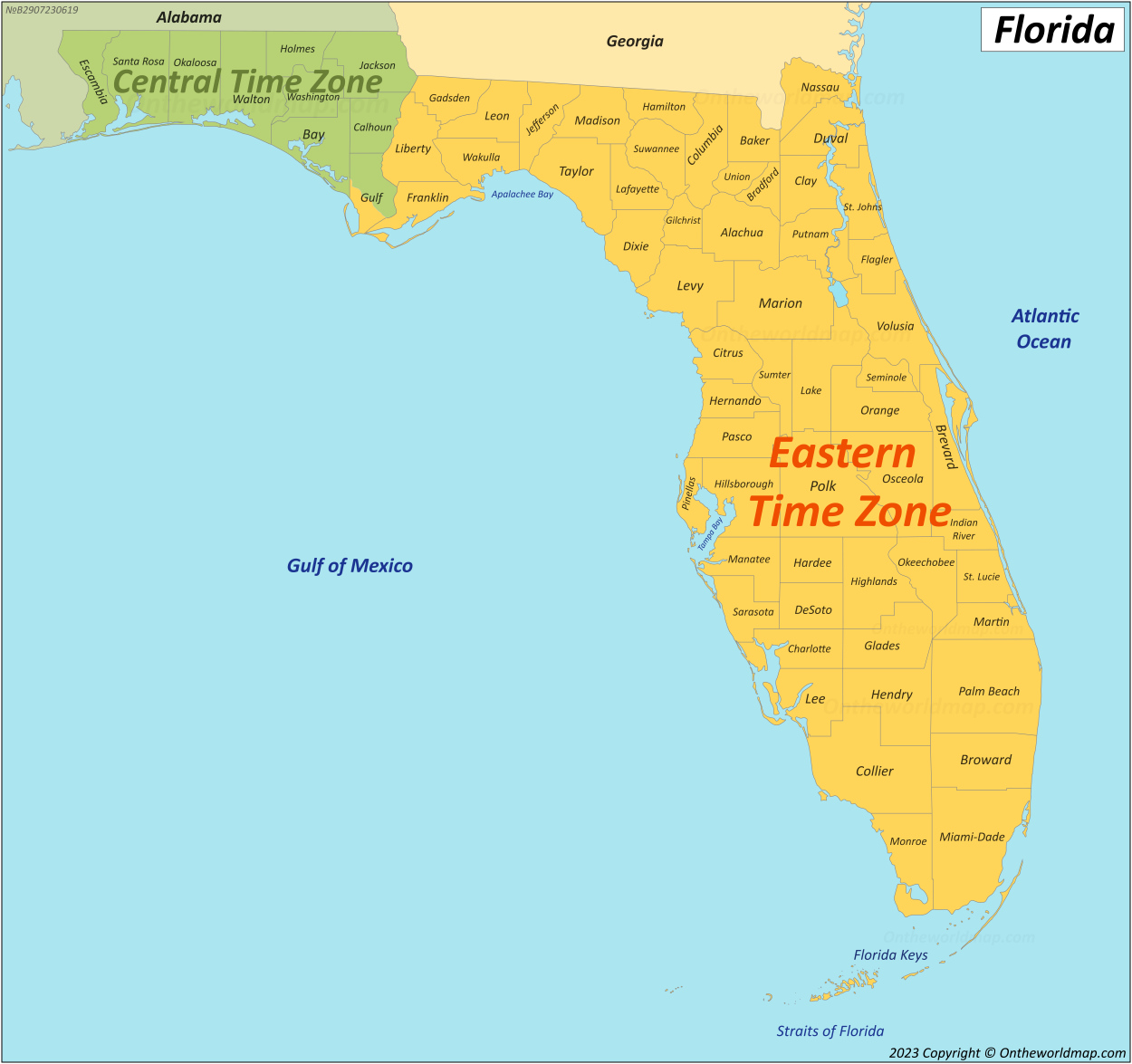
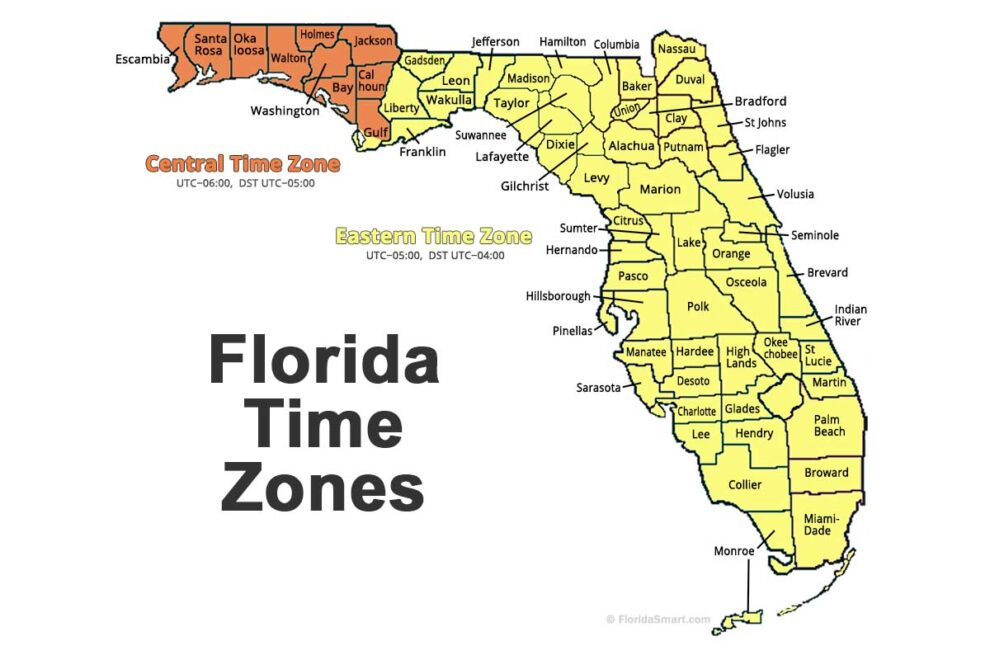
Florida’s geography dictates its time zone boundaries, creating a fascinating, albeit sometimes confusing, dual-time system. The vast majority of the state operates on one time zone, while a significant portion of its western reaches observes another. This division is a key piece of information for anyone planning a comprehensive journey across the Sunshine State.
Eastern Time Zone: The Sunshine State’s Dominant Clock
The predominant time zone across Florida is the Eastern Time Zone (ET). This encompasses nearly all of the Florida Peninsula, from the bustling metropolis of Jacksonville in the north to the tropical paradise of Key West at its southernmost tip. Major tourist hubs like Orlando, home to the Walt Disney World Resort and Universal Studios Florida, and Tampa, famous for Busch Gardens Tampa Bay, all fall squarely within Eastern Time. This means when you’re planning your visit to these iconic destinations, you’ll be operating on the same clock as much of the Eastern Seaboard of the United States. From the vibrant nightlife of South Beach in Miami to the historic charm of St. Augustine, and the space exploration wonders at the Kennedy Space Center Visitor Complex, all these experiences are synchronized to ET. For most travelers, especially those sticking to the peninsula, Eastern Time will be their primary temporal reference.
Central Time Zone: The Panhandle’s Different Beat
While Eastern Time dominates, the northwestern part of Florida, commonly known as the Florida Panhandle, operates on Central Time Zone (CT). This includes cities such as Pensacola, Tallahassee (the state capital), and Panama City. The distinction generally occurs around the Apachicola River, with areas to its west falling into Central Time. This means that if you’re traveling from, say, Orlando to Pensacola, you will cross a time zone boundary, effectively gaining an hour when heading west and losing an hour when heading east. This is a critical detail for anyone flying into or out of Pensacola International Airport or planning road trips that span the entire breadth of the state. Missing this detail can lead to missed appointments, flight delays, or simply confusion about opening and closing times for attractions in the Florida Panhandle.
Why the Split? A Geographical and Historical Perspective
The reason behind Florida’s split time zone primarily lies in its unique geographical shape and its historical ties to neighboring states. The panhandle region physically extends westward, aligning more naturally with states like Alabama and Mississippi, which are entirely within the Central Time Zone. Administratively, the contiguous nature of the panhandle with these western neighbors made it logical to share a common time zone for commerce, transportation, and daily life. The boundary roughly follows the Apachicola River and a portion of Gulf County, running south to the Gulf of Mexico. This division isn’t unique to Florida; several other states in the United States also straddle multiple time zones due to their size and westward expansion. Understanding this historical and geographical context helps clarify why a seemingly simple question about time in Florida requires a nuanced answer.
Navigating Time Zones as a Florida Traveler
For travelers, understanding and actively managing Florida’s time zones is crucial for a smooth and stress-free trip. From booking flights to scheduling theme park visits, every aspect of your itinerary can be impacted by temporal differences.
Planning Your Arrival and Departures
When booking flights to or from Florida, especially if your journey involves a transfer within the state or if you’re flying into one time zone and immediately heading to another, paying close attention to the local times listed on your tickets is paramount. An arrival time listed as “2:00 PM CT” for Pensacola will feel an hour later if you’ve been operating on Eastern Time throughout your planning. Similarly, if you’re departing from Jacksonville (ET) and flying to Tallahassee (CT), remember that the flight duration will be reflected in the time change, often making an hour-long flight appear to take two hours or even zero, depending on the direction. Always double-check the time zone indicated on your booking confirmations for each airport involved. This due diligence can prevent missed connections and unnecessary pre-flight stress, allowing you to enjoy your journey from the moment you land, whether it’s in Fort Lauderdale or Destin.
Coordinating Activities Across Time Zones
If your Florida adventure involves exploring both the peninsula and the panhandle, or if you’re communicating with friends and family in different parts of the state, coordinating activities becomes an exercise in time zone awareness. A dinner reservation made for 7:00 PM in Orlando (ET) is actually 6:00 PM for someone in Panama City (CT). Virtual meetings, phone calls, or even simply setting up meet-ups require a mental adjustment or a quick use of a time zone converter. This becomes particularly relevant for business travelers whose schedules might involve interactions across the entire state. Even for leisure travelers, knowing the time difference can impact when you call home to avoid waking up loved ones, or when attractions might open or close. For example, a morning wildlife tour scheduled for 8:00 AM ET near Naples would require an earlier start than the 8:00 AM CT kayak trip planned in Port St. Joe, despite both starting at seemingly the same clock time.
Day Trips and Cross-Zone Commutes
For those adventurous enough to plan day trips or road trips that traverse the time zone boundary, explicit awareness is key. Imagine starting your day in Gainesville (ET) and driving west towards Pensacola (CT) for an afternoon beach excursion. You’ll gain an hour upon entering the Central Time Zone, effectively extending your day. Conversely, driving east from Pensacola back to Jacksonville means losing an hour, potentially making a 6 PM arrival feel like 7 PM. This time shift can affect everything from sunset viewing plans to the timing of restaurant reservations or museum closing times. GPS devices and smartphones will typically update automatically when you cross a time zone boundary, but it’s always wise to be aware of the shift mentally, especially for specific appointments. Knowing where the time zone line lies—roughly west of the Apachicola River—can prevent confusion and ensure you maximize your precious travel time.
The Impact of Daylight Saving Time in Florida
Adding another layer of complexity to Florida’s time landscape is the observance of Daylight Saving Time (DST). Like most of the United States, Florida adjusts its clocks twice a year, which travelers must account for, especially if their visit coincides with these transitions.
When the Clocks Change: Spring Forward, Fall Back
Typically, Daylight Saving Time begins on the second Sunday in March when clocks “spring forward” by one hour, meaning 2:00 AM becomes 3:00 AM. It ends on the first Sunday in November when clocks “fall back” by one hour, with 2:00 AM becoming 1:00 AM. This annual ritual means that both the Eastern Time Zone and Central Time Zone parts of Florida observe EDT (Eastern Daylight Time) and CDT (Central Daylight Time) respectively during the warmer months, and then revert to EST (Eastern Standard Time) and CST (Central Standard Time) in the colder months. For instance, during the summer, Miami would be EDT (UTC-4) and Pensacola would be CDT (UTC-5), maintaining their one-hour difference. Travelers arriving or departing around these specific dates need to be extra vigilant about their schedules.
DST’s Effect on Travel Plans and Schedules
The biannual clock change can have a ripple effect on travel plans. If you’re traveling internationally or have connecting flights that cross into or out of Florida during a DST transition weekend, confirming your flight times with the airline and checking the local time upon arrival is paramount. Airlines and airports generally account for DST, but individual travelers can sometimes miscalculate. Furthermore, attractions, tours, and restaurant operating hours are always advertised in local time, which automatically shifts with DST. A theme park that opens at 9:00 AM during Standard Time will still open at 9:00 AM during Daylight Saving Time, but that 9:00 AM will correspond to an hour earlier by the “old” clock. This can impact sleep schedules, particularly for those sensitive to jet lag, and for families traveling with young children who thrive on routine. Staying informed about the DST schedule is an important aspect of preparing for your Florida trip.
Florida’s Stance on Permanent Daylight Saving Time
Interestingly, Florida has expressed a strong desire to make Daylight Saving Time permanent. In 2018, the state legislature passed the “Sunshine Protection Act,” which would keep Florida on Daylight Saving Time year-round. This move, if approved by the United States Congress, would mean that clocks in Florida would not “fall back” in November, effectively providing more daylight in the evenings throughout the year. The primary motivation behind this legislative effort is to boost tourism and recreation, allowing visitors and residents more daylight hours to enjoy outdoor activities and attractions. While the act has passed at the state level, it requires federal approval, which has yet to be granted. Should this change occur in the future, it would significantly simplify temporal planning for travelers, eliminating one of the biannual adjustments. Until then, travelers must remain aware of the current DST cycle.
Practical Tips for Time Zone Management in Florida
With Florida’s split time zones and the added layer of Daylight Saving Time, having a few practical strategies can make all the difference in ensuring your trip remains perfectly on schedule.
Setting Your Devices Correctly
Modern smartphones, tablets, and smartwatches are invaluable tools for time zone management. Most devices are set to automatically update their time zone based on your location data. Ensure this feature is enabled before you travel. As you cross from Eastern to Central Time (or vice-versa), your device should automatically adjust, displaying the correct local time. However, it’s always prudent to manually double-check, especially if you have important appointments. When checking a watch, confirm whether it’s displaying your home time or the local Florida time. For those using analog watches, remember to manually adjust them, or better yet, rely on a digital device as your primary timekeeper. Having a consistent and reliable time source is the first step in avoiding any time-related mishaps during your travels.
Communication Strategies for Multi-Zone Trips
If your travel party splits up or if you’re communicating with people in different parts of Florida (e.g., someone in Tampa and someone in Pensacola), always specify the time zone when scheduling calls or meetings. Instead of saying “Let’s meet at 3 PM,” clarify “Let’s meet at 3 PM ET” or “3 PM CT.” This simple addition can prevent confusion and ensures everyone is on the same page. For families coordinating activities or friends traveling independently, using a shared itinerary that clearly states times in the local zone for each location can be incredibly helpful. Time zone converter apps can also be downloaded to quickly check times across different zones, although your phone’s built-in world clock function is often sufficient for this purpose. Clear communication is the cornerstone of smooth multi-zone travel.
Embracing the Local Rhythm
Ultimately, the best approach to time zone differences is to embrace the local rhythm as quickly as possible. Once you arrive in a particular region of Florida, adjust your internal clock to its local time. This means eating meals, going to bed, and waking up according to the local schedule, rather than trying to cling to your home time zone. While initial adjustment might involve a slight sense of jet lag (even within the same state), integrating into the local time helps optimize your body for daily activities and ensures you don’t miss out on experiences. Florida’s diverse offerings, from early morning airboat tours in the Everglades to late-night entertainment in Miami, are best enjoyed when you are fully synced with the local clock.
Beyond the Clock: Maximizing Your Florida Experience
While understanding time zones is a critical logistical detail, it’s merely a means to an end: a fantastic Florida vacation. Once you’re properly synchronized, you can fully immerse yourself in the vast array of experiences the Sunshine State has to offer.
Iconic Destinations and Their Local Time
Nearly all of Florida’s most renowned attractions are situated within the Eastern Time Zone. This simplifies planning for visitors who primarily focus on the peninsula. From the magical gates of Walt Disney World Resort and the thrilling rides of Universal Studios Florida in Orlando, to the vibrant street art of Wynwood Walls in Miami, and the historic grandeur of St. Augustine, your Eastern Time clock will keep you perfectly aligned. The Kennedy Space Center Visitor Complex near Cape Canaveral also operates on ET. For those venturing into the Panhandle, attractions like the beautiful beaches of Destin and the historic forts of Pensacola will greet you on Central Time. Understanding this temporal distribution allows you to craft an itinerary that minimizes potential time-related hiccups, enabling you to focus on the joy of discovery.

Making the Most of Every Moment
Ultimately, knowing what time it is in Florida is about empowering you to make the most of every precious moment. Whether you’re chasing the sunrise over the Atlantic in Fort Lauderdale or enjoying a stunning sunset over the Gulf of Mexico in Clearwater, being in sync with local time ensures you’re never behind schedule. It means you’ll arrive promptly for your reservation at a Michelin-starred restaurant in Orlando, catch your airboat tour through the Everglades without a hitch, or make your flight from Tampa International Airport with ease. By proactively addressing the nuances of Florida’s time zones, you set the stage for an impeccably planned, richly rewarding, and unforgettable travel experience in one of the United States’ most beloved destinations.
LifeOutOfTheBox is a participant in the Amazon Services LLC Associates Program, an affiliate advertising program designed to provide a means for sites to earn advertising fees by advertising and linking to Amazon.com. Amazon, the Amazon logo, AmazonSupply, and the AmazonSupply logo are trademarks of Amazon.com, Inc. or its affiliates. As an Amazon Associate we earn affiliate commissions from qualifying purchases.