
Navigating the vast expanse of Texas involves more than just a map; it requires an understanding of its unique temporal landscape. While many states reside comfortably within a single time zone, the Lone Star State, stretching over 800 miles from east to west, proudly straddles two distinct time zones: the Central Time Zone (CT) and the Mountain Time Zone (MT). For travelers, business professionals, and anyone planning an itinerary within this diverse state, comprehending this dual time system is paramount.
Texas’s unique geographical position means that while the vast majority of its landmass and population observe Central Time, a significant portion of its westernmost reaches operates on Mountain Time. This distinction is not merely a curious fact but a practical consideration that impacts everything from flight schedules and hotel bookings to meeting times and local attraction opening hours. As a premier destination for tourism, Texas offers an incredible array of experiences, from bustling metropolitan centers to serene natural landmarks, each influenced by its particular temporal rhythm. Whether you’re planning a luxurious escape, a budget-friendly road trip, a family vacation, or a crucial business stay, understanding the time zones in Texas is your first step towards a seamless and enjoyable journey.
Navigating Texas’s Dual Time Zones
The heart of the Texas time zone conundrum lies in its impressive size. It’s the second-largest state in the United States by both area and population, covering an expansive geographical footprint that naturally extends across more than one longitudinal division. This geographical reality dictates the need for two distinct time zones, ensuring that daylight hours align reasonably with local work and social schedules across the entire state.
Central Time Zone (CT) Dominance
The overwhelming majority of Texas, encompassing its major metropolitan areas and population centers, operates within the Central Time Zone. This includes iconic cities such as Houston, Dallas, Austin, and San Antonio. In the United States, Central Time is typically UTC-6 during standard time and UTC-5 during Daylight Saving Time.
This time zone governs the daily lives of millions of Texans and sets the pace for countless businesses, tourist attractions, and travel experiences across the state. From the bustling energy of the Dallas financial district to the vibrant music scene of Austin and the historic charm of San Antonio’s River Walk, most visitors will find themselves operating on Central Time. This uniformity across the most frequently visited areas simplifies planning for many, but the exception in the west requires careful attention.
Mountain Time Zone (MT) in the West
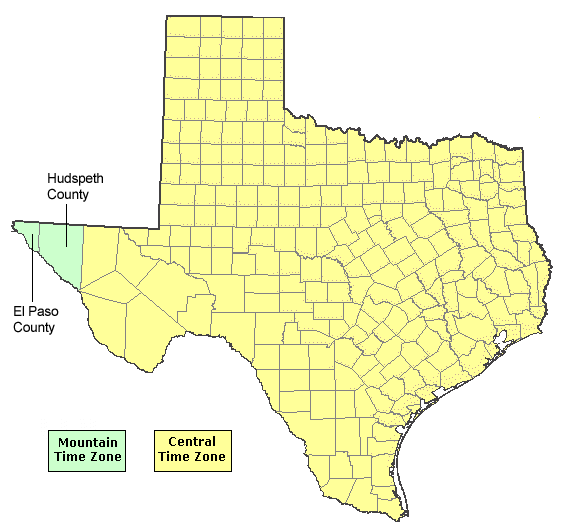
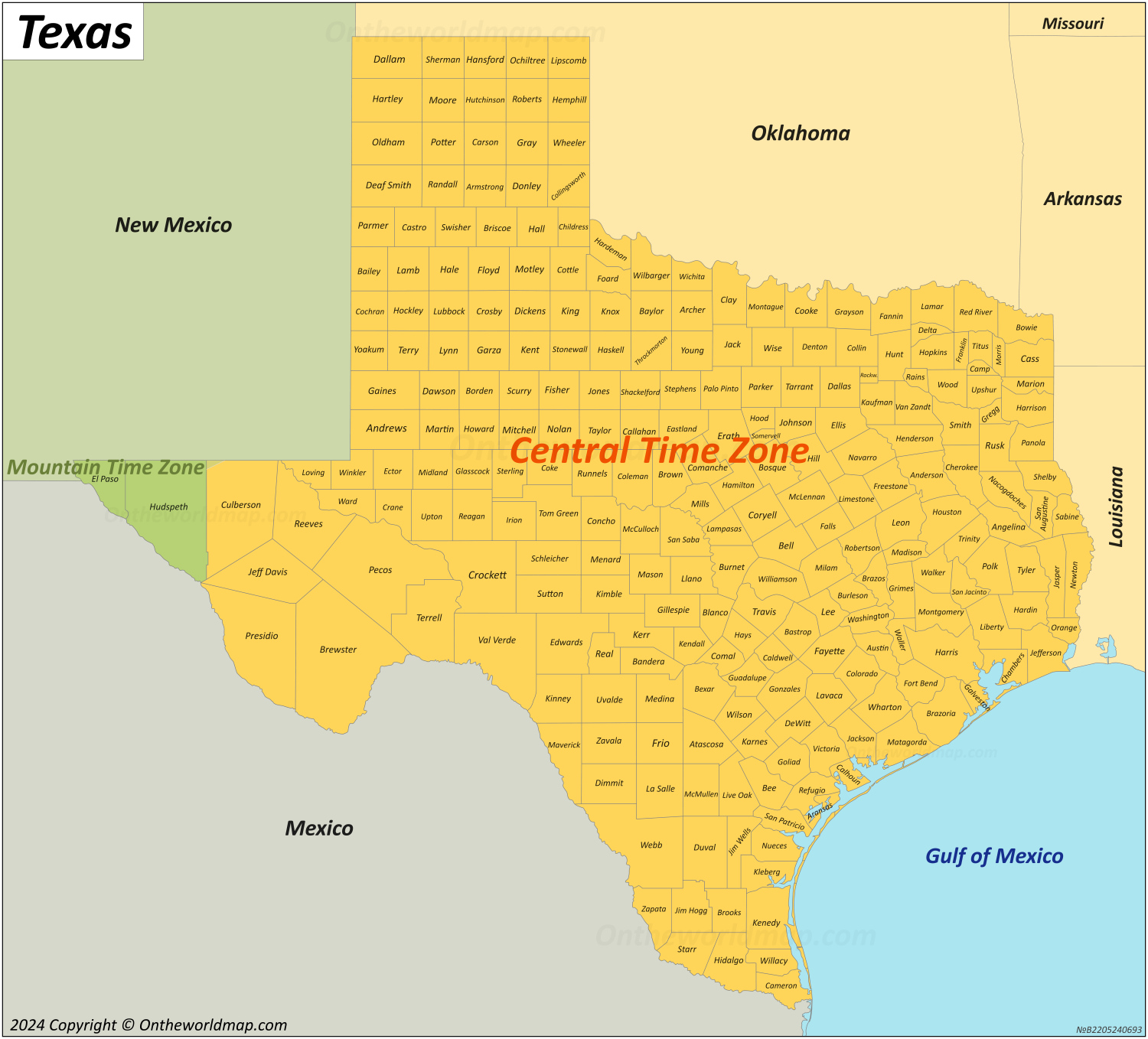
The transition to Mountain Time Zone in Texas occurs in its far western reaches. Primarily, the city of El Paso and the western part of Hudspeth County observe Mountain Time. In the United States, Mountain Time is UTC-7 during standard time and UTC-6 during Daylight Saving Time. This means that during standard time, El Paso is one hour behind Houston.
The reason for this deviation is largely geographical and historical, aligning El Paso with its neighbors to the west, such as New Mexico, rather than the rest of Texas. This part of the state, often referred to as Far West Texas, has a unique identity, characterized by rugged desert landscapes, stunning national parks like Guadalupe Mountains National Park and parts of Big Bend National Park, and a strong cultural connection to the American Southwest and Mexico. For those venturing into this distinct region, remembering the time difference is crucial.

Understanding Daylight Saving Time in Texas
Like most of the United States, Texas observes Daylight Saving Time (DST). This means that on the second Sunday in March, clocks spring forward one hour, and on the first Sunday in November, they fall back one hour. Both the Central Time Zone and the Mountain Time Zone in Texas follow this practice.
The implementation of Daylight Saving Time essentially shifts both zones forward by an hour relative to UTC, but the one-hour difference between Central Time and Mountain Time remains constant throughout the year. For instance, when it’s 2 PM in Houston (CT), it will be 1 PM in El Paso (MT), regardless of whether DST is in effect. This consistency simplifies the core time difference but still requires awareness for visitors traveling across the state’s temporal divide.
Planning Your Texas Adventure: Time Zone Considerations
The existence of two time zones within Texas adds an extra layer of complexity, and indeed excitement, to planning any trip or business venture in the state. From ensuring you don’t miss a flight to making it on time for a dinner reservation, understanding the local time is a foundational element of successful travel planning.
Travel and Flight Schedules
For those arriving by air, Texas boasts several major international airports, including Dallas/Fort Worth International Airport (DFW), George Bush Intercontinental Airport (IAH) in Houston, and Austin-Bergstrom International Airport (AUS). All of these hubs operate on Central Time. If your journey involves flying into one of these major airports and then connecting to or driving towards El Paso, remember that you will be crossing a time zone. A flight departing Dallas at 3 PM CT might arrive in El Paso at 3 PM MT – meaning a two-hour actual flight time. Always double-check arrival and departure times against the local time zone of your origin and destination. Similarly, if you are driving across the state, be mindful of the subtle shift in time as you traverse Hudspeth County. Missing a vital connection or appointment due to a time zone miscalculation can be a frustrating setback for any traveler.
Booking Accommodation and Activities
When reserving accommodation, whether it’s a luxury suite in Dallas, a resort on South Padre Island, or a cozy villa near Big Bend, always confirm the local time for check-in and check-out. Most online booking platforms will display times in the local zone of the property, but a quick confirmation call to the hotel or apartment can provide extra peace of mind, especially if you’re traveling across the state.
The same diligence applies to booking activities and attractions. A guided tour of the Chihuahuan Desert near El Paso will adhere to Mountain Time, while a show in Houston’s theater district or a visit to NASA Johnson Space Center will be on Central Time. It’s easy to lose an hour (or gain one, depending on your direction of travel) if you’re not paying attention, potentially leading to missed reservations or unnecessary delays.
Business Meetings and Appointments
For those undertaking business stays in Texas, precise time zone awareness is non-negotiable. If you’re based in Dallas and have a video conference call with a client in El Paso, remember to adjust. A 10 AM meeting for your El Paso counterpart means you should be ready by 11 AM in Dallas. Similarly, if you’re arranging a cross-state business trip, ensure all appointments, presentations, and even lunch reservations are confirmed according to the local time zone of the respective city. Miscommunication due to time differences can impact professional relationships and overall trip efficiency, making time zone vigilance a critical component of successful business travel.
Key Destinations and Their Time Zones
To provide a clearer picture for travel planning, here’s a breakdown of some prominent Texas destinations and the time zones they observe. This categorization is vital for mapping out itineraries, especially for those considering an epic Texas road trip that spans the state’s breadth.
East and Central Texas: Central Time Hubs
The vast majority of Texas’s most popular and populous areas fall under the Central Time Zone. These regions are the vibrant engines of the state, offering everything from world-class dining and entertainment to historical landmarks and natural beauty.
- Houston (CT): As the largest city in Texas, Houston is a hub of energy, space exploration, and diverse culture. Home to the NASA Johnson Space Center, a renowned museum district, and a thriving culinary scene, all its attractions operate on Central Time.
- Dallas (CT): A cosmopolitan city known for its vibrant arts scene, upscale shopping, and robust business sector. From the Dallas Arts District to historical sites like the Sixth Floor Museum, everything here runs on Central Time. Nearby Fort Worth, with its famous Stockyards National Historic District, also adheres to CT.
- Austin (CT): The state capital and “Live Music Capital of the World,” Austin offers a unique blend of outdoor activities, culinary innovation, and a laid-back lifestyle. From exploring the Texas State Capitol to enjoying live performances on Sixth Street, your clock will be set to Central Time.
- San Antonio (CT): Rich in history and culture, San Antonio is home to the iconic Alamo and the picturesque River Walk. All historic missions, vibrant marketplaces, and family-friendly attractions operate on Central Time.
- South Padre Island (CT): This popular resort destination on the Gulf Coast for beaches and water sports also observes Central Time.
- Other cities in CT: This includes Amarillo, Lubbock, College Station, Corpus Christi, Midland, and Odessa. Essentially, if you are not in the far western sliver of the state, you are on Central Time.
Far West Texas: Mountain Time’s Unique Charm
The exceptions to Central Time are found in the rugged, beautiful Far West Texas region, which operates on Mountain Time Zone.
- El Paso (MT): The largest city in Far West Texas, El Paso is a vibrant border city, deeply influenced by its proximity to Mexico and New Mexico. Historically known as Paso del Norte, its cultural attractions, business hours, and connections with Juárez, Mexico, and other Mountain Time cities are all synchronized to MT.
- Hudspeth County (Western Part – MT): While the eastern portion of Hudspeth County observes Central Time, the western part, including the town of Sierra Blanca, switches to Mountain Time. This is often the geographical point where the time zone change occurs for travelers driving east or west.
- National Parks (MT): Guadalupe Mountains National Park, home to the highest peak in Texas, and portions of the expansive Big Bend National Park (primarily its western areas) fall within the Mountain Time Zone. When planning hiking, camping, or exploring these natural wonders, always confirm their operating hours in MT.
Practical Tips for a Seamless Texas Trip
Traveling through a state with two time zones might seem daunting at first, but with a few practical strategies, you can navigate Texas effortlessly, ensuring your focus remains on enjoying your travel experience.
Adjusting to the Time Change
- Set Your Devices: Most modern smartphones and electronic devices automatically adjust to local time zones when connected to cellular networks or Wi-Fi. However, it’s always good practice to verify this functionality. Before crossing into Mountain Time from Central Time, or vice-versa, confirm your phone has updated.
- Manual Clocks: If you rely on a traditional watch or an in-car clock that doesn’t automatically update, remember to manually adjust it when you cross the time zone boundary. This is particularly important for long road trips where you might not notice the change immediately.
- Visual Cues: Look for signs. Sometimes, highway markers or local businesses will indicate the time zone change, especially around the Hudspeth County area. Towns near the time zone boundary are usually good indicators.
Essential Tools and Apps
- World Clock Apps: Utilize world clock features on your smartphone or dedicated apps that allow you to quickly compare times between cities like Houston and El Paso. This can be incredibly useful for coordinating calls or meetings.
- GPS and Navigation Systems: Most GPS devices and mapping apps (like Google Maps or Apple Maps) will display estimated arrival times based on the local time zone of your destination, which is a significant help in planning your journey. Ensure your device settings allow for automatic time zone updates.
- Itinerary Planning Apps: For complex trips involving multiple stops across time zones, consider using travel itinerary apps that can help organize schedules and highlight potential time differences.
Embracing the Local Rhythm
Ultimately, a key part of experiencing Texas is embracing its local lifestyle and pace. Whether you’re in the fast-paced business environment of Dallas or exploring the serene desert landscapes of West Texas, the time zone dictates the daily flow.
- Confirm Operating Hours: Always reconfirm the operating hours for restaurants, museums, attractions, and transportation services based on the local time zone of your specific location. Websites and booking confirmations often indicate this, but a quick search or call can prevent disappointment.
- Allow Buffer Time: Especially when traveling between time zones, build in extra buffer time for appointments, connections, and check-ins. This flexibility reduces stress and allows for unexpected delays.
- Communicate Clearly: When coordinating with others across time zones, explicitly state the time zone for any scheduled events. For example, “Let’s meet at 9 AM Central Time” or “The tour starts at 10 AM Mountain Time.” This simple clarification can prevent confusion and ensure everyone is on the same page.
By keeping these tips in mind, your journey through Texas will be as smooth as the Chihuahuan Desert horizon, allowing you to fully immerse yourself in the diverse destinations, rich history, and vibrant culture that the Lone Star State has to offer, regardless of which time zone you find yourself in. From bustling city breaks to tranquil retreats, Texas is ready to welcome you, on Central Time or Mountain Time.
LifeOutOfTheBox is a participant in the Amazon Services LLC Associates Program, an affiliate advertising program designed to provide a means for sites to earn advertising fees by advertising and linking to Amazon.com. Amazon, the Amazon logo, AmazonSupply, and the AmazonSupply logo are trademarks of Amazon.com, Inc. or its affiliates. As an Amazon Associate we earn affiliate commissions from qualifying purchases.