
Navigating the complexities of time zones can be a surprisingly intricate aspect of travel planning, especially when considering a vast and geographically diverse state like Kansas. The question, “What time zone in Kansas?” might seem straightforward, but the answer, like the Sunflower State itself, has nuances worth exploring. This article delves into the temporal landscape of Kansas, offering clarity for travelers, business professionals, and anyone seeking to understand the rhythm of this central American heartland.
Understanding Time Zones in the United States
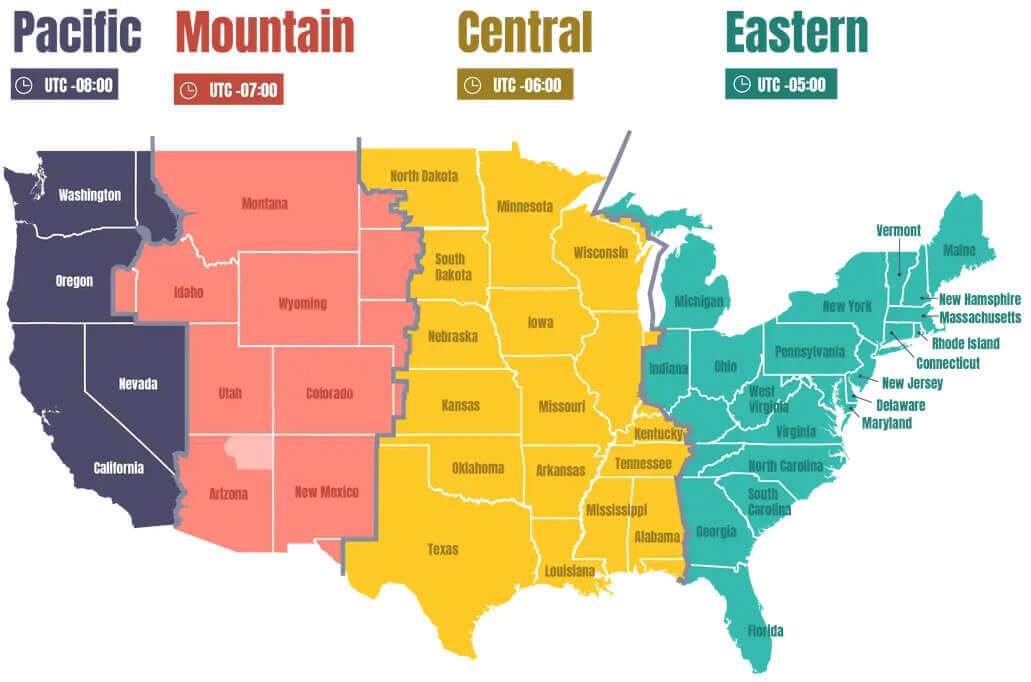
Before we pinpoint Kansas‘s time zone, it’s essential to grasp the broader framework. The contiguous United States is divided into four main time zones: Eastern Time (ET), Central Time (CT), Mountain Time (MT), and Pacific Time (PT). These zones are largely defined by longitude, with each zone generally spanning 15 degrees of longitude, representing one hour.

- Eastern Time (ET): This zone covers the easternmost part of the country, including states like New York, Florida, and Pennsylvania. It is UTC-5 during standard time and UTC-4 during daylight saving time.
- Central Time (CT): Situated west of Eastern Time, this zone encompasses a significant portion of the Midwest and South, including states like Texas, Illinois, and Minnesota. It follows UTC-6 during standard time and UTC-5 during daylight saving time.
- Mountain Time (MT): West of Central Time, this zone includes states like Colorado, Arizona, and Montana. It observes UTC-7 during standard time and UTC-6 during daylight saving time.
- Pacific Time (PT): This is the westernmost zone, covering states like California, Oregon, and Washington. It operates on UTC-8 during standard time and UTC-7 during daylight saving time.
In addition to these four, Alaska and Hawaii have their own distinct time zones. The United States also observes Daylight Saving Time (DST), where clocks are advanced by one hour during the warmer months, typically from the second Sunday in March to the first Sunday in November. This means that the UTC offsets change twice a year for most of the country.
Daylight Saving Time in Kansas
It is crucial to note that Kansas observes Daylight Saving Time. This means that for a significant portion of the year, the state will be on Central Daylight Time (CDT), which is UTC-5, and during standard time, it reverts to Central Standard Time (CST), which is UTC-6. This observance aligns it with the majority of the Central Time Zone.
Kansas: A Tale of Two Time Zones
Now, let’s address the specific query: “What time zone in Kansas?” The answer is not as monolithic as one might initially assume. While the majority of Kansas falls within the Central Time Zone, a small western portion of the state, specifically the counties of Greeley, Hamilton, Kearny, Scott, and Wichita, officially observe Mountain Time. This historical division stems from proximity and economic ties to neighboring states that observe Mountain Time.
The Predominant Central Time Zone in Kansas
The overwhelming majority of Kansas, encompassing its most populous cities and major attractions, operates on Central Time. This includes bustling urban centers like Wichita, the state capital Topeka, and the university city of Lawrence. Travelers visiting these areas will find themselves aligning with the Central Time Zone. When planning a visit to destinations like the Keeper of the Plains statue in Wichita or exploring the historic streets of Atchison, you will be operating under Central Time.
This means that during standard time (roughly November to March), Kansas is on Central Standard Time (CST), which is six hours behind Coordinated Universal Time (UTC-6). During daylight saving time (roughly March to November), it shifts to Central Daylight Time (CDT), which is five hours behind Coordinated Universal Time (UTC-5). This is a standard pattern for most of the Central Time Zone.
The Southwestern Slice of Mountain Time
For those venturing into the far southwestern reaches of Kansas, the temporal landscape shifts. The counties of Greeley, Hamilton, Kearny, Scott, and Wichita are outliers, adhering to Mountain Time. This means they are one hour behind the rest of Kansas. While this area might not be as densely populated or feature as many prominent tourist attractions as the eastern and central parts of the state, it is an important consideration for anyone traveling through or to these specific locales. For instance, if your itinerary includes visiting towns like Lakin in Kearny County or Syracuse in Hamilton County, you’ll need to adjust your watch accordingly.
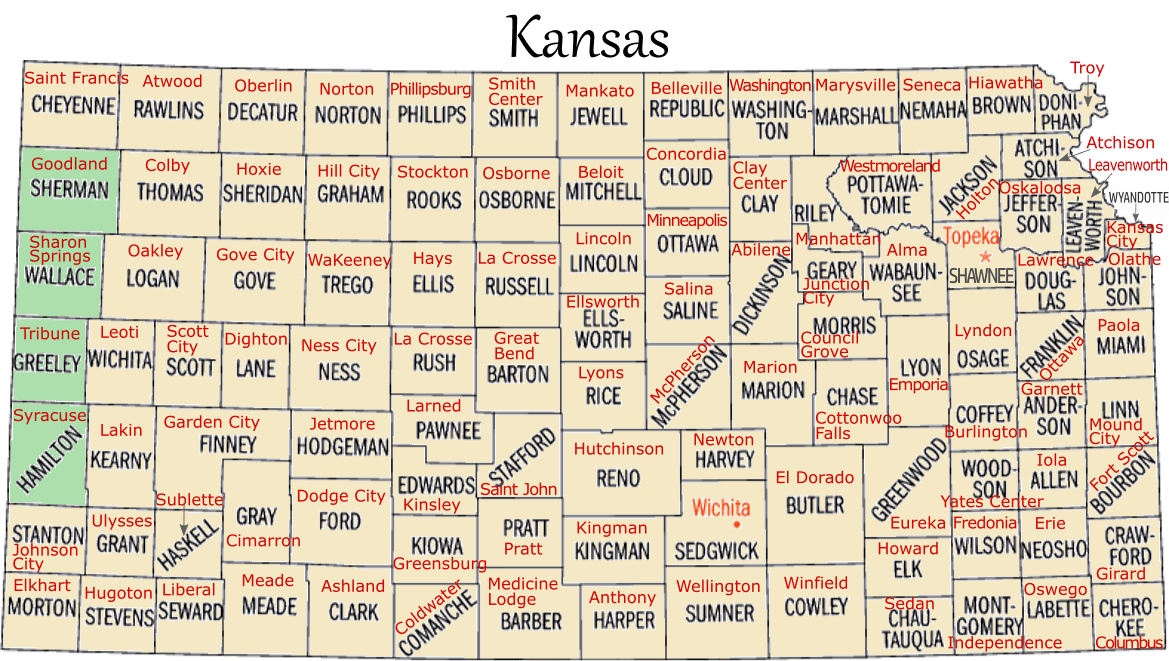
This unique temporal division is a legacy of historical settlement patterns and regional economic connections. Many residents and businesses in these counties have historically interacted more closely with communities in neighboring states like Colorado and New Mexico, which are firmly within the Mountain Time Zone. Therefore, to simplify daily life and business operations, these Kansas counties adopted Mountain Time.
Practical Implications for Travelers and Residents
Understanding the time zone situation in Kansas is more than just a trivia question; it has tangible implications for various aspects of life and travel.
Planning Your Travel Itinerary
When booking flights, hotels, or planning activities, being aware of the time zone is paramount. If your travel plans involve crossing from the Central Time Zone portion of Kansas to the Mountain Time Zone portion, or vice versa, remember to account for the one-hour difference. This is particularly relevant if you are traveling by car and navigating between towns in different time zones. For example, if you are driving from Dodge City (Central Time) to Garden City (Mountain Time) for a visit to the Lee Richardson Zoo, you will gain an hour upon arrival. Conversely, if you are departing from a Mountain Time county and heading east, you will lose an hour.
This difference can impact arrival times, meeting schedules, and the duration of daylight for sightseeing. It’s always advisable to confirm the local time zone of your specific destination within Kansas when making reservations or setting up appointments. Many online booking platforms and mapping services will specify the time zone, but a quick double-check is never a bad idea.
Business and Communication
For businesses operating across Kansas, or those with clients and partners in different parts of the state, managing time zones is a daily consideration. Conference calls, deadlines, and operational hours need to be coordinated carefully. A company headquartered in Kansas City (Central Time) might have employees or partners in Wichita (Central Time) and also engage with businesses in the Mountain Time counties. Ensuring everyone is on the same temporal page is vital for smooth operations. This is especially true for industries that rely on synchronized communication and operations.
Local Culture and Events
While the time zone difference is subtle, it can still influence the local feel and rhythm of life in the southwestern counties. Local events, festivals, and even the opening hours of businesses in these Mountain Time areas might be observed with a slight temporal shift compared to the rest of the state. For tourists seeking an authentic experience, understanding these nuances can add another layer of appreciation for the diverse character of Kansas.
The Role of Hotels and Accommodation
When booking accommodation in Kansas, the time zone is generally a straightforward matter for most travelers. The vast majority of hotels, resorts, and apartment rentals will operate on Central Time, aligning with the local time in the city or town where they are located. For instance, a stay at the Eldridge Hotel in Lawrence or a resort near Flint Hills National Scenic Byway will be in Central Time.
However, if your accommodation is in one of the five western counties observing Mountain Time, such as Scott City, the hotel’s front desk and services will operate on Mountain Time. This is standard practice for hotels and other lodging providers – they adhere to the local time zone of their physical location. When considering long-term stays or comparing accommodation options, it’s always prudent to confirm the local time of the property, especially if you are in the western part of the state. Many booking platforms will clearly state the city and state, and travelers can then use their knowledge of Kansas‘s time zones to determine the local time.
Conclusion: Embracing the Temporal Nuances of Kansas
The answer to “What time zone in Kansas?” is a fascinating blend of the predominant and the exceptional. While Central Time governs the daily lives of most Kansans and dictates the operational hours for popular attractions like the Cosmosphere in Hutchinson and the historic Boot Hill Museum in Dodge City, a small but distinct region in the southwest adheres to Mountain Time. This temporal duality is a charming characteristic of the Sunflower State, adding a subtle layer of complexity to its geography.
For travelers, understanding this distinction ensures smoother journeys, accurate scheduling, and a deeper appreciation for the state’s unique characteristics. Whether you’re exploring the rolling prairies, enjoying the vibrant downtowns, or delving into the rich history and natural beauty Kansas has to offer, a mindful awareness of its time zones will undoubtedly enhance your experience. So, as you plan your adventures across this central American gem, remember the subtle, yet significant, temporal shift that awaits in the far southwestern corner of Kansas.
LifeOutOfTheBox is a participant in the Amazon Services LLC Associates Program, an affiliate advertising program designed to provide a means for sites to earn advertising fees by advertising and linking to Amazon.com. Amazon, the Amazon logo, AmazonSupply, and the AmazonSupply logo are trademarks of Amazon.com, Inc. or its affiliates. As an Amazon Associate we earn affiliate commissions from qualifying purchases.