
Planning a trip to the Grand Canyon State? Whether you’re dreaming of desert landscapes, vibrant city life, or ancient wonders, understanding Arizona’s unique time zone situation is crucial for a smooth and enjoyable experience. Unlike most of the United States, Arizona largely dances to its own clock, opting out of the biannual ritual of Daylight Saving Time (DST). This singular approach can sometimes be a source of confusion for travelers, especially when coordinating flights, hotel check-ins, or tour schedules.
This comprehensive guide will unravel the mysteries of Arizona’s time zone, delve into its fascinating exceptions, and provide practical tips to ensure your visit is perfectly timed. From booking luxury resorts in Scottsdale to exploring the remote beauty of the Navajo Nation, we’ll help you navigate the clocks so you can focus on making unforgettable memories. Prepare to set your watches – or, more accurately, understand when not to adjust them – as we explore why the desert state operates on its own terms.

Arizona’s Year-Round Mountain Standard Time: A Unique Approach
At its core, the vast majority of Arizona observes Mountain Standard Time (MST) year-round. This means that while other states adjust their clocks forward in spring and backward in fall, Arizona remains steadfast. This distinctive characteristic is deeply ingrained in the state’s identity and climate.
The Core Rule: No Daylight Saving Time
The primary reason Arizona eschews Daylight Saving Time (DST) dates back to 1968. The hot desert climate played a significant role in this decision. During the scorching summer months, an extra hour of daylight in the evening would only extend the period of intense heat, driving up energy consumption for air conditioning and potentially making outdoor activities uncomfortable. By staying on Mountain Standard Time (MST) permanently, the state essentially experiences earlier sunsets during the summer, aligning work and school schedules with cooler parts of the day. This saves energy and makes the long, hot summers a bit more manageable for residents.
What does this mean for you, the traveler?
- Winter Months (early November to mid-March): Arizona is on Mountain Standard Time (MST), which is UTC-7. During this period, it’s one hour ahead of Pacific Standard Time (PST) (observed in states like California and Nevada) and one hour behind Central Standard Time (CST). So, if it’s 10:00 AM in Los Angeles, it’s 11:00 AM in Phoenix.
- Summer Months (mid-March to early November): This is where it gets interesting. When other states switch to Daylight Saving Time (DST), Arizona does not. This effectively means that Arizona becomes aligned with Pacific Daylight Time (PDT) (UTC-7), the same time zone as much of California and Nevada (including Las Vegas). So, if it’s 10:00 AM in Las Vegas, it’s also 10:00 AM in Phoenix. It remains one hour behind Mountain Daylight Time (MDT) (observed in states like Utah, Colorado, and New Mexico).
This consistency, while unique, simplifies things once you understand the rule. No need to change your clocks twice a year!
Practical Implications for Travelers and Residents
For residents, this means a stable schedule throughout the year, with predictable sunrises and sunsets relative to their daily routines. For travelers, however, this can lead to some initial confusion, especially when flying in or crossing state lines.
- Flight Schedules: When booking flights into Phoenix Sky Harbor International Airport or Tucson International Airport, always ensure you confirm arrival and departure times based on Arizona local time. Airlines typically adjust their schedules, but a quick double-check can prevent missed connections or early arrivals.
- Hotel Check-ins and Check-outs: Most hotels and resorts, from boutique stays in Sedona to luxury properties in Scottsdale, operate strictly on Arizona’s permanent Mountain Standard Time (MST). When coordinating check-in times or booking amenities, remember that during summer, Arizona is effectively on the same clock as California.
- Business Meetings and Tours: If you’re traveling for business, be mindful of the time difference when scheduling calls or meetings with colleagues in other states. Similarly, when booking guided tours, such as a jeep tour through the Sonoran Desert or a sunset photography tour of Monument Valley (more on this later!), always clarify the local time.
- Connecting with Family and Friends: Staying in touch can be tricky. A call to a friend in New York means a 3-hour difference (4 hours during summer if they are on Eastern Daylight Time (EDT)). Knowing the precise offset helps avoid waking someone up or missing a scheduled chat.
Ultimately, Arizona’s consistent time zone, while initially perplexing, offers a sense of stability. It’s a reminder of the state’s fierce independence and adaptation to its unique environment.
Navigating the Exceptions: The Navajo Nation Time Zone
Just when you thought you had Arizona’s time zone figured out, there’s a significant exception that adds another layer of complexity: the Navajo Nation. This vast, semi-autonomous territory, which spans parts of northeastern Arizona, New Mexico, and Utah, does observe Daylight Saving Time (DST).
The Navajo Nation’s Adherence to Daylight Saving Time
The Navajo Nation (or Diné Bikéyah) has historically chosen to observe Daylight Saving Time (DST). This decision is largely driven by practical considerations related to its geographical spread and its economic and cultural ties to neighboring states that do observe DST. By aligning its clocks with Mountain Daylight Time (MDT) during the summer, the Navajo Nation maintains consistency with the majority of the regions it borders, facilitating easier coordination for commerce, government, and tribal services across state lines.
- Winter Months (early November to mid-March): The Navajo Nation is on Mountain Standard Time (MST), just like the rest of Arizona.
- Summer Months (mid-March to early November): When the rest of Arizona remains on Mountain Standard Time (MST), the Navajo Nation springs forward to Mountain Daylight Time (MDT). This means that during these months, the Navajo Nation is effectively one hour ahead of the rest of Arizona.
This creates a peculiar situation for travelers venturing into or through the Navajo Nation. Imagine driving from Flagstaff (MST) to Page (MST) through a section of the Navajo Nation in July. While Flagstaff and Page will be on the same time, the intervening Navajo Nation land will be one hour ahead. It’s essential to be aware of which time zone you are in at any given moment, particularly when planning to visit attractions like Antelope Canyon or Canyon de Chelly National Monument, which are located within the Navajo Nation. Tour operators here will operate on Mountain Daylight Time (MDT) during the summer.
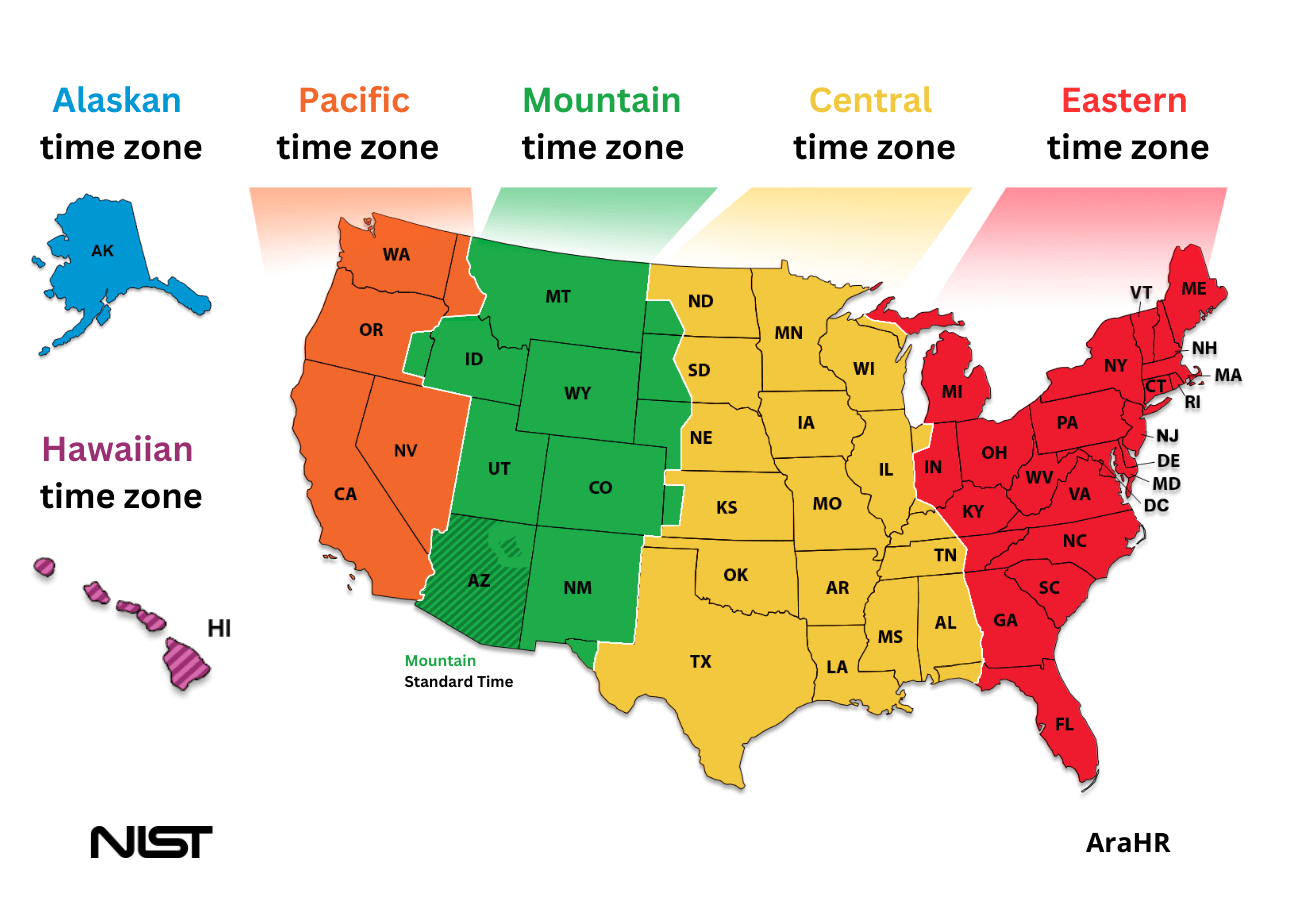
The “Time Donut” Anomaly: The Hopi Reservation
Adding another layer to Arizona’s time zone puzzle is the Hopi Reservation. This sovereign nation is entirely surrounded by the Navajo Nation within northeastern Arizona. Crucially, the Hopi Reservation does not observe Daylight Saving Time (DST), just like the rest of Arizona outside of the Navajo Nation.
This creates a geographical “time donut” during the summer months:
- You are in Arizona (MST).
- You drive into the Navajo Nation (MDT), so you set your clock forward one hour.
- You then drive into the Hopi Reservation (MST), so you set your clock back one hour.
- Exit the Hopi Reservation back into the Navajo Nation (MDT), set your clock forward again.
- Finally, leave the Navajo Nation for the rest of Arizona (MST), setting your clock back.
This sequence can be incredibly confusing for visitors, particularly those not aware of the unique tribal sovereignty implications regarding time zones. While visits to the Hopi Reservation are typically by guided tour and require respectful adherence to tribal customs, being mindful of the time shifts is paramount for scheduled appointments or tours. Always confirm the local time with your guides or hosts when visiting these culturally rich but time-complex areas. Using a smartphone that automatically adjusts for time zones can be helpful, but manual verification is always recommended in these border areas.
Planning Your Arizona Adventure: Time Zone Tips for Travelers
Understanding Arizona’s time zone nuances is a cornerstone of effective travel planning, ensuring a stress-free trip whether you’re embarking on a solo adventure, a family vacation, or a crucial business engagement.
Essential Tips for Seamless Travel
Staying on top of the clock in Arizona requires a proactive approach, especially during the spring and fall transitions when other regions are changing their clocks.
- Verify All Bookings: Before you depart, double-check all your reservations – flights, car rentals, hotel check-ins, tour start times, and restaurant bookings – to ensure they are confirmed for Arizona local time. If you’re visiting the Navajo Nation during summer, specifically confirm if their timings are on Mountain Daylight Time (MDT). Many booking platforms will automatically display times in the local time zone of the destination, but it’s always wise to confirm, especially for the unique case of Arizona.
- Utilize Time Zone Apps and Devices: Most modern smartphones automatically update their time based on your location. However, be aware that manual adjustments might be needed when crossing between the Navajo Nation and the rest of Arizona, as GPS signals might not always perfectly delineate tribal boundaries. A dedicated world clock app can be incredibly useful, allowing you to quickly compare Arizona time with your home time and other relevant zones.
- Communicate Clearly: When speaking with local businesses, hotel staff, or tour operators, explicitly ask, “Is that Arizona time?” or “Is that Navajo Nation time?” This small clarification can prevent major misunderstandings, especially for early morning activities or late-night arrivals.
- Allow Buffer Time: When transitioning between Arizona proper and the Navajo Nation, especially during the summer, build in extra time for travel and potential time zone adjustments. This buffer will reduce stress and ensure you arrive punctually for any scheduled activities.
Impact on Popular Destinations and Activities
Arizona’s time zone influences everything from leisurely sightseeing to adventure sports. Being aware of it can enhance your experience at the state’s most iconic landmarks.
- Grand Canyon National Park: This crown jewel of Arizona primarily lies outside the Navajo Nation and observes Mountain Standard Time (MST) year-round. This is particularly important for planning sunrise or sunset viewings at the South Rim, as well as coordinating helicopter tours or mule rides. If you’re staying on the Navajo Nation side (e.g., near the East Rim) and plan to drive to the South Rim in summer, remember that your destination will be one hour behind your starting point.
- Phoenix and Tucson: These major metropolitan areas operate consistently on Mountain Standard Time (MST). Dining reservations, concert times, or business meetings in Phoenix or Tucson will follow this rule. During summer, this means they share the same time as Los Angeles, making cross-state travel from California seamless time-wise.
- Sedona’s Red Rocks: The stunning landscapes of Sedona, famous for hiking and spiritual retreats, also operate on year-round Mountain Standard Time (MST). Planning an early morning hike to beat the heat or a sunset viewing from Airport Mesa will be straightforward.
- Monument Valley: This iconic landscape is entirely within the Navajo Nation. Therefore, during summer, it observes Mountain Daylight Time (MDT). If you’re coming from a non-Navajo part of Arizona, you’ll need to set your watch forward one hour upon entering. This is vital for guided tours, photo opportunities, and hotel bookings within the park.
Accommodation and Logistics
Every aspect of your stay, from checking into your lavish suite at a Scottsdale resort to picking up your rental car, is time-dependent.
- Hotel Check-ins/Check-outs: Most hotels clearly state their check-in and check-out times in local Arizona time. If you’re arriving from an area that observes Daylight Saving Time (DST) during the summer, remember that your body clock might feel an hour ahead when checking into a Phoenix hotel, even though the local time will align with Pacific Daylight Time (PDT). Conversely, if you arrive from a Mountain Daylight Time (MDT) zone (like Denver), you’ll gain an hour upon arrival in Arizona in summer.
- Car Rental Pickups/Returns: Ensure you schedule your car rental pick-up and drop-off based on the local time of the rental location. This is usually straightforward within Arizona’s main cities, but if you’re renting near the Navajo Nation or plan to return the car in a different state, be meticulously clear about time zones.
- Meeting Schedules for Business Travelers: For those on business trips, coordinating with colleagues outside Arizona requires careful attention. Schedule calls and virtual meetings with the precise time difference in mind. During summer, when Arizona aligns with Pacific Daylight Time (PDT), this simplifies coordination with West Coast partners but creates a larger gap with Mountain Daylight Time (MDT) and Central Daylight Time (CDT) zones.

Beyond the Clock: Why Arizona’s Time Zone Matters for Your Experience
Arizona’s unique time zone isn’t just a quirky fact; it’s a lifestyle choice that profoundly shapes the state’s daily rhythm and, consequently, your travel experience. By opting out of Daylight Saving Time (DST), the state embraces a more consistent schedule, particularly during its intense summer months. This decision, rooted in the desire to manage extreme heat and conserve energy, ultimately influences how locals and visitors alike interact with the environment and its attractions.
For the luxury traveler seeking serene mornings or the family on a budget aiming to maximize daylight hours, understanding this system helps to optimize plans. It means enjoying cooler mornings for outdoor activities like hiking or hot air balloon rides, and earlier sunsets during summer which can offer more comfortable evening relaxation after a day of exploration. For those delving into local culture and tourism, especially within the Navajo Nation and Hopi Reservation, the time differences are not just logistical hurdles but a reflection of diverse governance and historical decisions.
Ultimately, approaching your Arizona adventure with an informed perspective on its time zones will allow for smoother transitions, timely engagements, and a deeper appreciation for this truly distinctive state. So, pack your bags, confirm your clocks, and get ready to discover the magic of Arizona – precisely on time.
LifeOutOfTheBox is a participant in the Amazon Services LLC Associates Program, an affiliate advertising program designed to provide a means for sites to earn advertising fees by advertising and linking to Amazon.com. Amazon, the Amazon logo, AmazonSupply, and the AmazonSupply logo are trademarks of Amazon.com, Inc. or its affiliates. As an Amazon Associate we earn affiliate commissions from qualifying purchases.