
Understanding Arizona’s Time Zone Anomaly
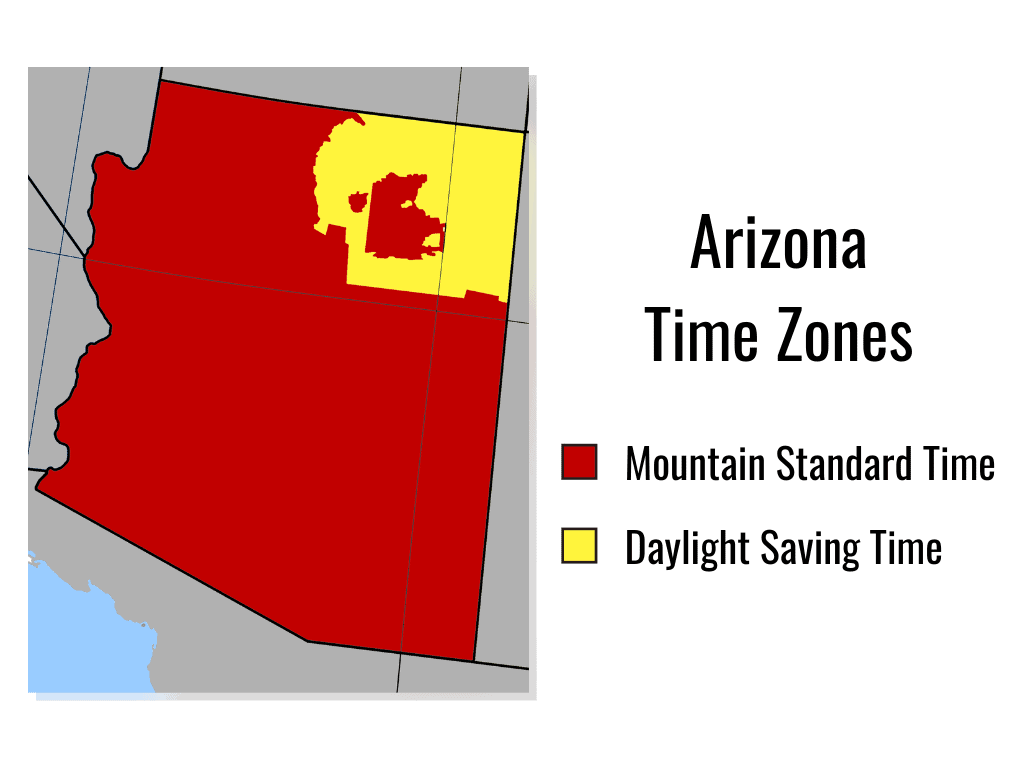
The question “What time zone is [Arizona]?” often elicits a response that’s both simple and complex. Predominantly, the state operates on Mountain Standard Time throughout the entire year, opting out of the biannual [Daylight Saving Time] switch that many of its neighbors observe. This means that while other states adjust their clocks forward in spring and back in fall, [Arizona] remains constant, making its time relative to other zones a fluctuating affair.
The Mountain Standard Time (MST) Constant
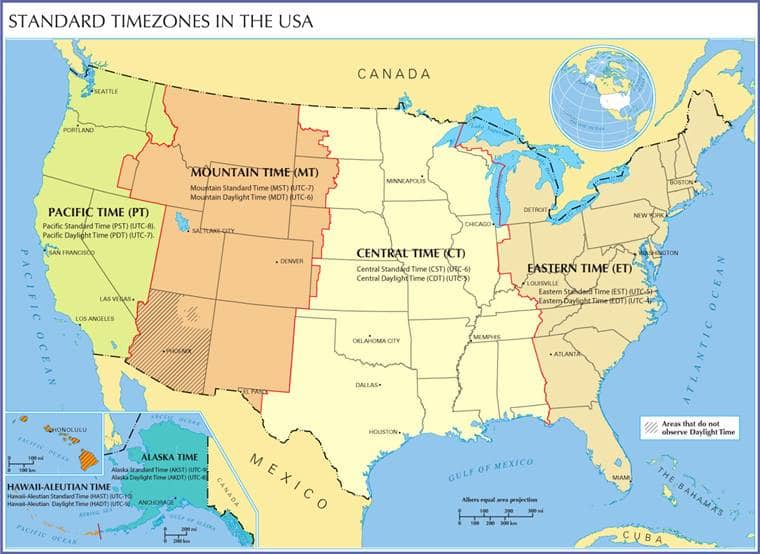
Mountain Standard Time is typically GMT-7, meaning it is seven hours behind [Coordinated Universal Time]. For much of the year, particularly during the winter months, [Arizona]’s time aligns with the Mountain Time Zone. However, when [Daylight Saving Time] begins in March, states observing [DST] in the [Mountain Time Zone] jump forward to Mountain Daylight Time, which is GMT-6. At this point, [Arizona] stays put on MST, effectively aligning itself with the Pacific Daylight Time observed by states like [California] and [Nevada]. Come November, when [DST] ends, those states revert to Pacific Standard Time (GMT-8), and [Arizona] on MST once again matches the standard [Mountain Time Zone] states.
This consistent adherence to [MST] means that for about half the year, [Arizona] is one hour ahead of [California] and [Nevada] (when they are on [PST]), and for the other half, it’s the same time (when they are on [PDT]). Similarly, its relationship with [New Mexico] and [Colorado] shifts: for half the year it’s the same time, and for the other half, [Arizona] is one hour behind. This dance of time has significant implications for everything from flight schedules to making dinner reservations across state lines.
Daylight Saving Time (DST) Exemption: A Deep Dive
The decision for [Arizona] to largely forego [Daylight Saving Time] dates back to 1968. The primary rationale is rooted in the state’s extreme summer heat. Shifting the clocks forward would mean pushing daylight — and thus peak solar intensity — later into the evening. In a state where summer temperatures frequently soar above 100°F (38°C), extending the heat of the day further into the evening is highly undesirable. Residents prefer to start their days early to accomplish outdoor tasks or enjoy recreational activities before the oppressive afternoon sun takes hold. By maintaining [MST] year-round, sunrise and sunset times remain relatively stable, allowing activities to conclude before the most intense heat sets in.
Furthermore, there are economic and energy conservation arguments. While [DST] was originally conceived to save energy by reducing the need for artificial lighting in the evenings, in [Arizona]’s climate, it could paradoxically increase energy consumption. More daylight in the evening would mean more hours of air conditioning use during the hottest part of the day, offsetting any potential lighting savings. For a state deeply familiar with the challenges of managing extreme heat, avoiding [DST] is a practical measure that enhances comfort and potentially reduces utility costs for its residents and businesses. This choice reflects a deep understanding of local environmental conditions and a prioritization of [lifestyle] adapted to its unique climate.
Historical Context and Practical Reasons
The historical context of [Arizona]’s [DST] exemption is intertwined with its predominantly agricultural roots and its unique climate. Farmers, for example, typically work by the sun, and changing clock times can disrupt natural rhythms and agricultural schedules. The consistent time allows for more predictable planning for harvests and livestock management. Beyond agriculture, the uniform time zone simplifies many aspects of daily life. There’s no confusion about when to adjust clocks, no temporary disruption to sleep patterns, and a general sense of stability that many [Arizonans] appreciate.
This stability contributes to a relaxed pace of life, particularly noticeable in many of [Arizona]’s popular [travel destinations]. For businesses, especially those in the [tourism] sector, the consistency means less need to constantly update schedules or explain time discrepancies to visitors. While cross-border interactions still require awareness of time differences, within [Arizona] itself, the consistent clock fosters a straightforward and predictable environment, a subtle but significant aspect of its distinctive character.
Navigating Time Across Arizona’s Diverse Landscapes
While most of [Arizona] adheres to its unique year-round [MST], there’s a crucial exception that every traveler must be aware of: the [Navajo Nation]. This creates a fascinating, albeit sometimes confusing, temporal patchwork across the state’s diverse landscapes, impacting everything from booking accommodations to planning excursions.
The Navajo Nation Exception: A Crucial Distinction
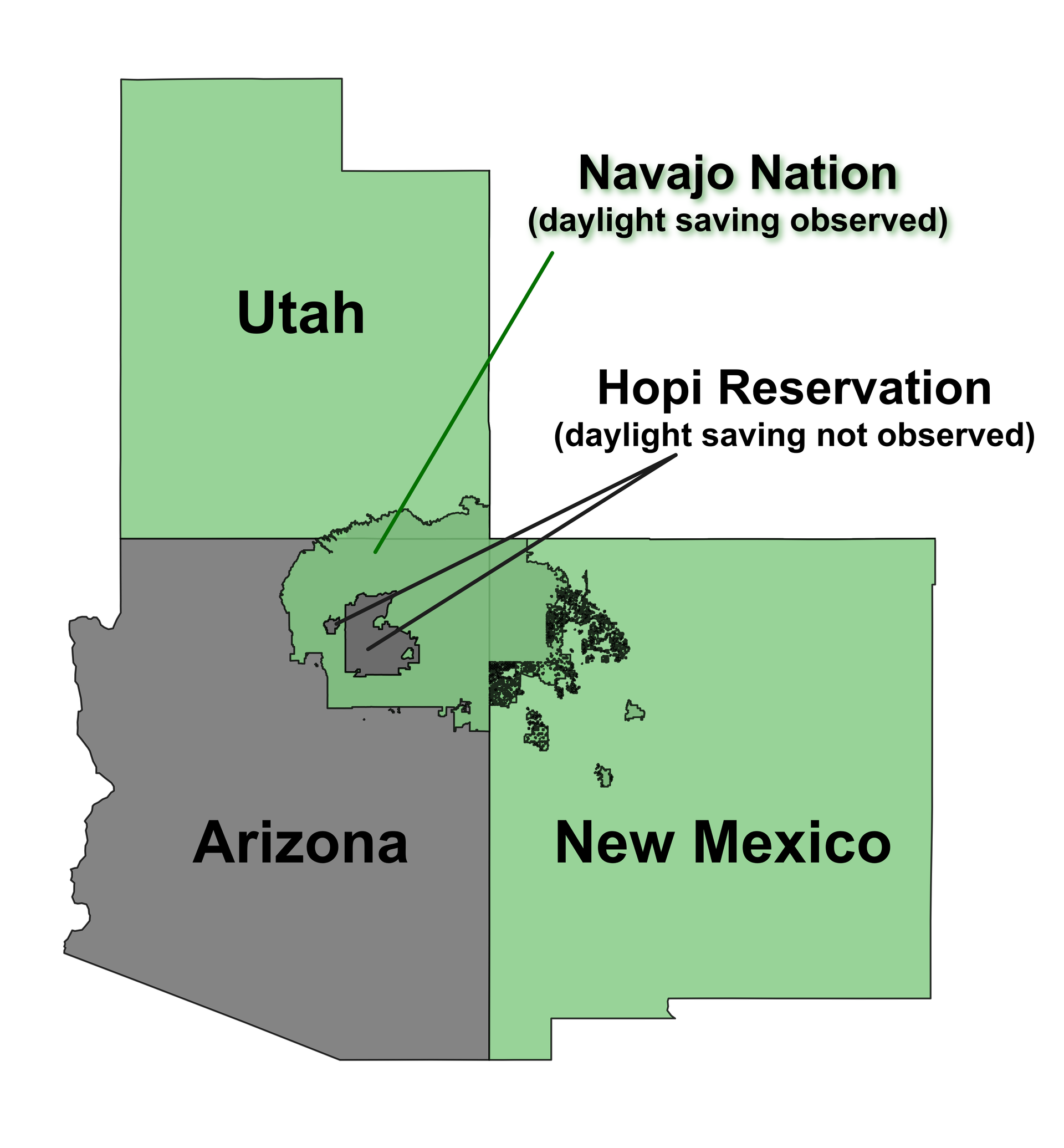
Within the northeastern part of [Arizona] lies a significant portion of the [Navajo Nation], the largest Native American reservation in the [United States]. Unlike the rest of [Arizona], the [Navajo Nation] does observe [Daylight Saving Time]. This decision stems from the fact that the [Navajo Nation] spans three states: [Arizona], [New Mexico], and [Utah]. To maintain temporal consistency across its vast territory and with its tribal members living in neighboring [DST]-observing states, the [Navajo Nation] aligns its clocks with the standard [Mountain Time Zone] practice, moving to Mountain Daylight Time during the spring and summer months.
This means that for roughly half the year (from March to November), when you travel from cities like [Flagstaff] or [Page] into the [Navajo Nation] (e.g., towards [Monument Valley Navajo Tribal Park] or parts of [Antelope Canyon]), you must adjust your clock forward one hour. Conversely, when leaving the [Navajo Nation] and re-entering the rest of [Arizona], you turn your clock back one hour. This “time warp” can be particularly perplexing for visitors exploring iconic sites like the [Four Corners Monument], where the point itself is on [Navajo Nation] land, surrounded by [New Mexico] and [Utah] (also on [DST]), but bordered by [Arizona] proper, which is not. Awareness of this distinction is paramount for punctual appointments, guided tours, and even simply knowing when local businesses are open.
Impact on Travel and Tourism Planning
The time zone situation in [Arizona] can significantly influence [travel] planning, especially for those embarking on multi-state road trips or relying on precise schedules. When flying into Phoenix Sky Harbor International Airport, for example, travelers arriving from [California] during [DST] will find no time change, while those from [Colorado] or [New Mexico] will need to set their watches back an hour. This can affect connecting flights, ground transportation bookings, and initial check-in times at [hotels] or [resorts].
For self-driving tours, particularly those encompassing destinations near the [Navajo Nation] or bordering states, careful planning is essential. Imagine booking a sunrise photography tour for [Horseshoe Bend] or [Antelope Canyon] – if you’re coming from [Flagstaff] and aren’t aware of the [Navajo Nation] time shift, you could easily miss your tour by an hour. Tour operators and [accommodation] providers in these border regions are generally well-versed in these nuances and will often provide reminders, but ultimately, the responsibility lies with the traveler to verify local times. This unique temporal characteristic becomes an integral part of the [Arizona travel experience], adding a layer of logistical consideration to an otherwise straightforward journey.
Key Cities and Attractions: What Time Is It Really?
To simplify, here’s a breakdown of some of [Arizona]’s key cities and [attractions], and their time zone status:
- [Phoenix], the state capital and largest city, operates on year-round [MST]. This includes its surrounding metropolitan areas like [Scottsdale], [Mesa], [Chandler], [Glendale], and [Tempe].
- [Tucson], in southern [Arizona], also adheres to year-round [MST].
- [Flagstaff], the gateway to the [Grand Canyon National Park], and other popular northern [Arizona] towns like [Sedona], [Williams], and [Kingman], all observe year-round [MST].
- [Grand Canyon National Park]: The entire park, including both the South and North Rims, observes year-round [MST].
- [Page]: Home to [Antelope Canyon] and [Horseshoe Bend], [Page] itself is on year-round [MST]. However, many of the tour operators for [Antelope Canyon] are [Navajo] owned and operated, and the tours actually take place within the [Navajo Nation]. Therefore, you often need to observe [Navajo Nation] time for your tour departure, even if [Page] town is on [MST]. Always double-check with your specific tour provider.
- [Monument Valley Navajo Tribal Park]: Located entirely within the [Navajo Nation], this iconic landmark observes [Daylight Saving Time] ([MDT] during summer).
- [Hopi Reservation]: Surrounded entirely by the [Navajo Nation] in northeastern [Arizona], the [Hopi Reservation] is another exception. It generally does not observe [Daylight Saving Time], aligning with the rest of non-[Navajo] [Arizona]’s [MST]. This creates an intriguing ‘island’ of non-[DST] within a [DST]-observing territory, making accurate time-keeping crucial when traversing this region.
This detailed understanding is vital for seamless [travel] logistics, ensuring you arrive on time for everything from sunrise [hikes] to scheduled cultural experiences and [dining] reservations.
Planning Your Arizona Adventure: Time Zone Tips for Travelers
Equipped with the knowledge of [Arizona]’s unique time zone situation, travelers can plan their visits with confidence, minimizing potential disruptions and maximizing their enjoyment. From booking [accommodations] to scheduling daily activities, a few key considerations will ensure a smooth and stress-free [Arizona] adventure.
Accommodation and Booking Considerations
When booking [hotels], [resorts], [villas], or [apartments] in [Arizona], particularly if you are traveling during the [Daylight Saving Time] months, always confirm the check-in and check-out times in local [Arizona] time. Most online booking platforms will automatically adjust to the local time zone of the property, but it’s always prudent to double-check, especially if you are arriving from a state that observes [DST] in a different time zone. For instance, if you’re flying from [New York] (on [Eastern Daylight Time]) to [Phoenix] (on [Mountain Standard Time]), you’ll experience a three-hour time difference that remains constant. However, if you’re driving from [Utah] (on [Mountain Daylight Time]) into [Arizona], your watch will need to go back one hour upon crossing the state line (unless you’re entering the [Navajo Nation]).
Many [Arizona] [resorts] and [hotels], particularly in popular [tourist] hubs like [Scottsdale], [Sedona], and [Tucson], cater to guests from across the globe. They are typically well-versed in explaining the time zone nuances. For [luxury travel] experiences, such as spa treatments at [The Boulders Resort & Spa] or golf tee times at [Hyatt Regency Scottsdale Resort & Spa at Gainey Ranch], punctuality is key, making accurate time awareness even more critical. If you plan to stay within the [Navajo Nation], confirm whether your chosen [accommodation] observes [DST], as most do, to ensure your internal clock aligns with local operations.
Synchronizing with Activities and Excursions
[Arizona]’s stunning natural [landmarks] and diverse [activities] make it a prime destination for outdoor enthusiasts. Whether you’re planning a sunrise [hike] in [Saguaro National Park], a [rafting] trip down the [Colorado River] through the [Grand Canyon], or a jeep tour through the red rocks of [Sedona], understanding the local time is crucial for synchronizing with your tour operators. Many excursions, especially those involving limited daylight or specific natural phenomena like sunrises and sunsets, run on very precise schedules.For instance, tours to [Antelope Canyon] and [Monument Valley] are often booked months in advance and have strict departure times. Since these are primarily within the [Navajo Nation], remember to advance your clock by one hour during [DST] months when departing from towns like [Page] (which is on [MST]). Imagine arriving an hour late for a once-in-a-lifetime slot canyon tour – a frustrating scenario easily avoided with a quick check of the local time zone. Similarly, if you’re meeting friends or family for a [golf] outing or a [wine tasting] tour in [Verde Valley], ensure everyone is on the same temporal page to prevent delays and missed opportunities.
Lifestyle Implications: Dining, Shopping, and Events
The consistent [MST] in most of [Arizona] contributes to a unique local [lifestyle]. Without the biannual clock changes, daily routines, business hours, and social events maintain a steady rhythm. This means restaurants in [Phoenix] or [Tucson] don’t experience the temporary disruption to evening crowds that can occur in [DST]-observing cities. Shopping hours, particularly in large malls and boutique districts in [Scottsdale], remain consistent year-round, making it easier for visitors to plan their retail therapy.
Local events, festivals, and cultural performances, from art walks in [Sedona] to rodeo events in [Prescott], are scheduled with this consistent time in mind. Travelers can appreciate this predictability, knowing that an evening concert or a happy hour special will start at the advertised time without the seasonal adjustment. For those coming from regions that observe [DST], this constant time can feel refreshingly stable, allowing for a more relaxed approach to daily planning and a deeper immersion into the local pace of life. It subtly shapes the [Arizona experience], offering a consistent backdrop to your exploration of its [local culture] and vibrant [food] scene.
Beyond the Clock: Arizona’s Enduring Appeal
While the time zone peculiarity adds a unique layer to [travel] in [Arizona], it’s merely a footnote in the grand narrative of what makes this state an absolutely essential [destination]. From its monumental [landmarks] to its vibrant [local culture] and diverse [accommodation] options, [Arizona]’s appeal extends far beyond the hands of a clock.
A Land of Iconic Landmarks and Natural Wonders
[Arizona] is a treasure trove of [natural wonders] that draw millions of visitors annually. The undisputed crown jewel is the [Grand Canyon National Park], a geological masterpiece that defies description and offers breathtaking vistas from its North and South Rims. Beyond the [Grand Canyon], the state boasts an array of other stunning [landmarks]. [Monument Valley Navajo Tribal Park], with its iconic towering sandstone buttes, is a testament to the raw beauty of the [Southwest] and a significant cultural site for the [Navajo Nation]. The ethereal slot canyons of [Antelope Canyon] and the dramatic horseshoe bend of the [Colorado River] at [Horseshoe Bend] near [Page] are photographer’s dreams, showcasing nature’s artistry.Further south, [Saguaro National Park] protects vast forests of the majestic saguaro cactus, an emblem of the [Sonoran Desert]. The painted landscapes of [Petrified Forest National Park] offer a glimpse into prehistoric worlds, while the ancient cliff dwellings of [Montezuma Castle National Monument] and [Canyon de Chelly National Monument] tell tales of early inhabitants. Each of these sites offers unique [experiences] for [travelers], from strenuous [hiking] and [adventure tourism] to serene scenic drives and cultural immersion. The consistent time zone simplifies the planning of multi-day trips to these diverse locations, ensuring that precious vacation time is spent marveling at scenery rather than adjusting watches.
Experiencing Local Culture and Gastronomy
[Arizona]’s [culture] is a rich tapestry woven from its Native American heritage, [Mexican] influences, and pioneering spirit. Visitors can delve into the profound history and contemporary life of tribes like the [Navajo Nation] and [Hopi Reservation], exploring their art, traditions, and sacred sites. Cities like [Tucson] and [Phoenix] are vibrant cultural hubs, offering world-class museums, art galleries, and performing arts venues. The [food] scene is equally diverse, featuring authentic [Southwestern cuisine] that blends Native American ingredients with [Mexican] flavors. From hearty chili and savory tamales to innovative farm-to-table dishes and upscale dining in [Scottsdale], [Arizona] offers a gastronomic journey for every palate.The [lifestyle] in [Arizona] is characterized by an appreciation for the outdoors, a relaxed demeanor, and a strong sense of community. Whether you’re enjoying a leisurely brunch, exploring a bustling farmers’ market, or attending a local festival, the lack of [Daylight Saving Time] means these events operate on a predictable schedule, allowing for seamless integration into your [travel] itinerary. This stability is a subtle yet significant contributor to the state’s welcoming atmosphere, making it easier for visitors to immerse themselves in the local way of life.
Finding Your Perfect Stay: From Luxury to Budget
[Arizona] caters to every type of traveler and every budget when it comes to [accommodation]. For those seeking [luxury travel], [Scottsdale] and [Sedona] are home to world-renowned [resorts] offering opulent [suites], championship [golf] courses, rejuvenating [spa treatments], and exquisite [dining]. Properties like [The Boulders Resort & Spa] or [Enchantment Resort] provide unparalleled service and stunning desert backdrops. For families, many [resorts] feature elaborate pool complexes and supervised children’s [activities], ensuring a memorable stay for all ages.Mid-range and [budget travel] options are abundant as well, with comfortable [hotels], charming boutique inns, and well-equipped [apartments] or [villas] available in cities and towns across the state. Whether you prefer the convenience of a hotel near a major attraction, the rustic charm of a cabin near [Flagstaff], or the unique experience of a glamping site, [Arizona] has something to offer. For longer stays, especially for “snowbirds” escaping colder climates, [long-term stay] [accommodation] options like vacation rentals are popular. The consistency of [Arizona]’s time zone simplifies the logistics of these extended visits, particularly when coordinating with services or communicating with family back home. This diverse range of choices ensures that every visitor can find their ideal home base from which to explore the wonders of the Grand Canyon State.
In conclusion, while the question “What Time Zone Is [Arizona]?” reveals a charmingly idiosyncratic temporal landscape, it’s just one facet of a state rich in [travel experiences], stunning [landmarks], vibrant [culture], and welcoming [hospitality]. Armed with this knowledge, you are now perfectly positioned to plan an unforgettable journey, whether you’re navigating the timeless beauty of the [Grand Canyon] or immersing yourself in the living history of the [Navajo Nation]. [Arizona]’s consistent clock, like its enduring beauty, is a testament to its unique character, inviting you to slow down, explore, and discover a truly remarkable corner of the [United States].
LifeOutOfTheBox is a participant in the Amazon Services LLC Associates Program, an affiliate advertising program designed to provide a means for sites to earn advertising fees by advertising and linking to Amazon.com. Amazon, the Amazon logo, AmazonSupply, and the AmazonSupply logo are trademarks of Amazon.com, Inc. or its affiliates. As an Amazon Associate we earn affiliate commissions from qualifying purchases.