
Navigating Florida’s Primary Time Zones
[Florida]’s time zone situation is relatively straightforward but features an important regional exception. The state primarily falls within one time zone, but its northwestern region, often referred to as the Panhandle, observes a different one. This dual-zone system is a key piece of information for anyone planning to explore different parts of the state.Eastern Standard Time (EST) / Eastern Daylight Time (EDT): The Dominant Zone
The vast majority of [Florida] observes Eastern Standard Time during the fall and winter months and transitions to Eastern Daylight Time from spring through summer. This includes all the major tourist hubs and most populous areas, making it the time zone that most visitors will interact with. Cities like [Miami], [Orlando], [Jacksonville], [Tampa], [Fort Lauderdale], [St. Petersburg], [Key West], and [Sarasota] all operate on EST/EDT.
For travelers, understanding this dominance is crucial. When you book a flight into [Miami International Airport] or [Orlando International Airport], your arrival time will be in EST/EDT. Your [hotel] check-in times at a lavish [Miami Beach] [resort] or a family-friendly [Orlando] [hotel] will adhere to this schedule. Likewise, the opening and closing hours for iconic attractions such as [Walt Disney World Resort], [Universal Studios Florida], and the [Kennedy Space Center Visitor Complex] are all set according to EST/EDT. This consistency simplifies planning for the majority of visitors, allowing them to easily coordinate activities, dining reservations, and travel within these popular regions. Knowing you’re in sync with the local clock from the moment you land helps set the stage for a relaxed and well-organized trip.
Central Standard Time (CST) / Central Daylight Time (CDT): The Panhandle’s Exception
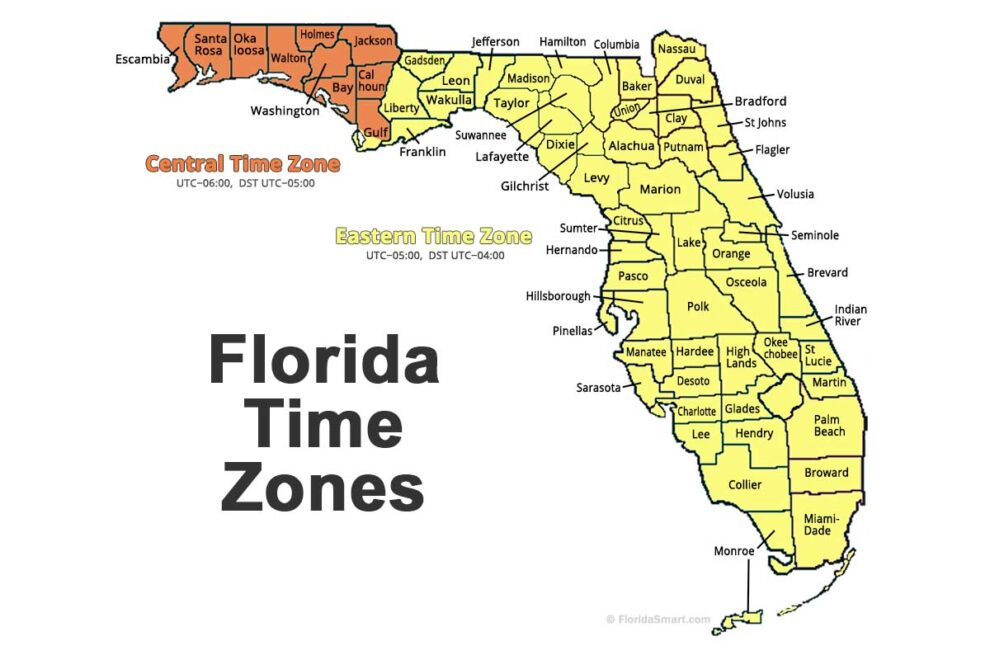
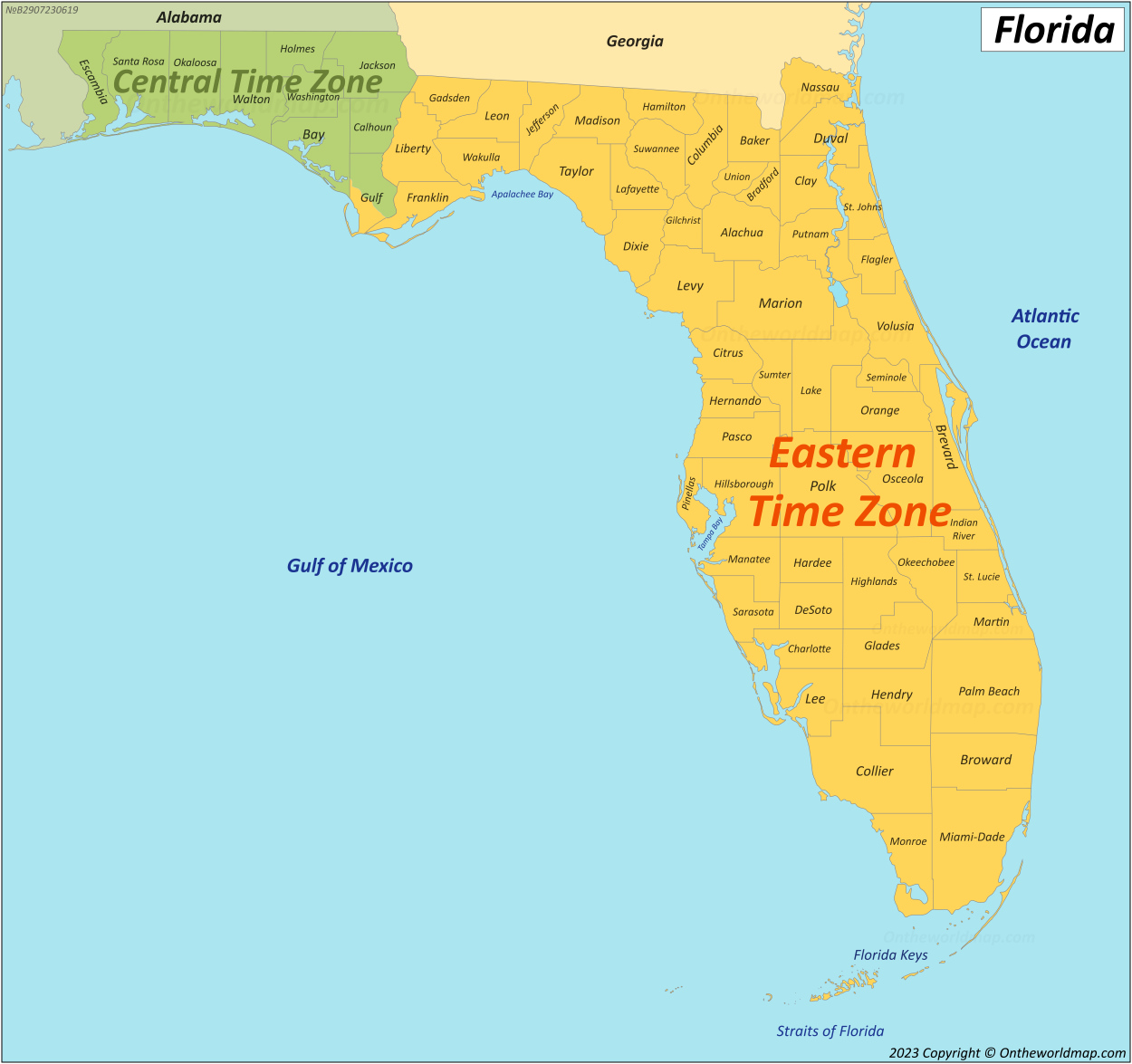
The notable exception to [Florida]’s dominant Eastern Time Zone is its northwestern Panhandle region. This area operates on Central Standard Time and Central Daylight Time. The counties fully within the Central Time Zone include [Escambia], [Santa Rosa], [Okaloosa], [Walton], [Bay], [Holmes], [Washington], [Calhoun], and [Jackson]. Additionally, parts of [Gulf] and [Franklin] counties also observe CST/CDT, specifically west of the Apalachicola River. Major cities in this time zone include [Pensacola], [Panama City], and [Panama City Beach].
This distinction becomes particularly important for travelers embarking on a road trip across the Panhandle or those who might be arriving from neighboring states like [Alabama] or [Georgia] that border this region. A one-hour time difference can easily lead to missed appointments, delayed check-ins, or confusion when coordinating with travel companions. For instance, if you are driving from Tallahassee to Pensacola, you will effectively “gain” an hour as you cross into the Central Time Zone. Conversely, driving east from [Pensacola] to [Tallahassee] means you “lose” an hour. Being mindful of these shifts is essential for seamless travel, especially when booking accommodations, planning visits to local landmarks like [Naval Air Station Pensacola], or timing your beach day at [Panama City Beach]. Local businesses, restaurants, and attractions in these areas will all operate on CST/CDT, so always confirm their hours based on the local time zone to avoid any surprises.
The Daylight Saving Time Dance
Like most of the [United States], [Florida] observes Daylight Saving Time, typically moving its clocks forward by one hour in the spring (“spring forward”) and backward by one hour in the fall (“fall back”). This transition occurs on the same dates across both the Eastern and Central Time Zones within the state, meaning the one-hour difference between them remains constant. During DST, the Eastern Time Zone operates as EDT, and the Central Time Zone operates as CDT.
While DST is a common practice, it can sometimes add a layer of confusion for travelers, especially those arriving from countries that do not observe it or those who forget to adjust their clocks. It’s always a good practice to confirm the current time zone status (Standard vs. Daylight) for your travel dates. [Florida] has famously passed the [Sunshine Protection Act], a state bill aiming to make [Daylight Saving Time] permanent, effectively keeping the state on EDT year-round. However, this act requires federal approval to take effect, and as of now, [Florida] continues to participate in the bi-annual clock changes. For the foreseeable future, travelers should expect the spring and fall time changes and plan accordingly, particularly if their trip spans one of these transition periods.
The Practicalities of Time Zones for Florida Travelers
Understanding [Florida]’s time zones isn’t just about knowing the local time; it’s about optimizing your travel experience, from initial planning to daily activities. Integrating time zone awareness into your itinerary ensures efficiency and maximizes your enjoyment.
Planning Your Florida Itinerary: Time Zone Considerations
Careful planning is the cornerstone of a successful [Florida] vacation. When booking flights, especially those with connections or originating from different time zones, always confirm that your arrival and departure times are clearly understood in the local time. For example, a flight arriving at [Tampa International Airport] at 2 PM means 2 PM EST/EDT. If you plan to rent a car and drive from [Tampa] to [Panama City Beach], remember that you’ll cross a time zone, and your 3-hour drive will actually bring you to [Panama City Beach] an hour “earlier” by the clock.

Business and Lifestyle Impacts
For business travelers or those considering longer stays, [Florida]’s time zones have broader implications beyond just vacation planning. Coordinating meetings and calls with colleagues or clients in different time zones requires careful attention. A conference call scheduled for 10 AM EST means it’s 9 AM CST for participants in [Pensacola] and potentially much later or earlier for those outside [Florida]. This can affect productivity and communication efficiency.
For those embracing the digital nomad lifestyle or seeking extended accommodation, integrating into the local rhythm means more than just adhering to business hours. It involves understanding the social ebb and flow, from peak beach times in [Naples] to the dinner rush in [Gainesville]. While the time zone differences within [Florida] are minimal, the collective impact on daily life and the rhythm of specific communities should be considered. Understanding these nuances contributes to a richer, more integrated experience, whether you’re working remotely from a [boutique hotel] in [Miami]’s [Brickell] district or enjoying a long-term rental near the springs in [Ocala].
Maximizing Your Florida Experience: Beyond the Clock
While time zones are a practical consideration, they ultimately serve the larger goal of helping you maximize your [Florida] experience. By being prepared, you can focus on the adventures that await, from theme park thrills to tranquil beach retreats.
Popular Destinations and Their Time Zones
Knowing which major destinations fall into which time zone can simplify your itinerary planning.
-
Eastern Time Zone (EST/EDT):
- [Orlando]: The undisputed theme park capital, home to [Walt Disney World Resort] (including [Magic Kingdom], [Epcot], [Hollywood Studios], and [Animal Kingdom]) and [Universal Orlando Resort] (featuring [Universal Studios Florida] and [Islands of Adventure]). All operations run on EST/EDT.
- [Miami]: A vibrant hub known for its stunning [South Beach], the iconic [Art Deco Historic District], and the colorful street art of [Wynwood Walls]. [Miami]’s dynamic lifestyle is timed to EST/EDT.
- [Tampa]: A bustling city on the Gulf Coast, offering attractions like [Busch Gardens Tampa Bay] and a scenic [Riverwalk]. All activities here follow EST/EDT.
- [Key West]: The southernmost point of the continental [United States], famous for [Duval Street], the [Ernest Hemingway Home and Museum], and breathtaking sunsets. [Key West] also observes EST/EDT.
- Other major cities like [Jacksonville], [St. Petersburg], [Fort Lauderdale], [Sarasota], [Naples], and [Daytona Beach] are all in the Eastern Time Zone.
-
Central Time Zone (CST/CDT):
- [Panama City Beach]: Renowned for its beautiful white-sand beaches and lively atmosphere, [Panama City Beach] is a popular destination in the Panhandle, operating on CST/CDT.
- [Pensacola]: A city rich in history and military heritage, offering attractions like the National Naval Aviation Museum. [Pensacola] also observes CST/CDT.
- Other notable locations include [Fort Walton Beach] and [Destin], both popular Gulf Coast vacation spots.
When planning to visit multiple regions, particularly if crossing the invisible time zone line, building in buffer time for travel and potential clock adjustments is a smart strategy.
Accommodation and Time Zones
Your choice of accommodation—whether a sprawling [luxury resort], a cozy [boutique hotel], a practical apartment rental, or a long-term villa—is inextricably linked to time zone awareness. Always confirm your reservation details, including check-in/check-out times, in the local time of the accommodation. Many [resorts] and [hotels] offer specific activity schedules, from morning yoga sessions to evening entertainment; these will always be displayed in the property’s local time. If you’re staying in the Panhandle, be mindful that nearby attractions or services in the Eastern Time Zone will operate an hour ahead, and vice versa. This awareness prevents you from being late for that booked spa treatment or missing the complimentary breakfast. For longer stays, understanding the local time becomes second nature, helping you integrate smoothly into the community’s rhythm and make the most of your temporary home.
Time Zone Tools and Apps for Travelers
In our increasingly connected world, numerous tools can help travelers effortlessly manage time zones. Your smartphone is arguably the most powerful tool; it typically adjusts automatically to the local time zone when connected to a cellular network or Wi-Fi. However, it’s always wise to manually check or set your device to automatically update time zones.
Beyond automatic updates, dedicated time zone converter apps can be incredibly useful, especially if you’re coordinating with people in different parts of the world or planning a complex multi-zone itinerary. Many airline and travel booking apps also display flight times in both origin and destination time zones, reducing potential confusion. Before your trip, download a reliable world clock app, familiarize yourself with your phone’s time zone settings, and perhaps even set a secondary clock for the other [Florida] time zone if you plan to travel across the state. A little preparation with these digital aids can save you from any time-related stress and keep your focus squarely on enjoying your [Florida] adventure.
In conclusion, while [Florida] generally operates on the [Eastern Time Zone], the unique exception of its Panhandle region observing the [Central Time Zone] adds a layer of planning for discerning travelers. By understanding these distinctions, being mindful of [Daylight Saving Time], and utilizing modern time-keeping tools, you can ensure your journey through the [Sunshine State] is characterized by smooth transitions and unforgettable memories, rather than by the ticking of a misplaced clock. So, pack your bags, set your watches, and get ready to experience all the magic that [Florida] has to offer, perfectly in sync with its vibrant pulse.
LifeOutOfTheBox is a participant in the Amazon Services LLC Associates Program, an affiliate advertising program designed to provide a means for sites to earn advertising fees by advertising and linking to Amazon.com. Amazon, the Amazon logo, AmazonSupply, and the AmazonSupply logo are trademarks of Amazon.com, Inc. or its affiliates. As an Amazon Associate we earn affiliate commissions from qualifying purchases.