
Navigating the intricacies of time zones can be a surprisingly complex aspect of travel planning, especially when your destination is as vast and diverse as Texas. Often referred to as “The Lone Star State,” Texas spans an immense geographical area, leading to a unique situation where it observes not one, but two different time zones. For anyone planning a trip, considering accommodation, or organizing business affairs within its borders, understanding these temporal divisions is absolutely essential. From the bustling metropolises in the east to the rugged desert landscapes of the far west, time operates differently, impacting everything from flight schedules and hotel check-ins to the timing of local cultural events and business meetings.
This guide delves into the specific time zones that govern daily life across Texas, explaining where each applies and how Daylight Saving Time further influences the clock. We’ll explore the practical implications for travelers, from choosing the right hotel to ensuring you don’t miss an attraction, and offer insights into how these temporal shifts can shape your overall experience of this incredible state. Whether you’re planning a luxury travel escape to a resort in the Texas Hill Country or a budget travel adventure through its national parks, mastering the time zone puzzle is your first step towards a seamless Texas journey.
Understanding Texas’s Time Zone Geography
The sheer size of Texas dictates its dual time zone status. The vast majority of the state, covering its populous eastern and central regions, operates on Central Time (CT). However, a small but significant portion of its westernmost frontier adheres to Mountain Time (MT). This geographical split is a crucial piece of information for anyone visiting or conducting business in the state, impacting everything from daily routines to travel itineraries.
Central Time Zone: The Heart of Texas
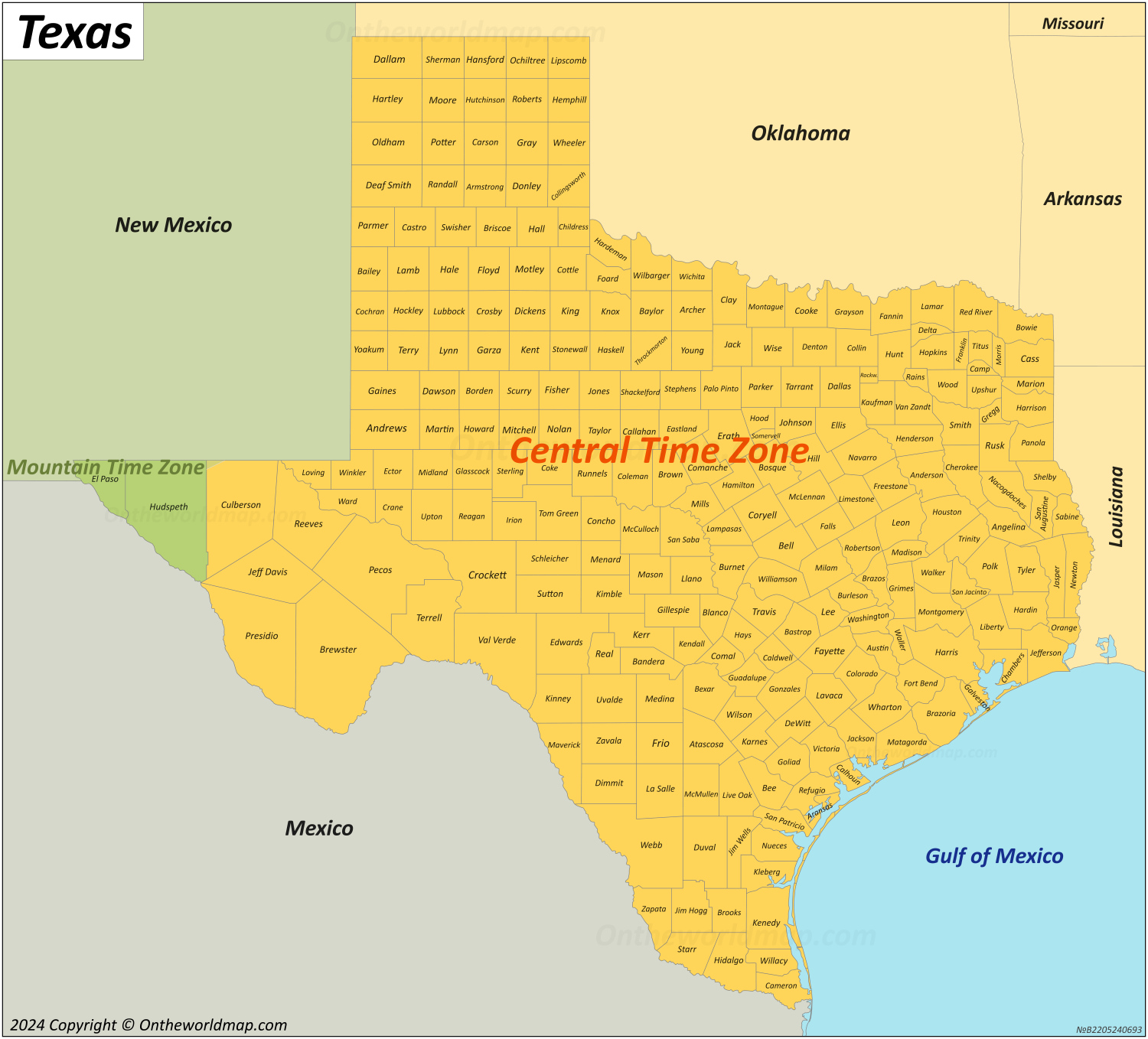
The dominant time zone in Texas is Central Time (CT), which is five hours behind Coordinated Universal Time (UTC-5) during Daylight Saving Time (CDT) and six hours behind (UTC-6) during standard time (CST). This encompasses all of the state’s major metropolitan areas and popular travel destinations. Cities like Houston, Dallas, San Antonio, Austin, and Fort Worth all fall within the Central Time Zone.
For the vast majority of visitors, particularly those arriving via George Bush Intercontinental Airport in Houston or Dallas/Fort Worth International Airport, their entire experience will unfold within Central Time. This simplifies planning for iconic landmarks such as The Alamo in San Antonio, exploring the vibrant Riverwalk, or visiting the NASA Johnson Space Center in Houston. All scheduled tours, dining experiences, and cultural activities in these areas will adhere to CT, making it straightforward for travelers arriving from other Central Time states or adjusting from other time zones. Many accommodations, from luxurious suites at the Omni Dallas Hotel to charming boutique hotels like The Driskill in Austin, will base all their services, from check-in to breakfast timings, on this pervasive time zone.
Mountain Time Zone: A Western Enclave
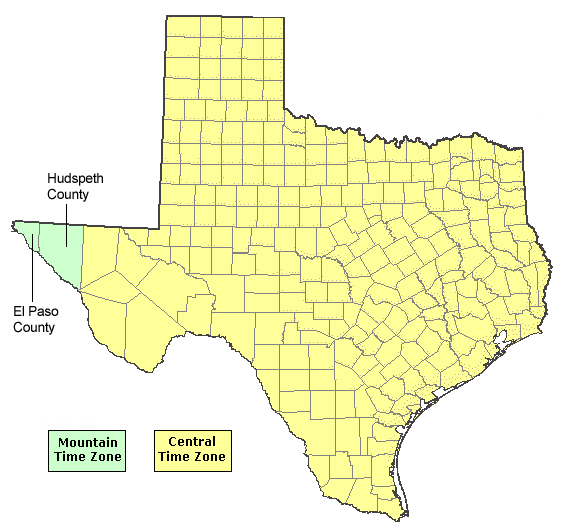
The exceptions to Central Time in Texas are found exclusively in the far western part of the state. Specifically, El Paso and Hudspeth County officially observe Mountain Time (MT). This means they are one hour behind Central Time (UTC-6 during Daylight Saving Time / MDT, and UTC-7 during standard time / MST). This distinction is particularly relevant for those traveling to or through this corner of the state, which borders New Mexico and Mexico.
While the population density in these MT areas is significantly lower than in the Central Time heartland, they are home to unique attractions and vast natural beauty, including parts of Big Bend National Park and Guadalupe Mountains National Park. For example, if you fly into El Paso International Airport, you are firmly in Mountain Time. This time difference is crucial for coordinating activities, making dinner reservations, or planning meeting schedules with colleagues in other parts of Texas. Travelers making a cross-state journey, perhaps driving from Dallas to El Paso, will experience a one-hour shift back as they enter Hudspeth County. This is often less noticeable than a full-day’s drive, but missing a reservation or connection by an hour can significantly disrupt travel plans.

It’s worth noting that historically, there have been debates and minor adjustments regarding time zones in the westernmost counties. However, the current standard clearly places El Paso and Hudspeth County firmly in Mountain Time, while counties immediately to their east, such as Culberson County, Jeff Davis County, Presidio County, Reeves County, and Pecos County, remain on Central Time. This makes the time zone boundary a very distinct, albeit sparsely populated, line on the map.
The Impact of Daylight Saving Time
Like most of the United States, Texas observes Daylight Saving Time, which typically begins on the second Sunday in March and ends on the first Sunday in November. During this period, clocks are moved forward by one hour.
- In the Central Time Zone, it becomes Central Daylight Time (CDT), which is UTC-5.
- In the Mountain Time Zone, it becomes Mountain Daylight Time (MDT), which is UTC-6.
The observance of Daylight Saving Time doesn’t change the relationship between the two time zones – Mountain Time always remains one hour behind Central Time. However, it does shift the absolute UTC offset for both zones. For travelers, this means ensuring they check specific dates for the start and end of Daylight Saving Time, especially if their travel crosses these transition periods. For example, a reservation made for a resort stay or an attraction ticket might be affected if the time change occurs mid-trip. Most modern devices automatically update, but manual clocks or fixed itineraries need careful consideration.
Navigating Time Zones for the Texas Traveler
For those planning to explore the diverse landscapes and vibrant cities of Texas, a firm grasp of the state’s time zone situation is more than just a trivial detail—it’s a fundamental aspect of successful trip planning. From ensuring timely arrivals to coordinating activities, time zones play a pivotal role in the travel experience.
Planning Your Itinerary Across Time Zones
When drafting your Texas itinerary, especially if it involves venturing west of Central Texas, the one-hour time difference between Central Time and Mountain Time must be factored in. For instance, if you’re driving from Austin to Big Bend National Park, which is primarily in the Central Time Zone but with some facilities operating on Mountain Time, or continuing to El Paso, you’ll effectively gain an hour upon crossing into the MT zone. This can be a welcome bonus, giving you an extra hour for exploration or relaxation, but it also requires foresight.
Consider travel coordination:
- Flight Schedules: Booking domestic flights, even within Texas, requires attention to the arrival and departure time zones. A flight from Dallas/Fort Worth International Airport (CT) to El Paso International Airport (MT) will show an arrival time that is numerically less than the departure time, even though the actual flight duration is longer. For example, a 3-hour flight departing Dallas at 10:00 AM CT would arrive in El Paso at 12:00 PM MT, not 1:00 PM MT.
- Road Trips: GPS devices and smartphones generally update automatically, but it’s wise to be aware of the shift. Missing a tour slot for a landmark or a reservation at a popular restaurant by an hour because you didn’t account for the change can be frustrating.
- Attraction Timings: The operating hours of attractions like Six Flags Over Texas near Dallas or a river rafting tour near Big Bend will be firmly rooted in their respective local times. Always confirm these details to avoid disappointment.
Accommodation and Bookings: Timing is Everything
When booking accommodation in Texas, especially if you’re moving between time zones, ensure you understand which time zone the hotel operates on. All advertised check-in, check-out, and amenity hours will be in the local time of the establishment. This is particularly important for:
- Check-in/Check-out: Arriving at your hotel in El Paso at 3 PM Central Time when check-in is at 3 PM Mountain Time means you’ll be an hour early. While most hotels are accommodating, it’s best to arrive when expected.
- Reservations: Whether it’s a suite at the JW Marriott San Antonio Hill Country Resort & Spa or an apartment rental booked through Airbnb in Austin, confirming the time zone for your arrival and departure helps avoid confusion. For longer stays or long-term accommodation, consistency is key.
- Hotel Amenities: Spa appointments, dinner reservations at the hotel restaurant, or scheduled activities like golf tee times will all be based on the local time. If you’re staying at a resort like the Four Seasons Hotel Austin, every aspect of your experience will be synchronized with Central Time.
- Online Booking Platforms: Websites like Expedia or Booking.com usually display times in the local time zone of the destination, but it’s always prudent to double-check the fine print, especially when dealing with multiple destinations across different time zones.
Beyond the Clock: Time Zones and the Texas Experience
The impact of time zones extends beyond mere scheduling; it subtly influences the very rhythm of life, business, and local culture within Texas. Understanding this can enrich your travel experience and help you better appreciate the unique nuances of each region.
Business and Lifestyle Considerations
For business travelers, the time zone differential in Texas is a significant factor. Coordinating meetings between, say, a company in Dallas (CT) and a branch in El Paso (MT) requires constant awareness of the one-hour difference. A 9:00 AM meeting in Dallas is an 8:00 AM meeting in El Paso, and vice-versa. This can affect conference calls, deadline submissions, and overall productivity, similar to how businesses in Silicon Valley operate across the Pacific Time Zone to coordinate with East Coast counterparts.
From a lifestyle perspective, the impact is more subtle but equally pervasive. Families planning family trips that involve crossing time zones might find younger children experiencing mild disorientation, akin to a mini-jet lag. Early risers might enjoy an “extra” hour of daylight in the Mountain Time Zone during summer evenings, perfect for outdoor activities in Big Bend. The timing of sunsets and sunrises, which affects outdoor recreation and evening entertainment, also varies significantly. For example, a sunset over South Padre Island on the Gulf Coast (CT) will occur an hour earlier by the clock than a sunset over the western Texas mountains (MT), creating different rhythms for local life and leisure.
Local Culture and Event Timings
The local culture and food scene are intimately tied to the clock. Festivals, concerts, sporting events, and even local dining experiences are all advertised and conducted according to the local time zone. Imagine trying to catch a concert in the Dallas Arts District (CT) after spending the morning hiking in a state park near El Paso (MT) – that one-hour adjustment could mean the difference between getting a good seat or missing the opening act.
For tourism and local culture, adhering to local time ensures you fully participate in the authentic experience. Attending a rodeo in Fort Worth, enjoying a barbecue joint in Austin, or exploring the historic sites of San Antonio means operating on Central Time. Conversely, visiting the unique desert art installations around Marfa or exploring the natural wonders of Big Bend requires synchronizing with Mountain Time. The scheduling of everything from guided tours to local markets, and even daily church services, is dictated by the time zone of that specific locality. Awareness of these differences is key to seamless integration into the local rhythm.
Essential Tips for Seamless Travel in Texas
To ensure your Texas adventure is as smooth as possible, here are some practical tips regarding its time zones:
- Always Confirm Local Time: When making reservations for flights, hotels, tours, or restaurants, confirm the time zone for the specific location. Many online booking sites default to the local time of the destination, but a quick check can prevent errors.
- Utilize Automatic Devices: Rely on your smartphone, tablet, or GPS system, as these devices typically update automatically when you cross time zone boundaries, especially when connected to cellular networks.
- Know the Boundary: If you’re driving across Texas, especially between Central Texas and El Paso or Hudspeth County, be mindful of the one-hour shift. Road signs might indicate the change, but it’s good to be aware.
- Consider Daylight Saving Time: Be aware of the dates when Daylight Saving Time begins and ends. If your travel falls during these transition periods, double-check all scheduled times.
- Build in Buffer Time: When traveling long distances, particularly by road, build in extra time. This not only accounts for potential delays but also provides a buffer for any minor time zone miscalculations.
- Communicate Clearly: If you’re coordinating with people in different parts of Texas, explicitly state the time zone when discussing meeting times or schedules (e.g., “9 AM CT” or “8 AM MT”).
In conclusion, while the majority of Texas operates on Central Time, the presence of the Mountain Time Zone in its far western reaches is a critical detail for any traveler. A small but impactful difference, this temporal divide influences everything from logistical planning to the pace of daily life. By understanding and respecting these time zone distinctions, you can ensure your Texas journey is not only memorable but also perfectly synchronized with the rhythm of the state.
LifeOutOfTheBox is a participant in the Amazon Services LLC Associates Program, an affiliate advertising program designed to provide a means for sites to earn advertising fees by advertising and linking to Amazon.com. Amazon, the Amazon logo, AmazonSupply, and the AmazonSupply logo are trademarks of Amazon.com, Inc. or its affiliates. As an Amazon Associate we earn affiliate commissions from qualifying purchases.