
For travelers planning a vibrant escape to the Sunshine State, understanding Florida’s time zones is a foundational piece of pre-trip preparation. While often perceived as uniformly observing a single time, Florida presents a subtle yet crucial time zone split that can impact everything from flight schedules to dinner reservations. Navigating this detail ensures a smooth, stress-free journey, allowing visitors to fully immerse themselves in the state’s diverse offerings without missing a beat.
Navigating Florida’s Time Zones: A Traveler’s Essential Guide
Florida primarily falls within the Eastern Time Zone, which aligns it with much of the East Coast of the United States. This is where the vast majority of its famous attractions, bustling cities, and serene beaches are located. However, a significant portion of the Florida Panhandle operates on Central Time, creating a distinct boundary within the state itself. For any traveler, whether flying in from afar or driving across state lines, being aware of this division is paramount for seamless itinerary management.
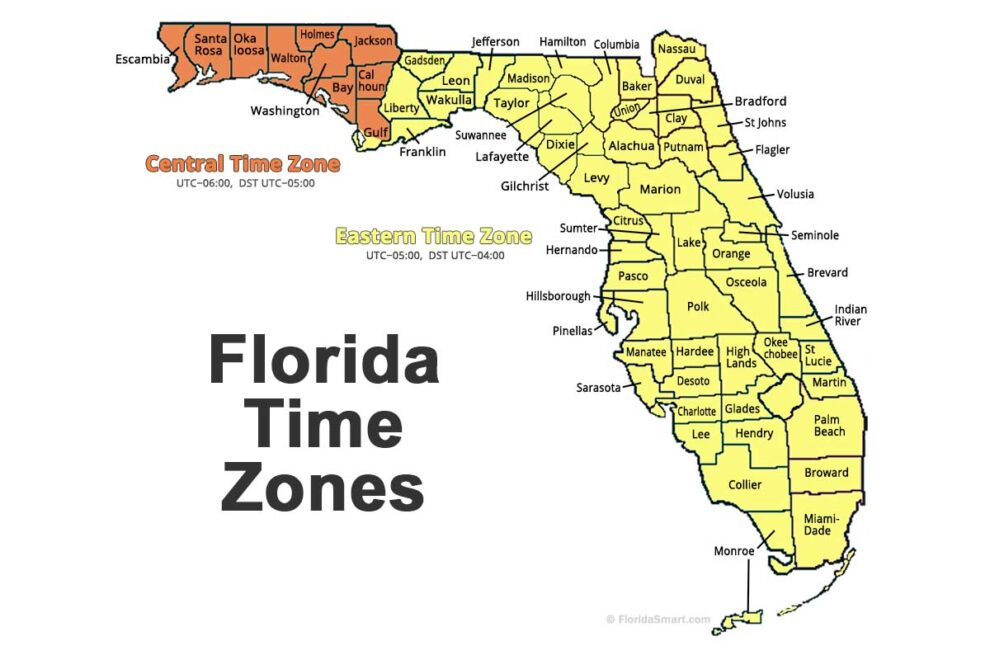
The time zone difference, while only an hour, can lead to genuine confusion if not accounted for. Imagine booking a dinner cruise in Panama City Beach thinking it’s 7 PM Eastern Time, only to discover it’s actually 7 PM Central Time – meaning you’ve potentially arrived an hour late, or even an hour early, depending on your origin and assumption. This seemingly minor detail becomes a critical element in the overall travel experience, influencing connection times for flights, check-in and check-out procedures for hotels, and the timing of pre-booked tours or events. Therefore, for every destination within Florida, a traveler’s first step should be to confirm its precise local time zone.
The Eastern Time Zone Dominance: Florida’s Primary Clock
The majority of Florida, including its most popular tourist regions and major metropolitan areas, observes the Eastern Time Zone. This means that during standard time, it is Eastern Standard Time (EST), which is UTC-5. During Daylight Saving Time, it shifts to Eastern Daylight Time (EDT), or UTC-4.
This encompasses virtually all of peninsular Florida and the eastern part of the Panhandle. Iconic cities such as Miami, Orlando, Tampa, Jacksonville, Fort Lauderdale, St. Petersburg, Naples, Sarasota, and the entire chain of the Florida Keys, including Key West, operate on Eastern Time.
For travelers heading to these areas, coordinating schedules is relatively straightforward. All major airports, theme parks like Walt Disney World Resort and Universal Orlando Resort, cruise departures from Port Canaveral or PortMiami, and local businesses adhere to Eastern Time. When booking flights to Orlando International Airport (MCO) or Miami International Airport (MIA), all listed times will reflect Eastern Time. Similarly, if you’re planning a day at Kennedy Space Center Visitor Complex or a drive along Scenic Highway 30A in the Eastern Panhandle, your clock will be on Eastern Time. The key is to be mindful when approaching the invisible line that separates Eastern from Central Time.
The Panhandle’s Central Time Zone Exception
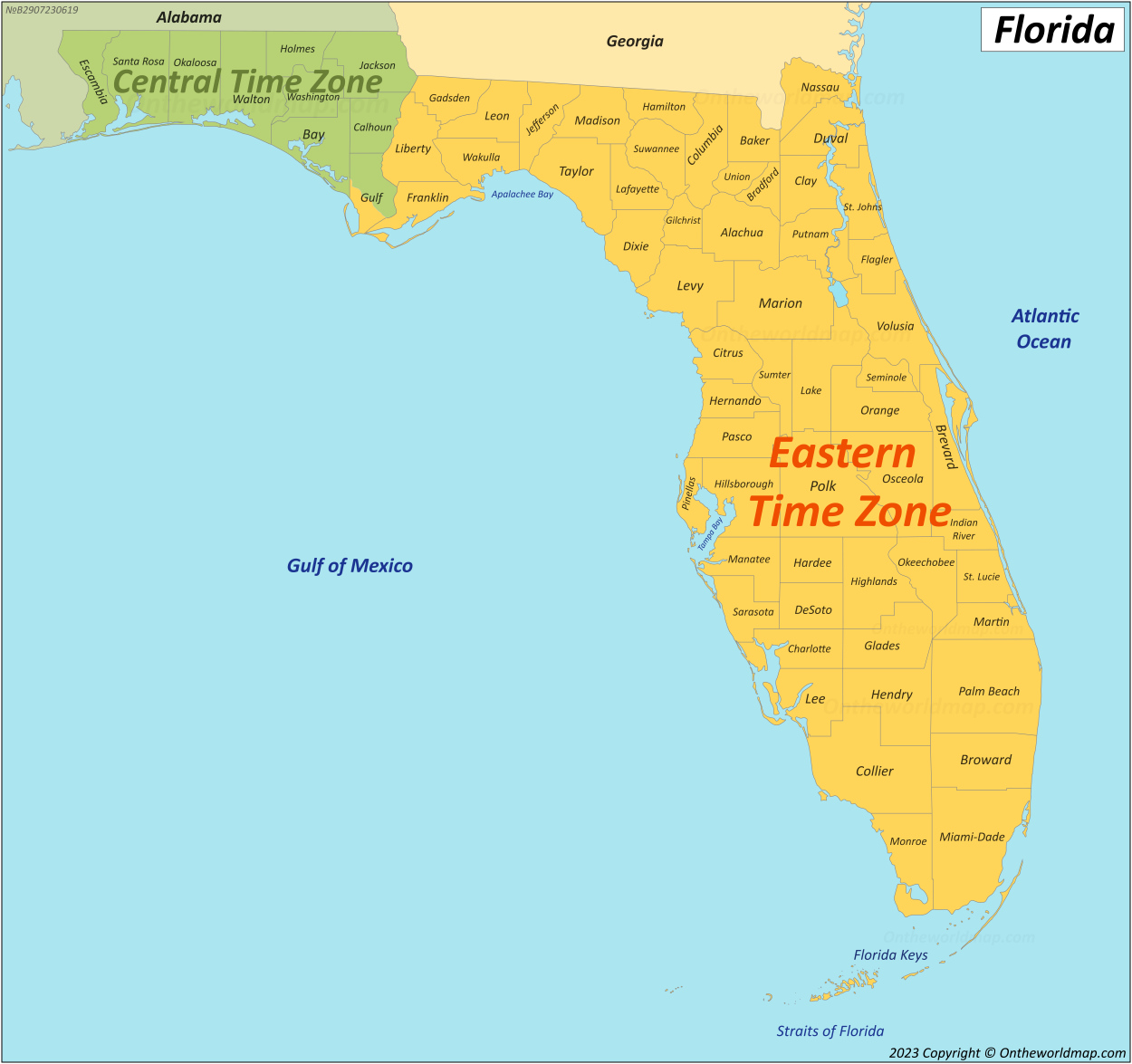
The significant exception to Florida’s Eastern Time rule lies in the western portion of its Panhandle. Several counties in this region observe the Central Time Zone. These counties include Escambia, Santa Rosa, Okaloosa, and Walton counties, as well as the western parts of Bay and Gulf counties. Key cities and tourist hotspots in this zone include Pensacola, Destin, Fort Walton Beach, and most of Panama City Beach.
During standard time, these areas operate on Central Standard Time (CST), which is UTC-6. When Daylight Saving Time is in effect, they switch to Central Daylight Time (CDT), or UTC-5. This means that travelers in the Central Time Zone part of Florida are consistently one hour behind their counterparts in the Eastern Time Zone side of the state.
The dividing line typically runs along the Apalachicola River, with areas to the west observing Central Time and areas to the east on Eastern Time. However, this boundary isn’t always perfectly intuitive. For instance, while the city of Tallahassee is firmly in Eastern Time, if you drive just west of it, you’ll quickly cross into the Central Time Zone.

This one-hour shift can have significant implications for travelers. If you’re flying into Northwest Florida Beaches International Airport (ECP) near Panama City Beach, your arrival time will be listed in Central Time. If you have connecting flights or are coordinating with family members arriving in Orlando, precise time zone communication is vital. Similarly, attractions like Gulfarium Marine Adventure Park in Fort Walton Beach or historical sites in Pensacola will operate on Central Time. Always double-check booking confirmations and event schedules against the local time, especially if your journey involves crossing this time zone boundary within Florida.
Daylight Saving Time: Florida’s Annual Clock Shift
Like most of the United States, Florida observes Daylight Saving Time (DST). This means that on the second Sunday in March, clocks “spring forward” one hour, and on the first Sunday in November, they “fall back” one hour. This practice affects both the Eastern and Central Time Zones within the state, maintaining the one-hour difference between them.
For travelers, the twice-yearly shift of Daylight Saving Time can introduce an extra layer of complexity. If your travel dates coincide with these transitions, it’s crucial to verify all booked times. A flight departing at 8 AM might suddenly become a 9 AM departure if you forget to adjust your internal clock, or vice versa. This is particularly relevant for international travelers who may already be dealing with significant time differences and potential jet lag.
Interestingly, Florida has been at the forefront of efforts to make Daylight Saving Time permanent. In 2018, the state legislature passed the Sunshine Protection Act, which would keep Florida on Daylight Saving Time year-round, effectively eliminating the “fall back” in November. However, this change requires federal approval from the U.S. Congress, which has not yet been granted. Therefore, for the foreseeable future, travelers to Florida should continue to anticipate the biannual clock adjustments. Always confirm local times for any appointments, events, or transport schedules during these transition periods to avoid any travel disruptions.
Practical Tips for Travelers: Avoiding Time Zone Troubles
Successfully navigating Florida’s time zones is all about foresight and verification. Here are essential tips for every traveler:
Always Confirm Local Time for Your Specific Destination
Never assume. While most of Florida is on Eastern Time, a quick online search for “current time in Pensacola” or “current time in Orlando” can save you from potential missed connections or appointments. This is especially vital if your itinerary includes areas around the Apalachicola River or if you are driving across the state, such as from Tallahassee (Eastern) to Destin (Central).
Exercise Vigilance with Flight and Reservation Times
Pay close attention to the time zones specified on flight tickets, hotel booking confirmations, and attraction entry passes. Airport times are always local to the airport, but if you’re traveling between time zones, be mindful of the difference for your departure or arrival. For example, a 6 PM flight from Pensacola International Airport (PNS) (Central) to Miami International Airport (MIA) (Eastern) will land at 8 PM Eastern Time, effectively taking two hours despite only one hour of flight time.
Leverage Your Technology
Modern smartphones and GPS devices are invaluable tools. Most automatically update to the local time zone when you travel, provided they have network connectivity or are set to automatic time updates. Ensure this feature is enabled on your devices. However, a manual check against a reliable source is always a good backup, especially when crossing the Eastern-Central Time Zone boundary.
Be Mindful of Border Zones and Activities
For travelers visiting areas near the time zone boundary, such as the counties surrounding the Apalachicola River, particular caution is advised. A fishing charter booked from a Port St. Joe outfitter might be on Eastern Time, while a restaurant just a few miles west could be on Central Time. Always confirm the time zone with local businesses when making reservations or planning activities.
Clear Communication is Key
When coordinating plans with travel companions or local contacts, explicitly state the time zone. Instead of “Let’s meet at 9 AM,” say “Let’s meet at 9 AM Eastern Time” or “9 AM Central Time.” This simple clarification can prevent misunderstandings and keep everyone on schedule.
By keeping these practical considerations in mind, travelers to Florida can confidently navigate the state’s time zones, ensuring their vacation proceeds as smoothly and enjoyably as possible. A little awareness goes a long way in maximizing every moment of your Florida adventure.
LifeOutOfTheBox is a participant in the Amazon Services LLC Associates Program, an affiliate advertising program designed to provide a means for sites to earn advertising fees by advertising and linking to Amazon.com. Amazon, the Amazon logo, AmazonSupply, and the AmazonSupply logo are trademarks of Amazon.com, Inc. or its affiliates. As an Amazon Associate we earn affiliate commissions from qualifying purchases.