
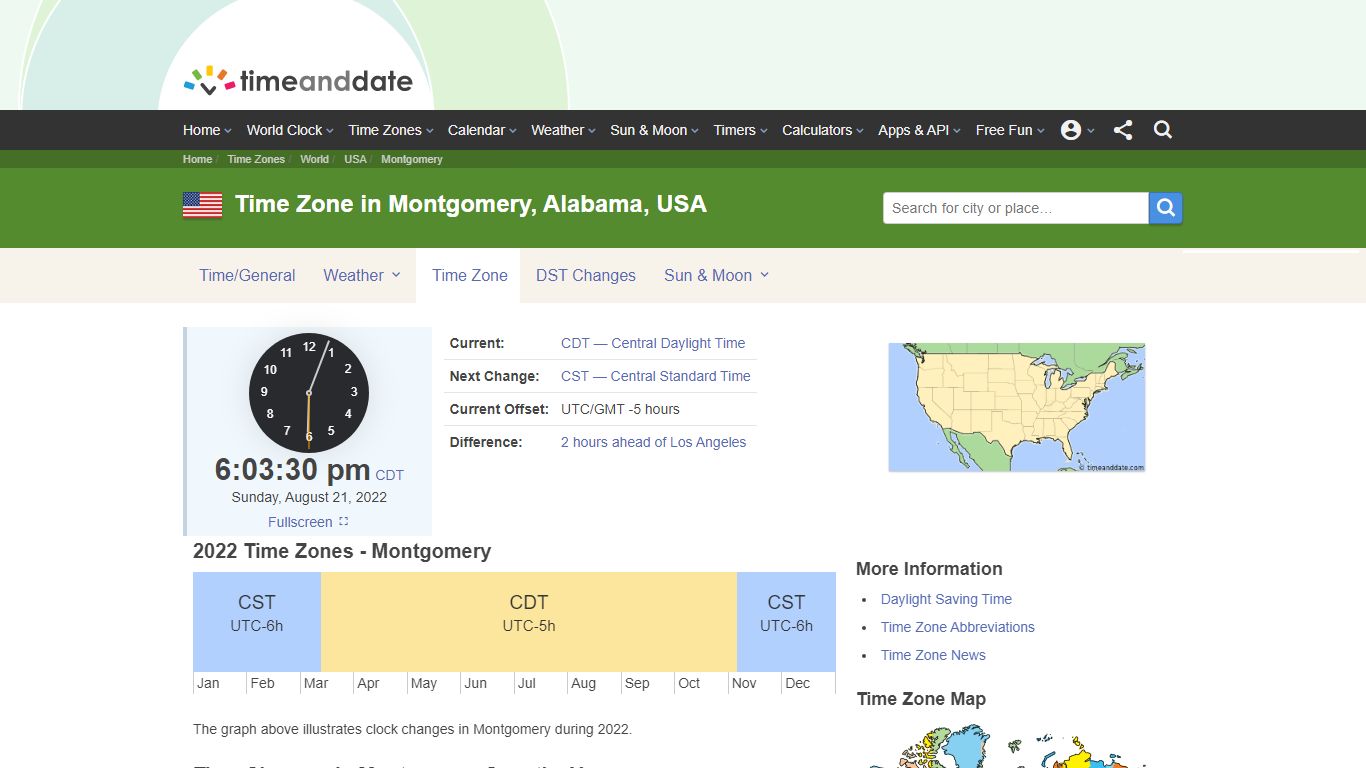
For anyone planning a trip, conducting business, or simply curious about the temporal landscape of a particular locale, understanding its time zone is a fundamental piece of information. When it comes to Montgomery, Alabama, the vibrant capital of the Southern U.S. state, travelers and planners can rest assured that its time zone aligns with much of the region, making adjustments relatively straightforward for most domestic visitors, while requiring careful consideration for international arrivals. Montgomery operates within the Central Time Zone, adhering to both Central Standard Time (CST) and Central Daylight Time (CDT) depending on the season.
Navigating the Clock: Understanding Montgomery’s Time Zone
The designation of Central Time Zone for Montgomery is not just a geographical quirk but a practical standard that impacts everything from flight schedules to dinner reservations. For travelers, grasping this core detail is the first step toward a seamless and enjoyable visit to Alabama’s capital.
Central Time Zone: The Standard for Alabama
Most of Alabama, including its capital city of Montgomery, falls squarely within the geographic boundaries of the Central Time Zone. This means that during the standard time period, from early November to mid-March, Montgomery observes Central Standard Time (CST), which is six hours behind Coordinated Universal Time (UTC-6). As spring approaches, like the majority of the United States, Montgomery transitions to Central Daylight Time (CDT). This shift, commonly known as Daylight Saving Time, moves the clocks forward by one hour, placing Montgomery at five hours behind Coordinated Universal Time (UTC-5). This seasonal adjustment is crucial for travelers to remember, as it can affect arrival times, scheduled events, and even the natural rhythm of their daily activities.
Why Time Zones Are Crucial for Travelers
For travelers, a city’s time zone is far more than an arbitrary detail; it’s a critical component of travel planning and execution. Firstly, it dictates flight and train schedules, ensuring that arrivals and departures are understood relative to local time. Miscalculating a time zone difference can lead to missed connections or inconvenient delays. Secondly, understanding the local time is essential for managing jet lag. Visitors arriving from time zones significantly different from CST/CDT may experience fatigue or disorientation, and being aware of the temporal shift can help in planning strategies to mitigate these effects. Finally, and perhaps most importantly, local time zones govern the operating hours of attractions, restaurants, and businesses. A traveler unaware of Montgomery’s time zone might arrive at the Civil Rights Memorial Center or the Rosa Parks Museum only to find it closed, simply due to a miscalculation of local hours. This foundational knowledge ensures that every aspect of a trip, from the moment of arrival to the final departure, runs smoothly.
Planning Your Visit: Time Zone’s Impact on Travel Logistics
Integrating the knowledge of Montgomery’s time zone into your travel planning will profoundly enhance your experience. It goes beyond merely knowing what time it is; it’s about strategic scheduling, seamless communication, and fully embracing your destination without temporal hitches.
Adjusting to Local Time Upon Arrival
Upon arrival in Montgomery, particularly for those traveling from the East Coast (Eastern Time Zone) or further west (Mountain or Pacific Time Zones), a conscious effort to adjust to local time is vital. For travelers from the Eastern Time Zone, the shift is a relatively easy one hour back, often feeling like a small bonus in sleep or an extended day. However, those coming from multiple time zones away may need to build in a buffer day or two to acclimate fully. Immediately setting your watch to CST/CDT, exposing yourself to natural daylight, and adopting local meal and sleep schedules can significantly reduce jet lag and allow you to fully enjoy what Montgomery has to offer from day one. Many smart devices automatically update their time zones, but it’s always wise to double-check manually.
Optimizing Your Itinerary: Scheduling and Operating Hours
The operational backbone of any travel itinerary is anchored in local time. When planning visits to historical sites like the Alabama State Capitol, the Dexter Avenue King Memorial Baptist Church, or exploring the exhibits at the Montgomery Museum of Fine Arts, verifying their opening and closing times according to CST/CDT is non-negotiable. Many attractions have seasonal hours that may change with Daylight Saving Time, further underscoring the need for diligence. Meal times, tour bookings, and transportation schedules—whether local buses or ride-shares—all operate on the city’s clock. Factor in travel time between destinations during peak hours, remembering that a 9 AM opening time for a museum in Montgomery will feel like 10 AM if you’re mentally still on Eastern Time.
Bridging the Distance: Communicating Across Time Zones
For many travelers, staying connected with family, friends, or colleagues back home is an essential part of the journey. Understanding the time difference between Montgomery and your home location is critical to avoid inconveniently timed calls or messages. If you’re communicating with someone in the Pacific Time Zone, remember that Montgomery is two hours ahead during standard time and two hours ahead during daylight saving time. For those on the East Coast, Montgomery is one hour behind. This awareness allows for considerate scheduling of video calls, important work check-ins, or simply a quick chat, ensuring you don’t inadvertently wake someone up or interrupt their workday.
Montgomery’s Dynamic Day: Daylight Saving Time Considerations

The annual ritual of Daylight Saving Time is a particularly important consideration for travelers. It can introduce an element of confusion if not anticipated, impacting everything from early morning flights to evening events.
The Annual Shift: When Clocks Change
In Montgomery, as in most parts of the United States, Daylight Saving Time begins on the second Sunday in March, when clocks “spring forward” one hour, shifting from CST to CDT. It concludes on the first Sunday in November, when clocks “fall back” one hour, returning to CST. For travelers, the week surrounding these changes requires extra vigilance. A flight scheduled for 8 AM might suddenly be at 7 AM or 9 AM local time if the clock shift isn’t properly accounted for, especially if traveling on the day of the change. It also affects the amount of daylight available, with CDT offering longer daylight hours in the evening, which can be advantageous for sightseeing and outdoor activities.
Staying Informed: Resources for Time Zone Accuracy
Modern technology significantly aids in managing time zone changes. Smartphones, smartwatches, and laptops typically update automatically. However, it’s always prudent to cross-reference with reliable sources. Major airlines and travel websites often display times in both local and traveler’s home time zones. Online search engines provide instant local time information for any city. Moreover, local tourism boards and hotel front desks are excellent resources for clarifying any time-related queries. Staying informed ensures that your itinerary remains accurate and that you can make the most of every moment in Montgomery.
Beyond the Clock: Exploring Montgomery’s Rich Offerings
While understanding Montgomery’s time zone is crucial for logistics, the real joy of travel lies in experiencing the destination itself. Montgomery is a city with profound historical significance and a burgeoning cultural scene.
Historic Landmarks and Cultural Experiences
Montgomery is renowned as a pivotal site in the American Civil Rights Movement. Visitors can walk in the footsteps of history at the Dexter Avenue King Memorial Baptist Church, where Dr. Martin Luther King Jr. once preached. The Rosa Parks Museum and the Civil Rights Memorial Center, a powerful testament to those who fought for equality, are essential visits. History buffs will also appreciate the Alabama State Capitol, a national historic landmark, and the re-creation of 19th-century life at Old Alabama Town. For art enthusiasts, the Montgomery Museum of Fine Arts offers an impressive collection. All these attractions maintain specific operating hours, which, as discussed, are best confirmed in local CST/CDT.
Culinary Delights and Evening Entertainment
Montgomery’s culinary scene offers a delightful blend of Southern comfort food and contemporary dining. From hearty breakfast spots to upscale dinner restaurants, there’s something for every palate. The city also offers various entertainment options, including live music venues, theaters, and sports events. Planning dinner reservations or catching a show requires an accurate understanding of the local clock. Whether you’re enjoying a plate of fried green tomatoes or exploring the nightlife, being synced with Montgomery’s time ensures you don’t miss out on any experience.
Essential Travel Tips for a Seamless Montgomery Experience
Beyond the specifics of time zones, a few general travel tips can make your visit to Montgomery even more rewarding and stress-free.
Best Times to Visit and Local Transportation
The best times to visit Montgomery are typically in the spring (March to May) and fall (September to November), when the weather is mild and comfortable for exploring. Summers can be hot and humid, while winters are generally mild. For getting around, a car is often recommended for exploring Montgomery and its surrounding areas, as public transportation options are somewhat limited. Ride-sharing services are also available. If arriving by air, Montgomery Regional Airport (MGM) connects to several major hubs, and its schedules will always be presented in local CST/CDT.
Practical Advice for an Enjoyable Stay
Always carry a form of identification and be aware of your surroundings, as you would in any unfamiliar city. Embrace the local culture and hospitality, which is a hallmark of the South. Don’t hesitate to engage with locals for recommendations. Most importantly, allow yourself to immerse in the rich history and vibrant present of Montgomery. By correctly factoring in the time zone, you lay the groundwork for a travel experience that is as enriching as it is smooth, ensuring that every minute of your trip is spent enjoying, rather than scrambling.
LifeOutOfTheBox is a participant in the Amazon Services LLC Associates Program, an affiliate advertising program designed to provide a means for sites to earn advertising fees by advertising and linking to Amazon.com. Amazon, the Amazon logo, AmazonSupply, and the AmazonSupply logo are trademarks of Amazon.com, Inc. or its affiliates. As an Amazon Associate we earn affiliate commissions from qualifying purchases.