
When planning a trip to the bustling metropolis of New York City, understanding its timezone is a fundamental, yet often overlooked, aspect of seamless travel. While seemingly a minor detail, knowing the precise timezone can prevent scheduling mishaps, ensure you’re connected with loved ones back home at the right moment, and help you make the most of your time exploring its iconic attractions. New York operates on Eastern Standard Time (EST) during the fall and winter months and observes Eastern Daylight Time (EDT) when daylight saving time is in effect. This means New York is typically five hours behind Coordinated Universal Time (UTC-5), and during daylight saving, it shifts to UTC-4.

Navigating the world’s timezones can be a complex puzzle, especially for travelers crossing multiple zones. For New York, this means it’s part of the Eastern Time Zone (ET), a broad geographical area that also encompasses significant portions of eastern Canada, the Caribbean, and parts of South America. This shared timezone simplifies communication and coordination for those with business or personal connections across these regions. For visitors from overseas, particularly those coming from Europe or Asia, the difference can be substantial, highlighting the importance of adjusting your watch and your internal clock accordingly upon arrival.
Understanding Eastern Time and Daylight Saving
The Eastern Time Zone is one of the most populous timezones in North America. Its western boundary snakes through Canada and the United States, and its influence extends southwards. The core principle behind the establishment of timezones, including the Eastern Time Zone, was to standardize time for the sake of convenience in transportation and communication. Before the widespread adoption of standardized time, local astronomical time was the norm, leading to considerable discrepancies even between relatively close cities.
The Rationale Behind Eastern Standard Time (EST)
Eastern Standard Time (EST) is the baseline offset for New York and the rest of the Eastern Time Zone. It is defined as UTC-5, meaning it is five hours behind Coordinated Universal Time. This is the time observed during the colder months, typically from the first Sunday in November to the second Sunday in March. During EST, cities like New York, Miami, and Toronto all operate on the same clock. This standardization is crucial for everything from flight schedules to stock market operations, ensuring that the pulse of commerce beats in unison. For travelers arriving in New York during this period, remembering that it’s UTC-5 is key to calculating arrival times and coordinating with other parts of the world.
The Transition to Eastern Daylight Time (EDT)
When spring arrives, New York, like much of North America, transitions to Eastern Daylight Time (EDT). This shift, governed by Daylight Saving Time (DST), moves the clock forward by one hour. Therefore, during EDT, the timezone becomes UTC-4. The change typically occurs on the second Sunday in March and reverts back to EST on the first Sunday in November. The purpose of Daylight Saving Time is to make better use of daylight by extending the evening hours. For travelers, this means that the time difference between New York and other parts of the world will shift by an hour during these periods. For example, if New York is five hours behind UTC during EST, it will be four hours behind UTC during EDT. This one-hour difference can be significant when trying to make international calls, book tours, or simply manage your daily itinerary. It’s essential to be aware of whether New York is currently observing EST or EDT when you plan your trip or communicate with people there.
Navigating New York’s Time with Travel in Mind
Understanding New York’s timezone is more than just knowing the numerical offset from UTC; it’s about integrating this knowledge into your travel plans for an enriched experience. Whether you’re a first-time visitor or a seasoned traveler, this awareness can significantly impact your journey, from booking flights and hotels to experiencing the city’s vibrant culture and world-renowned landmarks.
Planning Your Arrival and Departure
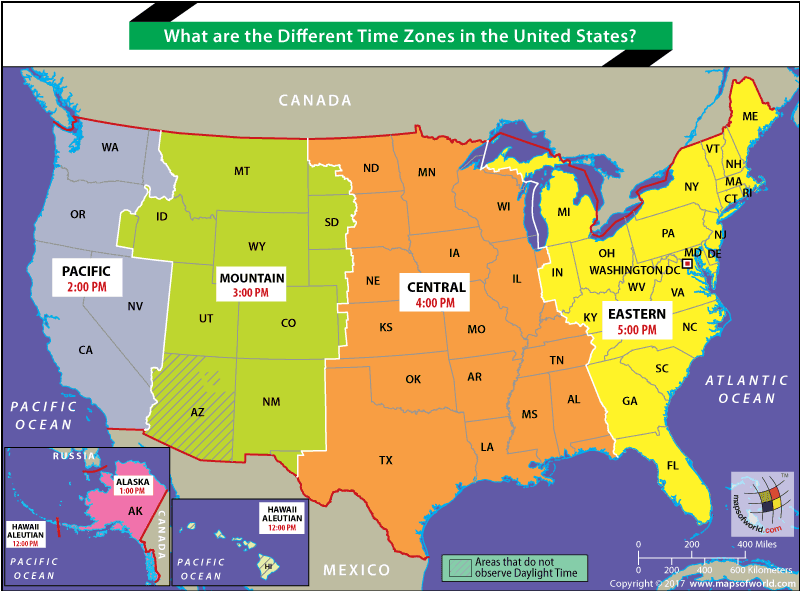
When booking flights to New York, the departure and arrival times will invariably be listed in the local time of the respective airports. However, a crucial step is to always cross-reference these times with your own local time, taking into account the Eastern Time Zone difference. For instance, if you’re flying from Los Angeles, which is in the Pacific Time Zone (PT), you’ll be crossing three timezones. A flight departing Los Angeles at 9:00 AM PST will arrive in New York at approximately 5:00 PM EST (assuming a roughly 5-hour flight duration). This calculation accounts for the 3-hour difference between PST and EST and the flight time itself. Similarly, when booking your return flight, factor in the time difference to avoid arriving home at an inconvenient hour or missing connections. For international travelers, the jet lag can be a significant factor, and understanding the timezone difference helps in planning your adjustment period. Arriving in New York and immediately needing to be alert for a business meeting or a guided tour of the Statue of Liberty requires mental preparation for the time shift.
Synchronizing with Local Activities and Attractions
New York City offers an endless array of activities, from catching a Broadway show to visiting the Metropolitan Museum of Art. Many of these experiences operate on a strict schedule. For example, Broadway shows typically have evening performances starting at 7:00 PM or 8:00 PM EST/EDT, and matinees often begin in the early afternoon. Tours of iconic landmarks, such as the Empire State Building or a ferry trip to Ellis Island and the Statue of Liberty, have specific departure times. Missing a tour due to a timezone miscalculation can be a significant disappointment. Furthermore, if you’re planning to enjoy the city’s renowned culinary scene, understanding the local mealtimes is important. While restaurants cater to a diverse clientele, peak dining hours in New York are generally aligned with Eastern Time. For those who wish to stay connected with friends and family back home, knowing the timezone difference is essential for scheduling calls or video chats without disturbing their sleep. For example, a 7:00 PM call in New York during EST would be 4:00 PM in Los Angeles, 12:00 AM the next day in London, and 9:00 AM the next day in Tokyo.
The Impact on Accommodation and Lifestyle Choices
The timezone of New York also subtly influences lifestyle and accommodation choices. For business travelers, aligning with Eastern Time is often paramount, as it is a major financial and business hub. Meetings and conferences will be scheduled according to EST or EDT. This might influence the choice of accommodation; a hotel in the Financial District, such as the Four Seasons Hotel New York Downtown, might cater more to business travelers who need to stay aligned with the trading hours of the New York Stock Exchange. For leisure travelers, understanding the timezone helps in planning day trips or excursions. For instance, if you’re considering a day trip to Niagara Falls, which is in the Eastern Time Zone as well, the travel time and the duration of your visit will be calculated within that timezone. For those considering long-term stays or even digital nomads working remotely, being in New York means operating on Eastern Time and adjusting their work schedules accordingly. This can also affect communication with clients or employers located in different timezones, making the Eastern Time Zone a central point of reference for many. The diverse lifestyle options in New York, from luxury penthouses to budget-friendly hostels, all operate under the same temporal rhythm, a constant reminder of your location within this dynamic city.
Exploring New York’s Landmarks and Culture with Time in Mind
New York City is a treasure trove of historical landmarks, cultural institutions, and vibrant neighborhoods, each offering unique experiences. To truly immerse yourself, it’s beneficial to integrate your understanding of New York’s timezone into your exploration. This knowledge can enhance your appreciation for the city’s rhythm and ensure you don’t miss a beat.
Iconic Landmarks and Their Operating Hours
From the soaring heights of the Empire State Building to the artistic masterpieces within the Metropolitan Museum of Art, New York’s landmarks have specific operating hours that are crucial for planning. Many of these attractions open their doors in the morning, typically around 9:00 AM or 10:00 AM EST/EDT, and close in the late afternoon or early evening. For example, the 9/11 Memorial & Museum has specific visiting hours, and it’s wise to book tickets in advance to avoid queues, especially during peak seasons. The American Museum of Natural History also adheres to a schedule, offering visitors a chance to explore its extensive collections. Imagine planning a visit to the Statue of Liberty and Ellis Island only to discover you’ve missed the last ferry because you miscalculated the time. Websites for these attractions invariably list their hours in local Eastern Time, making it easy to cross-reference once you know whether New York is observing EST or EDT. This attention to detail ensures you can fully appreciate these historical sites without the stress of last-minute rushes or missed opportunities.
Experiencing Local Culture and Cuisine
The cultural fabric of New York is incredibly rich, from its diverse culinary scene to its world-class performing arts. Understanding the timezone is vital for experiencing these aspects fully. For instance, attending a performance at Lincoln Center, whether it’s the Metropolitan Opera or the New York City Ballet, means adhering to scheduled showtimes, typically in the evening. Similarly, exploring neighborhoods like Chinatown or Little Italy at peak hours allows you to experience their vibrant atmosphere and enjoy authentic dining. Brunch culture is also a significant part of New York lifestyle, with most popular spots serving from late morning into the afternoon. Knowing that these times are all synchronized to Eastern Time allows for better planning of your gastronomic adventures. You can enjoy a leisurely brunch, followed by an afternoon stroll through Central Park, all while staying aware of the local rhythm. This seamless integration of time management with cultural immersion enhances the overall travel experience, allowing you to savor every moment.

The Advantages of a Well-Timed Itinerary
A well-timed itinerary, grounded in an understanding of New York’s timezone, can transform a good trip into an unforgettable one. It allows for a more relaxed pace, minimizing the feeling of being rushed. Imagine effortlessly navigating between different boroughs, catching a ferry across the East River to see the Brooklyn Bridge illuminated at night, and then heading back for a late-night snack in Manhattan, all without the anxiety of time constraints. For those interested in luxury travel, this precision can mean booking exclusive private tours or securing reservations at sought-after restaurants like Per Se or Le Bernardin. For families, it ensures that children’s schedules are maintained, minimizing meltdowns and maximizing enjoyment. Even for budget travelers, a well-planned schedule can help maximize free activities, such as walking across the Brooklyn Bridge at sunrise or exploring Times Square at night, without feeling pressured by time. Ultimately, knowing that New York operates on Eastern Standard Time or Eastern Daylight Time is the first step in unlocking the full potential of your visit to this magnificent city, ensuring every moment counts.
LifeOutOfTheBox is a participant in the Amazon Services LLC Associates Program, an affiliate advertising program designed to provide a means for sites to earn advertising fees by advertising and linking to Amazon.com. Amazon, the Amazon logo, AmazonSupply, and the AmazonSupply logo are trademarks of Amazon.com, Inc. or its affiliates. As an Amazon Associate we earn affiliate commissions from qualifying purchases.