
Navigating the nuances of time across different regions is an essential aspect of planning any journey, and understanding the timezone of your destination can significantly impact your itinerary, from booking accommodation to scheduling activities. For those considering a trip to the Pacific Northwest, specifically the Beaver State, a key question often arises: What timezone is Oregon in? The answer, while seemingly straightforward, involves understanding how time is observed within the continental United States and how geographical boundaries dictate these designations. Oregon predominantly observes Pacific Standard Time (PST), which is UTC-8, and during daylight saving months, it shifts to Pacific Daylight Time (PDT), which is UTC-7. This consistent observation of Pacific Time simplifies planning for many travelers and businesses operating within the state.

The observance of daylight saving time is a crucial element of the Pacific Time zone. Like most of the United States, Oregon participates in Daylight Saving Time (DST). This means that clocks are advanced by one hour in the spring and set back by one hour in the autumn. The official switch to PDT typically occurs on the second Sunday in March, and the return to PST happens on the first Sunday in November. This temporal adjustment is a widespread practice aimed at maximizing daylight during warmer months and is a familiar rhythm for many residents and visitors alike. For travelers, this means that the effective offset from Coordinated Universal Time (UTC) changes twice a year, and it’s important to be aware of this shift when coordinating with people in other timezones or when scheduling international calls or flights. The Pacific Time zone spans a significant portion of the western United States, encompassing states like California, Washington, and parts of Idaho and Nevada, in addition to Oregon. This uniformity across several popular travel destinations offers a degree of predictability for those moving between these locations.
Understanding Timezones in Oregon: Pacific Standard Time and Pacific Daylight Time
The core of understanding Oregon’s timezone lies in its adherence to the Pacific Time Zone. This zone is one of the nine standard time zones in the United States. As mentioned, it is officially designated as Pacific Standard Time (PST), representing a UTC offset of UTC-8. This is the standard time observed during the winter months. However, the majority of the year, Oregon operates under Pacific Daylight Time (PDT), which is UTC-7. This shift is a practical measure to align waking hours with daylight, a concept that has historical roots and continues to influence daily life and scheduling across the state.
The Eastern Border and a Nuance in Time
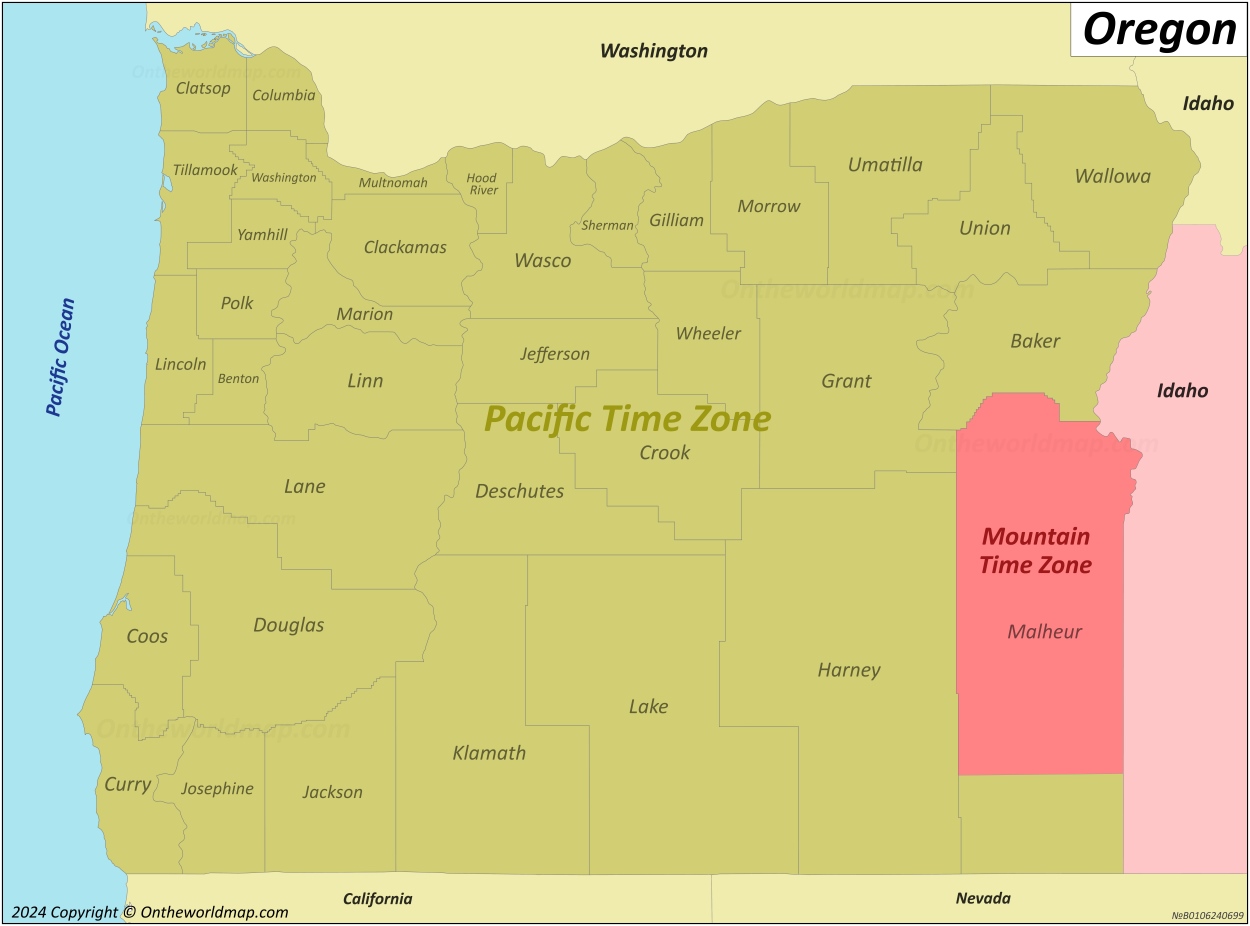
While the vast majority of Oregon observes Pacific Time, there’s a fascinating, albeit small, exception to consider. A sliver of the state’s eastern edge, specifically areas that share a border with Idaho, does observe Mountain Time. This means that for a very limited geographical area, the time is one hour ahead of the rest of Oregon. This distinction, though minor in terms of the state’s overall landmass and population, is a critical piece of information for anyone traveling through these specific eastern counties, particularly those transitioning between Oregon and Idaho. For most travelers, however, the primary focus remains on Pacific Time. This geographical anomaly underscores the complexity of time zone demarcation, which is often influenced by historical, economic, and social factors rather than strict geographical meridians alone. For instance, communities along state borders often find it more practical to align their time with their larger, more economically integrated neighbors, even if it means deviating from the theoretically “correct” meridian.
Planning Your Oregon Adventure: Timezone Considerations for Travelers
When you’re planning a trip to Oregon, understanding its timezone is more than just a matter of curiosity; it’s a practical necessity for a smooth and enjoyable experience. Whether you’re booking a cozy cabin in the Oregon Coast Range, securing a room at a luxury resort in Portland, or arranging to meet friends for a hike in the Columbia River Gorge, being aware of Pacific Time will help you avoid confusion and make the most of your precious vacation days.
Accommodation and Activities: Aligning Your Schedule
The most immediate impact of Oregon’s timezone on travel planning relates to accommodation and activities. When you search for hotels, whether it’s a boutique stay in Bend or a family-friendly resort near Crater Lake National Park, booking platforms will automatically display times according to Pacific Time. This means that check-in and check-out times, as well as any scheduled tours or events, will be based on PST or PDT, depending on the time of year.
For instance, if you’re eager to catch the sunrise over the Painted Hills, knowing that Oregon is on Pacific Time will help you set your alarm correctly. Similarly, if you’ve booked a guided food tour in Portland’s vibrant culinary scene, the meeting time will be in Pacific Time. This consistency across the majority of the state simplifies logistics, allowing you to focus on the experiences themselves. Imagine arriving at a charming bed and breakfast in Ashland for a Shakespearean festival performance; the curtain will rise according to Pacific Time, ensuring you don’t miss a moment.
When booking accommodations, consider the lifestyle of your trip. If you’re embarking on a budget travel adventure, understanding the timezone helps in coordinating with hostels or affordable motels. For those seeking luxury travel, knowing the Pacific Time helps in scheduling spa appointments or fine dining reservations at establishments like the Achilles Restaurant in Portland.
Business Travel and Communication
For those traveling to Oregon for business stays, time zone awareness is paramount for professional efficiency. Scheduling meetings with Oregon-based companies, attending conferences, or coordinating with remote teams requires a clear understanding of the Pacific Time Zone. Miscalculating the time difference can lead to missed appointments and professional missteps. For example, a conference call scheduled for 10 AM Eastern Time (which is UTC-5 or UTC-4 during DST) would actually be at 7 AM Pacific Time (which is UTC-8 or UTC-7 during DST). This significant difference underscores the importance of precision.
When planning business trips, always confirm the timezone for any meetings or events. This is especially true if you’re interacting with businesses in the eastern part of the United States or internationally. The Pacific Time Zone’s offset from UTC means it is several hours behind Eastern Time, a common point of confusion for those not accustomed to it.
Exploring Oregon’s Landmarks and Natural Wonders
Oregon boasts an incredible array of landmarks and natural wonders, from the majestic Mount Hood to the dramatic coastline along the Pacific Ocean. When planning excursions to these iconic locations, timezone awareness can enhance your experience.
For example, if you plan to hike in Crater Lake National Park and want to ensure you have ample daylight, knowing that Oregon observes Pacific Time will help you gauge the best starting times for your treks. Similarly, if you’re visiting the historic Multnomah Falls, understanding the local time ensures you can plan your visit to coincide with optimal lighting for photography or simply to enjoy the spectacle without feeling rushed.
The state’s tourism sector heavily relies on the Pacific Time Zone. When looking at guides for local culture, food festivals, or outdoor activities, all timings will be presented in Pacific Time. This includes popular events like the Oregon Brewers Festival in Portland or harvest celebrations in wine regions like the Willamette Valley.
Embracing the Oregon Lifestyle: Time and Leisure
The lifestyle in Oregon is often associated with a relaxed pace, a deep appreciation for nature, and a vibrant cultural scene. While the state operates within the standard Pacific Time Zone, this temporal framework serves as a backdrop for a diverse range of leisure pursuits.
Family Trips and Outdoor Adventures
Family trips to Oregon offer a wealth of opportunities for exploration. From the sandy beaches of Cannon Beach to the lush forests of the Oregon Coast Range, there’s something for every member of the family. When planning your adventures, understanding Pacific Time helps in organizing daily itineraries. For instance, a family outing to the Oregon Zoo in Portland or a visit to the fascinating exhibits at the Oregon Museum of Science and Industry (OMSI) will follow Pacific Time.
If your family enjoys outdoor activities, consider the timing of sunset when planning hikes or beach visits. Knowing that Oregon is in the Pacific Time Zone allows for accurate estimation of daylight hours, ensuring you can safely enjoy activities like kayaking on the Willamette River or exploring tide pools along the coast. For those planning long-term stays, such as renting an apartment in Eugene, integrating into the local rhythm means aligning with the Pacific Time Zone, which influences everything from school schedules to community events.

Culinary Tourism and Local Experiences
Oregon’s reputation as a culinary destination is well-deserved, with a thriving food scene that ranges from farm-to-table restaurants to bustling food carts. Local culture is deeply intertwined with its food and drink. When exploring this aspect of Oregon, time zone awareness is essential for making reservations and planning your gastronomic journey.
For example, popular brunch spots in Portland often have queues, and understanding Pacific Time helps in planning your visit to minimize wait times. If you’re interested in wine tasting in the Willamette Valley, wineries typically operate on Pacific Time, with tasting rooms often closing in the late afternoon. Similarly, exploring the vibrant markets like the Portland Farmers Market requires an awareness of operating hours, all of which are set to Pacific Time.
The tourism industry in Oregon works seamlessly within the Pacific Time Zone, providing visitors with predictable schedules for tours, workshops, and events. Whether you’re taking a cooking class focused on local ingredients or attending a craft beer festival, the timing will always be in Pacific Time, allowing for a stress-free and immersive experience.
In conclusion, while the question of “What timezone is Oregon?” may seem simple, it opens the door to understanding the practicalities of travel, business, and leisure within this diverse and captivating state. Oregon predominantly operates on Pacific Time, with a slight variation in its easternmost reaches. By being mindful of Pacific Standard Time (PST) and Pacific Daylight Time (PDT), travelers and residents alike can navigate their days with confidence, ensuring that every moment, from watching the sunset over the Pacific Ocean to attending a business meeting in Eugene, is perfectly timed.
LifeOutOfTheBox is a participant in the Amazon Services LLC Associates Program, an affiliate advertising program designed to provide a means for sites to earn advertising fees by advertising and linking to Amazon.com. Amazon, the Amazon logo, AmazonSupply, and the AmazonSupply logo are trademarks of Amazon.com, Inc. or its affiliates. As an Amazon Associate we earn affiliate commissions from qualifying purchases.