
California, often synonymous with endless sunshine, iconic road trips, and a vibrant outdoor lifestyle, attracts millions of visitors and residents alike. From the sprawling urban landscapes of Los Angeles and San Francisco to the serene beauty of Napa Valley vineyards and the dramatic coastal vistas of Big Sur, the Golden State offers an unparalleled tapestry of experiences. For many, a significant part of enjoying this environment involves driving, whether it’s a leisurely cruise along the Pacific Coast Highway or a daily commute through bustling city streets. With so much time spent on the road, vehicle comfort and protection become paramount, and window tinting often comes to mind as a solution.
Window tinting offers numerous benefits, from reducing interior heat and blocking harmful UV rays to enhancing privacy and adding a touch of personal style to one’s vehicle. However, unlike a simple accessory, window tint in California is subject to specific legal regulations designed to ensure driver visibility and road safety. For both seasoned California residents and travelers planning their dream road trip, understanding these laws is crucial to avoid fines and ensure a smooth, worry-free journey. This comprehensive guide delves into the specifics of California’s window tint laws, framing them within the broader context of travel, lifestyle, and responsible enjoyment of everything the state has to offer.
Understanding Window Tinting in the Golden State
The allure of tinted windows extends beyond mere aesthetics, deeply intertwining with the practicalities of travel and daily life in California’s diverse climates. Whether you’re exploring the sun-baked expanses of Death Valley National Park, navigating the bright reflections off the ocean near Santa Monica, or simply driving through a scorching summer day in Palm Springs, the benefits of properly tinted windows become incredibly clear.
Why Tinting Matters for California Travelers and Residents
-
Sun Protection and Heat Reduction: California boasts an enviable climate, but its abundant sunshine also brings intense heat and harmful ultraviolet (UV) radiation. A quality window tint can significantly reduce the amount of solar heat entering your vehicle, keeping the interior cooler and more comfortable, especially during long drives to Lake Tahoe or through the Central Valley. This reduces reliance on air conditioning, potentially saving fuel – a small but welcome benefit for any traveler. More importantly, tinting blocks up to 99% of UV rays, protecting occupants from skin damage and preventing upholstery from fading and cracking over time, preserving the interior of your car, which is particularly valuable for those who spend a lot of time driving or use their vehicle for extended travel.
-
Glare Reduction for Enhanced Safety: Driving under the brilliant California sun can sometimes be challenging, especially during sunrise or sunset, or when sunlight reflects off wet roads or other vehicles. Window tint acts as a shield against blinding glare, improving visibility and reducing eye strain. This enhances driver safety, allowing for clearer perception of road signs, traffic, and pedestrians – a critical factor when navigating the busy streets of San Diego or the winding roads of a mountain pass. For tourists exploring unfamiliar routes, reduced glare means a more relaxed and safer driving experience, allowing them to focus on the scenic beauty rather than struggling with impaired vision.
-
Increased Privacy and Security: When traveling, your vehicle often doubles as a temporary storage space for luggage, cameras, and personal items, especially if you’re checking into hotels or stopping at various attractions. Tinted windows offer an added layer of privacy, making it more difficult for opportunistic thieves to peer inside and spot valuables. This can provide peace of mind whether you’re parked at Disneyland Resort for the day, enjoying a meal in Hollywood, or simply leaving your car overnight at an accommodation. It’s a subtle but effective deterrent, safeguarding your belongings and enhancing your overall sense of security during your California adventures.
-
Aesthetic Appeal and Lifestyle Integration: Beyond the practical benefits, window tinting also contributes to a vehicle’s overall aesthetic. In a state known for its emphasis on style and design, a sleek, well-tinted car can complement the California lifestyle. It adds a touch of sophistication and sportiness, allowing vehicle owners to personalize their cars while staying compliant with the law. For many, it’s about blending functionality with personal expression, ensuring their ride looks as good as it feels to drive.
Key Terminology: VLT and Beyond
To fully grasp California’s tint laws, it’s essential to understand some core terminology:
-
Visible Light Transmission (VLT): This is the most critical term. VLT refers to the percentage of visible light that passes through the window film and glass combination. A lower VLT percentage means darker tint (less light passes through), while a higher VLT means lighter tint (more light passes through). For instance, 70% VLT means 70% of visible light gets through, making it a relatively light tint, whereas 5% VLT is very dark, often referred to as “limo tint.” California law often specifies minimum VLT percentages for different windows.
-
Reflective vs. Non-Reflective Tint: Tint films can be categorized by their reflectivity. Reflective or mirrored tints have a metallic appearance and reflect light away from the car, sometimes appearing like a one-way mirror. Non-reflective tints, on the other hand, absorb light and have a more uniform, charcoal-like appearance. California has specific rules regarding the use of reflective tint, primarily to prevent glare that could affect other drivers.
-
AS-1 Line: Located on most vehicle windshields, the AS-1 line is typically indicated by small “AS-1” markings or a factory-installed tint band along the top edge. This line serves as a legal reference point for how far down a non-transparent tint material can be applied to the windshield.
-
Medical Exemption: In certain cases, individuals with specific medical conditions that make them highly sensitive to sunlight may be eligible for a medical exemption, allowing them to have darker tint than legally permitted. This usually requires a doctor’s certification and specific documentation to be carried in the vehicle.
Understanding these terms provides a solid foundation for navigating the specifics of California’s tint regulations and making informed decisions about your vehicle’s window film.
Navigating California’s Window Tint Laws
California Vehicle Code Section 26708 governs window tinting, establishing clear guidelines to ensure visibility for drivers, pedestrians, and law enforcement, while still allowing for the benefits of tinting. Compliance is key to a smooth journey, especially when driving through different regions of the state, from the bustling freeways of Los Angeles to the quieter roads of Yosemite National Park.
Front Side Windows: The Strict Rules
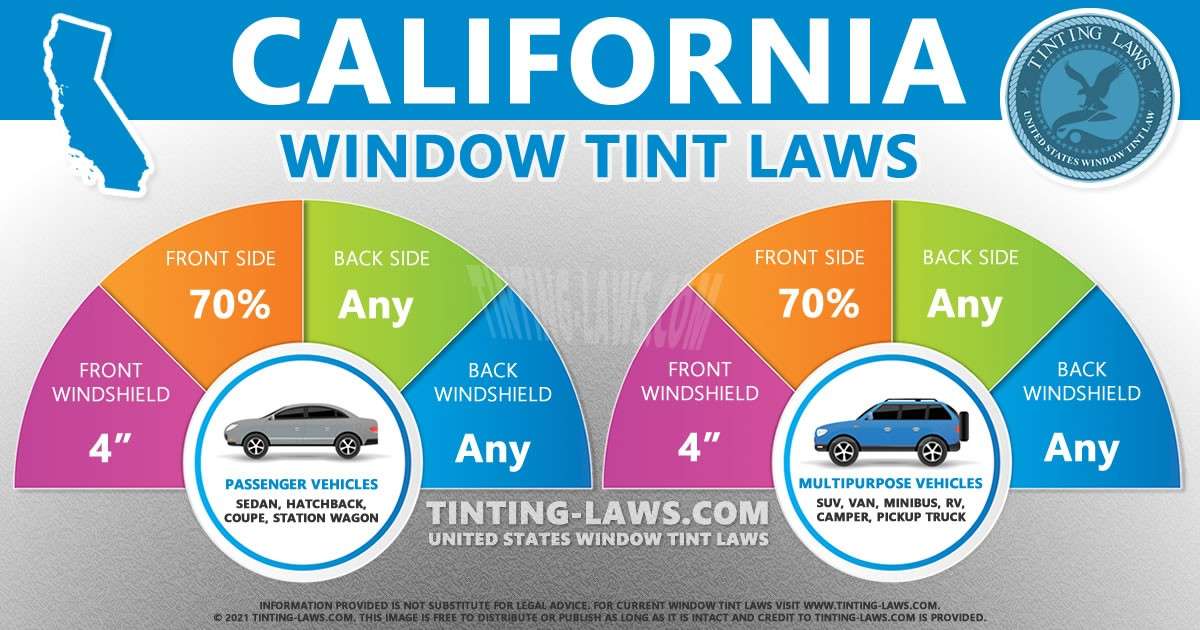
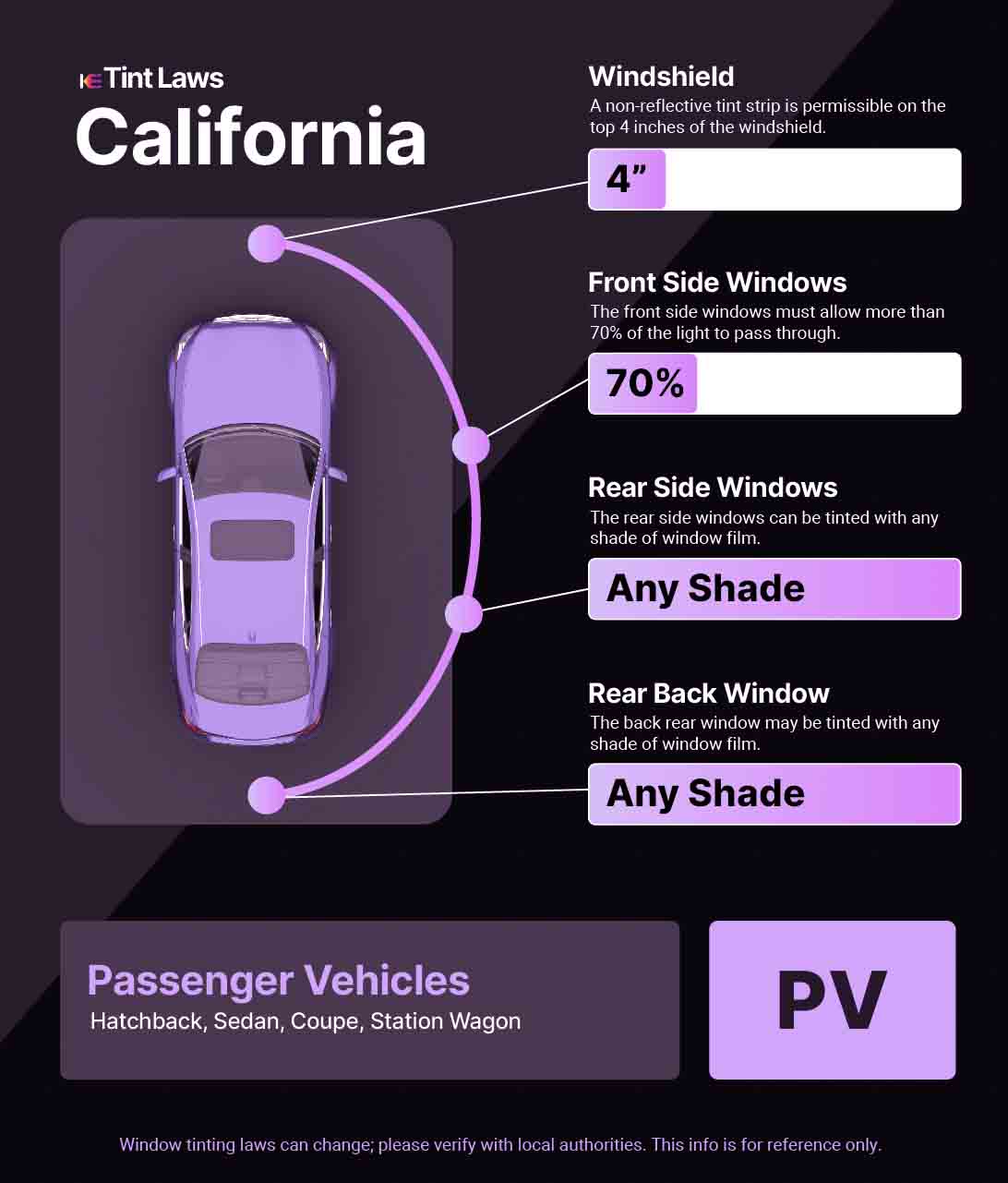
The most stringent regulations apply to the windows adjacent to the driver and front passenger seats. For these windows, California law dictates that a minimum of 70% VLT (Visible Light Transmission) is required. This means that at least 70% of visible light must be able to pass through the combined window and film. In practical terms, a 70% tint is very light and often appears nearly clear, offering subtle UV protection and heat reduction without significantly darkening the window.
The reasoning behind this strict rule is primarily safety. Law enforcement officers need to be able to clearly see the occupants of a vehicle, particularly the driver, for routine traffic stops and to assess situations quickly. Similarly, other drivers, cyclists, and pedestrians need to maintain eye contact with the driver to anticipate movements, especially in busy urban areas like downtown San Francisco or popular tourist spots like Universal Studios Hollywood. This level of transparency ensures public safety and accountability on the roads.
It’s also crucial to note that no tint film can be applied that makes the front side windows reflective or mirrored to any degree. The film must absorb light rather than reflect it, preventing glare for other road users.
Rear Side and Rear Windows: More Flexibility
When it comes to the rear side windows (behind the driver and front passenger) and the rear windshield, California law offers significantly more flexibility. For these windows, there is no specific VLT limit, meaning you can apply tint as dark as you desire, including 5% VLT “limo tint,” provided it’s non-reflective. This allows for greater privacy and enhanced sun protection for rear passengers, which is particularly beneficial for families traveling with children on long drives to Legoland California or Six Flags Magic Mountain.
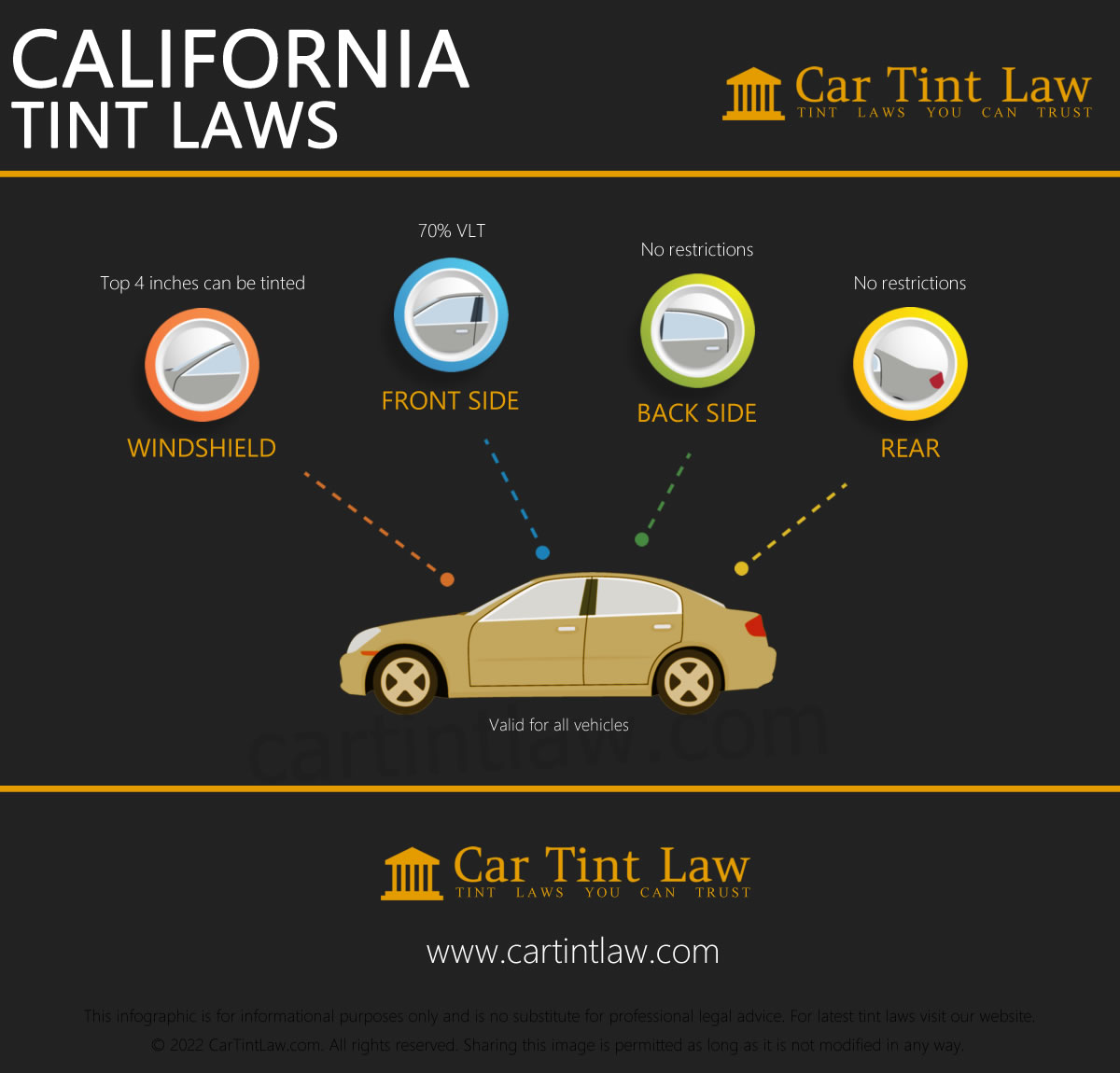
However, this increased tinting comes with an important caveat: if the rear window (windshield) is tinted, the vehicle must have dual side mirrors that provide a clear and unobstructed view to the rear. Most modern vehicles are equipped with dual side mirrors as standard, so this is rarely an issue for contemporary cars. For older vehicles or those with aftermarket modifications, it’s an important check to ensure compliance. This requirement maintains the driver’s ability to safely monitor traffic behind them, even if the rear window is heavily tinted.
Windshield Tinting: Limited Options
The windshield, being the primary window for driver visibility, has the most restrictive tinting rules.
- Top Strip Only: Tint film is only permitted on the uppermost portion of the windshield, above the AS-1 line or the top 4-5 inches of the windshield, whichever is less. This strip can be non-reflective and can be as dark as desired, primarily serving to reduce sun glare without impeding the driver’s field of vision. This is particularly useful when driving directly into the sun, a common occurrence on California’s east-west highways.
- No Full Windshield Tint: It is illegal to apply any tint film to the entire windshield, except for the small top strip. Even clear or very light tints are generally not allowed on the main viewing area of the windshield, as they can interfere with light transmission and clarity, especially at night.
- Clear, Non-Coloring Films: Some manufacturers offer clear films designed for UV protection or heat rejection that do not significantly alter VLT. While these films might seem compliant, specific legality depends on whether they are considered “material” that alters visibility. It’s best to consult with a reputable installer or the California Highway Patrol for clarity on such specialty films.
Prohibited Tint Types and Special Considerations
Beyond VLT percentages, California law also prohibits certain types of window tints:
- Colors: Tint films that are red, amber, or blue are explicitly prohibited on any window. These colors can interfere with the visibility of emergency lights or traffic signals and are deemed unsafe.
- Reflective/Mirrored Tint: As mentioned, any tint film that creates a mirrored or reflective appearance is generally illegal for all windows, particularly the front and side windows. This is to prevent glare that can blind other drivers and pedestrians, especially in sunny conditions.
- Obstruction: Any material, film, or object that obstructs the driver’s clear view through any window is illegal. This can include decals, stickers, or even heavily tinted license plate covers if they significantly impede visibility.
- Medical Exemptions: As noted earlier, individuals with documented medical conditions (e.g., severe photosensitivity, lupus) can apply for a medical exemption through the California Department of Motor Vehicles. If granted, this allows for darker tinting on front side windows than typically permitted. The exemption certificate must be carried in the vehicle at all times.
Navigating these specific laws can seem complex, but adhering to them ensures both your safety and compliance with state regulations, allowing you to enjoy your travels across the diverse landscapes of California without interruption.
Practical Advice for Tourists and Locals
Whether you’re a lifelong resident of California or a visitor renting a car for a week-long excursion along Highway 1, understanding and complying with window tint laws is essential for a seamless experience. This section offers actionable advice to help you stay on the right side of the law and make informed decisions about vehicle tinting.
Before You Travel: Checking Your Vehicle’s Tint
-
For California Residents: If your vehicle already has window tint, it’s wise to ensure it’s compliant, especially if you bought the car used or had the tint installed out-of-state. Professional tint shops can measure your vehicle’s VLT using specialized meters. This simple check can save you from potential headaches down the road. If you plan to install new tint, always choose a reputable installer who is well-versed in California regulations. They can guide you toward legal options that meet your aesthetic and practical needs.
-
For Out-of-State Visitors: Traveling to California with a vehicle tinted in another state? Be aware that tint laws vary significantly by state. What’s legal in Arizona or Nevada might not be in the Golden State. While law enforcement typically exercises some discretion for out-of-state plates, particularly for minor infractions, persistent issues or overly dark front window tint could still lead to a stop or a citation. It’s always best to be aware and, if possible, ensure your front windows meet the 70% VLT rule before embarking on your California adventure. If your tint is significantly darker, consider temporary alternatives or be prepared to explain your origin if stopped.
-
Rental Cars: When renting a vehicle in California, rest assured that rental agencies are legally obligated to provide vehicles that comply with state laws. You generally won’t need to worry about the tint on a standard rental car. However, if you opt for a specialty or luxury rental from a third-party provider, it’s still prudent to quickly check the front window tint for peace of mind, especially if it appears unusually dark. Most major rental companies like Hertz, Avis, or Enterprise operating in key California cities such as Sacramento or San Jose will have vehicles compliant with local regulations.
Consequences of Non-Compliance
Ignoring California’s tint laws can lead to several undesirable outcomes that can disrupt your travel plans or daily routine:
-
Traffic Stop and Citation: The most immediate consequence is being pulled over by law enforcement, typically the California Highway Patrol or local police. An officer will usually use a VLT meter to check your tint. If found in violation, you’ll receive a citation, often a “fix-it ticket.”
-
“Fix-It Ticket”: A fix-it ticket (or “correctable violation”) requires you to rectify the issue (remove or replace the illegal tint) and then provide proof of correction to the court or law enforcement agency within a specified timeframe. If you fail to correct the issue or provide proof, the citation can escalate into a more serious offense, potentially incurring higher fines and even a misdemeanor charge. For travelers, this can be particularly inconvenient, requiring time away from your itinerary to find a tint shop and then follow up with the authorities, which is especially challenging if you’re returning to an out-of-state residence.
-
Fines: While fix-it tickets might initially have a lower fine, additional penalties can apply if not corrected, or if the tint is excessively dark or non-compliant in multiple ways. These fines can add up, making an otherwise enjoyable trip unnecessarily expensive.
-
Safety Hazard: Beyond legal repercussions, illegally dark tint, especially on front windows, poses a legitimate safety risk. It can reduce visibility, particularly at night or in adverse weather conditions, increasing the chances of an accident. This risk extends not just to you but to other road users, underscoring the importance of compliance for everyone’s safety on California’s roads.
Choosing a Reputable Installer
If you decide to get your windows tinted, selecting the right installer is paramount. A reputable shop will:
- Knowledge of CA Laws: Be intimately familiar with California Vehicle Code Section 26708 and guarantee their work complies with all state regulations. They should be able to advise you on legal VLT percentages for each window and explain why certain options are not permissible.
- Quality Materials: Use high-quality window film that offers superior UV protection, heat rejection, and durability without bubbling, peeling, or fading prematurely. Quality film also ensures accurate VLT readings.
- Professional Installation: Employ experienced technicians who can apply tint smoothly and precisely, without imperfections or damage to your vehicle.
- Warranty: Offer a warranty on both the film and the installation, giving you peace of mind.
- Certification: Some installers may have certifications from film manufacturers, indicating their expertise and commitment to quality.
By choosing a trusted professional, you ensure that your investment not only enhances your driving experience but also adheres strictly to California law, allowing you to focus on enjoying the journey, whether it’s a coastal drive to Monterey Bay or an inland adventure.
Enjoying Your California Journey Responsibly
California offers an unparalleled array of experiences, from the breathtaking natural wonders of Big Sur and Catalina Island to the bustling urban excitement of Los Angeles and San Francisco. Embracing the Golden State’s sunny disposition often means spending significant time on the road, exploring new destinations, and soaking in the vibrant lifestyle. Window tinting, when done legally and responsibly, can significantly enhance this experience, providing comfort, safety, and a touch of personal flair without contravening the law.
By understanding and adhering to California’s window tint regulations, you ensure that your vehicle not only looks great and provides optimal protection from the sun’s rays but also remains fully compliant with the state’s safety standards. This responsible approach prevents unnecessary fines and disruptions, allowing you to fully immerse yourself in the beauty and excitement of California. Whether you’re a long-term resident enjoying the daily commute or a visitor embarking on an epic California road trip, a legally tinted vehicle is one less thing to worry about, freeing you to focus on the unforgettable memories waiting to be made around every corner. Drive safe, stay cool, and enjoy the radiant charm of California.
LifeOutOfTheBox is a participant in the Amazon Services LLC Associates Program, an affiliate advertising program designed to provide a means for sites to earn advertising fees by advertising and linking to Amazon.com. Amazon, the Amazon logo, AmazonSupply, and the AmazonSupply logo are trademarks of Amazon.com, Inc. or its affiliates. As an Amazon Associate we earn affiliate commissions from qualifying purchases.