
Embarking on a journey through the Sunshine State promises endless warmth, vibrant culture, and unforgettable experiences. Whether you’re planning a leisurely road trip along the scenic Florida Keys, a family adventure to Orlando’s theme parks, or a relaxing escape to the pristine beaches of South Beach in Miami, understanding local regulations is paramount for a smooth and enjoyable trip. Among the often-overlooked details that can significantly impact your travel experience, especially if you’re driving your own vehicle or renting one, are the window tinting laws. Florida, known for its intense sun, has specific rules governing how dark your car windows can be. Navigating these regulations isn’t just about avoiding a fine; it’s about ensuring your safety, maintaining visibility, and respecting the state’s legal framework. This comprehensive guide will illuminate the intricacies of Florida’s window tint laws, providing travelers with the essential knowledge needed to drive confidently and legally across the state. From the bustling streets of Tampa to the historic charm of St. Augustine, knowing what tint is legal will help you focus on the breathtaking sights rather than potential legal woes.
Understanding Florida’s Window Tinting Regulations
Florida’s climate necessitates measures to combat heat and glare, making window tint a popular choice for many drivers. However, the state balances driver comfort with public safety, leading to clear and specific tinting regulations. These laws are designed to ensure that law enforcement officers can see into vehicles and that drivers maintain adequate visibility, especially during diverse weather conditions. For any traveler, whether a long-term visitor or a new resident, grasping these specifics is the first step toward compliance.
The Basics: What is VLT?
At the heart of window tint laws is the concept of Visible Light Transmission (VLT). VLT refers to the percentage of visible light that passes through your car’s windows. A lower VLT percentage indicates a darker tint, allowing less light to pass through. Conversely, a higher VLT percentage means a lighter tint. Florida law specifies different VLT percentages for various windows on a vehicle, ensuring a consistent standard across the state. Understanding VLT is crucial because it’s the primary metric by which tint legality is determined.
Front Side Windows: Specific VLT Percentage
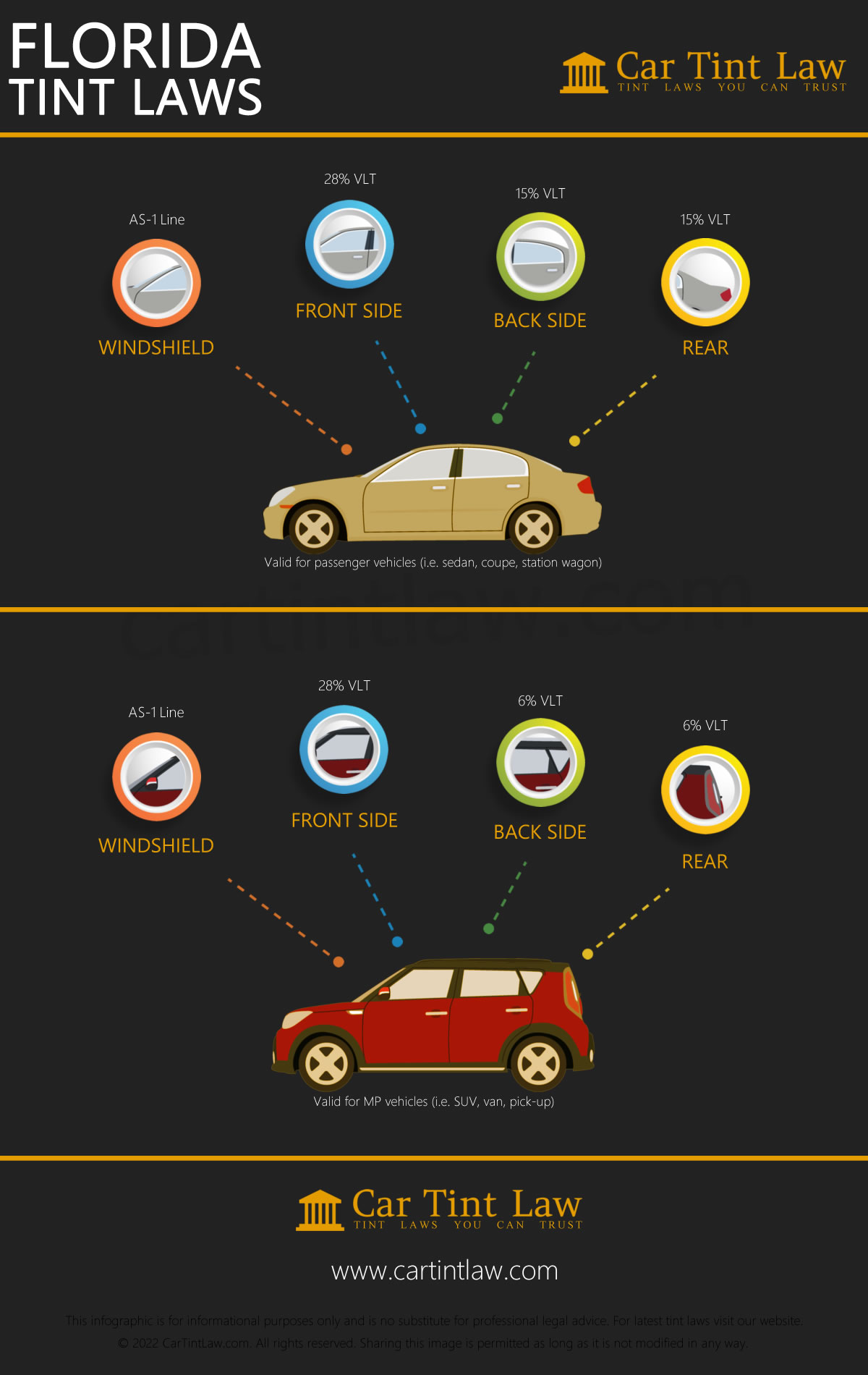
For the front side windows – those next to the driver and front passenger – Florida law requires a VLT of no less than 28%. This means that at least 28% of visible light must be able to pass through these windows. The reasoning behind this specific percentage is to allow sufficient visibility for the driver to see side mirrors and for law enforcement to identify vehicle occupants, crucial for traffic stops and overall road safety. Travelers bringing their vehicles from other states should pay particular attention to this, as front window tinting laws can vary significantly from one state to another.
Rear Side and Rear Windows: Specific VLT Percentage
The regulations for rear side windows (those behind the driver and front passenger) and the rear window (the back windshield) are more lenient. For these windows, Florida law permits a VLT of no less than 15%. This allows for a darker tint, providing increased privacy and heat reduction for passengers and cargo, while still maintaining some level of visibility. This distinction acknowledges that the rear windows do not directly impact the driver’s forward or immediate side visibility in the same way the front side windows do.
Windshield Tinting: Restrictions and Permissible Areas
The windshield, being the most critical window for driver visibility, has the strictest tinting rules. In Florida, only the top portion of the windshield – specifically, the AS-1 line or the top 5 inches, whichever is less – may be tinted. This permissible strip must also comply with a VLT of no less than 28%. The primary purpose of this upper tint strip is to reduce sun glare without impeding the driver’s clear view of the road, traffic signals, and other essential visual information. Tinting below this line is generally prohibited to maintain maximum visibility for the driver.
Reflectivity Standards: Beyond Just Darkness
Beyond VLT percentages, Florida also imposes restrictions on the reflectivity of window tints. The law states that the tint must not be more than 20% reflective on any window. Highly reflective tints can create glare for other drivers, posing a safety hazard, and can also interfere with the visibility of law enforcement personnel. Therefore, when considering tint options, or checking your existing tint, it’s essential to consider both the VLT and the reflectivity to ensure full compliance with Florida law.
Why Florida’s Tint Laws Matter for Travelers
For visitors exploring Florida, understanding and adhering to tint laws goes beyond mere legal obligation; it’s an integral part of a seamless travel experience. Unexpected legal issues can quickly derail even the most meticulously planned itinerary, turning a sunny vacation into a stressful ordeal.
Avoiding Unwanted Fines: Impact on Travel Budget and Experience
One of the most immediate consequences of non-compliant window tint is the risk of receiving a traffic citation. A tint violation can result in a fine, which, while perhaps not astronomical, is an unnecessary expense that could otherwise be spent on experiencing Florida’s many attractions, such as exploring Everglades National Park or visiting the magical Walt Disney World Resort. More than just the monetary cost, the process of dealing with a ticket – from being pulled over to potentially appearing in court – can consume valuable vacation time and introduce unwanted stress. For travelers, avoiding such disruptions is key to a truly relaxing and enjoyable trip.
Car Rental Considerations: What to Check When Renting
When renting a vehicle in Florida, it’s generally safe to assume that rental car companies provide vehicles that comply with state laws. However, it’s always wise to do a quick visual check, especially if you notice exceptionally dark tinting. While rare, a non-compliant rental vehicle could theoretically put the renter at risk. More importantly, if you are planning to rent a car and have specific tinting preferences (e.g., due to sensitivity to sun), knowing the legal limits will help manage your expectations and select a suitable vehicle if options are available. Reputable rental companies like those found at Jacksonville International Airport typically ensure their fleet adheres to local laws.

Protecting Your Investment: If Driving Your Own Vehicle
For those driving their personal vehicles into Florida, ensuring your window tint is compliant before you cross the state line is crucial. If your home state allows darker tint than Florida, you risk being cited. Modifying tint can be an additional expense, and being forced to remove or replace non-compliant tint mid-trip can be a significant inconvenience. Taking proactive steps to ensure your vehicle meets Florida’s standards not only protects you from fines but also safeguards your time and peace of mind during your travels.
Safety and Visibility: Ensuring Compliance for Clear Driving
Beyond legal penalties, the core reason for tint laws is safety. Overly dark or highly reflective tint can impair a driver’s visibility, especially during nighttime driving or in adverse weather conditions like Florida’s notorious sudden downpours. It also reduces peripheral vision and the ability to clearly see pedestrians, cyclists, or other vehicles, which is particularly important in busy tourist areas around Universal Orlando Resort. Compliance ensures that you have the clearest possible view of your surroundings, contributing to safer driving for yourself, your passengers, and everyone else on the road.
Navigating Exceptions and Special Circumstances
While the general rules for window tinting in Florida are clear, there are specific circumstances and vehicle types that may operate under different regulations. Understanding these exceptions is crucial for a complete picture of the law.
Medical Exemptions: Process and Requirements for Specific Conditions
Florida law provides for medical exemptions for individuals who have a medical condition that requires protection from the sun’s harmful rays. Conditions such as lupus, porphyria, or severe photosensitivity may qualify for darker window tinting than ordinarily permitted. To obtain a medical exemption, individuals must apply through the Florida Department of Highway Safety and Motor Vehicles (FLHSMV) and provide a physician’s certification detailing the medical necessity. If approved, a special sticker or certificate is issued, which must be kept in the vehicle. Travelers with such conditions should research this process well in advance of their trip to Florida to ensure they have the necessary documentation.
Manufacturer’s Tint: Distinguishing Factory Tint from Aftermarket
Many vehicles come with factory-installed tinted windows, especially SUVs and minivans. It’s important to distinguish between this “privacy glass” and aftermarket tint films. Factory tint is typically integrated into the glass itself and, by law, is designed to meet the legal requirements of the states where the vehicles are sold, including Florida. However, factory tint often refers to the rear side and rear windows and may not be as dark as some aftermarket options. Aftermarket tint, applied as a film, is what typically needs careful VLT checking. Drivers should be aware that adding an aftermarket film on top of existing factory tint could push the combined VLT percentage below the legal limit, making it non-compliant.
Commercial Vehicles and Limousines: Different Rules Apply
Certain types of commercial vehicles, such as limousines, buses, and some vans used for transport, may have different tinting regulations due to their specific operational purposes. For instance, limousines often have significantly darker tint on passenger windows for privacy and luxury, and these are typically regulated under different commercial vehicle statutes. If you are operating a commercial vehicle or a specialty transport service in Florida, it is essential to consult the specific commercial vehicle tinting laws, as they may differ from those applicable to private passenger vehicles.
Ensuring Compliance Before and During Your Florida Journey
Proactive measures can prevent potential issues related to window tint, ensuring your travel through Florida is as smooth and enjoyable as possible. A little preparation goes a long way in avoiding fines and maintaining peace of mind.
Checking Your Current Tint: Tools and Methods
Before setting off for Florida, especially if you’re driving a vehicle with aftermarket tint, consider checking its VLT. This can be done using a tint meter, a device that measures the percentage of light passing through the glass. Many auto shops and tint installers offer this service, and some law enforcement agencies might also check it upon request (though this is less common). Knowing your tint’s VLT percentage beforehand will give you confidence or allow you to make necessary adjustments. If you’re unsure, it’s always better to err on the side of caution.
Professional Installation: The Importance of Certified Installers
If you decide to have window tint installed or adjusted before your trip, always choose a reputable, certified professional installer. Experienced installers are knowledgeable about Florida’s specific tint laws and will use high-quality films that comply with VLT and reflectivity standards. They can also provide documentation or guarantees that the tint meets legal requirements. Attempting a DIY tint job or going with an uncertified installer might lead to uneven application, bubbling, or, more critically, non-compliant tint that could result in fines later on.

Staying Informed: Laws Can Change
Tinting laws, like other traffic regulations, are subject to change. While Florida’s tint laws have been relatively stable, it’s always a good practice to do a quick search for the most current regulations shortly before your trip, especially if a significant amount of time has passed since your last visit. Government websites, such as the Florida Department of Highway Safety and Motor Vehicles, are reliable sources for the latest information. Staying informed ensures that your preparation remains current and accurate.
In conclusion, understanding what tint is legal in Florida is an essential part of preparing for any journey through the state. By familiarizing yourself with VLT percentages, reflectivity limits, and specific regulations for different windows, you can ensure your vehicle is compliant. This not only helps you avoid unnecessary fines and disruptions but also contributes to safer driving conditions for everyone on Florida’s roads. With this knowledge, you are well-equipped to enjoy the sunny vistas and diverse attractions that make Florida such a beloved travel destination, driving confidently and legally from the vibrant beaches to the tranquil natural reserves.
LifeOutOfTheBox is a participant in the Amazon Services LLC Associates Program, an affiliate advertising program designed to provide a means for sites to earn advertising fees by advertising and linking to Amazon.com. Amazon, the Amazon logo, AmazonSupply, and the AmazonSupply logo are trademarks of Amazon.com, Inc. or its affiliates. As an Amazon Associate we earn affiliate commissions from qualifying purchases.