
Understanding time zones is crucial for seamless travel, business dealings, and staying connected across the globe. When planning a trip to or coordinating with New York, knowing its precise relationship to Coordinated Universal Time (UTC) is fundamental. This article delves into New York’s time zone, its practical implications, and how to navigate it effectively.
The Foundation: New York’s Standard and Daylight Saving Time
New York operates on Eastern Time. This designation encompasses two distinct time standards throughout the year: Eastern Standard Time (EST) and Eastern Daylight Time (EDT). The shift between these two is governed by the observance of Daylight Saving Time (DST), a practice aimed at maximizing daylight during warmer months.
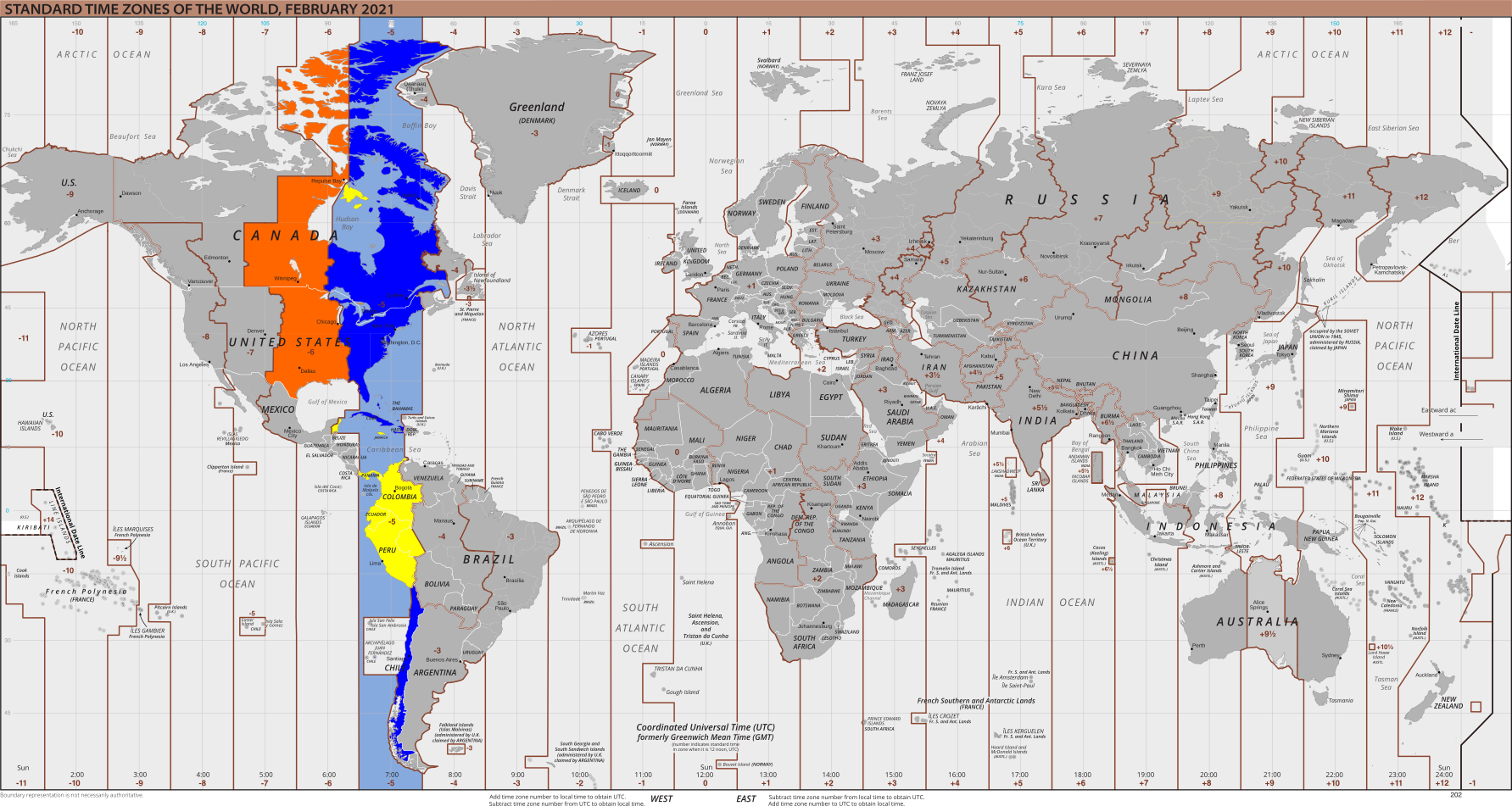
Eastern Standard Time (EST)
During the fall and winter months, New York observes Eastern Standard Time (EST). This time zone is UTC−5. This means that when it is UTC 12:00 (noon), it is 7:00 AM EST in New York. EST is the baseline time for the eastern part of North America, stretching from Canada down through the United States. Many major cities, including New York City, Philadelphia, Washington D.C., and Miami, fall within this time zone.
Eastern Daylight Time (EDT)
As spring arrives, the United States, including New York, transitions to Eastern Daylight Time (EDT). This adjustment moves the clock forward by one hour, making the time zone UTC−4. Consequently, when it is UTC 12:00 (noon), it is 8:00 AM EDT in New York. EDT is in effect from the second Sunday in March until the first Sunday in November. This period is characterized by longer daylight hours in the evenings, which is the primary purpose of DST.
The exact dates for the start and end of DST can vary slightly year to year, but the general rule of thumb—second Sunday in March to first Sunday in November—provides a reliable guide. This bi-annual time change is a common practice across much of North America and parts of Europe, though not universally adopted.
Navigating Time Zone Differences: Practical Applications for Travelers and Businesses
Understanding that New York is either UTC−5 or UTC−4 depending on the time of year is more than just an academic exercise; it has significant practical implications for anyone interacting with the city.
Travel Planning and Coordination
For travelers, accurately grasping New York’s time zone is essential for booking flights, hotels, and activities. Miscalculating time differences can lead to missed flights, late check-ins, or arriving for tours at the wrong time.
- Flight Bookings: When booking flights to or from airports like John F. Kennedy International Airport (JFK), LaGuardia Airport (LGA), or Newark Liberty International Airport (EWR), always double-check the arrival and departure times in local New York time. Airlines will typically display times in the local zone of the departure and arrival airports.
- Hotel Reservations: Confirming check-in and check-out times is straightforward once you know New York’s current time offset from UTC. For example, if your flight arrives at 10:00 AM UTC, and it’s currently EDT (UTC−4), you’ll arrive at 6:00 AM New York time, meaning you’ll likely need to arrange for an early check-in or store your luggage.
- Tour and Activity Scheduling: Many attractions in New York City, such as the Empire State Building, Times Square, or a ferry to the Statue of Liberty, operate on strict schedules. Knowing the local time ensures you arrive punctually for your reserved slots. Booking a Broadway show or a museum visit to the Metropolitan Museum of Art becomes much smoother.
Business Communications and Global Operations
For businesses with international operations or clients, precise time zone management is non-negotiable. Whether you are in London, Tokyo, Sydney, or Los Angeles, understanding how your time relates to New York’s is vital.

- Meeting Scheduling: Coordinating virtual meetings across multiple time zones requires careful calculation. For instance, a meeting scheduled for 9:00 AM EST (UTC−5) would be 2:00 PM in London (which observes GMT/BST, typically UTC+0 or UTC+1), 10:00 PM in Tokyo (JST, UTC+9), and 5:00 AM the same day in Los Angeles (PST/PDT, UTC−8 or UTC−7). Using EDT (UTC−4) would shift these times accordingly.
- Financial Markets: New York is a global financial hub, with the New York Stock Exchange (NYSE) and Nasdaq operating on Eastern Time. Understanding EST and EDT is critical for traders and investors worldwide who need to align with market opening and closing hours.
- Customer Support and Service: Companies offering 24/7 customer support must have staff strategically located to cover all time zones or manage handoffs effectively. Knowing New York’s current time is essential for overlap and communication between support teams operating in different regions.
Calculating New York Time: Simple Methods
Fortunately, calculating the current time in New York relative to UTC is straightforward with a few methods.
Online Tools and Apps
The most convenient way to determine New York’s current time is by using online time zone converters or world clock applications. Websites like timeanddate.com or simply searching “New York time” on a search engine will provide the current local time and its UTC offset instantly. Many smartphones also come with built-in world clock features that allow you to add New York City and see its time alongside your local time.
Manual Calculation
If you need to calculate it manually, remember the following:
- During EST (UTC−5): Subtract 5 hours from UTC to get New York time. If it’s 18:00 UTC, it’s 13:00 (1 PM) EST.
- During EDT (UTC−4): Subtract 4 hours from UTC to get New York time. If it’s 18:00 UTC, it’s 14:00 (2 PM) EDT.
To convert from New York time to UTC:
- During EST (UTC−5): Add 5 hours to New York EST. If it’s 13:00 EST, it’s 18:00 UTC.
- During EDT (UTC−4): Add 4 hours to New York EDT. If it’s 14:00 EDT, it’s 18:00 UTC.
Knowing the DST Dates
To accurately predict the offset, it’s helpful to be aware of the Daylight Saving Time transition dates. For the United States:
- DST Begins: Second Sunday in March. Clocks move forward one hour at 2:00 AM local time.
- DST Ends: First Sunday in November. Clocks move back one hour at 2:00 AM local time.
By knowing the current date and whether it falls within the DST period, you can confidently determine whether New York is operating on EST (UTC−5) or EDT (UTC−4).
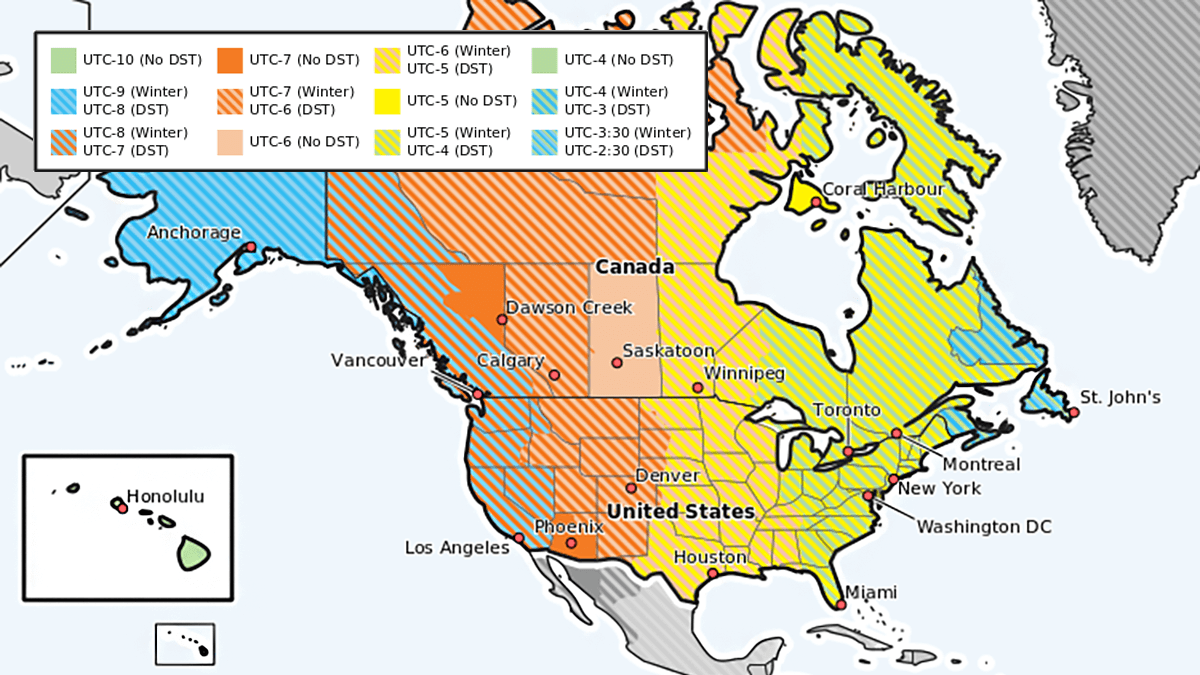
Embracing the Rhythm of Eastern Time
New York’s Eastern Time zone, with its DST adjustments, is a fundamental aspect of the city’s temporal rhythm. Whether you are a tourist eager to explore iconic landmarks like Central Park, a business professional closing deals in the financial district, or simply a traveler looking to connect with friends and family across continents, a clear understanding of “What UTC Is New York?” ensures smooth transitions and well-managed schedules. By leveraging available tools and understanding the basic principles of time zone conversion, you can navigate the temporal landscape of this dynamic metropolis with ease and confidence, making your experience in or with New York truly seamless.
LifeOutOfTheBox is a participant in the Amazon Services LLC Associates Program, an affiliate advertising program designed to provide a means for sites to earn advertising fees by advertising and linking to Amazon.com. Amazon, the Amazon logo, AmazonSupply, and the AmazonSupply logo are trademarks of Amazon.com, Inc. or its affiliates. As an Amazon Associate we earn affiliate commissions from qualifying purchases.