
The Hawaiian Islands represent one of the most geologically active regions on the planet. Located in the heart of the Pacific Ocean, this archipelago was birthed from the depths of the sea by the relentless power of volcanic activity. When people ask, “What volcano erupted in Hawaii?” the answer is rarely simple, as the island chain is home to several active shields that frequently reshape the landscape. However, in recent years, two primary landmarks have dominated the headlines: Kilauea and Mauna Loa.
Understanding these eruptions requires a deep dive into the unique geology of the Big Island. Unlike volcanoes formed at tectonic plate boundaries, the volcanoes in the United States’ 50th state are fueled by a “hotspot”—a stationary plume of magma that remains fixed while the Pacific Plate moves slowly over it. This process has created a trail of volcanic landmarks stretching across thousands of miles.
The Relentless Activity of Kilauea
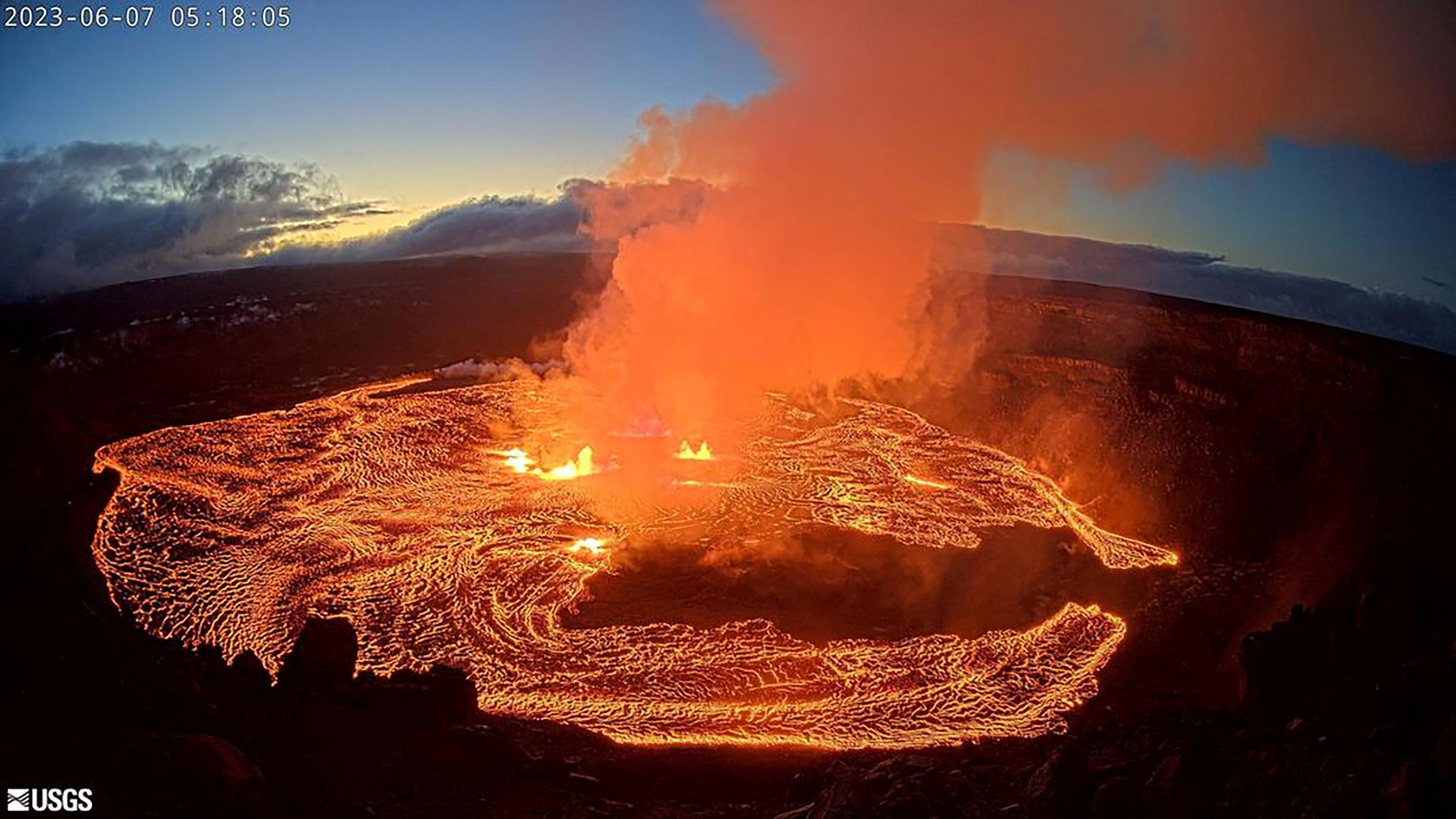
Kilauea is widely regarded as one of the most active volcanoes in the world. For decades, it has been the primary answer to which volcano is erupting in Hawaii. Its name, which means “spewing” or “much spreading” in the Hawaiian language, perfectly describes its character.
The Historic 2018 Lower East Rift Zone Eruption
Perhaps the most significant volcanic event in modern history occurred in 2018 when Kilauea experienced a massive eruption in the Leilani Estates residential area. This event was a turning point for the geography of the Puna district. Fountains of lava reached heights of over 200 feet, and the subsequent flows destroyed hundreds of homes while adding hundreds of acres of new land to the coastline. The eruption also caused the collapse of the floor of the Halemaumau Crater, forever changing the silhouette of the summit within Hawaii Volcanoes National Park.
Recent Summit Pulsations (2020–2024)
Since the cataclysmic events of 2018, Kilauea has settled into a pattern of summit eruptions. Between 2020 and 2024, multiple eruptive phases have occurred entirely within the Halemaumau Crater. These eruptions are characterized by glowing lava lakes and dramatic fountaining that draws visitors from Hilo and Kailua-Kona to witness the raw power of nature. Because these recent events have been confined to the crater, they pose no immediate threat to residential areas, serving instead as a magnificent natural spectacle.
The Awakening of Mauna Loa: The World’s Largest Volcano
While Kilauea is the most active, Mauna Loa is the most massive. Standing at over 13,000 feet above sea level and extending miles below the ocean floor, it is a landmark of global proportions. For 38 years, Mauna Loa remained quiet, leading many to wonder when the “Long Mountain” would wake up.
The 2022 Eruption Event
In late November 2022, the wait ended. Mauna Loa erupted, sending lava flows down its Northeast Rift Zone. This eruption was a significant geological event because it marked the first time since 1984 that the giant had shown its power. The lava flows moved toward the Daniel K. Inouye Highway, also known as the Saddle Road, which connects the east and west sides of the Big Island.
Fortunately, the lava stopped short of the highway, but the event provided scientists at the Hawaiian Volcano Observatory with invaluable data. For several weeks, the night sky over North Kona and South Kohala glowed with a deep crimson hue, visible even from parts of Maui on clear nights.
Shield Volcano Characteristics
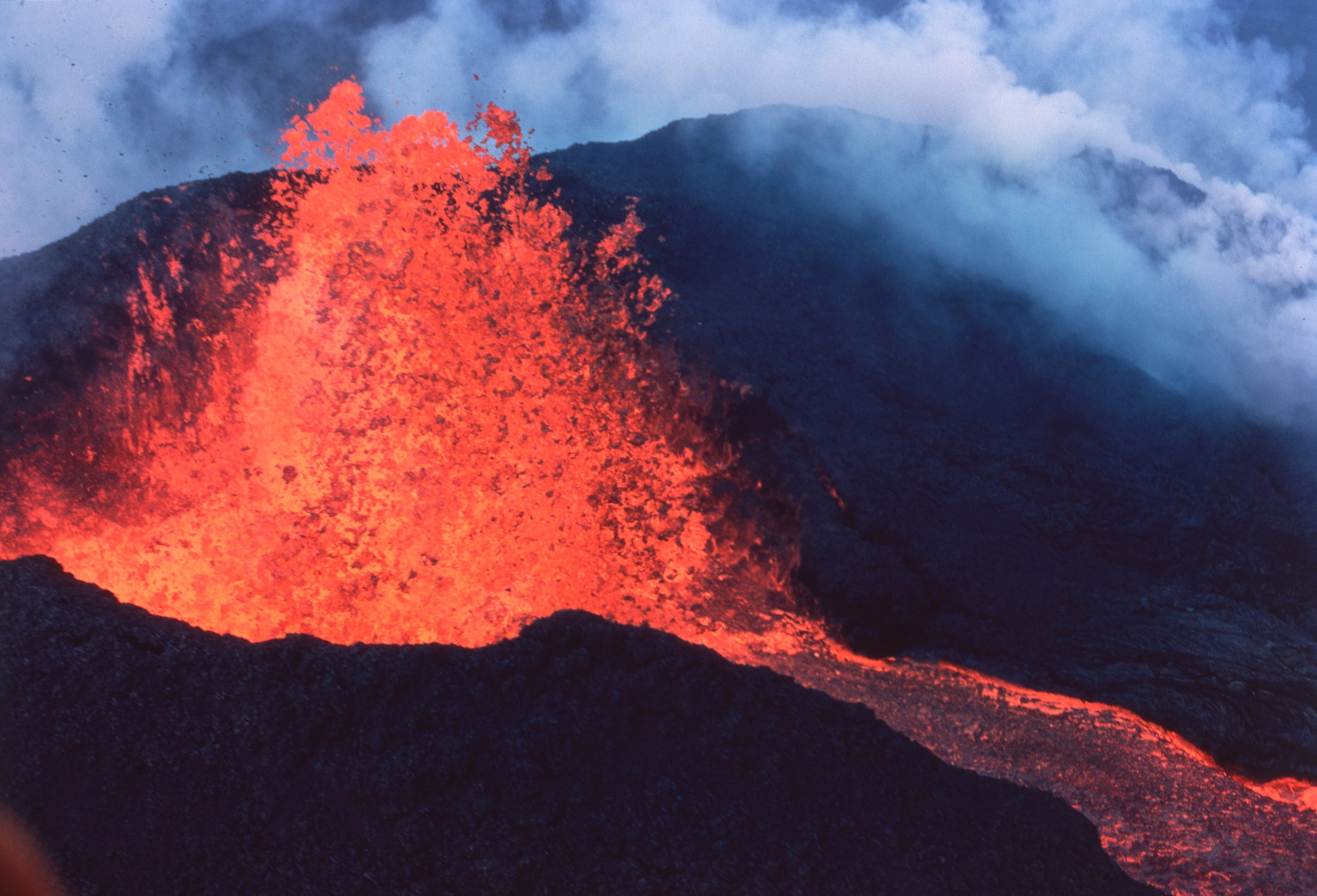
Mauna Loa is a classic example of a shield volcano. Its eruptions are typically non-explosive compared to the stratovolcanoes found in the Cascade Range or the Andes. Instead, the lava is highly fluid, allowing it to flow over long distances and create the broad, gently sloping profile that characterizes the Big Island. This type of activity is what has built the massive volume of the Hawaii landmarks over hundreds of thousands of years.
Exploring the Volcanic Landmarks of Hawaii
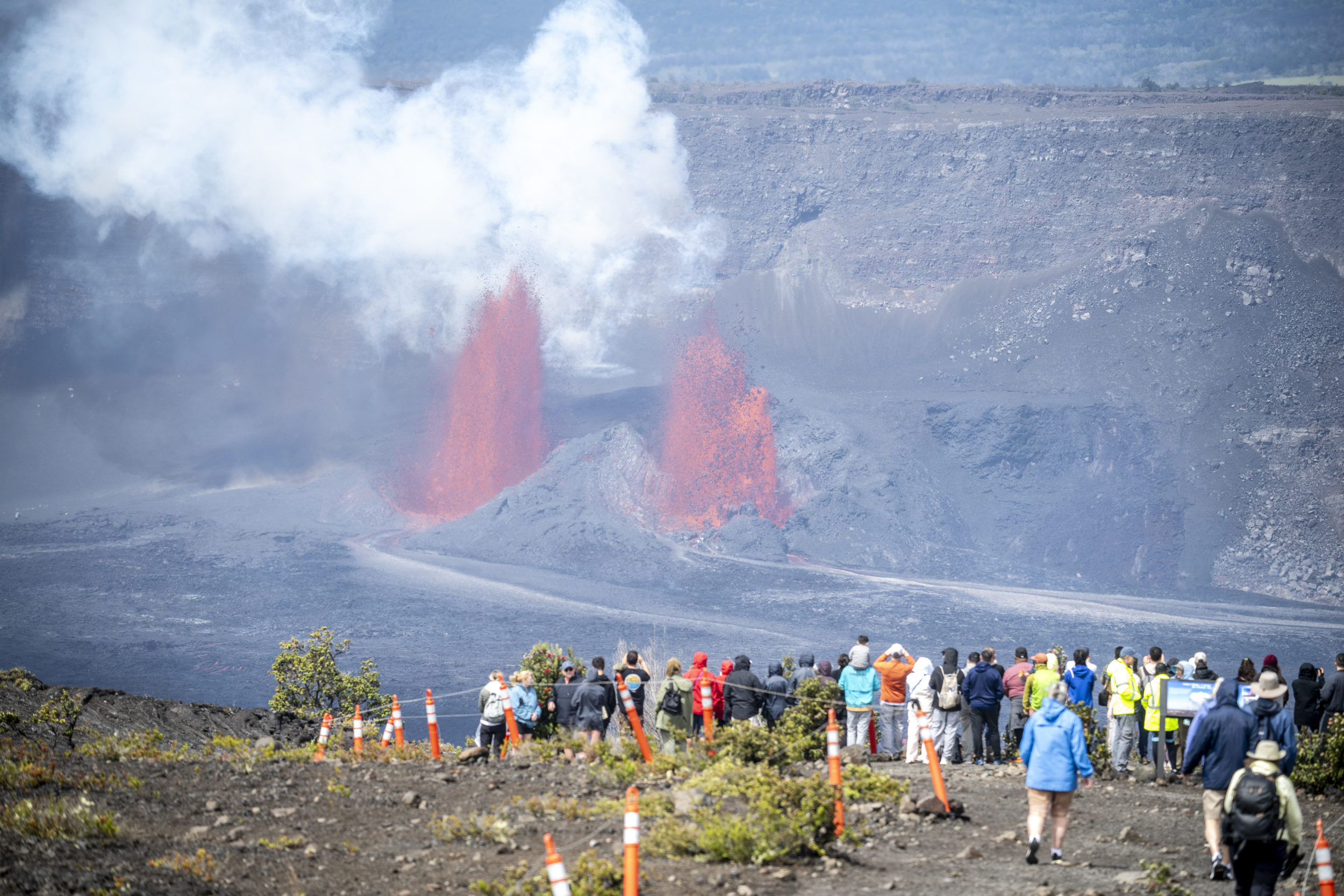
The volcanic activity in Hawaii has created some of the most unique landmarks in the world. Visitors traveling from places like Honolulu on Oahu or from the mainland United States often make the Big Island their primary destination to explore these natural wonders.
Hawaii Volcanoes National Park
No discussion of Hawaiian volcanoes is complete without mentioning Hawaii Volcanoes National Park. Established in 1916, this park protects the summits of both Kilauea and Mauna Loa. It is a UNESCO World Heritage Site and offers a window into the Earth’s formative processes. Key sites within the park include the Thurston Lava Tube (Nahuku), where visitors can walk through a subterranean passage formed by ancient lava flows, and the Chain of Craters Road, which descends 3,700 feet to the coast.
Mauna Kea: The Dormant Neighbor
While Kilauea and Mauna Loa grab the headlines for their eruptions, Mauna Kea stands as a silent sentinel to the north. Though it has not erupted in approximately 4,500 years, it remains a vital landmark. Its summit is home to some of the world’s premier astronomical observatories, taking advantage of the clear, high-altitude skies above the Pacific Ocean. The contrast between the active fire of Kilauea and the snow-capped, dormant peak of Mauna Kea showcases the diverse geological lifecycle of the islands.
The Cultural Significance of Volcanic Landmarks
In Hawaii, volcanoes are not merely geological features; they are deeply spiritual landmarks tied to the indigenous culture and history of the people. The eruptions are often viewed through the lens of traditional beliefs and respect for the natural world.
Pele, the Goddess of Fire
Central to the identity of these landmarks is Pele, the goddess of fire, lightning, wind, and volcanoes. According to Hawaiian tradition, Pele resides in the Halemaumau Crater at the summit of Kilauea. Eruptions are seen as her way of reshaping the land, reclaiming what is hers, and creating new foundations for life. This cultural connection transforms the volcanoes from mere tourist attractions into sacred spaces that demand reverence and protection.
Conservation and Preservation
The landmarks created by these eruptions are fragile ecosystems. The National Park Service works tirelessly to balance the influx of tourists with the preservation of native species that evolved in isolation on the volcanic slopes. From the Nene (Hawaiian goose) to the Ohia Lehua trees that are the first to grow on new lava flows, the biological history of the Big Island is inextricably linked to the volcanic eruptions that provide the very soil they grow on.
The Future of Hawaii’s Volcanic Landscape
As the Pacific Plate continues its slow journey to the northwest, new landmarks are already forming. Beneath the surface of the ocean, a few miles off the southern coast of the Big Island, lies Kama’ehuakanaloa (formerly known as Loihi Seamount).
The Next Island in the Chain
Kama’ehuakanaloa is an active submarine volcano that is currently about 3,000 feet below sea level. In the coming tens of thousands of years, repeated eruptions will eventually cause it to break the surface, forming a new island or merging with the Big Island. This ongoing process ensures that the map of Hawaii is never truly finished.
Monitoring and Safety
The United States Geological Survey (USGS) maintains a constant watch over these landmarks. Advanced technology, including satellite imagery, tiltmeters, and seismic sensors, allows experts to predict when an eruption might occur. For those living in cities like Hilo or Pahoa, this monitoring is essential for safety. For the rest of the world, it provides a fascinating, real-time look at the forces that shape our planet.
In conclusion, when asking which volcano erupted in Hawaii, one must look at the recent activity of Kilauea and the historic 2022 event of Mauna Loa. These landmarks are more than just mountains of rock; they are living, breathing entities that define the history, culture, and natural beauty of the Hawaiian Islands. Whether you are witnessing the glow of a lava lake from a distance or hiking across a cooled volcanic field, the experience of these active volcanoes is a powerful reminder of the Earth’s enduring capacity for creation and change.
LifeOutOfTheBox is a participant in the Amazon Services LLC Associates Program, an affiliate advertising program designed to provide a means for sites to earn advertising fees by advertising and linking to Amazon.com. Amazon, the Amazon logo, AmazonSupply, and the AmazonSupply logo are trademarks of Amazon.com, Inc. or its affiliates. As an Amazon Associate we earn affiliate commissions from qualifying purchases.